If you build it, they will come
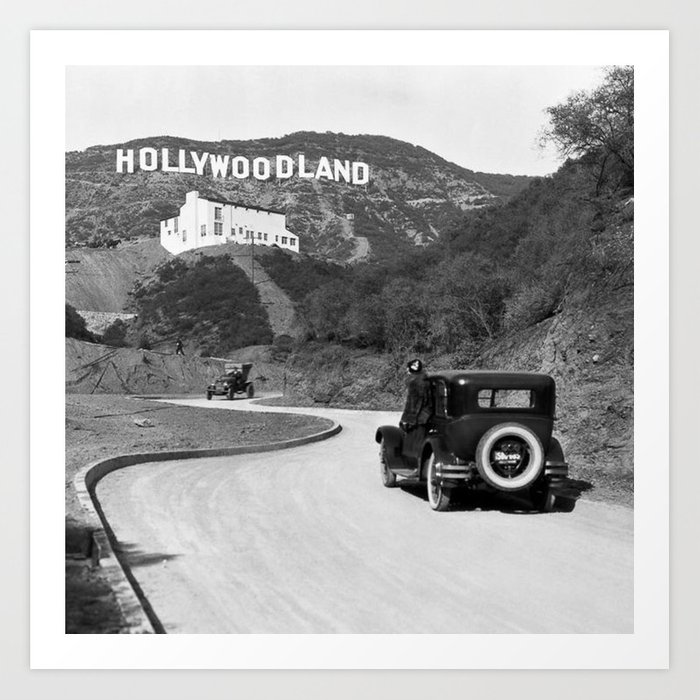
In the 1920’s, as the entertainment, housing and transportation industries continued to develop in Hollywood, more people moved to the “city of angels”. In 1923, the sign “Hollywoodland” was put up in the Mount Lee, Beachwood Canyon area of the Santa Monica mountains to promote a new housing development situated in Hollywood Hills. The sign was only going to be placed temporarily for a few years, but then became a monument recognized internationally, so the sign stayed minus the “land”. As new neighborhoods were born, large letters were strategically placed in the side of the hill staking their claim on the land.

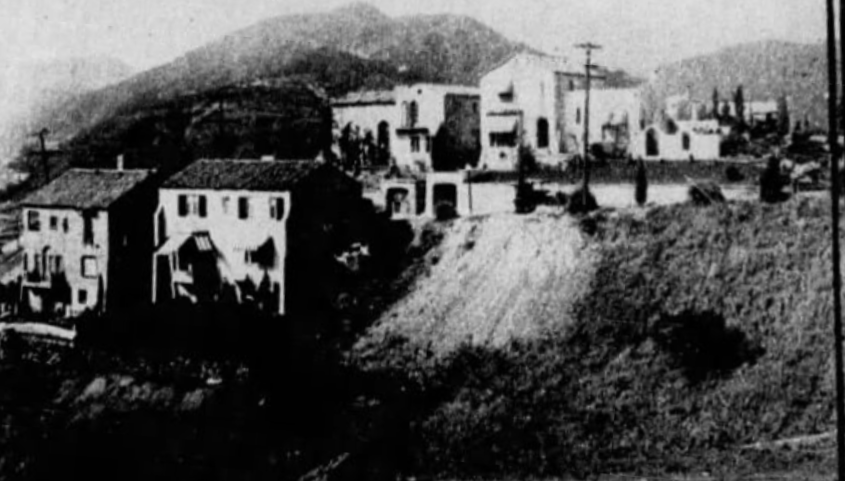
Whitley Heights was no exception and as the letters went up on top of the hill on Whitley Terrace, so did the construction of H.J. Whitley’s new home at 2073 Grace Avenue. Actually, his house stood adjacent to the letters for the whole town to see.
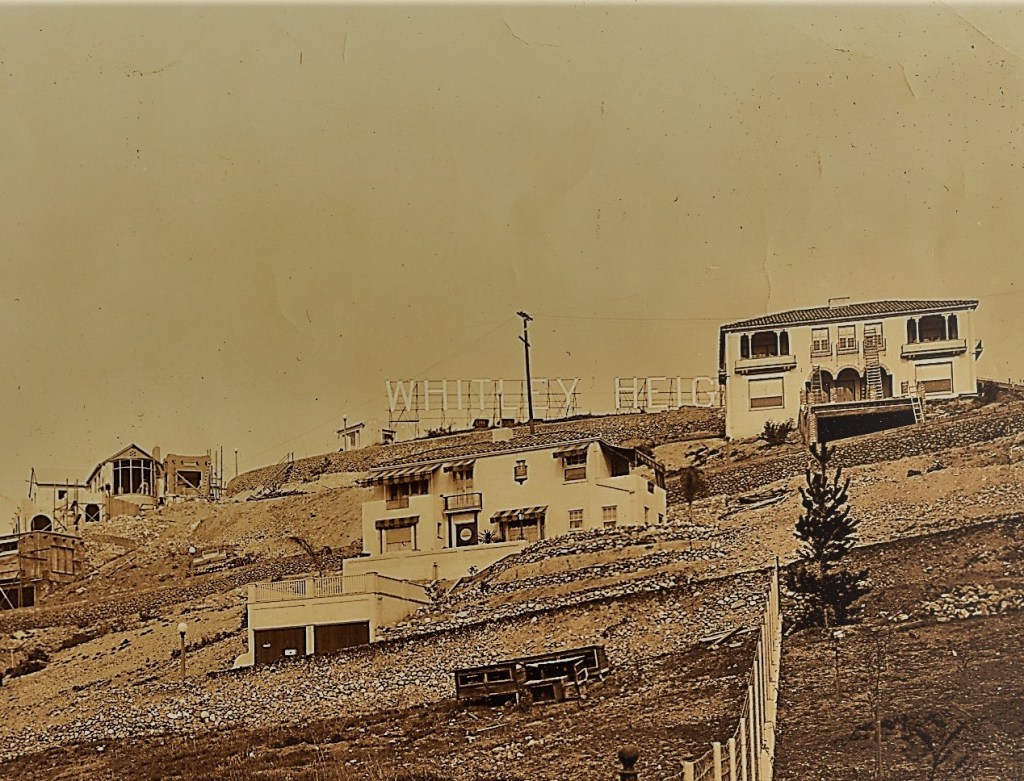
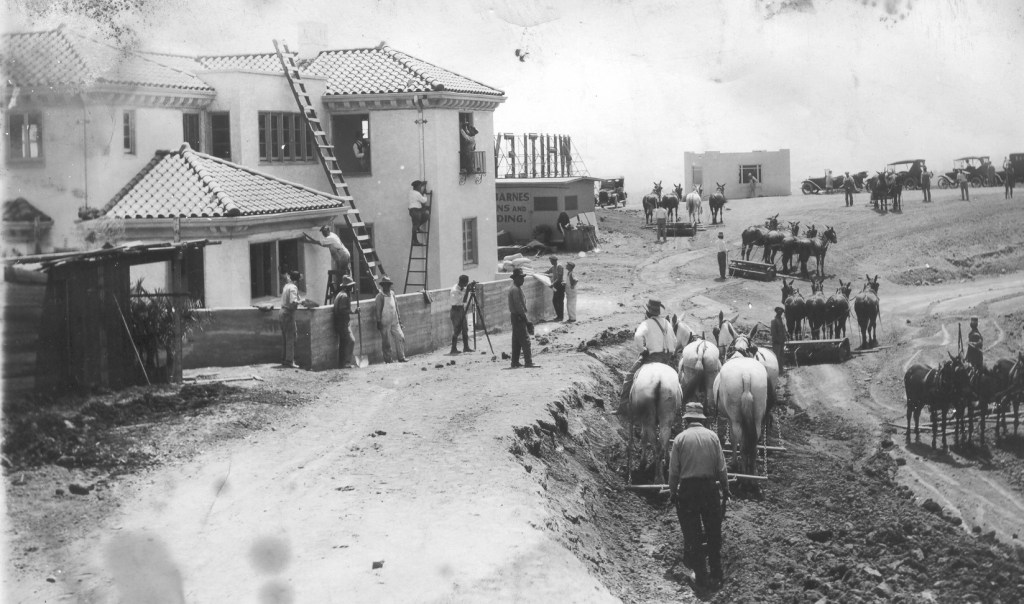
In the photograph above, Whitley’s house is directly to the right of the Whitley Heights sign. The house below would be J.A. Taylors created by Montgomery and Nibecker, 6633 Emmet Terrace. The house partially built on the upper left corner is 6662 Whitley Terrace and Arthur S. Barnes was the architect. The photograph below is the back of Whitley’s house being built at 2073 Grace Avenue. Whitley’s house was situated so it had a back entrance on Grace Avenue and a stairway up to the house on Whitley Terrace. In the 1927 Los Angeles City Directory, Whitley lists 6643 Whitley Terrace as his address. and the Grace Avenue address was used later. Whitley actually died in this home at the age of 83 on June 3, 1931.
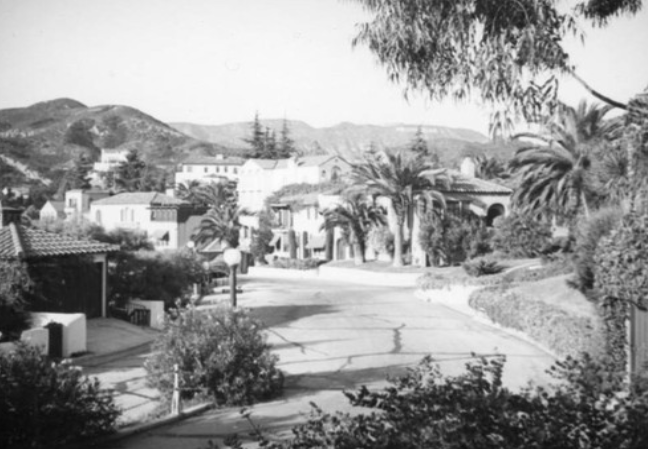
Whitley worked aimlessly to make sure that Whitley Heights would be the most magnificent neighborhood to live in. He redesigned the landscaping for the second time after the fire. In June 1920, he announced Whitley Heights was officially open. He also put in adequate lighting on the streets throughout the entire hill and in May of 1921 he held a “Lighting Celebration” upon completion of the project. Whitley also hired architect Arthur S. Barnes, of Ye Planry Building Company to tour the Mediterranean architecture in Italy and Spain. Barnes designed the majority of the residences in Whitley Heights from 1918 to 1928, and recreated the ambiance of a Mediterranean village. The beauty and seclusion of Whitley Heights’ architecture and terrain quickly made it the home of Hollywood’s elite.
Whitley knew that this would be the last masterpiece he designed. He wanted to expand the area of Whitley Heights. In 1921, Whitley bought land from Emma L. Hambleton, the property known as “Araby”, located on the summit of the hills adjoining Whitley Heights abounded by Cahuenga Blvd., Curlew Street and Whitley Terrace. He originally sold the property to her in 1903 for $2,000 and is now buying it back for 50 thousand dollars. When she purchased the land, Mrs. Hambleton turned the land into a private park with tropical trees, shrubs, fruits, and flowers. Whitley would call this section Whitley Heights Park. This is the fifth purchase he had made in growing Whitley Heights in which he extended the neighborhood from Cahuenga Blvd. to Emmet Terrace. Hambleton bought property and moved to 6650 Whitley Terrace and died there in 1937.
The image taken below in October of 1923, shows houses build on Wedgewood Place. 6735 and 6733 Wedgewood on top and 6738 and 6734 Wedgewood below. Wedgewood Place would meet Whitley Terrace to the right.
Some of the earliest houses built were on Fairfield Avenue which is located in northern Whitley Heights near Highland Avenue. Unfortunately, most of the homes on the street were relocated or demolished due the 101 Freeway construction in the late 1940s and then the proposed plan to build a Hollywood museum (which was never built)! Three houses still remain on what is left of Fairfield Avenue.
Notable residences constructed prior to 1920 include: 6824 Whitley Terrace (1915) and originally owned by Roy S. Clements, motion picture director and screenwriter of the silent era. This 2 bedroom, 1 bathroom 1,428 square foot house is located on the other side of the 101 freeway just below Iris Circle. The front of the property is obstructed by trees. (See screenshot below).
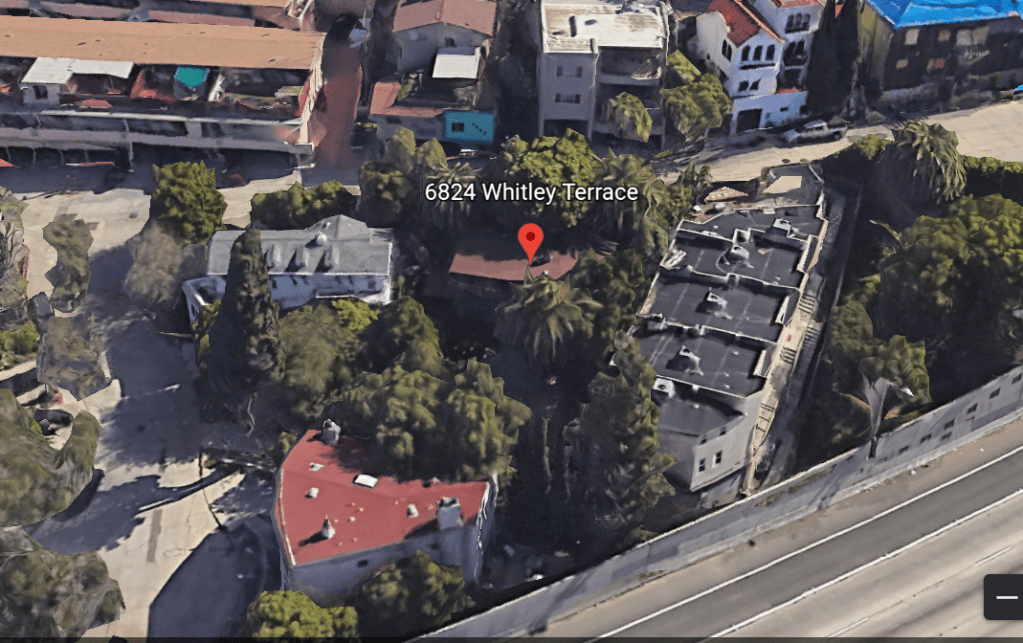
6830 Whitley Terrace was also built in 1915 by contractors McCann and Leech, which was originally on the corner of Whitley Terrace and Odin Street (before this section of Odin was bulldozed). In the screenshot above, the house is adjacent to the left of the Clements house and is a 2-story, 4 bedroom, 2 bathroom, 2,244 square foot home. A street can also be seen to the right of the property which would have been Odin Street.
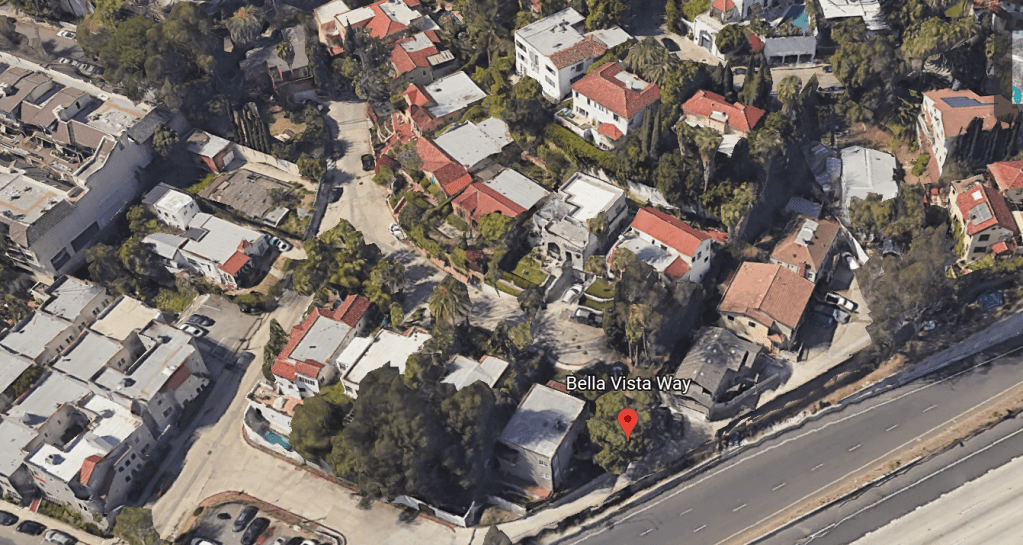
Bella Vista Way was another street that was comprised of many of the earliest houses built beginning in 1915 and encountered that same demise that Fairfield Avenue did. The screenshot below shows what is left of Bella Vista Way. The three properties to the immediate right of the red dot are all that remain.
6519 Bella Vista Way was built in 1916 and was relocated to 423 Chestnut Avenue in Long Beach. The house was originally a one-story, five room house when it was built. However, in 1998 a second story was built on the house. (see photo below)
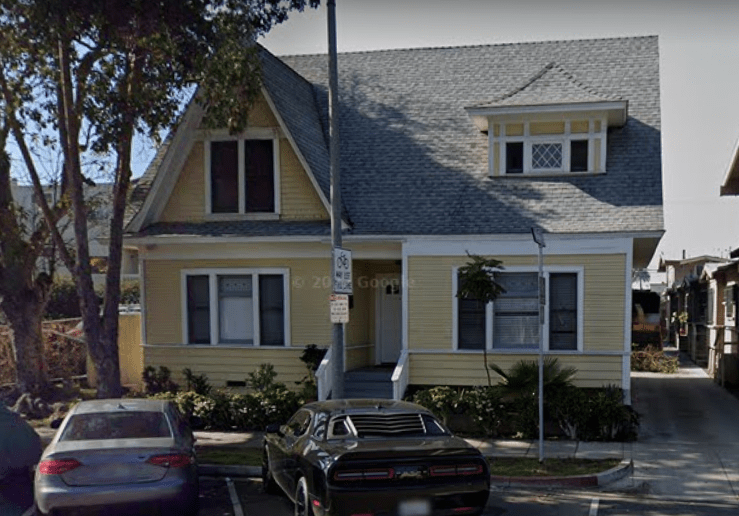
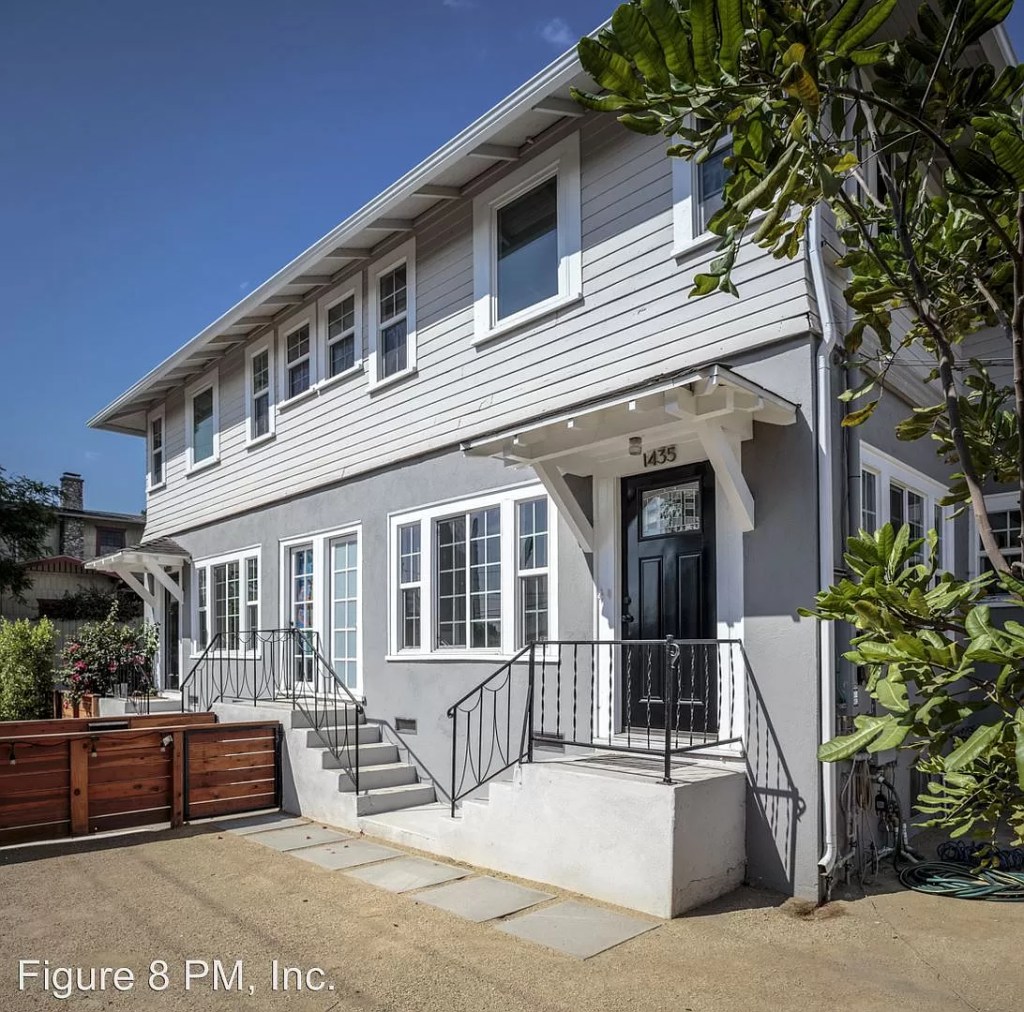
2209 and 2211 Fairfield Avenue (duplex),was a one-story built in 1917, was relocated in 1952 to 1433-35 Talmadge Avenue in Los Angeles. With the relocation, the owner added a second floor, giving the residents a total of 5 rooms each. (See photo below).
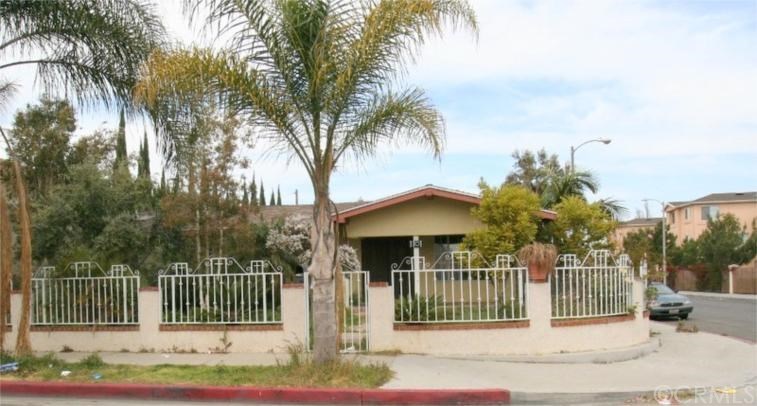
6535 Bella Vista Way was built in 1917 and was relocated to 1105 W. 255th Street in Harbor City in 1950. A garage was added in 1953 and another bedroom was added in 2001 to total 1,500 square feet of the 4 bedroom and 2 bathroom house. See photo below.
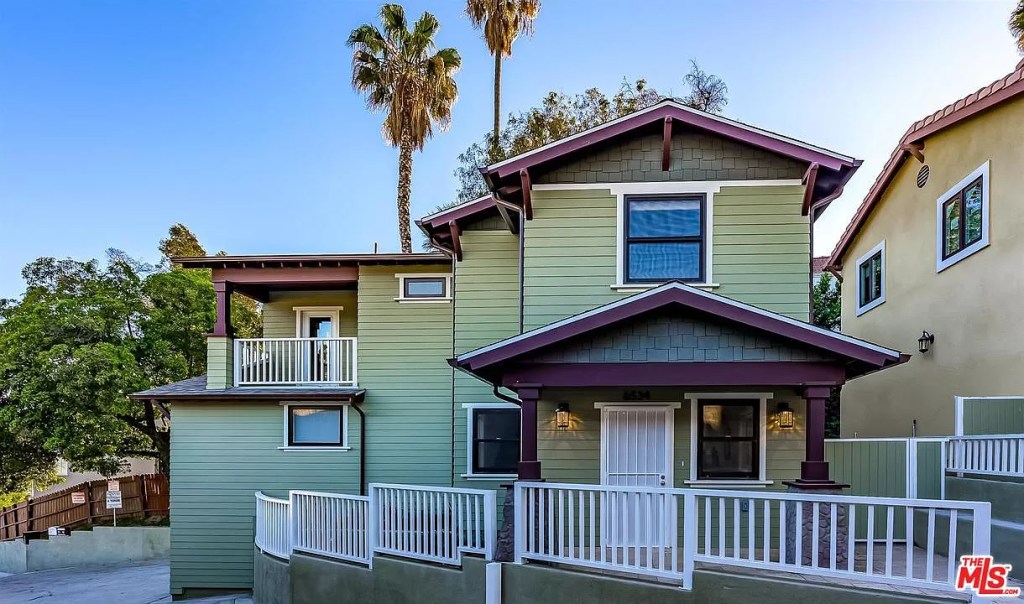
6534-36 Bella Vista Way was a duplex built in 1917 totaling 2 rooms per family (very small). Actor Rex Cherryman and his wife resided at 6534 Bella Vista Way in 1917. Cinematographer John Lyman lived at the same address the same year (maybe he slept on the couch). Cherryman was a theatrical actor who had an affair with Barbara Stanwyck in San Francisco during the production of the play “The Noose” from 1926-27. The play helped launch Stanwyck’s career and probably kill his marriage. Cherryman died to septic poisoning in 1928 while sailing to France to try out for a part in a play. This property is one of the three properties that still remains on Bella Vista Way. A garage was added in 1927 and was eventually made into a single family home with a 6 car garage in 2014. It is the first house on the right on Bella Vista Drive.
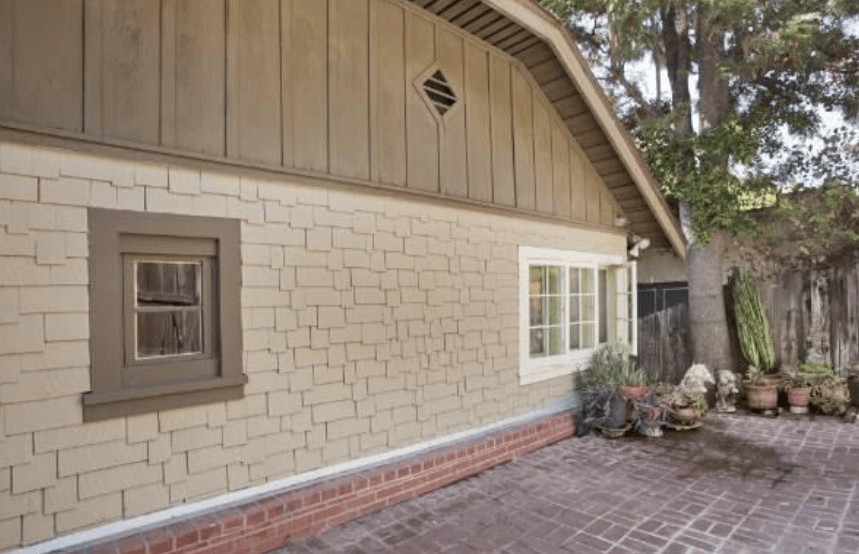
6680 Emmet Terrace is a craftsman bungalow home that was built in 1919 by architect J. J. Frauenfeld. This 1,080 square foot home consists of 3 bedrooms and 1 bathroom. See photo below.
Most of the other properties that were built prior to 1920 in Whitley Heights were either relocated or demolished. It is a shame that H.J. Whitley’s vision was somewhat destroyed when a portion of the hill was destroyed for the 101 Freeway and some more houses were destroyed later for a parking lot. It was helpful to find out that some of the homes escaped from being destroyed even if they were altered. One has to wonder what Whitley Heights would be like today it remained in tact.
 Whitley Heights 101
Leave a comment