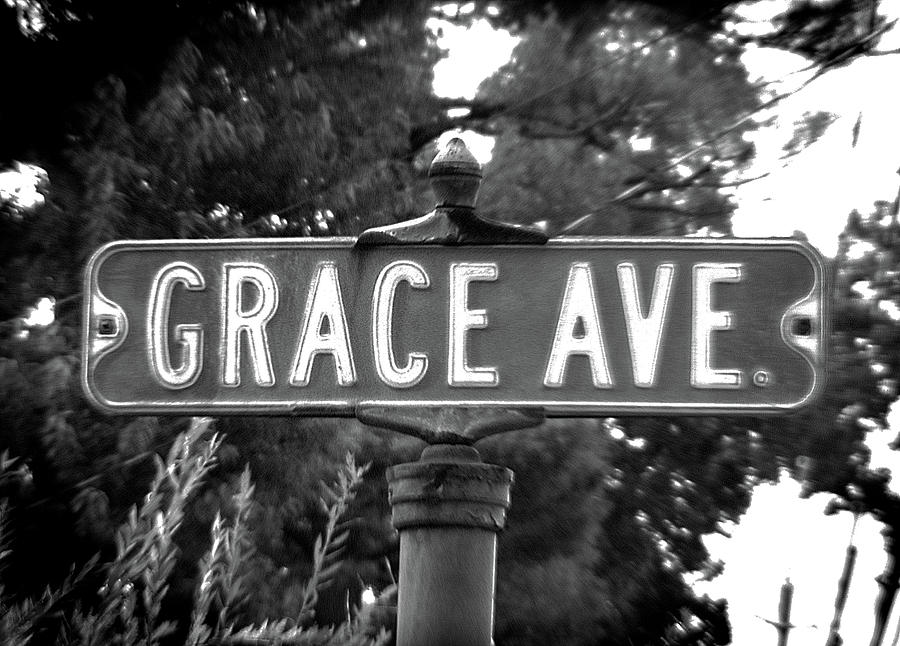
One of the most important events in Hollywood in 1921, was the rise of Rudolph Valentino. He became popular after the film, “The Four Horsemen of the Apocalypse” and then appeared in “The Conquering Power”. A major role in “The Sheik”, increased his popularity even further. Also, Paramount Pictures was one of the major movie companies that produced a total of 101 full-length feature movies. And Charlie Chaplin finished his contract at First National and then joined Douglas Fairbanks and Mary Pickford at United Artists. He released his first feature film, “The Kid”.
In 1921, H.J. Whitley and architect, Arthur S. Barnes built 2053 Grace Avenue, a one-story, 6 room Mediterranean style house with French windows and doors.
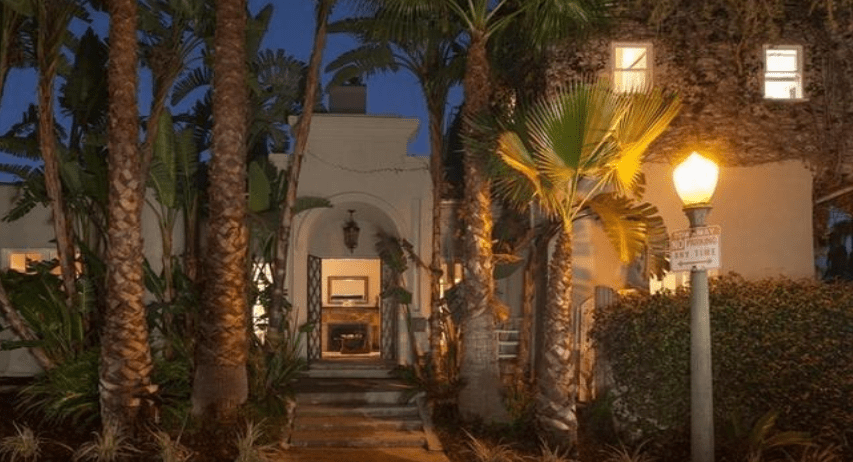
He built this as a model home to the right of his house located at 2073 Grace Avenue. Today, the houses stand two properties away from one another. Unlike Whitley’s property, which has access to both Grace Avenue and Whitley Terrace, this house sits behind another house (6621 Whitley Terrace).
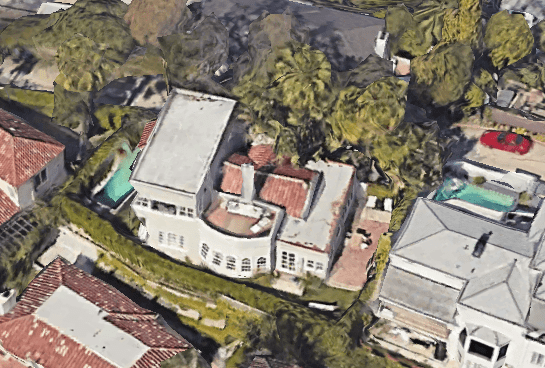
The house was bought by Mr. and Mrs. Wallace Riblett and in 1922, they put a roof on an existing patio that was positioned in the back center of the house and put in 5 windows to make it another room. In the photo above, note the 5 windows in an arc pattern in the back of the house, which is now used as a formal dining room. The Riblett’s put the house on the market a year later and it was purchased by Carl and Rilla P. Palmborg who resided in the home from 1932 up until 1956. Below where the porch was located and is now used as a dining room.
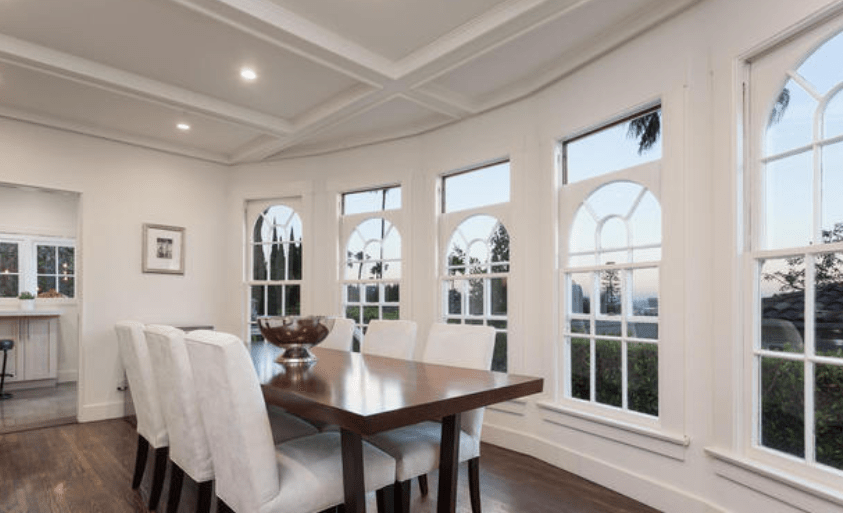
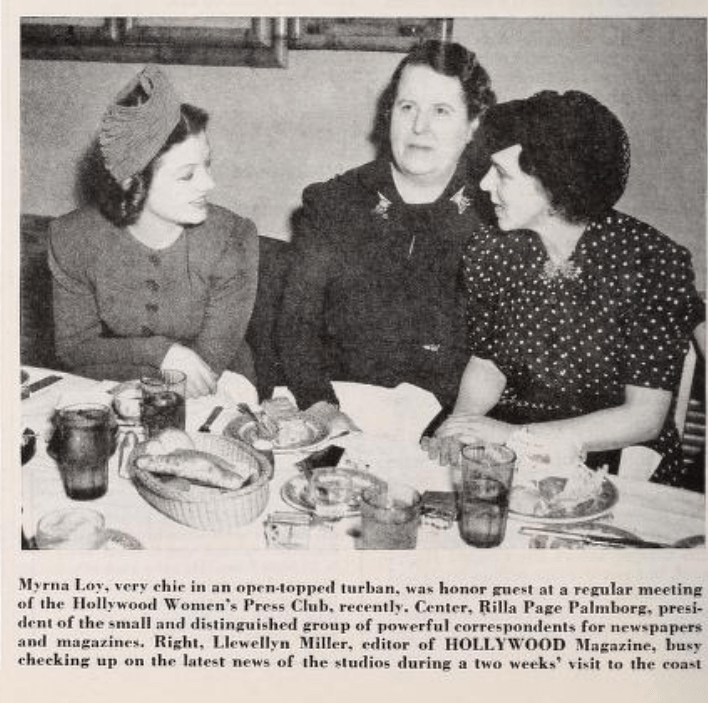
Carl was an insurance salesman and Rilla was an entertainment writer (think National Enquirer). Palmborg was a reporter and wrote many articles about celebrities in magazines such as Movieland, Photoplay, Movie Picture Magazine in the 1930-40’s. Palmborg had interviewed celebrities such as Vincent Price, Hedy Lamarr, Gene Tierney, and Mae Murray. She is seen in the center below with actress, Myrna Loy, to her left.
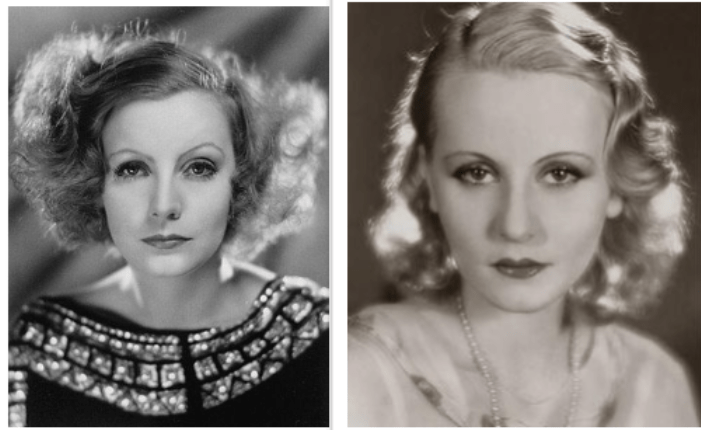
Her claim to fame was writing a book about Greta Garbo entitled, “The Private Life of Greta Garbo”, published in 1931. The book is available to read on the following website: http://www.greta-garbo.de/the-private-life-of-greta-garbo/index.htm . What makes the book interesting is that Garbo would almost always turn down interviews and wanted to lead a private life. However, she felt compelled to be interviewed by Palmborg because Palmborg’s husband was of Swedish origin and Garbo said, “Swedes understand Swedes”. Well, Palmborg not being Swedish, took the book to another level after interviewing some of the Hollywood people who knew and talked about Garbo’s flaws. Palmborg sometimes depicted Garbo as a cold, aloof loner. What was revealed in the book that that Garbo had a “double” named Geraldine de Vorak who would get her gowns fitted, stood in for rehearsals and occasionally stand in for scenes that did not require a facial shot. Palmborg stated that “stardom bored Garbo, and when the day’s work was done she left its glittering, dazzling garments at the studio. Then Geraldine picked them up and put them on. With her hair slicked back from her face like Garbo’s, wearing the clinging, exotic garments of the Garbo of the screen, Geraldine would sit at the table in a gay night club, looking more like Garbo than Garbo herself, while Garbo, dressed in a rough tweed coat, with a slouch felt hat pulled down over her eyes, hurried home to quiet and peace. Life at the studio was much easier for Garbo after her double came.” The photos below show the stark resemblance of Garbo and de Vorak. The book gained notoriety for Rilla as she went on to be a well known celebrity writer.
In 1940, the Palmborg’s added the second floor to a portion of the existing building. They added two rooms and one bathroom upstairs; the house now totaling eight rooms.
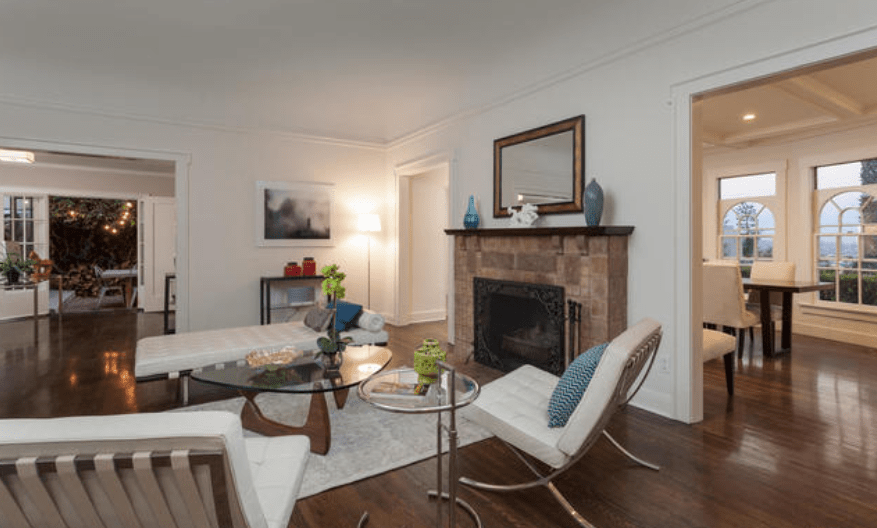
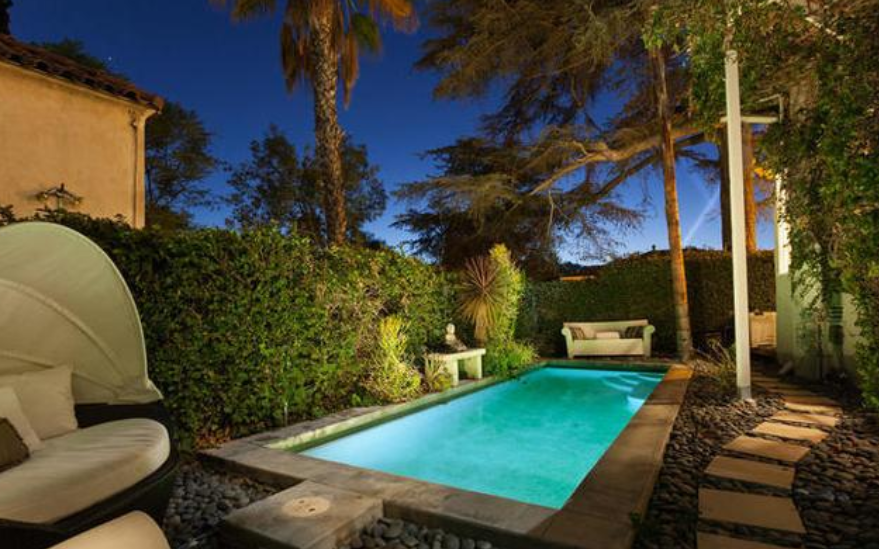
Actress Mary Jackson and her husband, Griffin Bancroft, Jr. moved into the home sometime after. Mary Jackson was born in Milford, Michigan and still had a house there located at 209 Liberty Street. In 2006, she had the chimney repaired and installed an interior staircase to connect the first floor to the second floor. She also updated the swimming pool that same year.
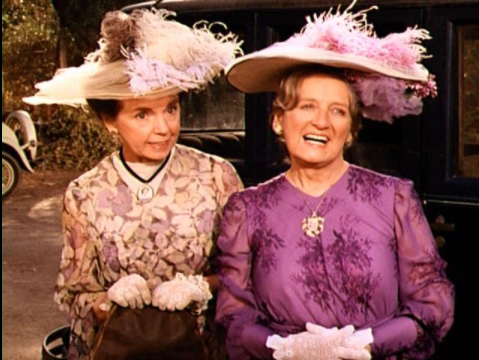
Mary Jackson started acting in 1951 and worked even when she was diagnosed with Parkinson’s Disease in 2003 (she passed away at the age of 95 in December of 2005). Jackson is best known for her role as Emily Baldwin in the tv show, The Waltons, from 1972-1981. Below, Jackson (left) is shown with her television sister Mamie Baldwin (played by Helen Kleeb). Kleeb died on the same day, exactly two years later.
Since then, the house has remained in tact with the a new roof and the retaining wall reinforced. When the house last sold in 2016, it was being advertised with two bedrooms below and the second floor was an entire master suite with a very large spa bathroom and large walk-in closet.
 Whitley Heights 101
Leave a comment