6830 Whitley Terrace
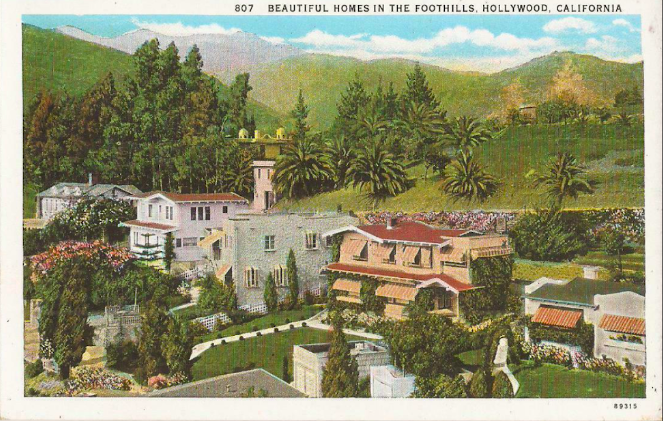
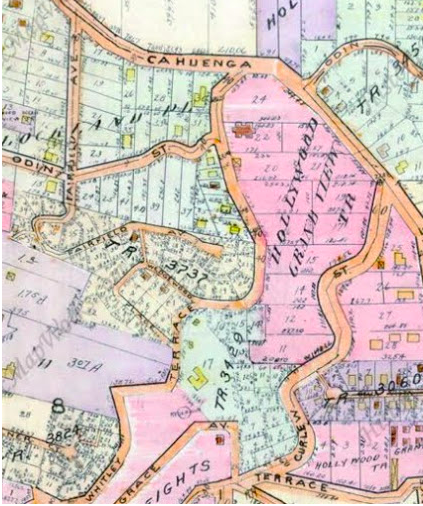
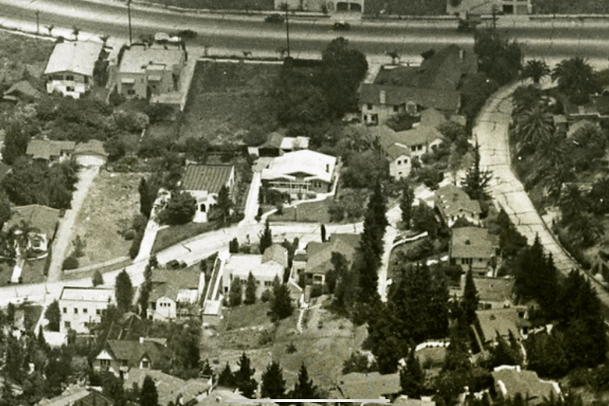
Some of the earliest homes built in the Whitley Heights area happened on the northeast end of Whitley Terrace and were referred to as “beautiful homes in the foothills”. Pictured above are five homes built by architects McCann & Leech on Whitley Terrace between 1915-1920; only the right two houses exist today. 6830 Whitley Terrace is the house on the farthest left. Built in 1915, the two-story home sat on the corner of Whitley Terrace and Odin Street. Below is map showing the area of Whitley Terrace and where the 5 properties exist. As shown on the map, those properties run parallel with Fairfield Avenue on the Lockland Place Tract and are the last homes on that tract on Whitley Terrace. The next home is part of 3737 tract which include homes on Whitley Terrace and Wedgewood Place.
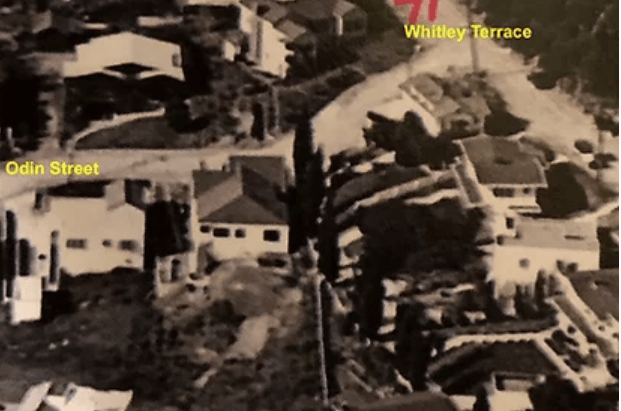
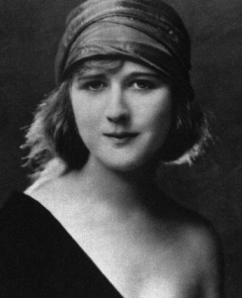
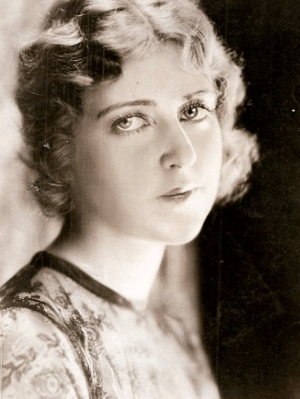
Perhaps the house’s most “claim to fame” is that actress Mary McLaren lived here with her mother and sister, Miriam, in 1917. At that time, Mary was the sole source of income to her family and paid the rent of this home. Although they appeared to be a close family, the sisters actually hated one another and the distain for one another worsened over the years. Born in Pittsburgh, Pennsylvania, Mary (born MacDonald] was the youngest of three daughters to Lillian Agnew, a dancer and waitress, and William MacDonald, a hotel proprietor to the Arlington Hotel. The hotel ended up closing due to William drinking up all of the profits. Her two sisters, Miriam and Katherine MacDonald, also became actresses; her brother, Edward, died at birth in 1901, 14 months after Mary was born. By 1910, Lillian filed for divorce from the unemployed alcoholic and decided to move her daughters to New York City by 1913. The three daughters sought work by modeling or starring in minor parts in plays, but had financial help from wealthy relatives. Mary began her own stage career in the Winter Garden in New York City with Al Jolson in The Passing Show of 1914. Below is a photo of Mary MacDonald.
Around 1915-1916, Mary entered the motion picture business as an extra. While working at Universal, she was “discovered” by pioneer director Lois Weber, who liked Mary’s plain, “working girl” looks and began casting her in a number of films in 1916 and had her change her last name to McLaren. McLaren became a star with a film called Shoes (1916), where she played a shop-girl who turned to prostitution in order to buy a new pair of nice footwear. From that point on, she became one of Universal’s popular stars. Below is Mary in front of the residence at 6830 Whitley Terrace in 1918.
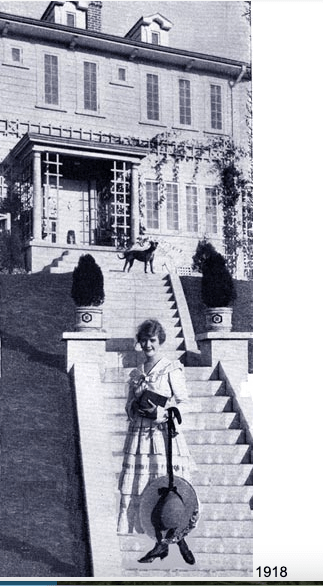
Wanting out of her contract, MacLearn filed a lawsuit in 1917 citing having to work in a dangerous environment: namely a no-fault clause of her life working in life-risking scenes and appearing in scenes where she may appear “undraped” risking her reputation. The judge ended up siding with McLaren due to her being a minor and being subjected to those risks. She returned to Universal Studios with a better contract, making more money. Below, the front of 6830 Whitley Terrace which faces Odin Street.
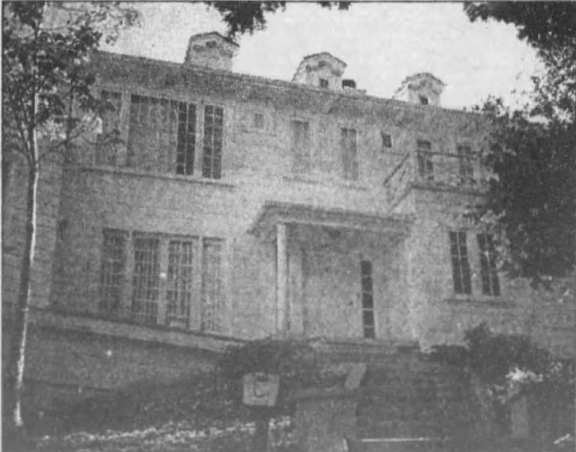
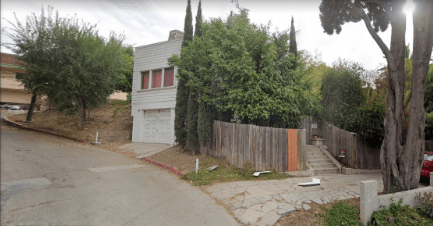
Soon after, Mary purchased her own home at 127 North Manhattan Place. The following year, her younger sister, Katherine McDonald, entered the motion picture business. Considered more beautiful than her older sister, Katherine became more of a model and socialite than her sister; however, Katherine was a closet alcoholic. The sisters were so different from each other in many ways, like day and night. In August of 1917, Mary was involved in a serious car accident in which she hit her head and fractured her skull, causing a blood clot in the brain requiring brain surgery. She was struck by 17 year old Jules Roth and was thrown 75 feet from her car which caused the permanent brain damage and may have affected her in her later years. Even so, Mary still had fun going out dancing and participating in charity events. She claimed her mother had stopped her from accompanying a young Rudolph Valentino to a dance at the Alexandria Hotel. Below is the garage entrance of the home on Odin Street. As this house is not cited as a historic preservation home, any alterations can be made without approval. The garage door has been replaced with a modern door. In 1955, after the construction of the Hollywood Freeway, the remaining part of Odin Street was renamed as Lash Lane.
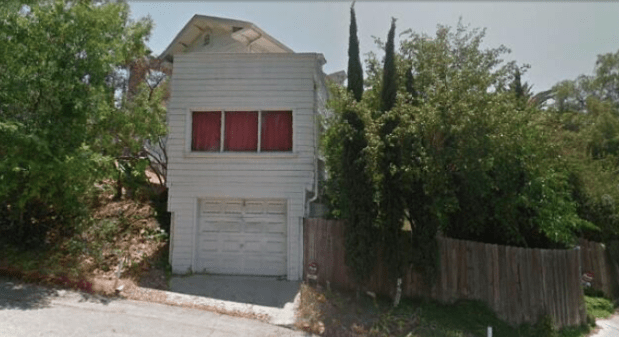
McLaren left Universal in 1920 because Paramount offered her $1 million contract. With Katherine doing the negotiations, the deal fell through. McLaren suddenly found herself without a studio contract, working freelance wherever she could. She did have success in Douglas Fairbanks The Three Musketeers in 1921, but did little work after that film. In 1924, Mary decided to end her film career and married British Colonel George H. Young; however, their marriage did not last as she discovered her husband was gay. McLaren spent a large part of her brief marriage in India, hating the experience. In 1928, the couple divorced and McLaren returned home. As if that wasn’t bad enough, the following year, the stock market crashed, wiping out most of her fortune. Below is a recent photograph of the area and the roof of the residence.
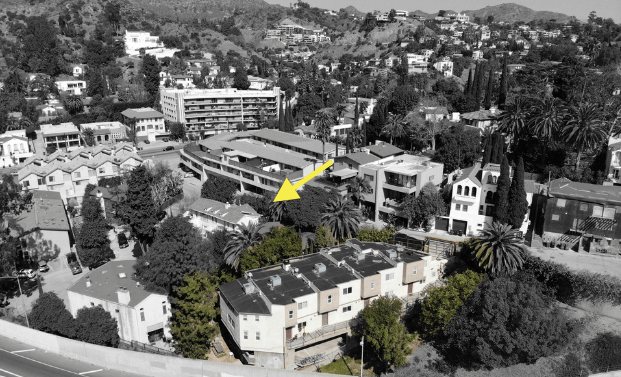
Struggling to find new stardom, McLaren returned to films in 1931, playing whatever small roles she could find. Oftentimes, the only work available was as a movie extra, making $15 per day. To make things worse, Mary received no financial help from her sister, who had married into wealth. She was also involved in two more car accidents, one in 1946 and the other in 1961, which may have further impacted her previous brain injury. After her last film appearance in 1949, she converted her North Manhattan Place home into a boarding house, while looking for a job to make ends meet. In the early 1950s, she wrote a novel called the “The Twisted Heart,” based on her marriage with Young; however, the story about a woman who unknowingly married a homosexual was rejected by publishers. McLaren attempted to self-publish her novel in 1952, but the book sold only a few copies.
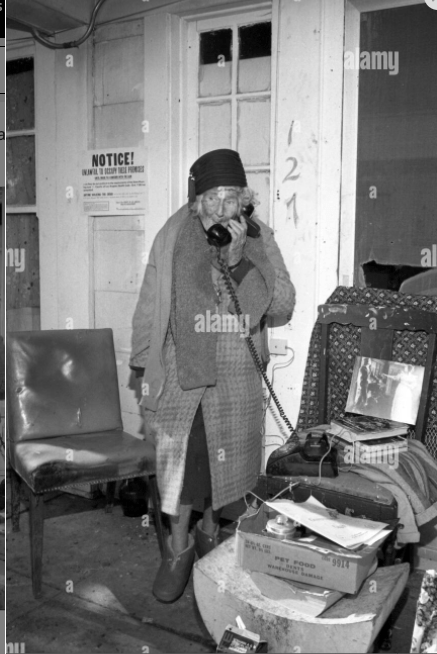
McLaren also married a blind WWI amputee who had been beaten and robbed in a hotel room named Robert S. Coleman in 1965; he passed away in 1971. McLaren was still operating her boarding house, fell into greater poverty and was taking care of lost and abandoned pets while living like a bag lady. One of her tenants conned her into selling her house in 1979, resulting in a battle over the property. After winning back her house, the upper floor caught fire. Meanwhile, the Los Angeles County tried to gain conservatorship of McLaren’s finances, saying she could no longer care for herself and was living in filth. In 1983, the North Manhattan Place house was sold at auction and McLaren was moved into a convalescence home. Two years later, after her house had been torn down, the 89-year-old, with a little money earned from the sale, passed away and was buried at Forest Lawn Glendale. Below is McLaren in her Manhattan Place home after it was declared unlivable.
In 1923, Herbert E. Bennett, an associate at Barker Brothers, a well known furniture dealer, resided at 6830 Whitley Terrace with his wife, Margaret Constance Hoag. The Bennetts would later reside at 2041 Grace Avenue from 1926-1938. The Bennetts married in 1918. Mrs. Bennett, an Old English Sheepdog breeder and competitor of dog shows, had many of her dogs appear in movies. Actress Gloria Grey resided here with her parents, Edward and Lisa, between 1929-30. Gloria Grey born Maria Dragomanovich, born in 1909, was an American screen and stage actress and director, appearing in mainly dramatic and romantic films during the silent era and after. Grey appeared in 33 films during the 1920s, as well as five Spanish-language films made in Argentina during World War II. Grey, pictured below, was found deceased in bed at her mother’s home in Hollywood, California on November 22, 1947, having succumbed to a two-month bout of influenza. At the time of her death, she was estranged from her husband, screenwriter and magazine editor Ramón Romero; they had one daughter. Romero and Grey had been married since 1934, but she had started divorced proceedings 5 months before her death.
When the Early American Colonial house was built in 1915, it consisted of three bedrooms and two bathrooms. In 1936, the owner enlarged the living room and two bedrooms, added a breakfast nook, and extended the porch to the front of the home. In 1937, another bathroom was added to the first floor. This two story house currently consists of 2,244 square feet, has four bedrooms and three bathrooms.
 Whitley Heights 101
Leave a comment