6820-22 Whitley Terrace
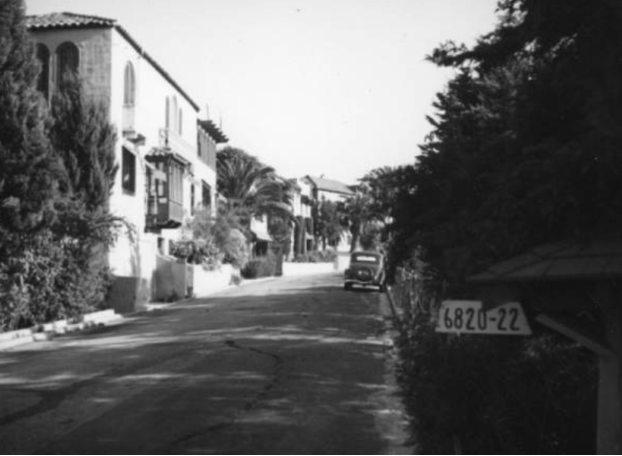
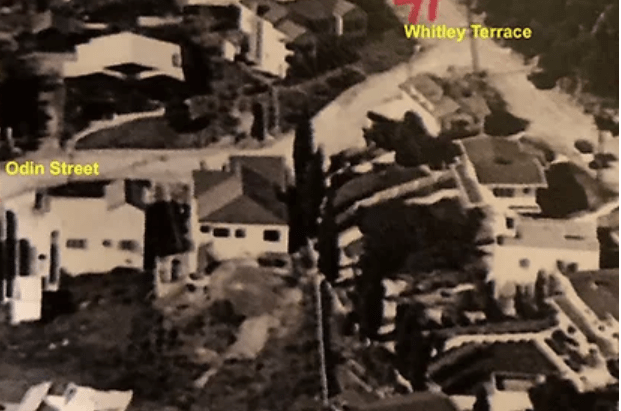
6820-22 Whitley Terrace was a 2-story duplex with a detached garage, built in 1920 by architect L.W. Collins and owners Clarence and Grace Hamrick of Pasadena. Since the time it was built, the property has housed an importance cast of characters at both 6820 and 6822 Whitley Terrace until it was demolished and replaced new condominiums in 2004. In the early 1920s, Whitley Heights was the place to live for many celebrities. Below is a photograph of Whitley Terrace in the early days and a sign indicating this residence was on the right hand side. On the left side of the street, 6814 Whitley Terrace is seen and then up ahead, 6797 Whitley Terrace, which was relocated to San Fernando Valley in the 1950s for the freeway construction. 6814 Whitley Terrace still exists today.
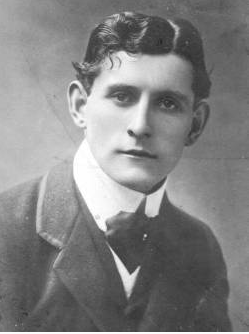
Actor and director Douglas Gerrard “Gerry” was listed as living at 6822 Whitley Terrace in 1923 and 6820 Whitley Terrace in 1924 according to the Los Angeles City Directories. Gerry, pictured below, was born in Ireland in 1879 and was born to a big family. He started acting in theater and then moved to Australia. Since Gerry was a serious actor and well-rehearsed, he was seen as competition to the other Australian actors and had difficulty getting parts. However, Gerry was a good investor and bought into a copper mining company and left Australia with dividends to what would be worth over six hundred thousand dollars today. With some money in his pocket, Gerry left for America and improve his acting career. He started movie roles in Hollywood in 1913 and by 1915, he was working with the biggest names in Hollywood. Gerry was best known for roles in Polly Put the Kettle On (1917), The Hottentot (1929) and The Sealed Envelope (1919).
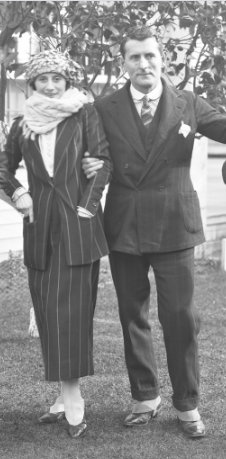
Although Gerry never married or had children, he was known to be a playboy and one documented love affair he had was with dancer and actress, Anna Pavlova. They met while filming “The Dumb Girl of Portici” in 1916. This was Pavlova’s, a famed dancer, first film role and only appeared in one other film after, The Dying Swan in 1925. It was speculated that the director, Lois Weber, was in awe of Pavlova and she let Pavlova do as she pleased while filming so there was no direction given to her from Weber. Critics claimed she could dance, but could not act. The affair continued for several years as Gerry attended the Russian Ballet with Rudolph Valentino to watch her perform. Apparently Gerry leaped onto the stage after her performance and kissed her hand. Below is Anna and Gerry being photographed when they were together circa 1916.
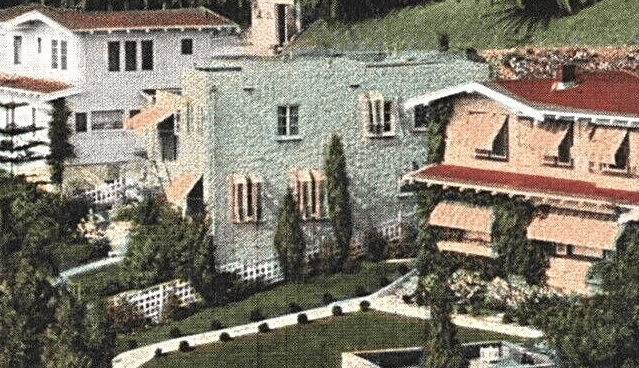
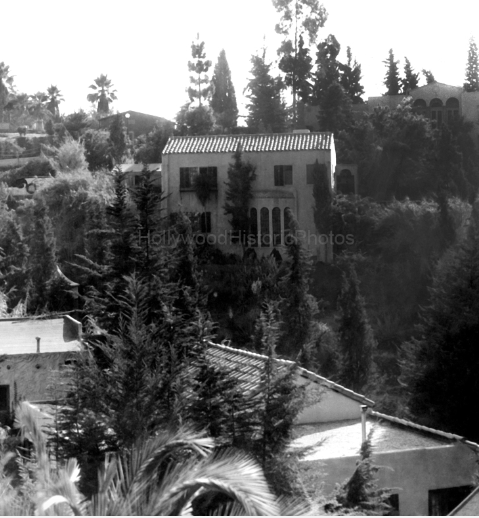
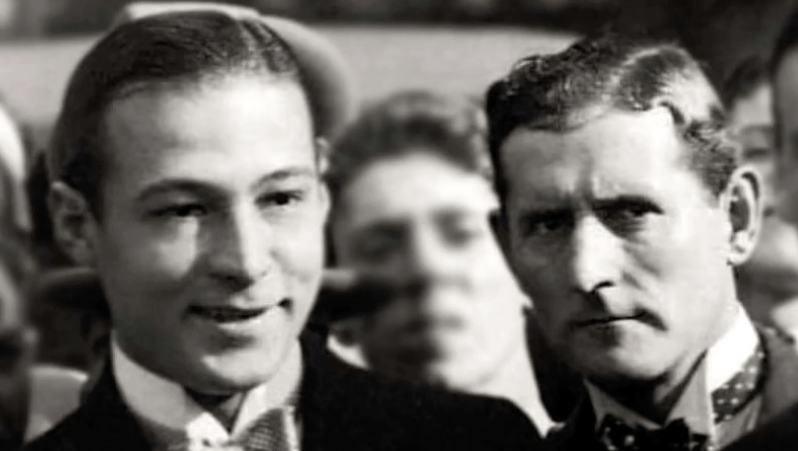
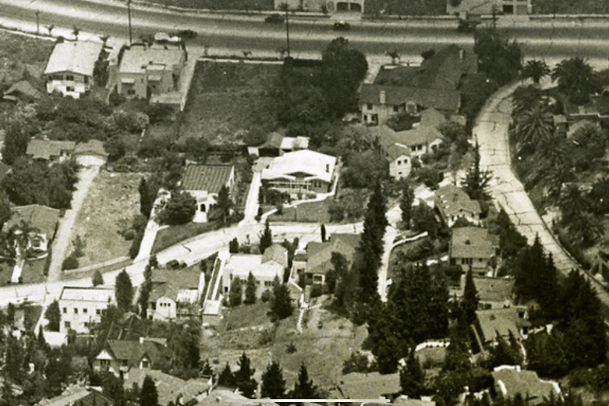
Gerry was also a very close friend of Valentino. Gerry met Valentino in 1917 while working at Universal Studios; Valentino was working as a movie extra and they were introduced by Gerry’s brother, actor Charles Gerrard. Gerry observed Valentino speaking poor English and struggling to find acting parts. In 1918, Valentino asked Gerry for a $25 loan and Gerry was impressed that he paid him back with his first paycheck once he got another acting part. Valentino asked for future loans and would always pay Gerry back promptly. From that time, Gerry became a mentor and friend to the young Valentino, who was 16 years younger than he. Also loaning him clothes, he would introduce Valentino to his circle of friends at society parties. Finally, others began noticing Valentino, especially the older women. Valentino lived across the street from Gerry at 6776 Wedgewood Place from 1922-24. Below, the rooftop of 6820-22 Whitley Terrace can be seen (bottom left) across the ravine from 6779 Wedgewood Place.
Gerry even witnessed Valentino and actress, Natacha Rambova’s wedding in Mexico in 1922. The pair had met in the movie lots of Hollywood, Natacha seeing the value of working with him in a movie role. Valentino, was instantly in love and unable to hold back, filed for divorce from his spouse, actress Jean Ackers. A long romance followed, and Natacha eventually relented and fell for him. However, Valentino was still married to Ackers so their Mexican marriage was not valid. Ackers went after Valentino on bigamy charges and he was thrown in jail over night. Gerry and some of Valentino’s other close friends were able to bail him out of jail. Both Gerry and Valentino had contracts at Famous Player’s Lasky Studios who forbid Valentino to see Natacha. Valentino was heartbroken and his depression showed while working on the movie set. Gerry knew that the only cure for Valentino is if he see Natacha. They had arranged for a secret meeting.
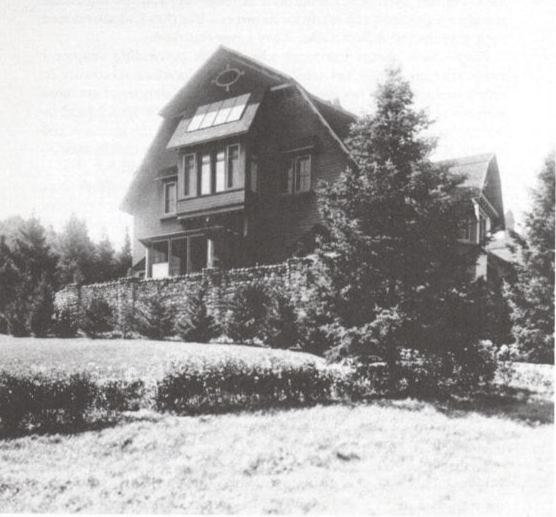
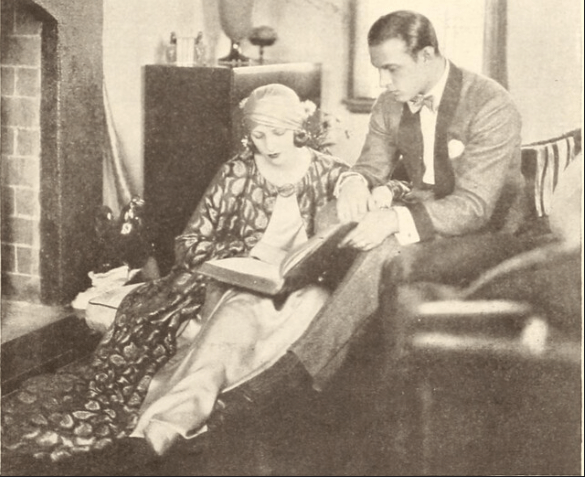
In August of 1922, disguised in sunglasses and fake beard, Valentino and Gerry traveled to their hidden refuge in the Adirondacks of Oregon. Foxlair, pictured above, was a sweeping wilderness estate owned by the legendary cosmetics magnate Richard Hudnut, also Rambova’s adoptive father. Today, the huge manor is no more. The land is now part of the Adirondack Forest Preserve. One night the three were playing cards on the veranda and Natacha heard a noise signaling to the two men that they were not alone. With an intruder now present, they feared for their lives; Gerry ended up shooting the prowler three times, who was able to escape. It was later learned that a detective was sent from Lasky Studios to spy on the couple. Below is Valentino and Natacha together in the Wedgewood Place home.
Unfortunately, this incident did not fare well for Gerry, who was shunned from Hollywood and given less parts. He still worked but not top billing parts. Now Valentino’s career was picking up and he seemed apologetic to Gerry that he was responsible for Gerry’s career loss. Who put out the boycott? Natacha fearing bad press? Jessie Lasky? Either way, Valentino and Gerry’s friendship was put on hold.
Rudy and Natacha separated in 1925. Natacha had had an affair with a cameraman. Rudy and Gerry reunited and Gerry became a regular at Falcon Lair. In August of 1926, Valentino suddenly died from peritonitis after he suffered a ruptured ulcer. Gerry was a pallbearer at the funeral. Below, 6820-2 Whitley Terrace is the third house down from the corner of Whitley Terrace and Odin Street.
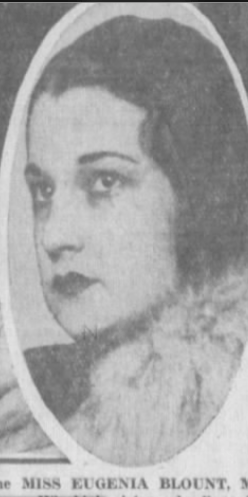
Between 1930-31 Mrs. Joseph G. Blount and her daughter, actress Eugenia Blount, were living at 6822 Whitley Terrace. The Blount family was known to the Macon, Georgia area because Joseph’s father was United States congressman James H. Blount who was in office between 1873-1893. James served on the Committee for Foreign Affairs and openly opposed the imperialist expansion in the late 1800s. Immediately upon his retirement from Congress in 1893, President Grover Cleveland appointed him special commissioner with “paramount authority” to investigate the overthrow of the Hawaiian Kingdom by American residents of the islands. The report that he submitted to Cleveland stands as his most notable achievement, known as the Blount Report.
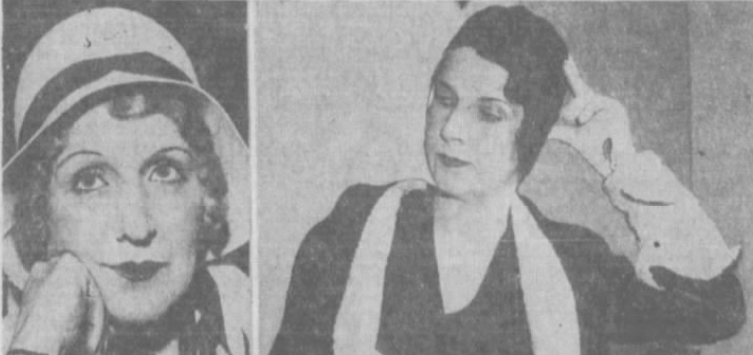
Mrs. Blount also had another daughter, Dorothy, who decided to marry Lt. Colonel Emory Sanders Winship. Winship happened to be her next door neighbor growing up in Macon and he was also 20 years her senior. Emory’s previous wife had died and left him a rich widow in San Francisco. Dorothy moved right in and enjoyed the wealth, but little did she know he had a mistress from his previous marriage, actress Helen Elizabeth Thompson. Helen and Emory met years prior and she gave up her acting career and in return he gave her $200 per month. They continued their affair when Emory married Dorothy. Below former actress Helen Thompson, pictured left, and Dorothy Lamar Blount Winship is right.
Three years later, Emory walked in and found Dorothy sleeping with the chauffeur, Ray Macguangle in their San Francisco apartment. A few weeks later, Emory is found dead with a gunshot wound to his head. It is ruled a suicide and Emory left a note indicating that he took his own life because he really wanted to kill Dorothy and the chauffeur. Helen contested the will stating she was promised $200 a month, but was cut off just prior to Emory’s death because Dorothy found out about the affair and ordered Emory to stop the payments. During the hearing, Dorothy denied her affair with the chauffeur, but the maid presented a love letter written by Dorothy’s sister, Eugenia, to the chauffeur. Apparently both sisters were involved in a love triangle with the chauffeur while Emory was having his fling with Helen. Eugenia, of course, denied the whole thing and writing the letter. The lawyer then presented theatrical contracts she had signed with Henry Duffy when she entered into a Los Angeles appearance and the signatures happened to be identical.
When Emory found out about Dorothy’s affair, he had changed his will a few weeks prior to his death. He took her out of the will and left everything to their six month old son, Emory Jr. What came out in the hearing is that Emory was not wealthy and the majority of his money was tied up in heavily mortgaged land in Georgia and he also owed money to his previous wife’s estate. In addition, a year prior, Emory cancelled the large life insurance policies he had been carrying for years. The lawyer also tried to further tarnish Dorothy’s reputation citing her first marriage occurred in 1928 in New York and was merely a “dare”. The jury ended up citing fault with Dorothy but she would be given time to find another place to live. Emory Jr. was staying with his grandmother at 6822 Whitley Terrace during this ordeal when it was reported that Dorothy had gone missing just prior to the hearing, but was later located as she indicated she needed some time alone.
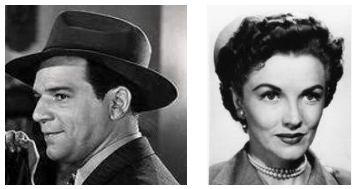
Actor John A. Bagni, and his wife, screenwriter, Gwendolyn, lived at 6822 Whitley Terrace from 1940-42. Bagni started off his career in film with roles in the Tom Tyler adventure “Adventures of Captain Marvel” (1941), the action movie “Junior G-Men of the Air” (1942) with Billy Halop and the adventure “Perils of Nyoka” (1942) with Kay Aldridge. Bagni began to focus on film after appearing in “Captain America” (1944) with Dick Purcell, “Cobra Woman” (1944) with Maria Montez and “The Phantom” (1944) with Tom Tyler. He also appeared in the drama “The Pretender” (1947) with Albert Dekker and the Roy Rogers western “The Far Frontier” (1948). Later in his career, Bagni wrote “Law and Order” (1953). Bagni passed away in February 1954 at the age of 44. Gwen Bagni had a decades-long career as a Hollywood writer. She began her screen writing career in the late-1930s, working in film, radio, and television. Among her many credits are popular radio programs such as Escape and Suspense; television series such as Burke’s Law, Honey West and Playhouse 90; television films such as Backstairs at the White House; and motion pictures including With Six You Get Eggroll.
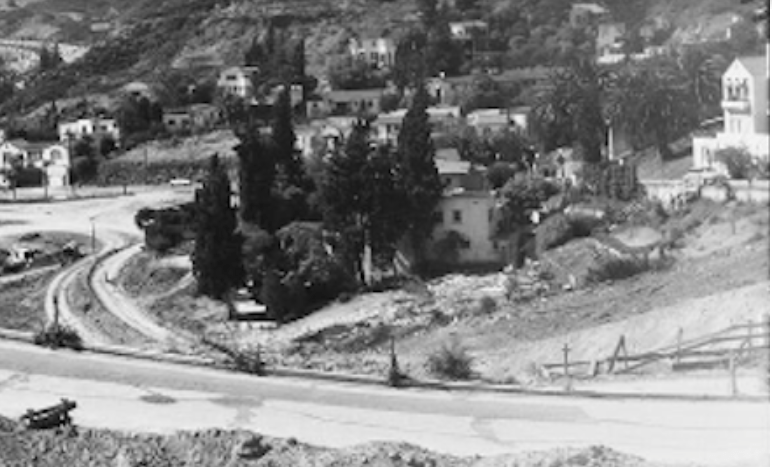
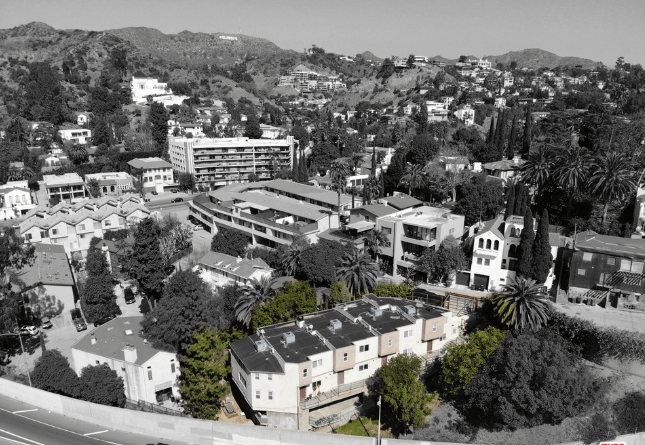
Above, a partial image of 6820-22 Whitley Terrace is seen during the construction of the Hollywood Freeway in the early 1950s. It survived being demolished or moved. However, it was not part of Whitley Heights Historic Preservation and was torn down starting in 1997 for condominiums that were built in 2004. Below, the condominiums can (bottom of photo) be seen where the duplex used to be.
 Whitley Heights 101
Leave a comment