6655 Alta Loma Terrace
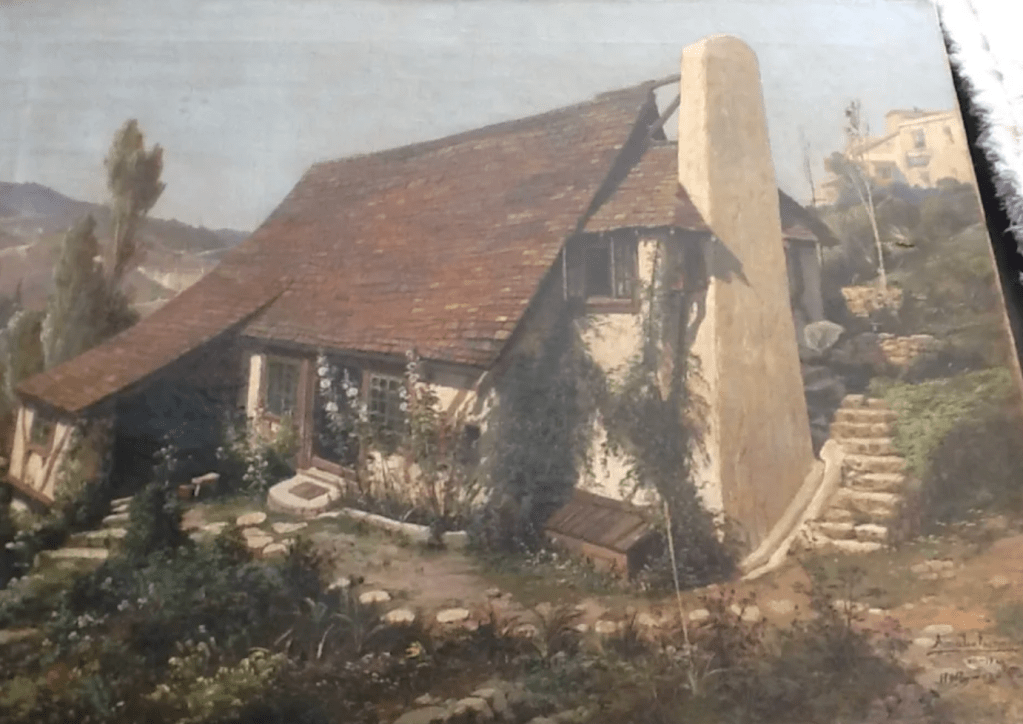
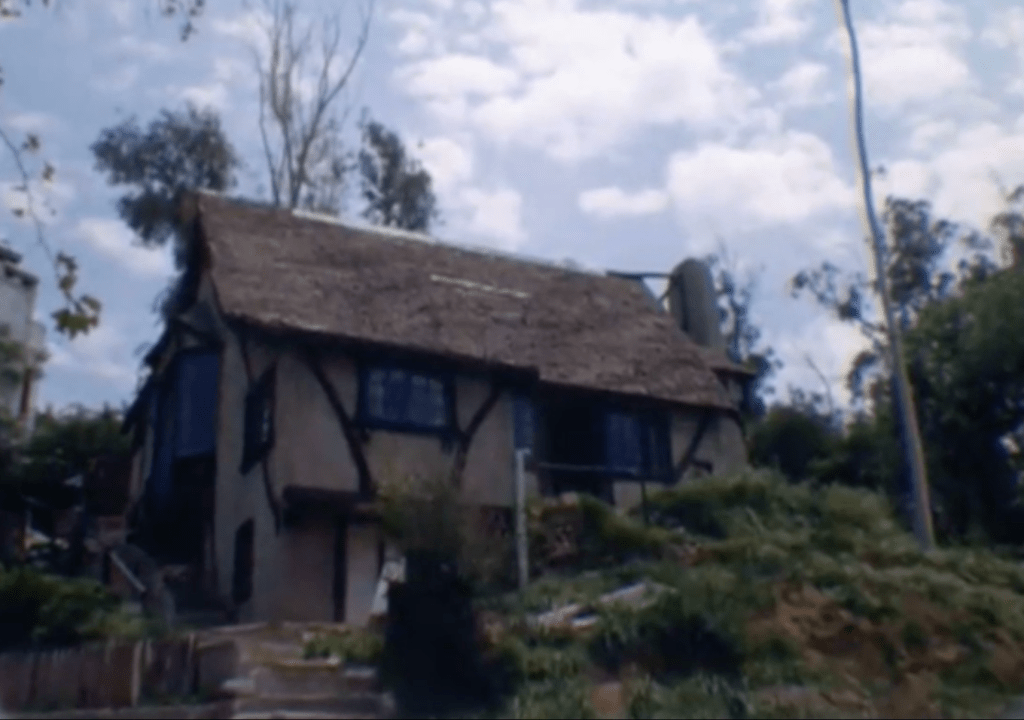
6655 Alta Loma Terrace was built in 1923 by owner, cinematographer Gordon B. Pollock and architect Ray G. Smith. It was said that set pieces from Rex Ingram’s 1922 production of The Prisoner of Zenda had been incorporated directly into the home’s design. The Old English style home could qualify as a “Storybook Home” due to several characteristics: constructed out of stucco giving the home a “faux distressed look”, a deeply pitched roof, an asymmetrical structure, the rounded, arched front door, mismatched windows, and the overgrown landscaping. Storybook homes and even courtyards of them, popped up in Los Angeles in the 1920s.
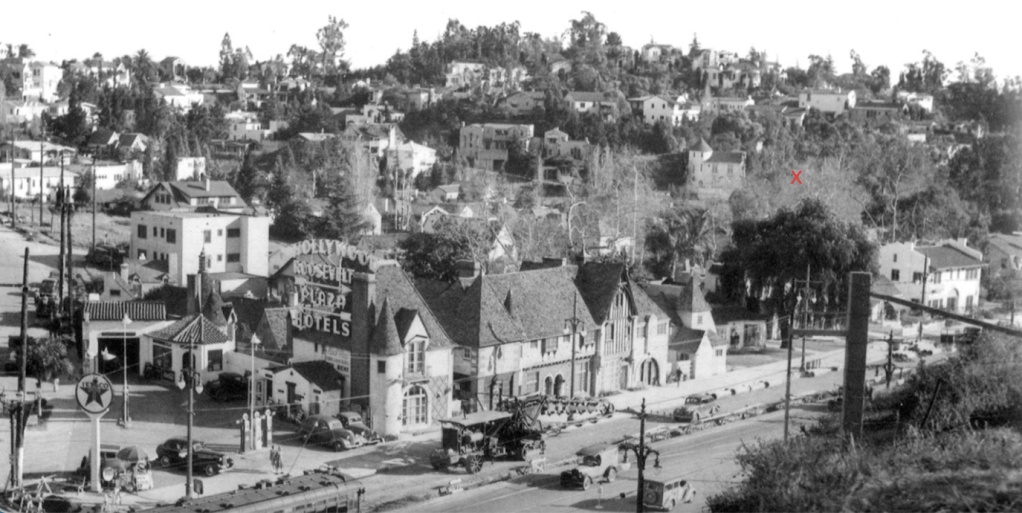
The Whitley Heights area of Fairfield Avenue and Alta Loma Terrace had developed lot with quaint “storybook cottage” style houses that were visible on the hillside. Below is the area where this cottage was located at the intersection of Highland Avenue and Cahuenga Boulevard. The red “x” marks the location of the home. The buildings in the forefront of the photograph were formerly the French Village and then the Hollywood Roosevelt Plaza Hotels circa 1937.
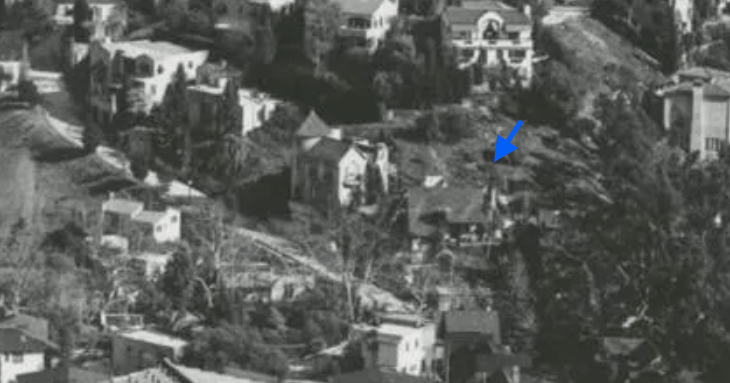
Below is a closer view of 6655 Alta Loma Terrace which was to the right of homes on Fairfield Avenue. The road that is visible in the photograph is Fairfield Avenue. 6655 Alta Loma Terrace was located towards of end of the street which dead ended in Whitley Heights, but ran through the other side of Highland Avenue. Part of Alta Loma Terrace that is north of Highland Avenue still exists today; at least part of it.
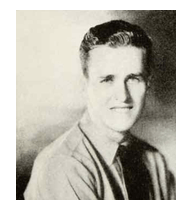
Cinematographer Gordon Pollock owned the home until the early 1960s when he allegedly deeded the property to its current renter, Steven Anthony. Pollock was the cinematographer for six films between 1924 to 1953. His best known work was Charlie Chaplin’s City Lights (1931), Queen Kelly (1932), and College Capers (1953). Below is Pollock in his earlier years. The sole alterations on the home was done by Pollock. In 1927, he finished the basement to be used as a living room and in 1930, he added a bathroom beneath the den.
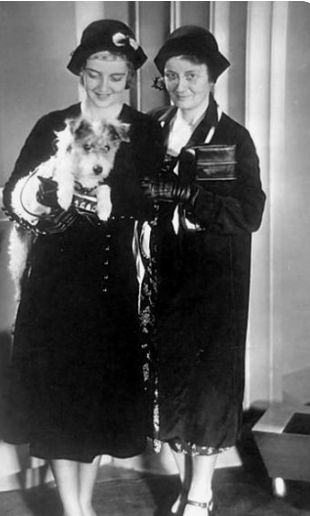
One notable renter was actress Bette Davis. In December of 1930, Bette, her mother, Ruth, and terrier dog, Boojum, got off of the train in Los Angeles. They traveled for five days from New York. They checked into the Hollywood Plaza Hotel which was located on Vine Street in Hollywood. A studio worker was supposed to pick Bette and her mother up, but failed to show so they took a cab to the hotel. Then they went to a realtor who showed them the rental house at 6655 Alta Loma Terrace. The rent was more expensive than Bette could afford but she said, “this is the sweetest house that I have ever seen in my life” and fell in love with the Storybook home. Ruth suggested that Bette try to get an advance from her paycheck or get the money from Bette’s father, but she refused to do either. While Bette was at work, Ruth secretly schemed to get the money for the house.
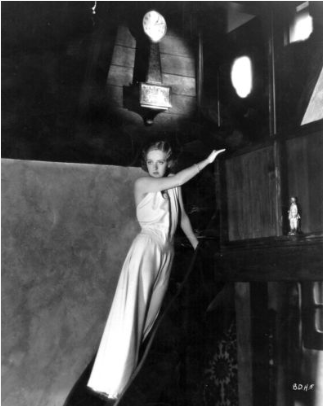
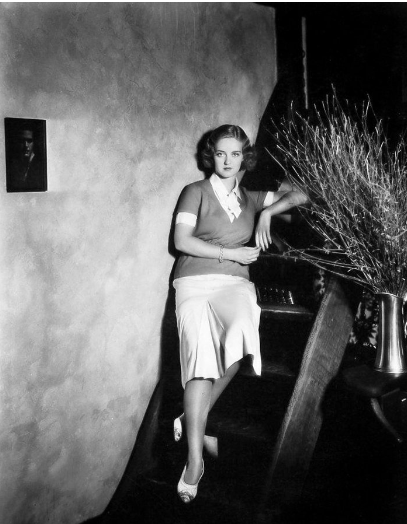
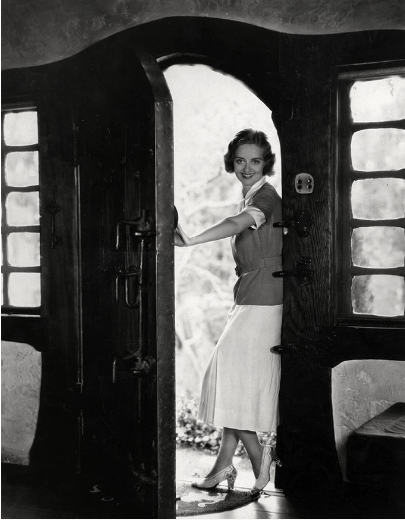
Carl Milliken, former governor of Maine and a family friend to the Davis’, happened to be in town and was staying at the Roosevelt Hotel. Milliken was known to play tennis every morning at 9 a.m. sharp at the hotel. Ruth got on a bus and went over to the hotel tennis court and asked Milliken for a $500 loan. Right there on the court, Milliken took a wad of money out of his pocket, counted five hundred dollar bills and handed it to Ruth. Ruth made him promise that he would not tell Bette. Ruth then went over to a Western Union and paid a worker to type out a phony telegram from Bette’s father indicating that he sent money and never discuss it again. So the Davis’ moved into 6655 Alta Loma Terrace and their first guest was Carl Milliken! Below are three photographs of Bette taken at the residence circa 1931 before Bette lightened her hair.
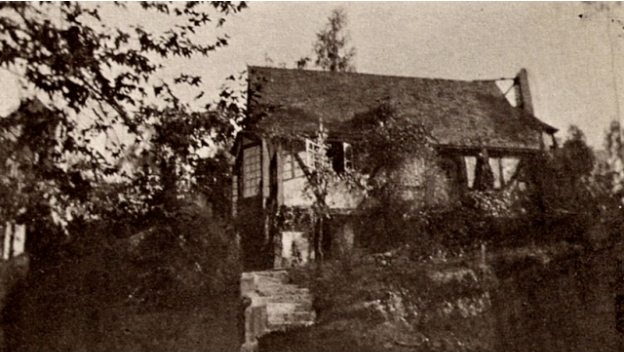
By the summer of 1931, they moved into a Hollywood Hills house owned by Douglas Fairbanks cameraman. Below is a photograph of the Alta Loma house that was featured in Bette Davis’ autobiography, “The Lonely Life” and listed as her first home when she moved to Hollywood.
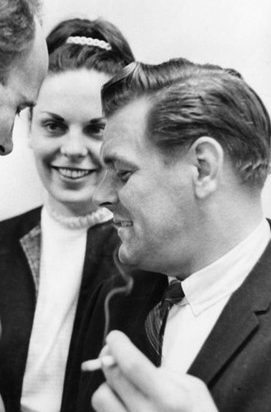
Sometime in the early 1960s, Pollock had Steven Anthony, his wife Elona, and their three children move in. In some accounts Steven was Pollock’s godson. In others, he became close to Pollock, who treated him like a son. Pollock had suffered a stroke and Anthony helped to fix up the house. In another reading, Pollock was still living at the Alta Loma home with the Anthonys. Steven, a former Marine, was bartending at Barney’s Beanery in West Hollywood. Below is Steven and Elona Anthony.
In the early 1950s, Whitley Heights had just taken a beating with the removal of 49 homes to make way for the Hollywood Freeway. Now a group of motion picture industry heavyweights headed by Sol Lesser, Gregory Peck, Mary Pickford, and Walt Disney wanted to create a museum showcasing the history of movies, radio, and television called The Motion Picture Exposition and Hall of Fame. Many movie and community leaders could become founder-members for $1,000 each including; Bing Crosby, Desi Arnaz, Walt Disney, and Frank Sinatra. wanted the museum to be built across the street from the Hollywood Bowl. Below is William A. Pereira & Associates design for museum circa 1964.
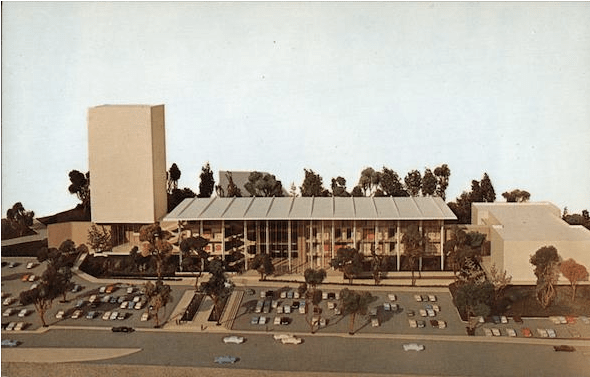
The powerful museum committee managed to convince the county to use eminent domain to force homeowners that lived north of Milner Road and east of Highland Avenue to pave way for the museum. Many residents in the area, including Whitley Heights, opposed the project.
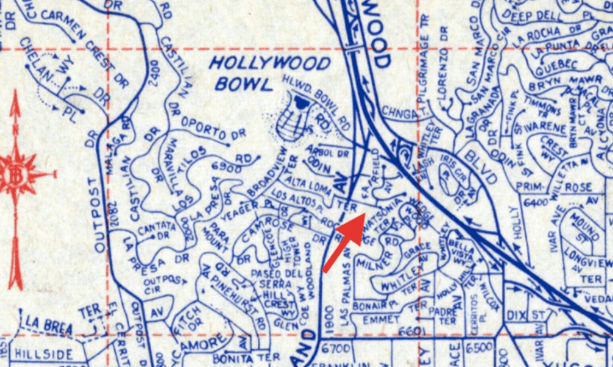
All the fifteen homeowners, except for one, accepted the low-ball settlement offers. Steven Anthony only owned half the property located at 6655 Alta Loma Terrace and refused to settle with the county while the other owner of half the property wanted to receive the settlement. Anthony, who was grieving the loss of Pollock and appreciated receiving half of the property from him, knew Pollock loved the home and would not want to see it torn down. Anthony refused the $11,000 settlement forcing the county into a lengthy legal process to forcefully evict him.
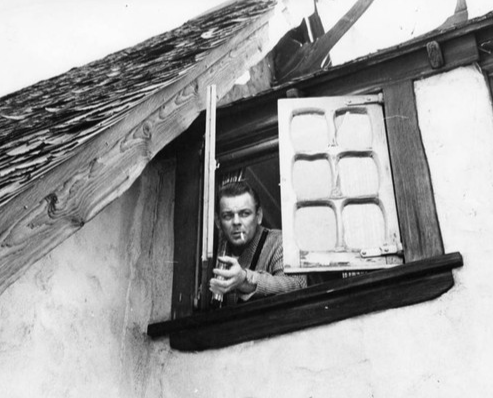
The Anthony family was served eviction notices, and on Feb. 8, 1964, the sheriff deputies attempted to remove them. Anthony, hold a shotgun in one hand and a baby in another, refused to leave. The police actually back down and gave the Anthonys a few more weeks to vacate the property; it was the start of a 10 week standoff. During that time, Anthony went on a rant with the news media indicating he was not leaving and would be armed when the authorities came back for him. He also stated that he would have his friends, who were all ex-Marines, standing next to him. Anthony got an attorney, who argued that eminent domain could not apply to a “public-private” partnership as the county and the museum. Anthony took his case to the California Supreme Court and then the U.S. Supreme Court, but unfortunately both sided with the county and museum.
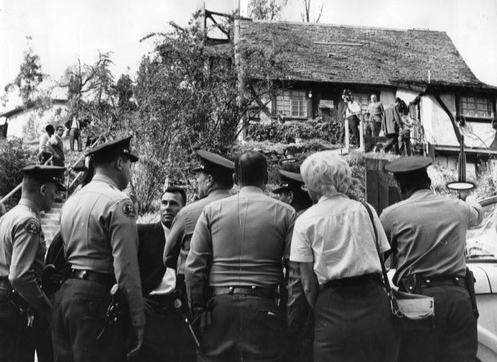
Anthony, who said he would abide by the Supreme Court decision, had changed his mind. “I’m perfectly willing to die for this,” he said. “A man has to die for something he believes in.” He also indicated that he bought 300 rounds of ammo. County Supervisor Kenneth Hahn suggested an appeasement, “Let’s remember we’re just building a motion picture museum.” The stand-off ended on the Academy Awards night in 1964 when Anthony was watching it from his black and white tv set when there was a knock at the door. The visitors were two Barney’s Beanery customers who he had met a a Young Republican meeting who agreed with him fighting “big government”. Anthony let them in, but it was a complete set-up. One of the men stood in front of Anthony’s view of the tv and took out hand-cuffs and punched him in the jaw before he could grade his gun. There were 30 deputies waiting outside and moved in to arrest Anthony who was taken to jail while county workers began removing all of the Anthony’s belongings.
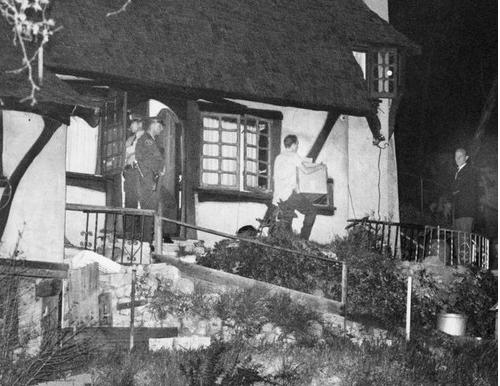
To prevent another altercation, the county wasted no time bulldozing the property. Anthony was sentenced to six months in jail. Nothing was left except for the foundation of 6655 Alta Loma Terrace at the corner of Fairfield Avenue and Alta Loma Terrace. Bette Davis’ former Storybook house.
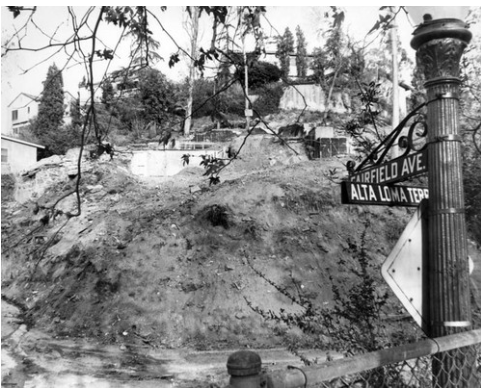
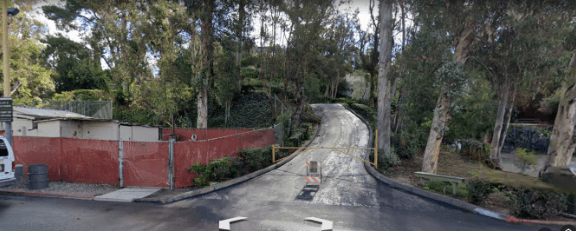
So the “kicker” of this story is that the museum never got built. Some say that they over budgeted the project and ran out of money and mismanaged funds. Others say that there was an internal conflict between the partners and nothing could ever get done and they lost interest on the project. Finally, there was talk that county supervisors actually wanted a parking lot along and discussed the proposed parking lot for the Hollywood Bowl to create 700 parking spaces for cars to be used a few times every year. Many residents argued that losing 35 homes in the area would cost the city $15,000 annually in taxes. They further indicated that the Hollywood Bowl attendance dropped by almost 7,000 from 1953 to 1954. Stanley Preston, a retired screen writer and former child actor, of 6648 Odin Street, spoke out against the new proposal at a hearing. The parking lot was built and more of Whitley Heights vanished. To add insult to injury, in the early 1970s, the Hollywood Freeway was widened, and four more homes were demolished, and once again, these lots were never used except for landscaping from the state.
For those who admire the Storybook architecture, there are several homes in the Los Angeles area that exist today. These would be my top 10. For #9 and 10, two Whitley Heights homes that “closely” resemble the Storybook design were included to continue the Whitley Heights theme.
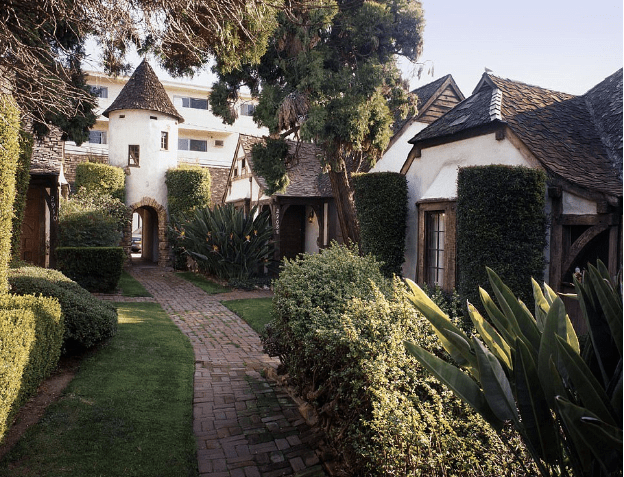
#1: The Snow White Cottages, 2900 Griffith Park Boulevard, is a courtyard of eight cottages and are currently used as rental units. The complex was built by Ben Sherwood for Walt Disney. Disney allowed his studio workers to reside here during filming. The original Walt Disney Studio used to be located down the street at 2719 Hyperion Avenue. These cottages include; crooked roofs, timber-frame facades, picture-perfect window boxes, landscaping, intentionally-worn chimneys, and a tower at the far end of the bungalow courtyard. These were used as the model for Disney’s dwarfs home in the Snow White movie.
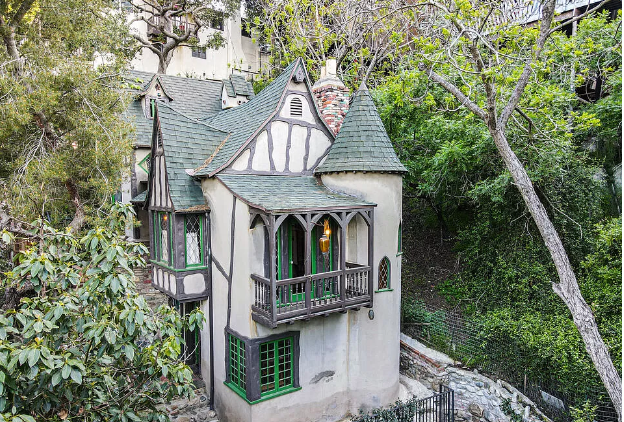
#2 Snow White’s Home, 6937 Vanland Trail, is a single-family residence situated off of Pacific View Drive between Viso Drive and Woody Trail. While there is no direct access and driveway into the home, there is a walkway between two of the homes on Pacific View Drive off of Mulholland Drive in the Hollywood Hills. This 1,036 square foot home has two bedrooms and two bathrooms and has features both in the interior and exterior that are completely in the Storybook theme. An added bonus is that the 1938 home is currently for sale.
#3 Witches House, 516 Walden Drive, Beverly Hills, the house was built in 1921 for a silent film movie studio, Willat Studios in Culver City, to serve as its offices and dressing rooms. When the studio closed, the Spadena family moved the home to its current location in Beverly Hills, where it has been since 1934.
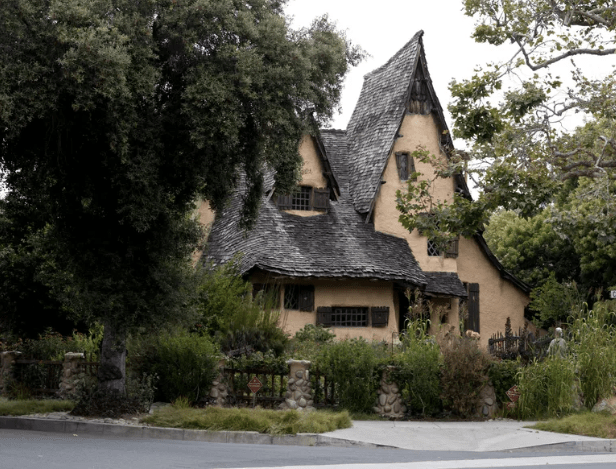
#4 Charlie Chaplin Bungalows, 1330 N. Formosa Avenue, were built in 1923 by Charlie Chaplin for his studio workers. Over many years, stars like Rudolph Valentino, Judy Garland and Douglas Fairbanks spent their time in these tiny bungalows (from 560 to 700 square feet) that were designed in the then-famous “storybook” style. They are currently rental units.
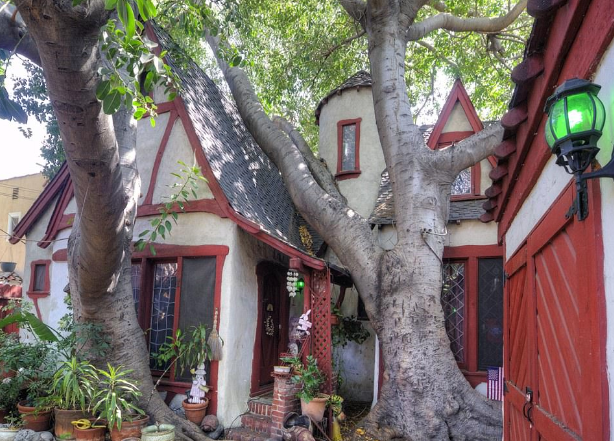
#5 The Hobbit Houses 3819 Dunn Drive, Culver City, is across the street across from the Sony Pictures lot which was built over a 20 year lifespan by a Disney Studio artist. These houses have shingled roofs, twisted brick chimneys and colorfully patterned windows give off an impression that one is living in a Disney cartoon. The Culver City Hobbit Homes have been home to actor Nick Nolte, broadway actress Gwen Verdon, and Frank Sinatra Jr kidnapper Joseph Amsler over the years.
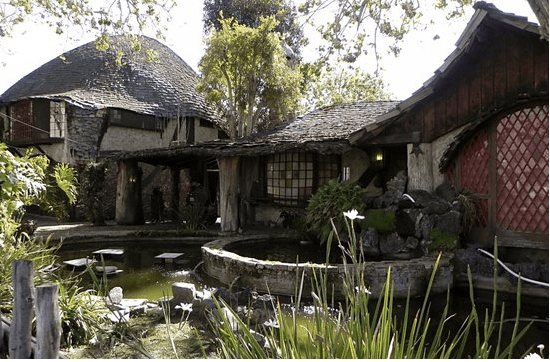
#6 Hlaffer-Courcier Residence, 2574 Glendower Avenue is located in Los Feliz, this 1924 two-story home was designed and constructed by Rufus Beck, who was also responsible for other Storybook homes around Los Angeles.
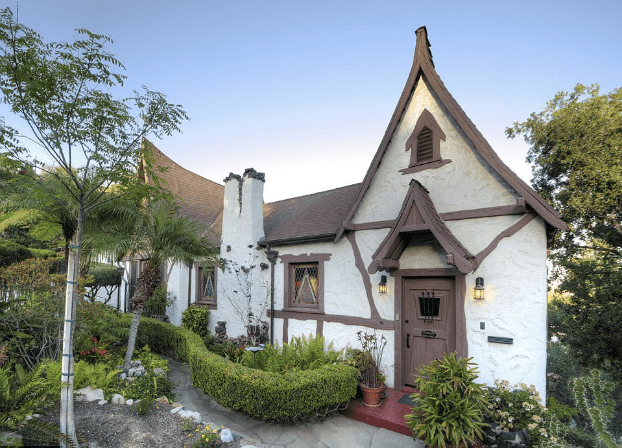
#7 6310 Rodgerton Drive, was built in 1926 by Evander Hoven in Hollywoodland, and included owners such as, Humphrey Bogart to Fred Astaire’s choreographer, Hermes Pan, and singer Dean Torrence of surf rock duo Jan & Dean.
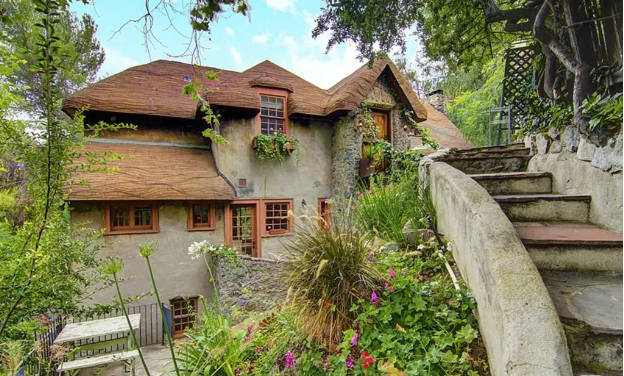
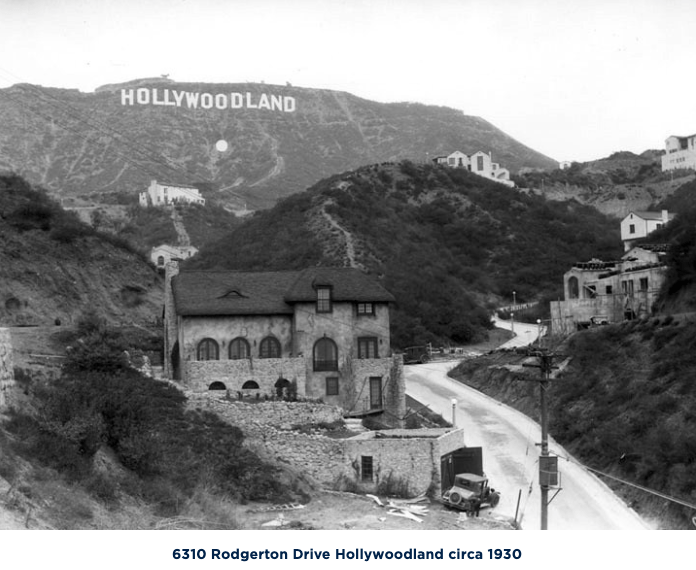
#8 Erbes Residence, 3072 Belden Drive, was the original Storybook house built in 1924 by Henry Withey, architect. Actors Jack Nicholson and Dennis Hopper lived at this home in Beachwood Canyon, an area perched below the Hollywood sign.
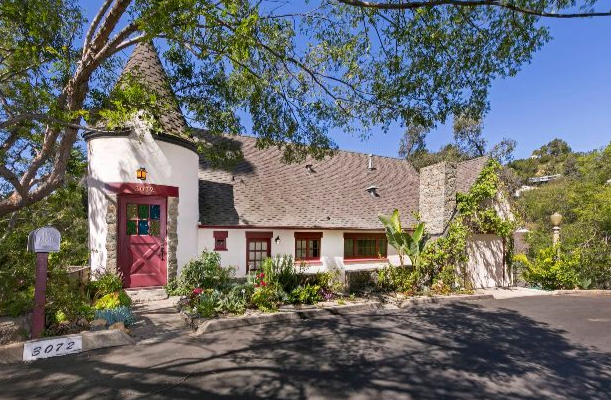
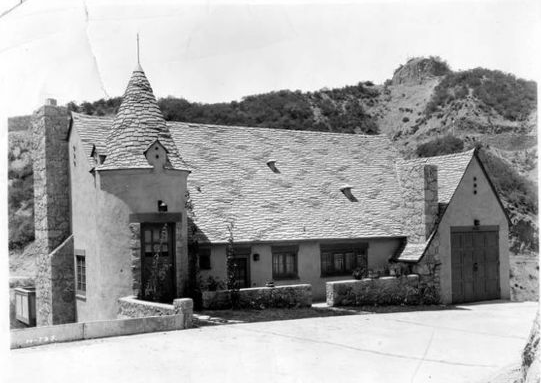
#9 6757 Milner Road, Whitley Heights, was built in 1923, a Norman cottage, with leaded colored glass windows, and irregular storybook gable.
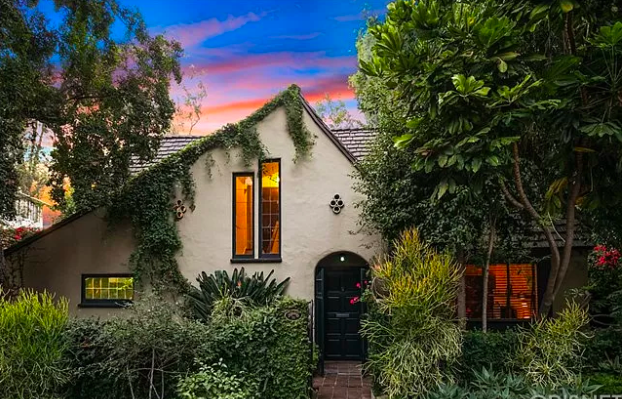
#10 6747 Milner Road, Whitley Heights was built in 1923, a Norman cottage on an irregular lot with some Storybook features. Filmmaker Sophia Coppola resided here in 1993. 6747 Milner is just two houses from 6757 Milner Road.
 Whitley Heights 101
Leave a comment