6662 Emmet Terrace
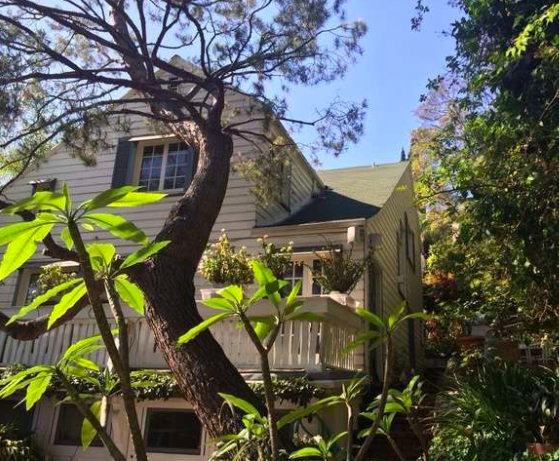
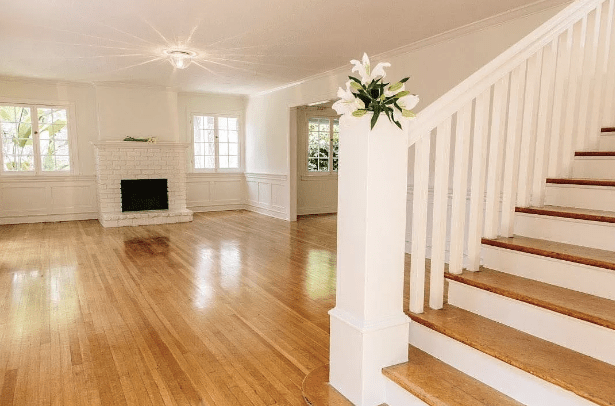
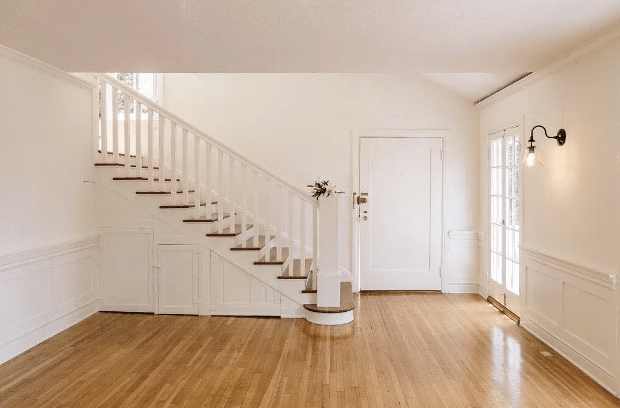
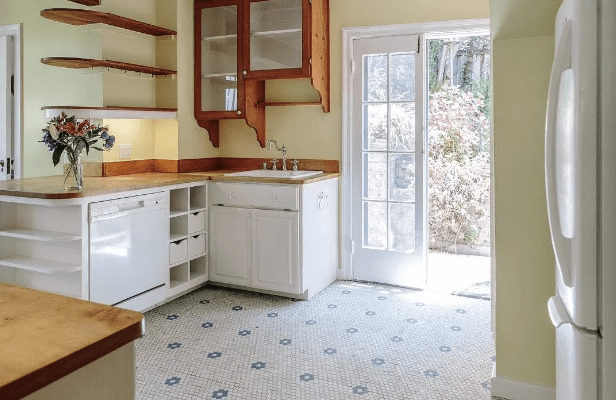
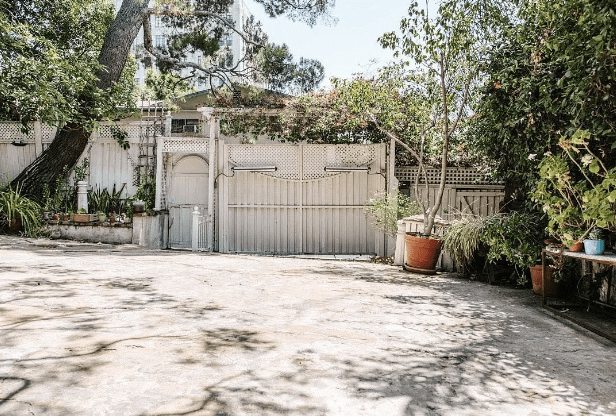
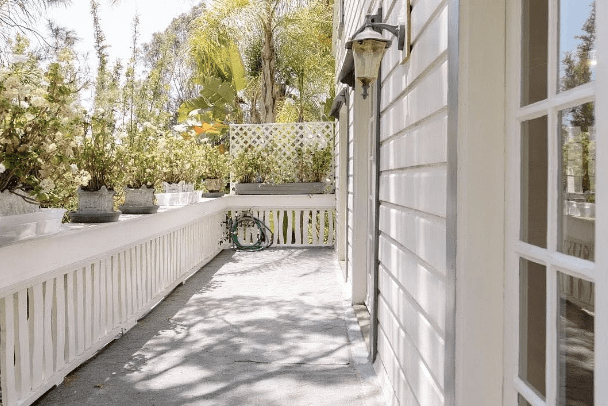
6662 Emmet Terrace was built in 1922 as 6660 Emmet Terrace by architect B.B. Horner and owner C.F. Hale, a real estate developer who used this residence as a rental property. This Cape Cod home sits on a downslope on Emmet Terrace and consists of a total of 1,874 square feet with three bedrooms and 1.5 bathrooms. Ben B. Horner was also responsible for designing 6788 Whitley Terrace in 1923 and The Outpost Building, 6715 Hollywood Blvd., which was built in 1927.
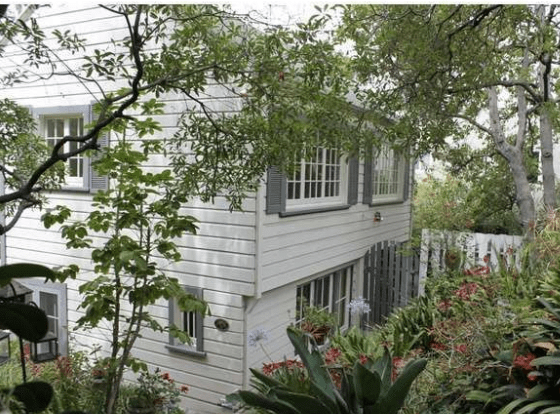
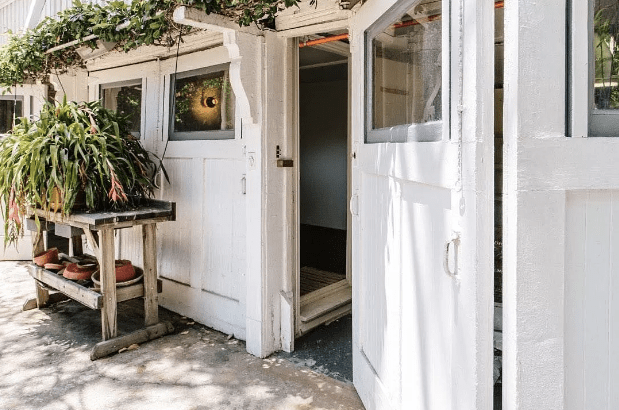
One of the first well-known renters was director Roland West and his wife, actress Jewel Carmen between 1924-1925. According to William Donnati, the author of The Life and Death of Thelma Todd, they were living at “6662 Whitley Heights, a two-story residence on a steep street. Though located in an exclusive neighborhood, the house was peculiar, since the roof was practically level with the street. Visitors had to use a descending walkway to enter. Roland and Jewel took particular interest in their garden which was filled with plants and exotic flowers”. Other sources had the West’s living across the street at 6665 Emmet Terrace, but that residence is on a upslope. The only other property in Whitley Heights with a street address of 6662 is on Whitley Terrace, but that property is not level with a street and has one level above the street. 6665 Odin Street was not on a downslope.
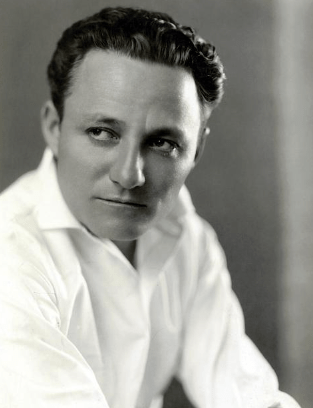
Roland West (1885-1952) directed innovative film-noir movies of the 1920s and 30s including; Lon Chaney’s, The Monster (1925), Norma Talmadge’s The Dove (1926), and Chester Morris/Thelma Todd’s Corsair (1931). He is however best known for his possible involvement in the death of Hollywood actress Thelma Todd in 1935. West married Jewel Carmen in 1918, who has also been involved in a few of her own scandals.
On the morning of Dec. 16, 1935, Todds maid found her employers body in a garage in Pacific Palisades, slumped over the wheel of her Lincoln convertible. The garage was owned by Roland West and Carmen Jewel located at 17520 Revello Drive. The garage was directly above the location of Thelma Todd’s Sidewalk Cafe on Pacific Coast Highway. During the time of her death, West was having an affair with Todd and split his time between his house and an apartment on the premises of Todd’s restaurant. The coroner ruled Todd’s death a suicide via poison monoxide. To this day, her death still remains a mystery because she died with a broken nose, bruises around her throat and two cracked ribs which would not have occurred just by poisoning.
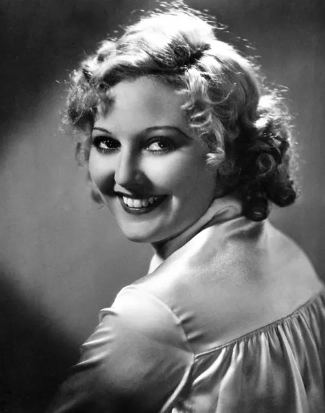
Two possible suspects to her death would have been both Roland West and Carmen Jewel. By then, Roland West was a failed director and he and Jewel were both co-owners of Todd’s restaurant. Obviously Carmen knew of the affair, but it was rumored that Todd was sleeping with other men which made West jealous. Carmen, who claimed to have seen Todd on Hollywood Blvd. hours after he death, became involved with the investigation. However, the jury felt it was an accidental death when she drove the car into the garage to warm herself after she was locked out of the her apartment that was over the restaurant. Ultimately, it was a strange relationship between the three, especially with Todd having ties to the mob since she had been married to Pasquale‘Pat’ DiCicco, the right hand man of notorious mobster Charles “Lucky” Luciano.
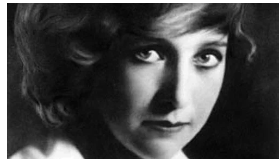
Jewel Carmen was a silent film actress who had starred in over 30 movies but eventually retired after she appeared in her husband’s film, The Bat in 1926. What she had in most common with West is being notorious for the scandals whey were involved in. The first being at the age of 15 and a statutory rape case with a 35 year old car dealer in Los Angeles. The charges ended up being dropped because she could not prove her age to authorities. Following Todd’s death, Carmen and West divorced, and she lived the remainder of her life outside the public eye before dying in an El Cajon nursing home in 1984. Following the divorce, West rarely worked and withdrew into seclusion. In the early 1950s, his health began to decline, and he suffered a stroke and a nervous breakdown. He died in Santa Monica, California, in 1952.
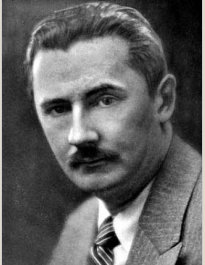
Following the West’s departure from the rental in Whitley Heights, director Roy Neill rented the home in 1925. Neill (1887-1946), was credited for directing 110 films starting in 1917 until his death. Neill was best-known for directing the Sherlock Holmes series of films at Universal, starring Basil Rathbone and Nigel Bruce. Neill was actually born off of a ship near Ireland because his father was a boat captain. He died after having a heart attack while visiting friends in England.
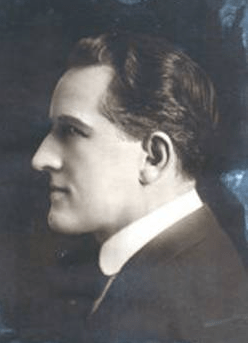
In 1932, actor Boyd Irwin and his wife, Madeline, rented the property. Irwin (1880-1957) was a British actor who starred in over 145 films between 1915-1949. He was known for bit parts in The Three Musketeers (1921), Captain Blood (1924), a police inspector in Dr. Jekyll and Mr. Hyde (1931), The Adventures of Sherlock Holmes (1939), and a costume ball attendee in Saratoga Trunk (1945).
In the 1940s, 6662 Emmet Terrace was owned by the Cressey family up until the 1960s. Meta Gehring Cressey (1882-1964) studied art at National Academy School in New York in 1911 and is where she met her husband Herbert C. Cressey. In 1912, the students traveled to Europe to study art and became engaged. A year later they were married in Ohio. They then settled at Herbert’s family ranch in Compton, California and set up their first art studio. In 1916, the Cresseys and eleven other area artists, became founding members of the Los Angeles Modern Art Society, established to promote and convey the growing enthusiasm for modern art ideas in Los Angeles. The group’s inaugural exhibition was held that same year at the Brack Shops in the Bronson building at 7th and Grand Avenue in downtown Los Angeles. Below is a painting completed by Meta Cressey.
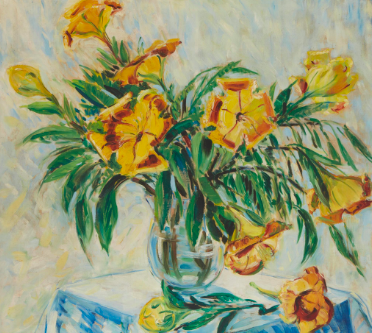
In 1920, the Cresseys moved to the Hollywood section of Los Angeles on a ten-acre parcel with lavish and colorful gardens that became the setting for many of Meta’s paintings. She continued to exhibit her work throughout the 1920s and the early 1930s. Sadly, the house was sold, and with the loss of her home and beloved gardens, she ceased painting around 1936. The house, located at 1830 N. Sierra Bonita Drive, is now called the Raymond Burr Estate and sits on the hill of Runyon Canyon just above Hollywood Blvd. The Cresseys then relocated to his Whitley Heights home for the next two decades.
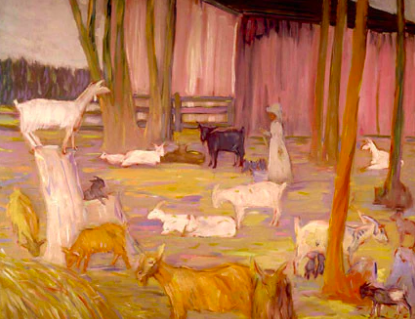
Herbert “Bert” Chester Cressey (1883 – 1944) was born on the ranch near Compton, and studied at University of Southern California and National Academy of Design under Robert Henri. At the outbreak of WWII he began working in a movie studio as a “prop man” where a work-related accident was the cause of his death on August 18, 1944. The Cressey ranch was given to the city of Compton and is now known as Gonzales Park. Below is an early California oil painting by Herbert “Bert” Cressey, titled Contentment.
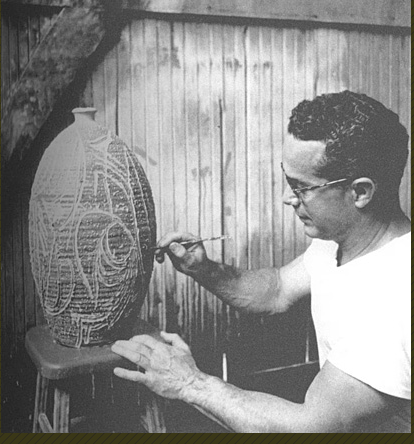
While a student in 1940, the Cressey’s son David (1916-2013) lived here with them. David began his art training with his parents Bert and Meta Cressey and experimented with painting, sculpture, and ceramics. After earning an M.A. degree at UCLA, he later taught at that school as well as at Utah State University and Mount St Mary’s College. His art career was briefly interrupted while serving in the South Pacific during WWII. After the war he had a studio in Venice, CA and from 1961-87 was with the Group Artec and Earthgender Ceramic companies.
 Whitley Heights 101
Leave a comment