6835 Iris Circle
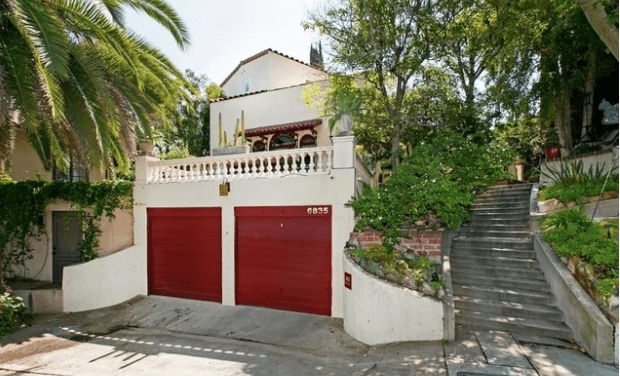
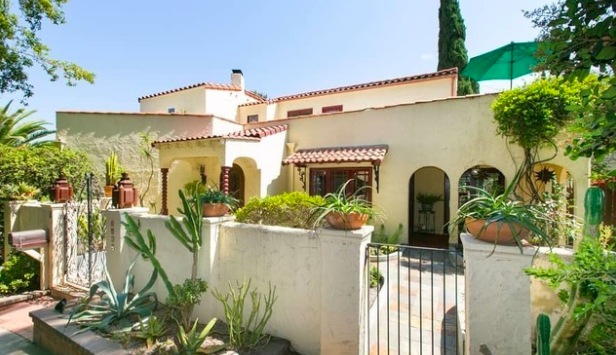
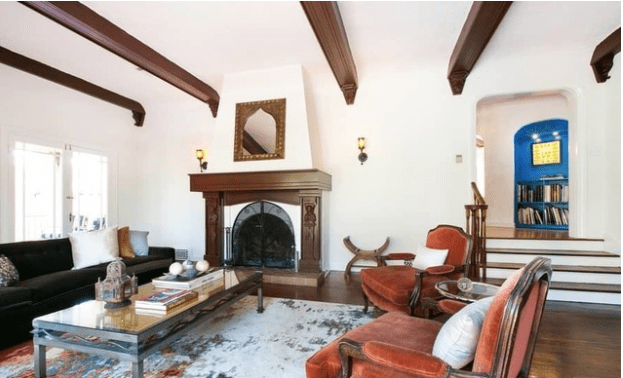
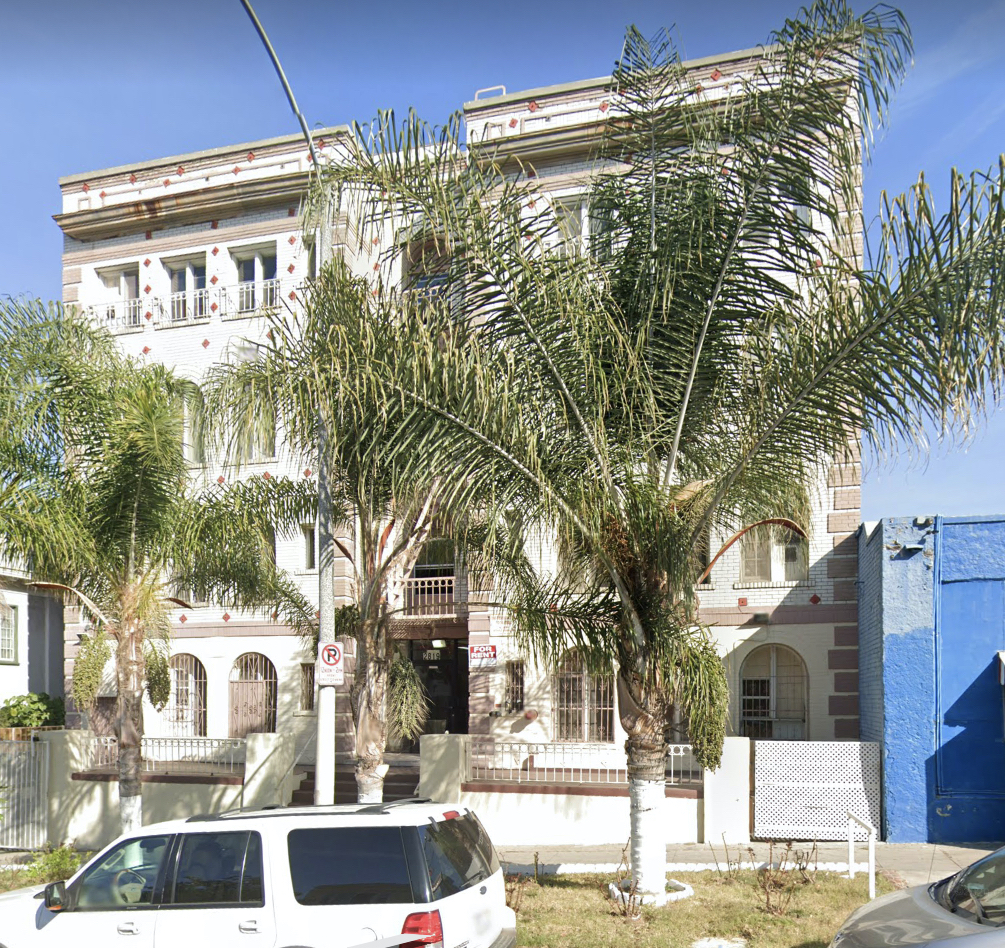
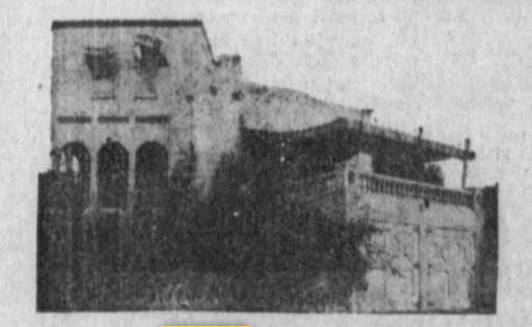
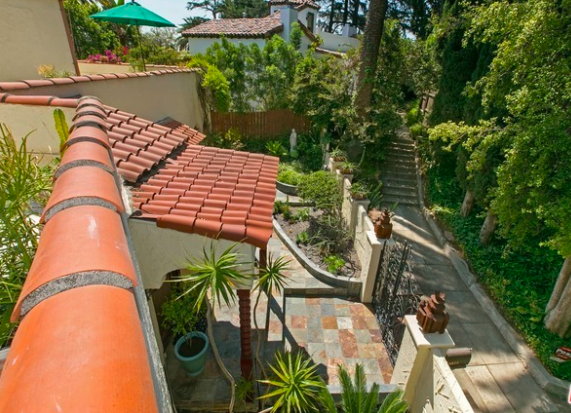
6835 Iris Circle was built in 1923 by artist Charles D. Grolle and real estate developer Bruce McCaskill. The three bedroom and two bathroom home has a total of 2,450 square feet and is located on the other side of the freeway. The front entrance is located up the steps to the right of the property as shown above.
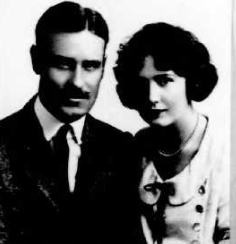
In 1923, Bruce McCaskill lived at 6613 Whitley Terrace, the former home of Jean Harlow’s voice coach Samuel Keyser. He made headlines that year when hosting a New Year’s Eve party and caught his wife, Frances Sawyer McCaskill kissing actor Robert Gollmers. McCaskill was enraged and beat his wife with his golf club so severely she was sent to the hospital in critical condition. Although there were about 50 witnesses, McCaskill did not receive any major consequence for the event other than a night in jail because she would not press charges. Her mother, a wealthy Boston socialite, threatened to cut her out of the will if she did not take action as this was not the first time Frances was physically abused by her husband. The marriage did not last and they divorced sometime before McCaskill remarried in in 1934.
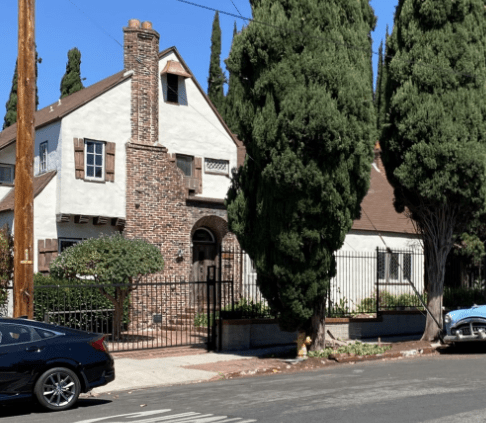
Although Bruce proved not to be a supportive husband to Frances, he faired well in real estate. In 1925, he had Charles Grolle built his next home at 1973 Carmen Avenue (see below). This tudor revival home has been designated as a historical building in Los Angeles and was purchased in 1971 by dancer and choreographer Carl Jabolonski who had danced with several starts including; Jerry Lewis, Donny & Marie Osmond, Suzanne Somers, Mickey Rooney, The Jackson Five, Michael Jackson, Angela Lansbury, Bob Hope, and also danced on the Carol Burnett show frequently.
McCaskill also built 6861 Iris Circle in 1926, the former home of Carole Lombard and William Powell. McCaskill was often listed as an actor but does not show any documented credits. In 1925, he joined the Marion Mack Productions as an assistant director and Cecil DeMille as the director. However, he appeared not to be doing well financially and had over extended himself owning the homes on Whitley Terrace and Carmen Avenue so he put the Whitley home up for sale with aggressive advertising. It took almost two years to sell the home and by then he also sold the Carmen Avenue home. Getting out of the real estate and film industries, he became a car salesman and quietly moved back to New York, dying in 1942 at the age of 48 with an undisclosed illness.
Artist Charles D. Grolle was a well-known artist and designer. Not only did he paint oil-based scenery portraits, he designed several homes and decorated interiors. In 1923, he lived and had a studio in Whitley Heights, located at 2178 Fairfield Avenue, a home destroyed to make room for the Hollywood Freeway in the 1950s. After designing this home and the 1973 Carmen Avenue home, he painted a mural called the Fairy Tales of the Northmen in the Essman Cafe on Ventura Blvd. Some of his artwork still exists today and is sold at auctions.

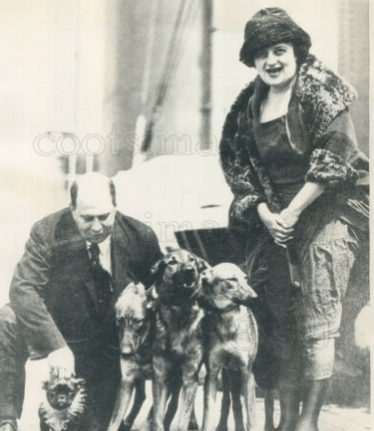
One of the first owners of 6835 Iris Circle was a wealthy New York metal manufacturer, Albert Mors and his wife, Teresa, who only lived at the residence for a year due to unforeseen circumstances. Albert was in semi-retirement and he and Teresa decided to open an antique store 2228 W. 8th Street in Los Angeles called Mors Inc. Albert married Teresa in New York eight years prior when she was working as a stenographer. They had several dogs because Teresa was a dog lover and she also loved prized fighters because she was having an affair with Norman Selby a.k.a. Kid McCoy. Below is Albert and Teresa with their dogs.
Norman Selby was a man of many trades including; boxer, actor, diamond dealer, detective, race car driver, and a husband who married ten times! He earned the name Kid McCoy in boxing and was sometimes called the Real McCoy as he won his first professional fight at the age of 17 in Butte, Montana. He fought many prized professionals and was rumored to “con” them into thinking they would win the fight and when McCoy started using his fists, they were unprepared and would lose the fight. During this time, he was with his second wife, actress Julia Woodruff, who he would marry and divorce three times over the next seven years. It was Julia who told the press that McCoy would fake his fists pretending to be on the verge of collapse and then strike his opponents when they least expected it.
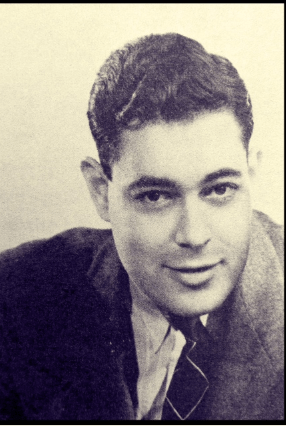
By 1905, the Kid was broke so he decided to marry an heiress. A year later, he was heading a diamond firm that may have been involved with smuggling and was arrested in London for being a jewel thief. The charges were dropped-just a case of mistaken identity. In 1908, he opened a detective business, but unfortunately he was no Sherlock Holmes. He then moved into selling and racing cars but got caught for speeding. He then tried to claim he was “closely” related to Lord Hume of London to break into high society but failed. He moved back to the states and unsuccessfully ran a health farm in Los Angeles. In 1918, he was discharged from the military for lying about his age. He was 44 years old so he thought he would try acting.
McCoy got roles that were closely related to parts of his past. He got to play a detective investigating a jewel heist in “The House of Glass.” In 1919, he appeared in D. W. Griffith’s film, Broken Blossoms: Or, The Yellow Man and the Girl, with Richard Barthelmess and Lillian Gish, whose father in the movie is a prizefighter and knocks out the Kid and beats Gish to death. By this time, he meets Albert Mors and they team up in jewel smuggling. This is when he meets Mors wife, Teresa, pictured below, and the start of their affair. Albert found out about the affair and filed for divorce. This is when they briefly lived at 6835 Iris Circle.
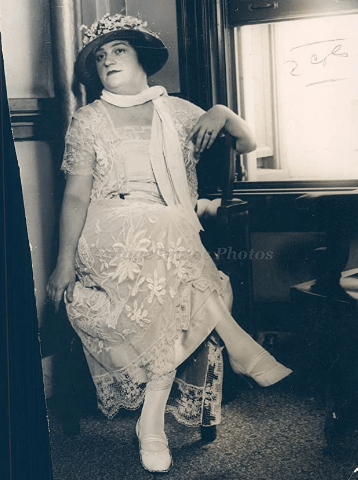
On August 12, 1924, Albert called the police to 6835 Iris Circle asking they arrest his wife for assault and battery. The police found Albert in one room with a bloody lip and Teresa and Kid McCoy in another room. Albert came home and found McCoy and ordered him to leave the house but he refused as Teresa requested to him to stay for protection. Teresa attacked her husband with her fists. She filed for divorce a year ago but tried to reconcile, but things got worse so she told him to file for a divorce a few months ago. Teresa was planning to marry McCoy as soon as the divorce was final, and she was living with him in an apartment downtown.
McCoy was a heavy drinker and who became violent when he hit the bottle. The morning after Teresa’s death, he held 8 employees as hostage at the antique store for two hours as he pointed his gun at them and ended up shooting one of the men in the leg who was trying to escape. He was also well known with the police and it did not surprise them when he went to the police station looking to fight the police officer that took the call on Iris Circle. The same evening in August, Teresa and McCoy were at the apartment at 2819 Leeward, unit 212 when she was killed by gunshot.
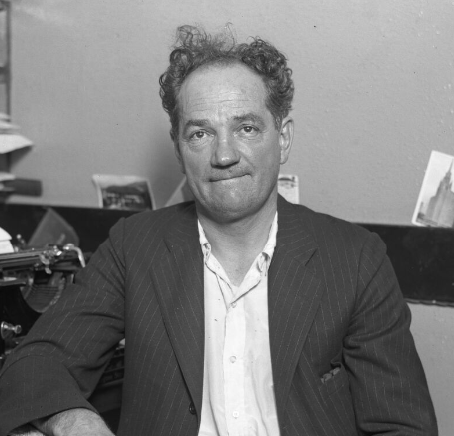
Below is McCoy at the police station the day after Teresa’s death. McCoy claimed she killed herself, but the jury felt otherwise and he was convicted of manslaughter and sent to San Quentin and paroled in 1932. McCoy took his own life on April 18, 1940. He committed suicide at the Hotel Tuller in Detroit by an overdose of sleeping pills, leaving a note behind that said, “Everything in my possession, I want to go to my dear wife, Sue E. Selby … To all my dear friends … best of luck … sorry I could not endure this world’s madness-Norman Selby”.
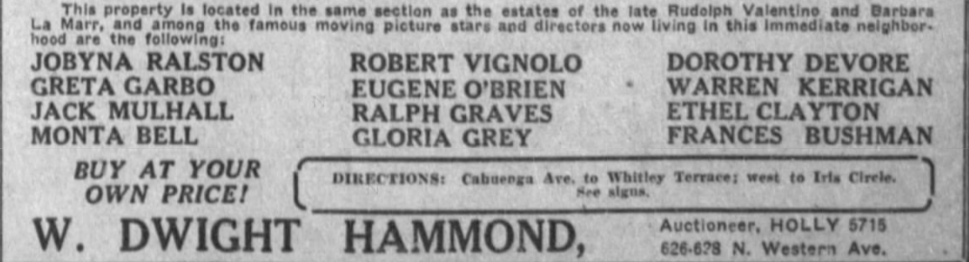
6835 Iris Circle was auctioned in 1926. To minimize the fact that the Mors lived in the home, the real estate agent focused on the fact that several celebrities were living in Whitley Heights during that time:
Thankfully the house with blessed with responsible successors. American composer, conductor, teacher, timpanist, and percussionist William Kraft purchased the home. He even hired Barker Brothers Studios and West Brothers to build an organ chamber in part of the basement. Kraft, who recently died in 2022, began as a member of the Los Angeles Philharmonic’s percussion section, before being promoted to the orchestra’s principal timpanist. From 1968–1972, he also served as the orchestra assistant conductor, under then music director Zubin Mehta. He was with the Philharmonic for 22 years.
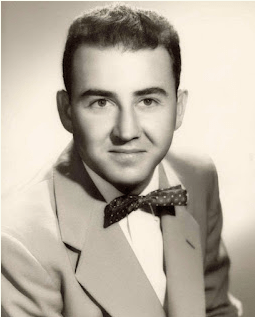
Kraft also worked as a composer and in the music department for several films and television shows between 1959-1993. His most notable films included: Hitchcock’s North By Northwest (1959), Hud (1963), Dead Again (1991) and Carlito’s Way (1993). He also provided original music to the show Ripley’s Believe It or Not between 1982-1985.
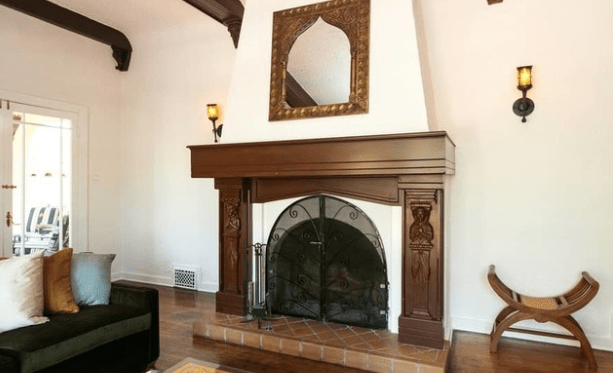
Another well-known American composer, conductor, pianist and arranger, Arthur Johnston, resided at 6835 Iris Circle in the 1930s. In 1929, he moved to Hollywood, where he orchestrated and arranged the music for films including Puttin’ On the Ritz and Charlie Chaplin’s City Lights. He became closely associated with Bing Crosby, writing songs for the films Collegehumor (1933), Too Much Harmony (1933), and Pennies From Heaven (1936), the first film on which he worked with lyricist Johnny Burke. Johnston and Burke were nominated for an Academy Award for Best Original Song in 1936 for the song “Pennies From Heaven”. He also worked on the Marx Brothers 1933 film, Duck Soup and Robert De Niro’s Raging Bull in 1980.
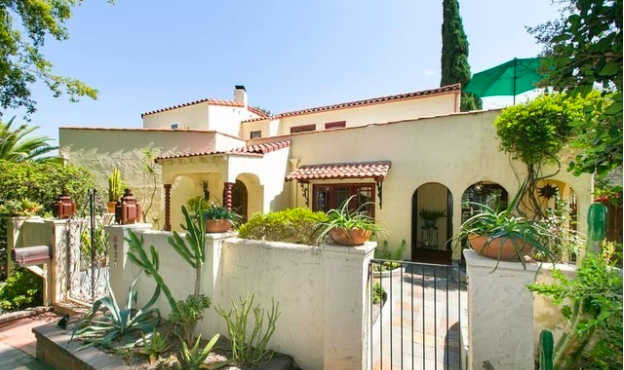
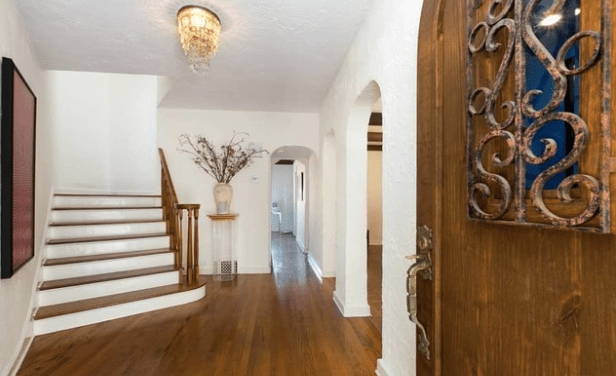
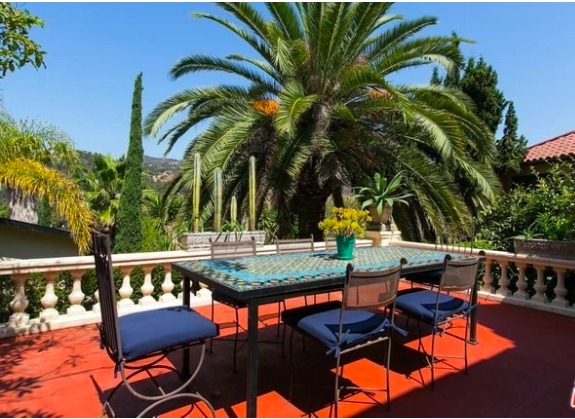
There is definitely beautiful scenery that exists outside the home on all parts of the property.
 Whitley Heights 101
Leave a comment