2178 Fairfield Avenue
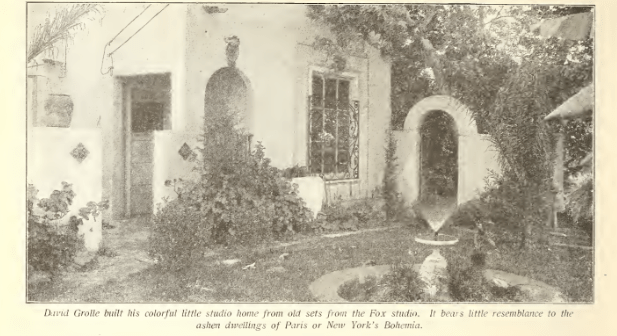
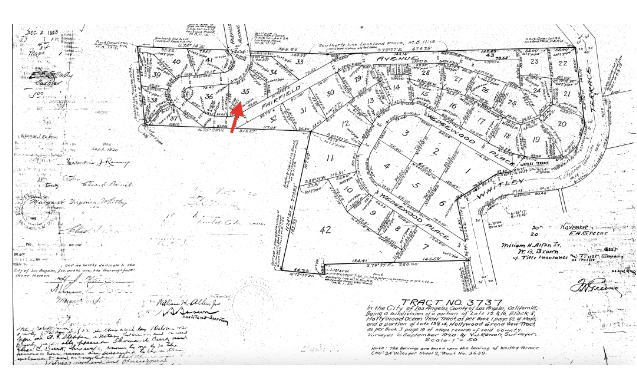
In the previous post, artist Charles David Grolle was the architect of 6835 Iris Circle, which was built in 1923. He decided to build this five room artist’s studio with the assistance of Arthur S. Barnes in 1923. Unfortunately this little bungalow did not survive the construction of the 101 Freeway and was demolished in 1956 by Lucas Wrecking and Salvage. However, there was an article published in 1923 in Picture Play Magazine written about Bohemian inspired homes in the Whitley Heights area. Below, used to be tract 3737 in Whitley Heights with the red arrow indicating where 2178 Fairfield Avenue was located. Lots 29, 30, and 31 are the only homes on Fairfield Avenue that still exist today.
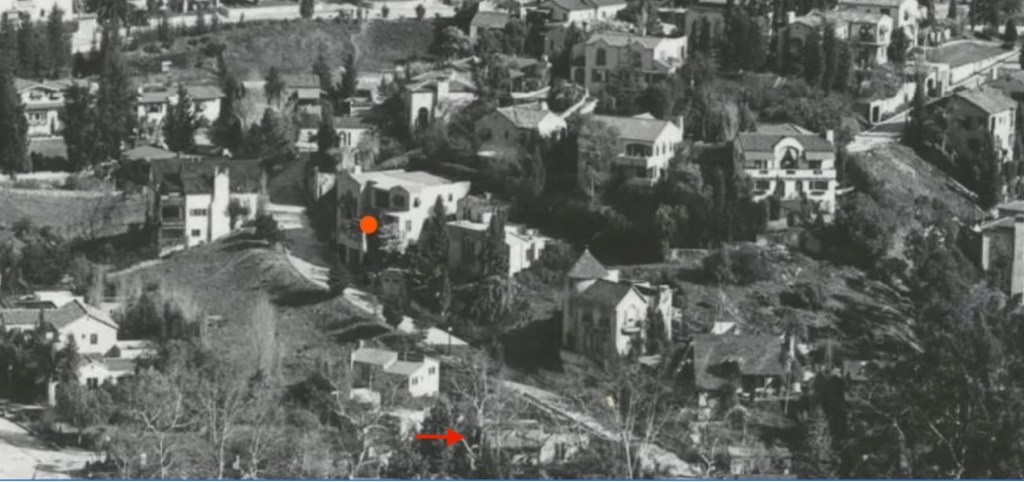
The article titled, “Being Bohemia in Hollywood” was written by Gordon Gassaway who describes stopping at a “tiny pink plaster house with the big iron grille over the window and the sycamore shading the tea table in the open patio”. Grolle had built bridges and trails with little platforms containing pink and purple wicker furnishings. Under one of the trees was a large picture of a Spanish dancer which lit up at night when guests were entertained at the home. Grolle informed the reporter that he built the home with props he used for films left over from Fox Studios. Below the orange dot is 2133 Fairfield Avenue, which still exists, and the red arrow is the location where 2178 Fairfield Avenue once stood.
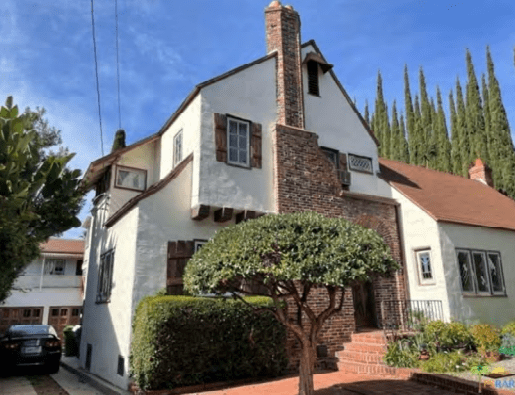
Charles D. Grolle was born in 1877 in Cincinnati, Ohio, and by 1904, he was living in Los Angeles. Later, he moved to Pasadena and then to San Francisco, but returned to Los Angeles by 1920, at which time he was working with Judson Studios in Garvanza. Better known as a painter, he also designed several single-family homes in the Whitley Heights and Hollywood neighborhoods during the early 1920s. Real estate developer Bruce McCaskill hired Grolle to design what is now called The Jablonski Residence located at 1973 Carmen Avenue in Hollywood. The Hollywood Tutor home has the characteristics of a traditional tudor home but does not have the “half timbering” and was later named a historical home.
When Grolle was living in San Francisco, he owned The San Francisco Art Glass Studios and was involved in constructing the dome in the Resurrection Oakland Church. The dome is among the many stained glass windows original to the building’s construction (1900-1901), designed by Charles David Grolle and crafted by the glass manufacturing studios of Flanagan & Biedenweg, Chicago, Illinois, with some windows containing images from the Christian Science tradition.
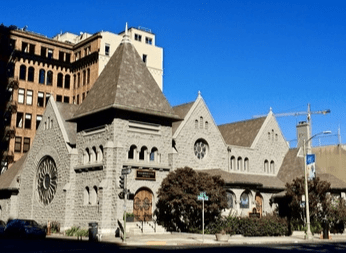
Grolle was married twice. He first married Matilda Fichter when he was 20 years old in 1904 while living in Los Angeles. She died suddenly four years later when she was only 24 years old. In 1922, he married Hebe Hamden Crawford also in Los Angeles. Crawford made news just one years earlier when her husband, John, and father of her two children, ages three and four, was killed when his car was struck by a Los Angeles Railway car. Crawford had been in the vehicle with her husband when she was slightly injured and brought a $100,000 lawsuit against the railway company. The Crawford’s were living at 2211 Fairfield Avenue during the time of his death. A year later she would be living with Grolle down the street at this residence. While residing at 2178 Fairfield Avenue, she had to call 911 when the house was in danger of a brush fire. The fire started in one of the canyons and was able to be contained by volunteer firemen. The fire came within 25 feet of the home-wonder if any other home was destroyed in the area.
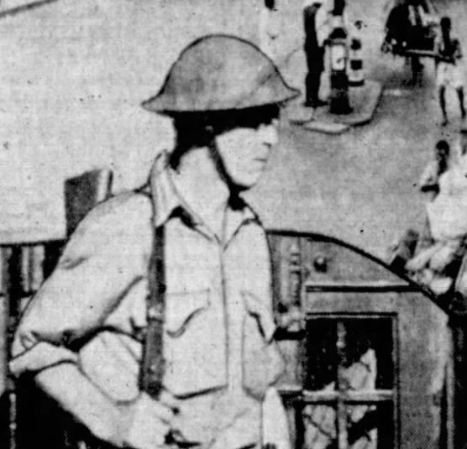
Architect Nathan L. Coleman resided at 2178 Fairfield Avenue in 1928. Coleman was a Bay area architect that designed several home in Whitley Heights including; Villa Vallombrosa (2074 Watsonia Terrace), 2064 Watsonia Terrace, 6660 Whitley Terrace, 6756 Milner Road, 6735 Wedgewood Place, and 6697 Whitley Terrace. He also built several homes in Beverly Hills and Hollywood and was a member of the Hollywood Architectural League. Coleman specialized designing homes that were of Mediterranean, Venetian, and Normandy styles. He was commissioned to build a hotel in Montauk, Long Island, New York in 1930. Following the hotel construction, Coleman moved to Shanghai, China to continue his architectural work for the next six years. Unfortunately, this was a time when China and Japan were at war and he fled back to the United States. In the photo above, Coleman was dressed as a member of the Shanghai Volunteer Corps which served as an emergency unit during their war.
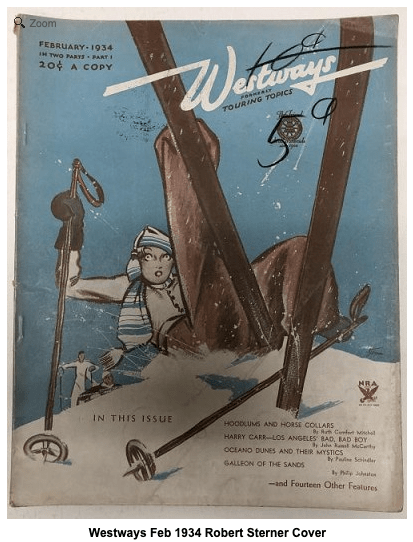
Artist and illustrator Robert J. Sterner and his wife, Helen, lived at 2178 Fairfield Avenue between 1929-30. Robert Joadrie Sterner (1899-1947) moved to Los Angeles in 1920. In the 1920s, he was part of the Hy-Art Studio which made headlines in 1928 with a “sinful” statue of a couple dancing that advertised ginger ale. The statue in question was placed in Glendale on East Colorado Street. Robert Sterner, another Hy-Art Studio sculptor, made the “sin-statue” that depicted a dancing couple. The Women’s Christian Temperance Union was aghast by the statue while Sterner, who later worked for Disney, argued that “it was a less suggestive pose than could be found on the dance floor of the Biltmore or Ambassador on any given night”. In 1940 he worked on Disney’s Fantasia, drawing sketches but was listed as part of the story development and research team. He was also the art director for advertising at the Daily News and the Los Angeles Examiner. He died in 1947 in New York after a six-week illness.
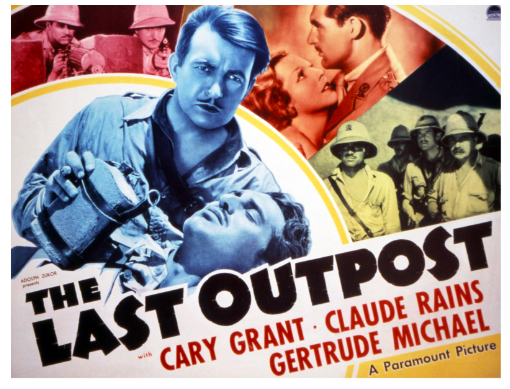
One last notable residence was a theater actress named Margaret Swope who resided in the home between 1930 and 1931. Swope was a theatrical actress in New York who also starred in productions at the Pasadena Playhouse. She also had a minor role in the 1934 film of the Last Outpost starring Cary Grant as Nurse Rowland. She also had an uncredited role in the 1930 film, Madam Satan.
 Whitley Heights 101
Leave a comment