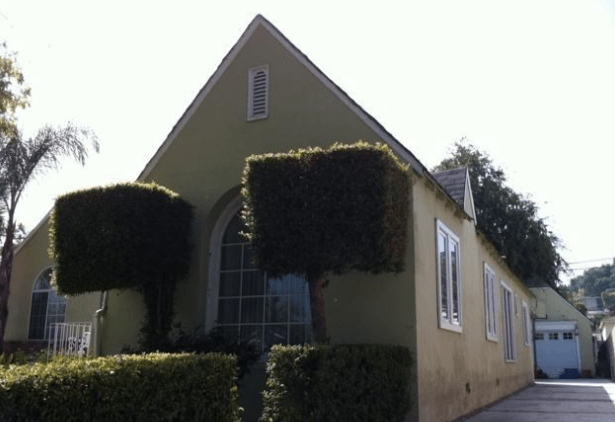
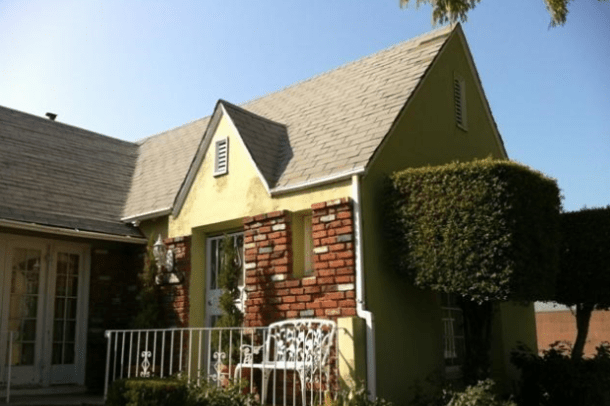
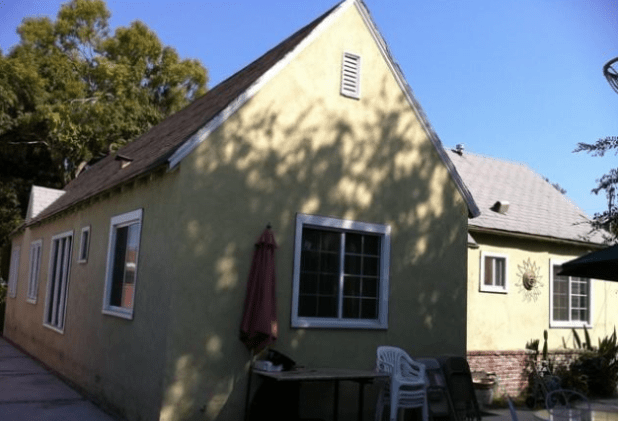
2220 Fairfield Avenue
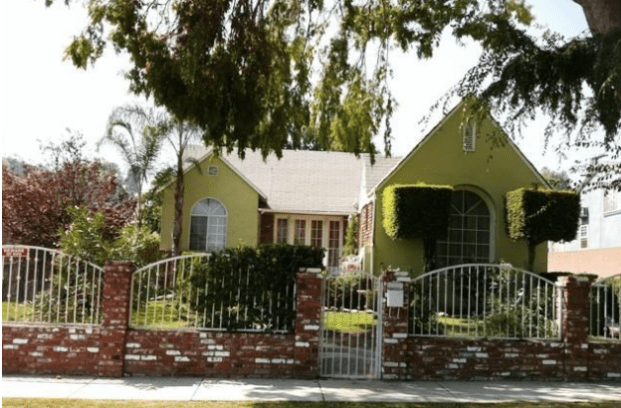
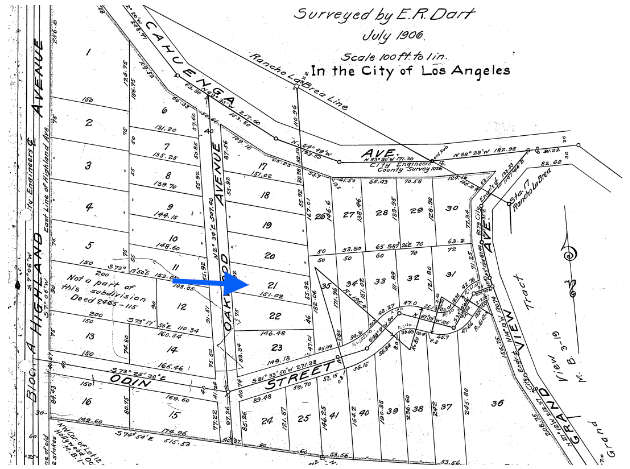
2220 Fairfield Avenue was built in 1923 by architect Kenneth Albright and owner Frank W. Stafford on lot 21 of Lockland Place Tract. The 1,471 square foot home has three bedrooms and one bathroom. In 1949, the house and separate garage were relocated to 2907 Hollister Avenue in the El Sereno neighborhood of Los Angeles and still exist today. Below is Lockland Place Tract map with the location of 2220 Fairfield Avenue on lot 21. The portions Fairfield Avenue was named Oakwood Avenue and Whitley Terrace was named Grand View Avenue in early 1920.
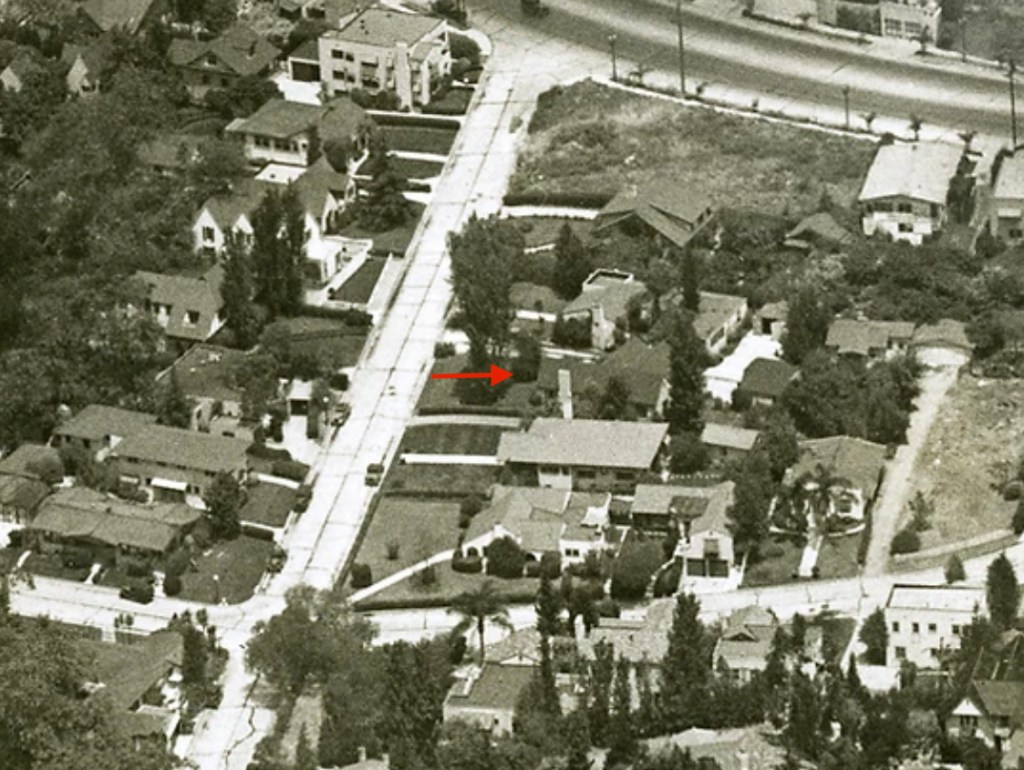
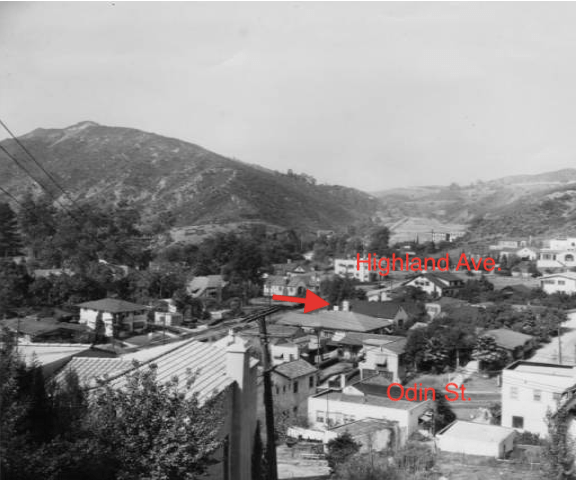
The owner Frank W. Stafford and his wife, Grace, owned the property until the early 1940s. Frank Stafford was a lawyer and worked as a Deputy District Attorney for Los Angeles until his death in 1934 when he died in this house of “acute indigestion”. Stafford prosecuted several cases but was known for the Julian Pete and Sidney T. Graves convictions. In the late 1920s, the Julian Petroleum Corporation defrauded over 40,000 investors of 150 million in one of America’s earliest Ponzi schemes. The Julian scam was centered in Southern California and the oil boom of the early 1920s. Courtney Chauncey Julian, migrated from Canada in 1922 claiming experience in the old business and real estate. Julian secured a lease to drill on five acres at Santa Fe Springs and advertised for investors in the Los Angeles Times and other newspapers.
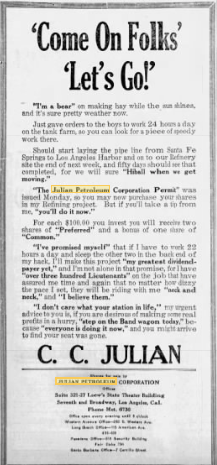
In June 1923, he launched the Julian Petroleum Corp., a venture that he claimed would supply standard oil. In less than two months, he sold 5 million worth of stock in his company. He lived large in Los Angeles, went to the best nightclubs with the most beautiful women and even got in a fight with Charlie Chaplin. Eventually his company was investigated for it’s questionable activities and in May 1927, the Los Angeles Stock Exchange stopped selling the stock of the company and all of those invested, including many of the Hollywood elite, lost money. To avoid any consequences, Julian fled California and went to Oklahoma where he was involved in another scam.
Julian was able to get a fake passport and posed as an Irishman who dressed in shabby clothing and boarded a ship in Seattle enroute to Shanghai in 1933. He was able to check into the Astor Hotel (Pujiang Hotel today) and the U.S. authorities could not touch him because he was Canadian. The schemes he was able to pull off in the United States did not work in China and he turned to alcohol. He ended up ending his life with poison after a lavish dinner with his girlfriend back at the Astor Hotel. However, others who were involved in the ponzi scheme were convicted back in the United States. Financier Motley H. Flint was shot and killed in 1930 in a courtroom by Frank D. Keaton. Keaton said that he lost $35,000 in Julian Pete stock and blamed Flint. Flint was formerly a vice-president of the Pacific Southwest Trust and Savings Bank and had been indicted several times, but the charges were dismissed or he was acquitted. He was awaiting trial on another indictment when he was killed.
The other big case Stafford was involved with was the conviction of Sidney T. Graves, a member of the Los Angeles County Board of Supervisors between 1926 and 1930. He was the only member of the county’s governing body to be convicted of a crime and sent to prison. In 1933, the former supervisor was convicted of accepting a bribe concerning the building of a dam on the San Gabriel River. He served three years in state prison and was released, but he had to serve more time in a federal prison for evading taxes on the bribe. Graves was convicted of bribery a year before, after accepting a sum of $80,000 in connection with the high San Gabriel dam project. At that time, Graves had been a county Supervisor. He was sentenced to one to fourteen years imprisonment for his crime.
In 1937, while Stafford’s widow Grace was still residing at 2220 Fairfield Avenue, she had to repair the northeast corner of the home because of a motor vehicle who ran into the property. It was not disclosed whether she caused the accident or if it was someone else. The property exchanged hands of several other owners and finally it was sold to the state by its last owners, John and Dorothea Achard in 1948. However, the Los Angeles City Counsel inquired about the sale. J. Andrew White, president of the Whitley Heights Civic Association had questioned whether this property would be available for rent and was instructed by the State Highway Commission that they were “not in the rental business”.
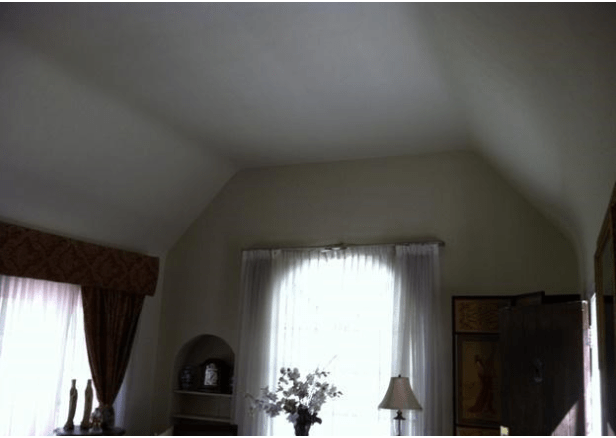
White had determined that the house was being occupied by W.L. Welch, a state highway engineer. White wanted the city counsel to investigate the circumstances of the property being rented. During this time, the Whitley Heights Civic Association had opposed the location of the Hollywood Freeway and was working with city engineer Lloyd Aldrich on alternate routes. The city council unanimously approved of what was called the “Warburton Resolution” and halt any further sales of Whitley Heights properties to the state with this investigation. The state did not comply and started to speed up their activity of buying the properties. White had found out that the property on 2053 Lloyd Lane was bringing the state $300 per month of rental money. Then suddenly, they wanted to kick the tenant out of the home and demolish it when other homes have not been sold and are still being occupied. Another example was the demolition of 6786 Whitley Terrace which was auctioned for $855 which could have been rented for short term. 6522 and 6518 Bella Vista Drive was also bought by the state and vacated and now a family of a state employee is living the homes. White also found out that property sales were “sworn to secrecy” about the price the state paid for them by the property owners since they were sold at low prices. Unfortunately, no alternate route was ever brought about and these homes were either relocated or demolished. Fortunately, 2220 Fairfield Avenue was relocated and remains in existence today.
 Whitley Heights 101
Leave a comment