6776 Wedgewood Place
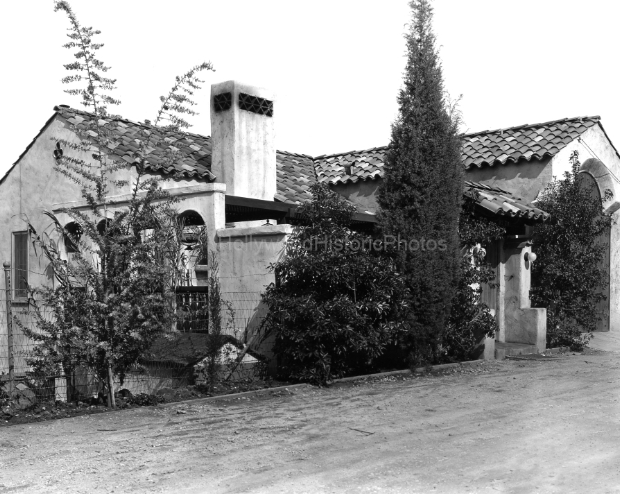
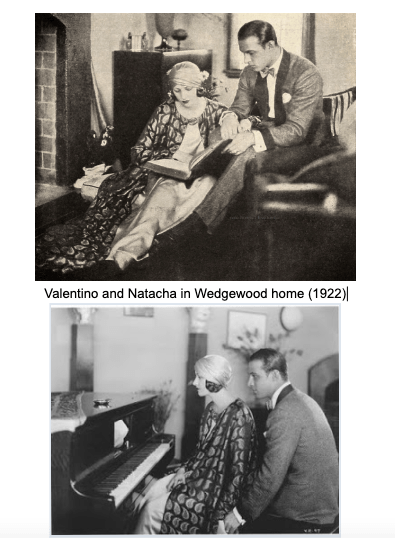
Soon after Rudolph Valentino married his second wife, actress Natacha Rambova, he started to build his first house with the assistance of architects A.S. Barnes and Charles D. Grolle. In December 1921, Valentino “scraped” enough money for the down payment of his first home. Since he and his new wife could not afford new furniture, they brought Rambova’s furniture from her Sunset Blvd. duplex, had the gas and water turned on, and moved in two days before Christmas. They had only one chair to furnish the living room so they got a Christmas tree and homemade wreaths to fill the space.
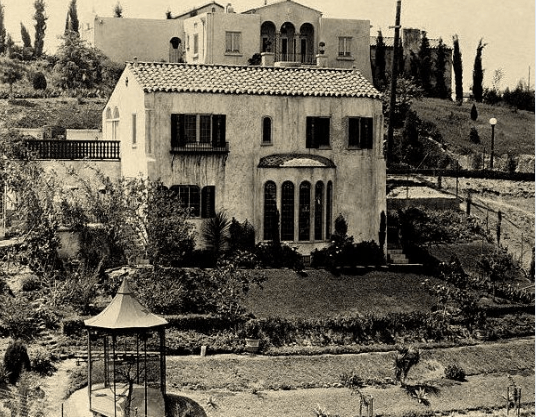
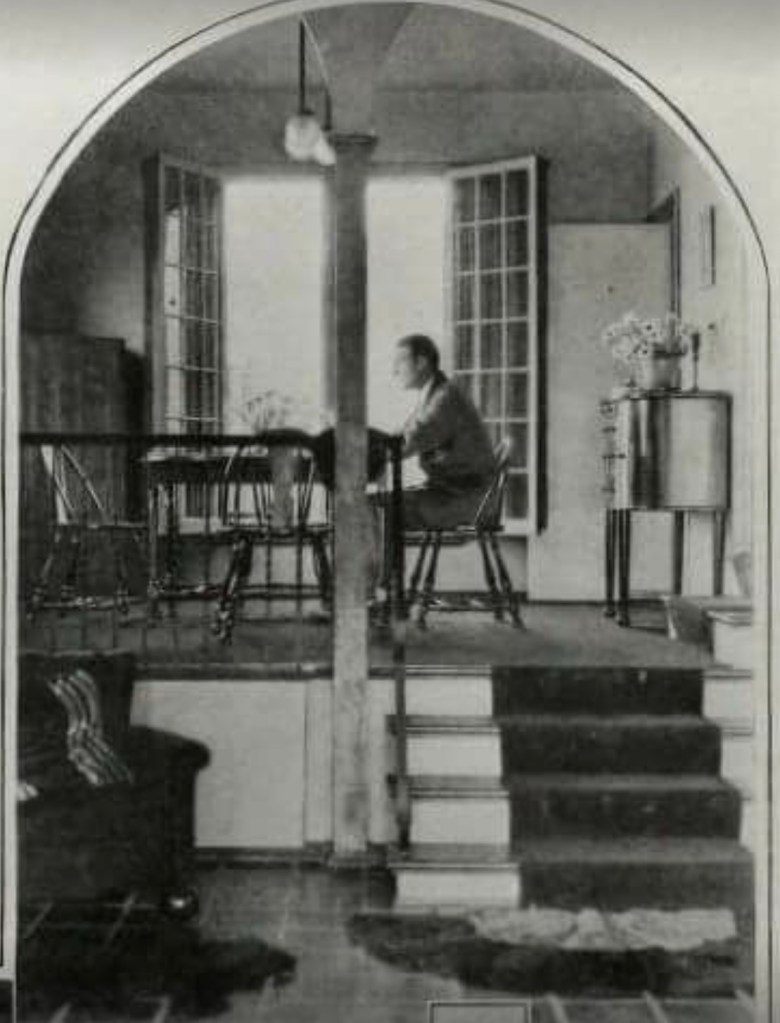
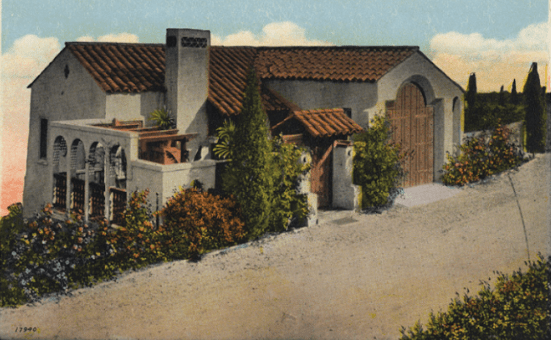
After an extended European trip in 1923, the couple focused on renovating and decorating Villa Valentino. The house was up-to-date moderne, except for the master bedroom which was furnished with antiques brought in Europe. A sunken black marble floor was placed in the living room and Natascha added velvet rugs and lacquered black and red furniture. The walls were painted yellow and modern paintings were hung. Rudolph Valentino’s home featured a one-car garage, courtyard, small living area in the entryway, and 2 bedrooms with baths. The lower level featured the main living room, dining room, kitchen, and servant’s quarters. There were four steps leading up to the dining room as seen below:
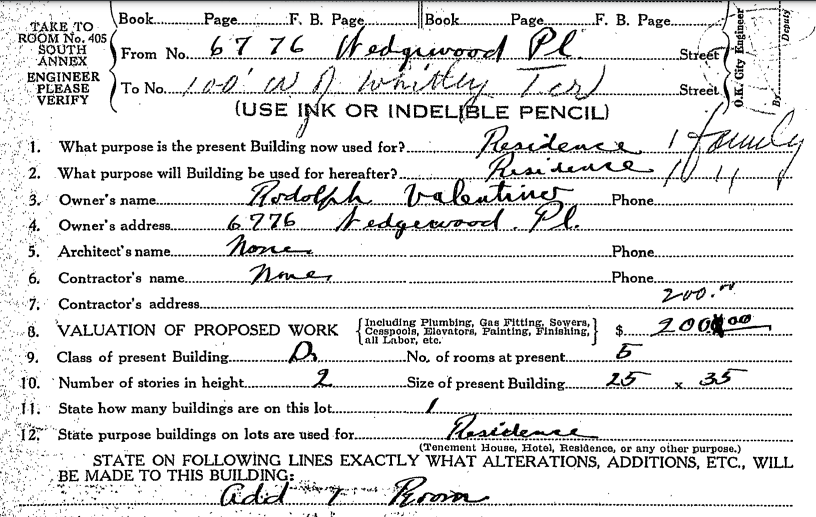
Below is a 1923 permit by Valentino adding one room to the house:
Valentino’s bathroom contained a five-headed shower and throne-like toilet with a carved and gilded seat. An inspiration from Seville, Spain was a small spray on the vanity in the dressing room which squirted scent into the bathroom when pressed. A six-sided swimming pool and barbeque pit were added outside in the back of the house. There was a fishpond in the garden and an aviary for Natacha’s collection of finches. Valentino was the first resident to build a garage on top of the house.
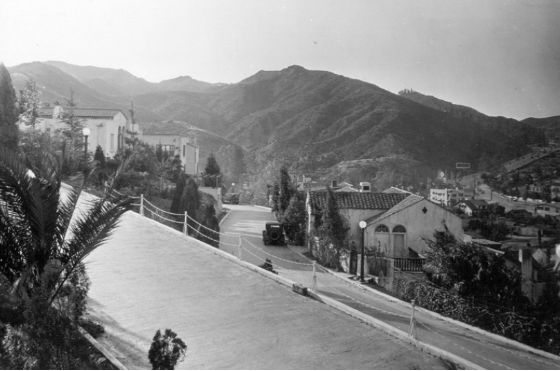
Rudy loved walking in his neighborhood while wearing riding gear and walking his dogs. However, the women of the neighborhood always made sure to conveniently be outside while he walked by waving hello. In the 1920s this area was party central. His next-door neighbors were Walter and Margaret Teague. Their daughter Frances for a time was a famous silent film star who thought that their very famous neighbor was nice. Bus tours of movie stars’ homes would often ride through Whitley Heights and would find a man dressed in old work clothes while working in a fancy car parked in front of the house. Little did they know they were waving to the famous star. Below, Valentino’s house is on the right on Wedgewood Place.
Cinematographer Paul Ivano first met Valentino in 1919 in Palm Springs. Valentino was visiting his friend, Helen Troubetsky, but she did not think it would be proper that Valentino stay with her since she was married so she asked Ivano if he would stay with him. Whether it was just a close friendship or something more, as Valentino was rumored to be bi-sexual, the two were almost inseparable after that weekend. They soon worked together on the film, The Four Horsemen of the Apocalypse and even moved in together to save money. They then began working on Camille and Ivano had a fling with actress, Alla Nazimova, while Valentino pursued Natacha Rambova. With money still tight, both Valentino and Ivano moved into Rambova’s little bungalow and continued to work in movies together.
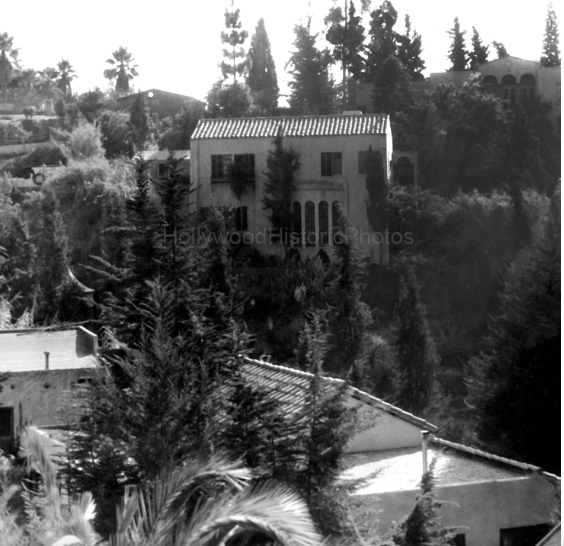
When Valentino moved into the Wedgewood property with Natacha, Ivana lived in a bungalow just below the residence at 2139 Fairfield Avenue. In 1924, Rudolph Valentino purchased Falcon Lair, a Mediterranean styled Home off Benedict Canyon in Beverly Hills. The Valentino’s were considered to be “lavender lovers”, a name given to a husband and wife who marry for convenience and not sexual orientation. Aside from the Valentino rumors that he had several male lovers, Natasha was rumored to be with other women. However, they moved into Falcon Lair, but still kept the Villa Valentino residence.
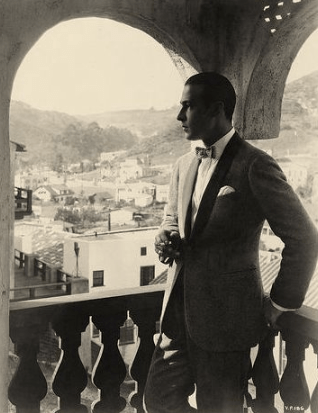
A year later, the marriage began to crumble and Natacha filed for a divorce. The divorce was granted the same year of Valentino’s death in 1926. Not only was Valentino an avid horse rider and owned stables just below his Falcon Lair estate, he owned several dogs and enjoyed driving his automobiles. He was often seen driving his cars around the hills of Whitley Heights. Since he had so many cars, actor Francis X. Bushman, let Valentino park four of his cars at his residence at 2020 Grace Avenue. Below is Valentino in his in front of 6737 Wedgwood Place.
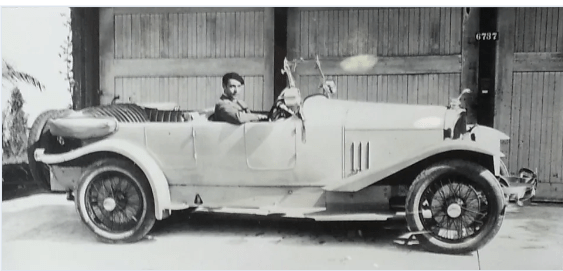
After Valentino, his two homes, vacant land on Beverly Drive, his stables, riding equipment, horses, dogs and his cars were auctioned off in 1926. His automobiles included: Italian Isotta Fraschini car, French Avion Voisin car (pictured above and below), 1926 Franklin Coupe car, 1925 Chevrolet Roadster, and 1922 Ford Truck.
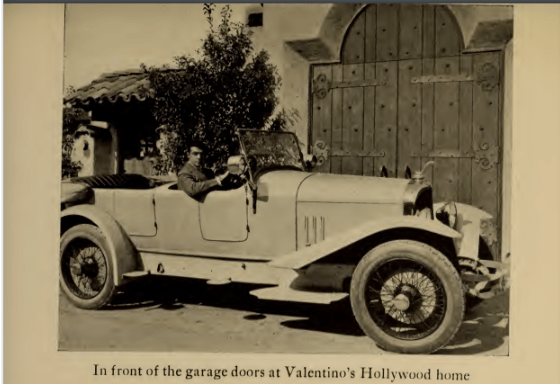
Actor Lyle Talbot, who lived next door at 6764 Wedgewood Place, attempted to buy this house. For whatever reason, the house could not be auctioned and remained vacant until it was rented out in 1928. Three separate couples rented the home until Valentino’s brother Alberto moved in circa 1935. Alberto, a controller at Fuscado Wines, attempted to resume his brother’s acting career. He starred in minor roles in four movies between 1929 to 1936, but he was no “Valentino”. With a combination of the vandals and Alberto’s lack of finances, the property started to dilapitate and by 1934, the city deemed the property as dangerous. Since Alberto could not enhance his acting career, he sold the property to a former friend of Rudolph, actor and oil tycoon Paul Portanova in 1937.
Part 2
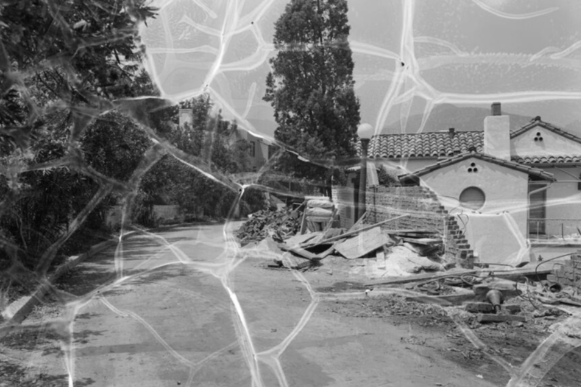
Although 6776 Wedgewood Place was in need of repairs due to neglect and vandals, real estate agent Harry E. Radtke purchased the home in January of 1937 and immediately sold it to oil operator and actor, Paul Portanova, for $5,000 before it was out of escrow. Portanova, a former friend of Rudolph Valentino pledged to spend $5,000 to repair the property. He had minor roles in four films: Here’s to Romance (1935), Rosa di Francia (1935), Winter Carnival (1939) and Down Argentine Way (1940). Portanova updated the heating system, eradicated the dry rot, replastered, repaired the stairs, replaced missing and broken tile, and put in a retaining wall. He put in on the market that same year. Below is the retaining wall repair work taking place at 6776 Wedgewood Place in the 1930s.
Maybelline Cosmetics founder, Tom Lyle Williams, and his long-time partner, Emery Shaver, had been spending time in Los Angeles and commuting back to Chicago to run the business. They had been staying in a rented beach house, but needed an office if they were going to consider moving to Southern California. Williams heard that Villa Valentino was up for sale and decided to rent the property with all intentions to buy it. While browsing inside an antique store, Williams met the owner, Billy Haynes, a former actor. Haynes had just decorated Joan Crawford’s home so Williams decided to hire him and Jimmy Shields to help with the interiors of Villa Valentino. Williams remodeled the pool and put in new tile in the cabana area, built a new garage, put in a bomb shelter, a badminton court in the courtyard, and added another retaining wall. Below, Tom Williams in front of Villa Valentino in 1937.
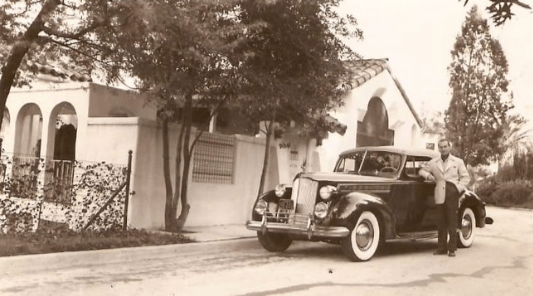
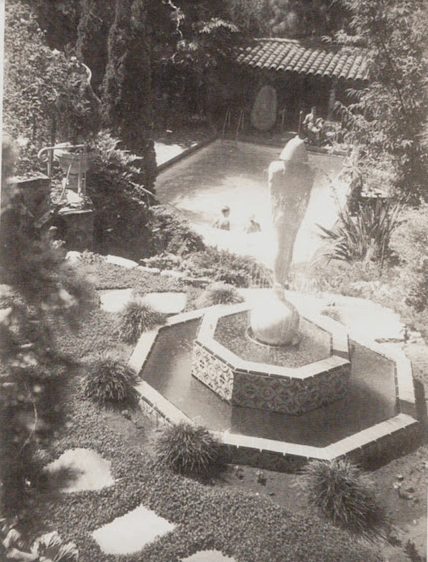
Tom and Emery had rebuilt Villa Valentino to be a Mediterranean paradise. However, he had his gardner plant over 100 palm trees on the acre property to enhance the beauty and to give them more privacy as the house was a popular tourist attraction. He had a replica of Valentino’s statue, “Aspiration” that was built in 1930 and put in De Longpre Park. The statue was placed on a fountain overlooking the pool area.
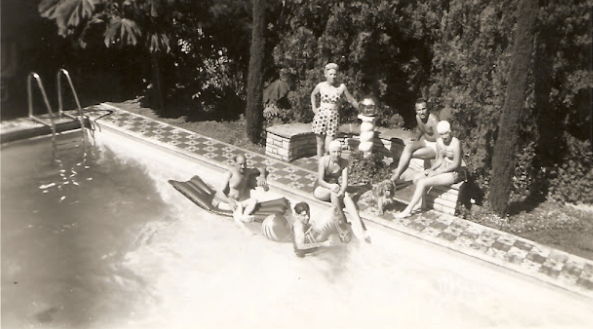
Although Tom had married and fathered a child at the age of 16, he ended up having a partner of 35 years, Emery Shaver, whom he met when they both worked at Montgomery Ward. When Tom started the cosmetics company, he had Emery work for him as an advertising executive. To hide his lifestyle, he and Emory moved to Los Angeles and had an office in the home so he could continue to run his empire. Tom was extremely close to his family and was continuously helping them with their problems. Below is his family at the pool area of the residence.
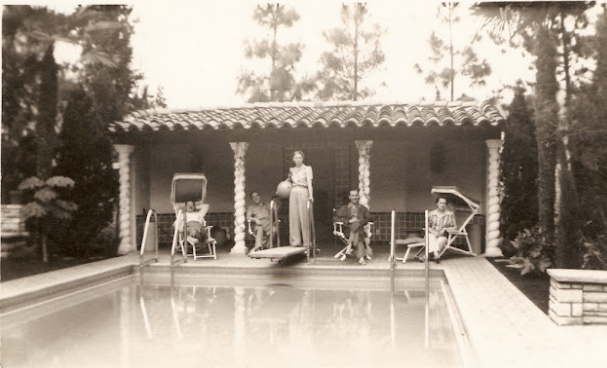
Tom remodeled the inside of the residence from top to bottom. He remodeled the two upstairs bedrooms and added a dressing room. He also remodeled the dining room and library. Outside, he added a new balcony and deck, making the property almost unrecognizable in the back. He and Emory adored the property and they were going to spend the rest of their lives at Villa Valentino.
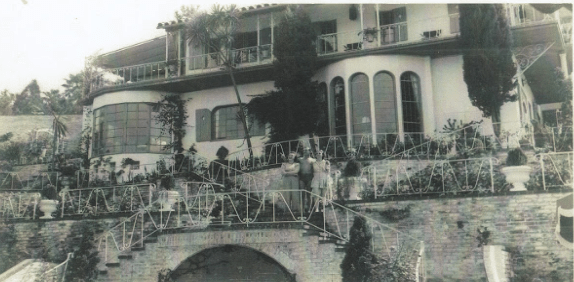
Below is the courtyard area and the badminton court.
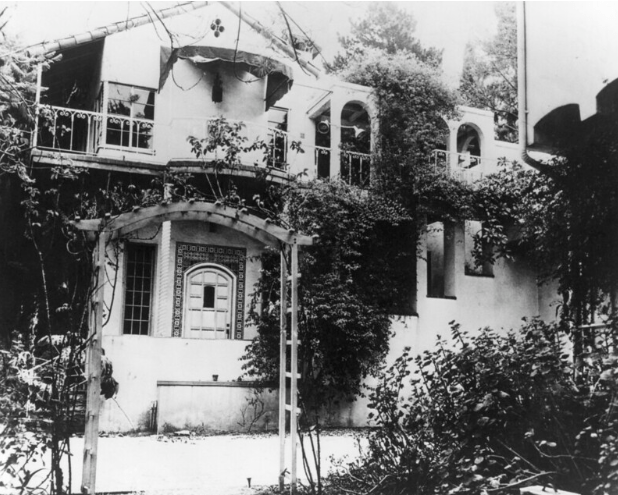
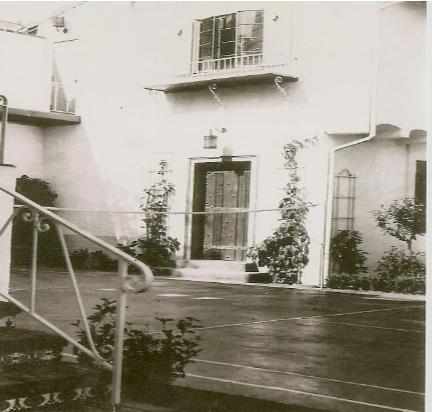
One day in 1950, Tom received a letter from the state indicating the Hollywood Freeway would be built through Whitley Heights and he had one year to vacate the property. Tom was heartbroken and cried after he read the letter.
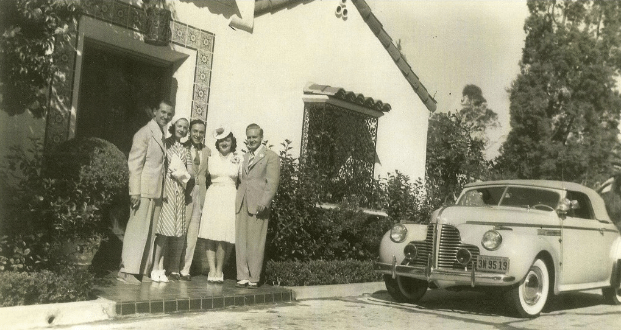
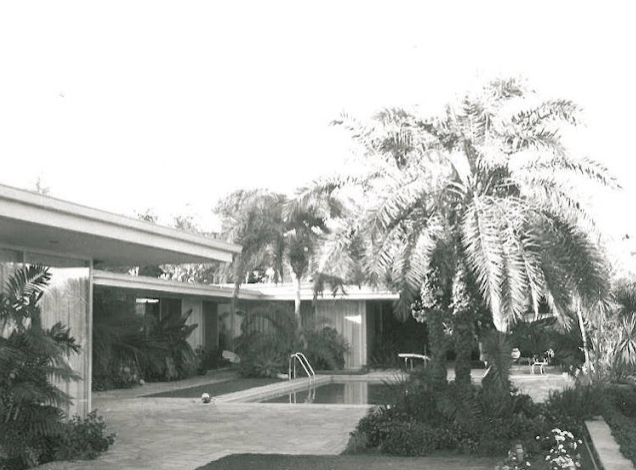
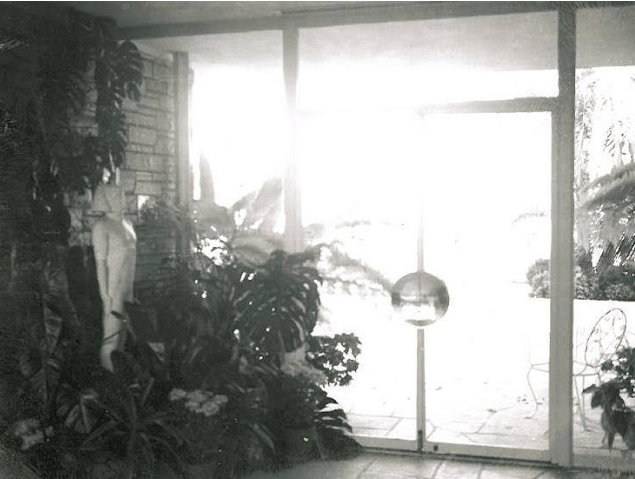
Instead of electing to move the property, Tom decided to go in the opposite direction and built an ultra-modern house at 900 Airole Way in Bel Air. Tom and Emery moved out leaving Villa Valentino abandoned once again. He took Valentino’s statue and placed it in the entryway of the new home. Shaver died of a massive heart attack in 1964, which put Tom into a deep depression and he ended up selling the company. Unfortunately, none of his family were responsible enough to run it so yet another loss for Tom. Williams died in Los Angeles, California in 1976. He and Shaver are buried together in the Columbarium of Memories at Forest Lawn Memorial Park, Glendale, California.
Part 3
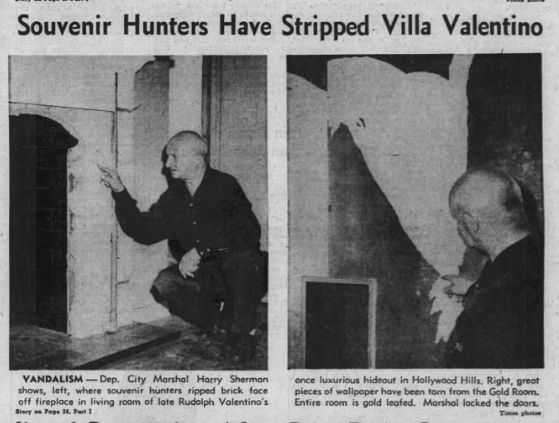
After Tom and Emery moved out, the state paid them $90,000 as compensation and was still offering anyone the house if they could pay to move it on their own. In September of 1950, actress Eleanor Parker, who played Valentino’s love interest in Columbia Pictures, Valentino, was photographed visiting 6776 Wedgewood Place. Unfortunately, the house had been once again, ravaged by looters. The mirror in what was once Valentino’s bedroom, had been shattered. A marble slab had been torn out of the fireplace. Parker was able to capture the beauty of the grounds outside: drinking fountains, tiled seats built into garden walls, and a swimming pool with the tiled cabana. Still, the house sat empty.
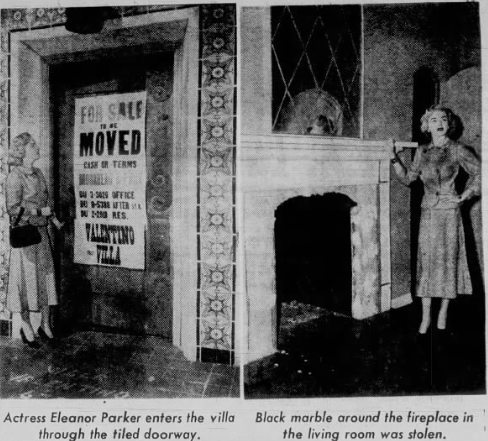
In December of 1950, a group of men: Gale Fleming, L.R Shirley, Robert Morehead, and Robert Pugh had paid $1,500, out of the total of $20,000 needed to move the property. In June the following year, a lawyer, who was representing Fleming, filed a document in court to recover the money they paid. The attorney claimed that since the down paid had been made, vandals had stripped the property of it’s fixtures and they did not want to move the home in the condition it was in.
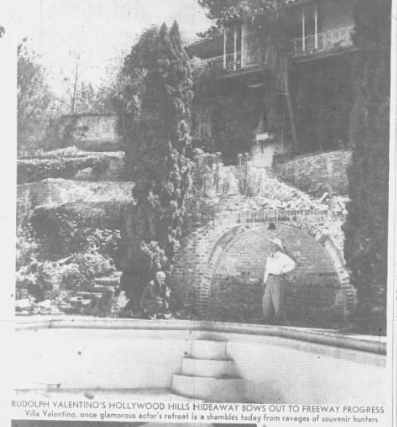
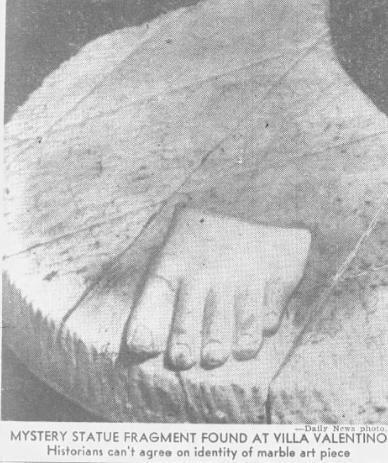
Consequently, the property was going to be torn down. During the process, the foot of a statue was recovered when the grounds of the property were being bulldozed. However, no one could identify what statue the foot belonged to other than the fact that the foot was arched as in a running position.
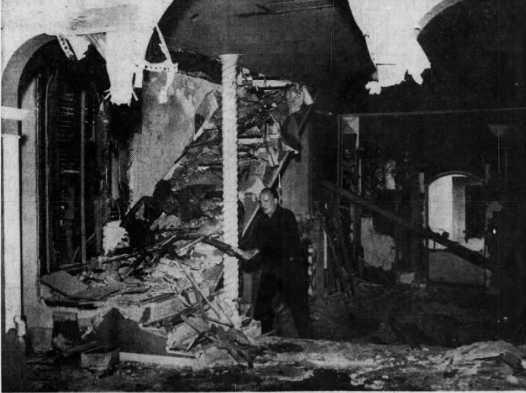
The vandals were known as “souvenir hunters”, people who wanted to take something as a memento of Rudolph Valentino. They chiseled the decorative tile from the walls inside and outside the house. They torn off sections of the wallpaper that hung in Valentino’s bedroom. However, not all the looters there for souvenirs because they took out sections of walls in order to get expensive wiring from the intercom system. All types of fixtures had been removed including, entire mirrors, painted shutters, and bricks from walls.
By September of 1951, most of the property had been razed.
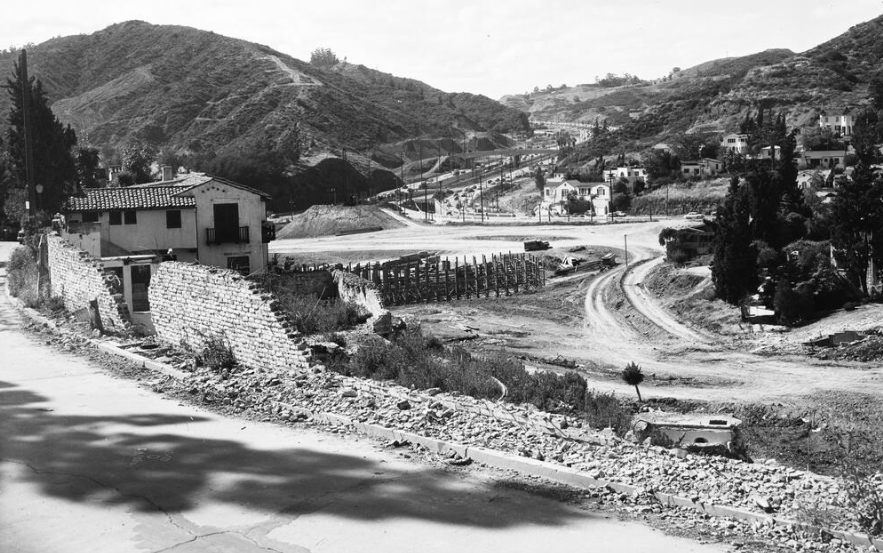
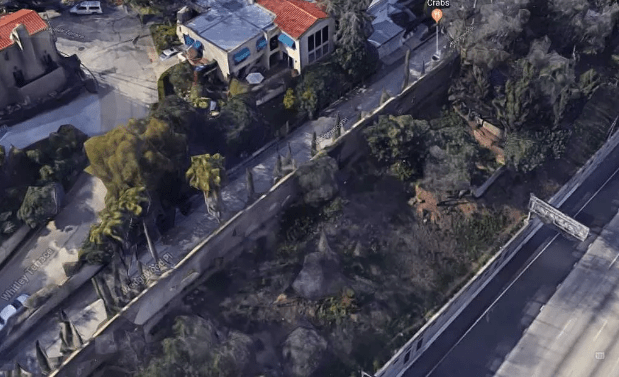
Below, the progress of the Hollywood Freeway, shows 6766 Wedgewood Place still standing, just prior to its demolition. Part of the foundation of Valentino’s residence can be seen to the right of the 6766 Wedgewood Place.
Now, all that was left was the Valentino ghosts. According to others, the “Latin Lover” began to haunt his former residences and to this day, he is known as an active ghost. Valentino has been spotted in a number of places, most often in his former mansion – the Falcon’s Lair. Here, his image has been seen in the hallways, in his old bedroom, peering from a window on the second floor, and in the stables. One stable worker, after having seen Valentino petting his favorite horse, promptly quit his job and never returned. He has also been spotted at his beach house in Oxnard and the Santa Maria Inn where he has been known to continuously knock at his former hotel room door and reclines on the bed. He has also been seen floating among the costume department at Paramount Studios and roaming the catwalks above Studio Five. He has also been sighted near his resting place in the Cathedral Mausoleum at Hollywood Forever Memorial Park. According to author Michael J. Kouri, in Whitley Heights, the ghost has been seen a derby hat and a grey pinstripe suit, driving down the hill in his roadster, and stopping at a street light waving to his fans. When the light turns green, he rides away, but he gets halfway through the intersection and he totally disappears.
 Whitley Heights 101
Leave a comment