6717 Whitley Terrace
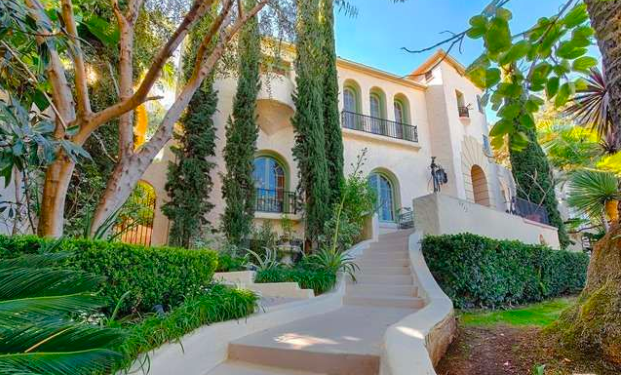
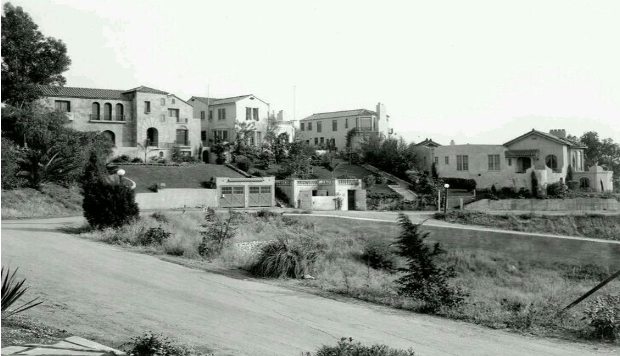
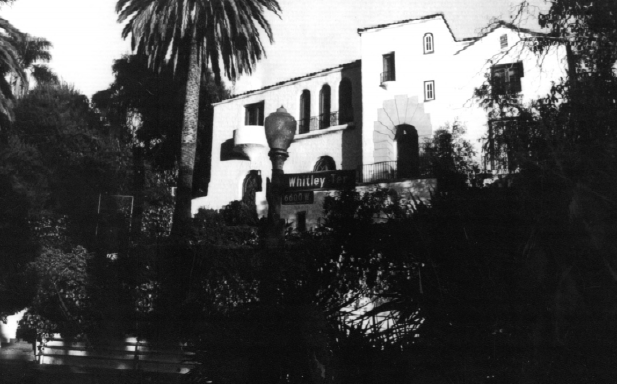
6717 Whitley Terrace (Los Balcones) was built in 1923 by owner and contractor M.C. Kersh. The Mediterranean style home has a Spanish tile roof, arched French windows and doors with balconettes, and two convex balconies. The three story, 2,705 square foot home has four bedrooms and three and one-half bathrooms. There is a one bedroom apartment in the basement. The home has a detached two car garage on Whitley Terrace. Below, 6717 Whitley Terrace is on the right and photographed in the mid 1920s.
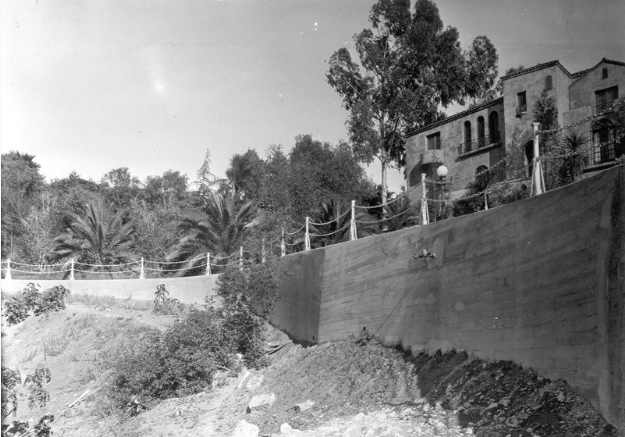
The Kershes auctioned the house in 1928. Another owner, George Grist, built another garage in the back of the house which had access at 2026 Grace Avenue. The back garage has since been torn down in 2018. Below is the property pictured in 1928 when retaining walls were being built.
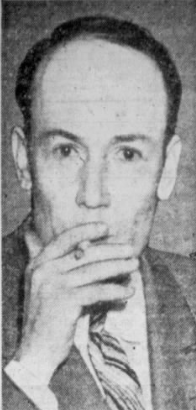
From 1933 to 1942, lawyer Bingham Gray resided at the Whitley Terrace home. William Bingham Gray was born in Virginia in 1896 and graduated from Yale Law School with honors. The promising young attorney started his career in Los Angeles in the 1920s but succumbed to be an “ambulance chaser” defending victims in accidents and divorces. He was a well-known attorney who had worked with many actors from the 1920s and 1930s including; Thelma Parr, Colleen Moore, Charlotte Jackson, Marion Shelton, Dianne Carroll, and Lona Andre.
Perhaps his most infamous case was that he defended actress Dorothy Mackaye for murder. Dorothy met her first husband, Vaudeville performer, Ray Raymond, while performing in the chorus in one of his shows. He was so smitten with Dorothy, they eloped immediately even though he was married to someone else who had bigamy charges brought up against him. After the charges were sorted out, he and Dorothy had a baby girl and the three moved to Hollywood into a small bungalow at 2261 Cheremoya Avenue (pictured below). The 1,622 square foot house is worth $1.4 million today.
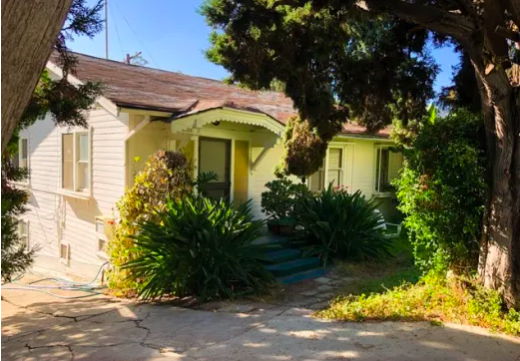
Raymond, a heavy drinker, was often traveling with vaudeville leaving his wife and baby alone. Dorothy, who was craving attention, began hanging out with an old friend, actor Paul Kelly, whom she and Raymond met years ago when they were working on a show together. Kelly started show business when he was a child and had already appeared in 55 films before he turned 18. Kelly lived only three blocks away from Raymond and Dorothy at 2420 N. Gower Street (pictured below).
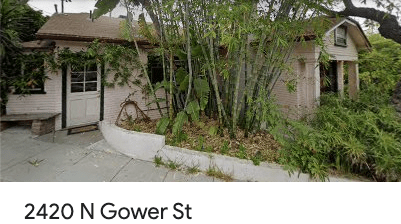
Their friendship turned into a hot, steamy affair and the two did not hide it. Dorothy would often spend the night at Kelly’s apartment, according to her maid. Kelly’s Japanese houseboy would serve the two meals and Gin Fizzes while they were in bed. Ray, who was distraught over their affair, returned home in April of 1927 to try and convince Dorothy to give up her affair with Kelly. On the night of April 16, Dorothy went out to buy Easter eggs, but headed over to Kelly’s house and the two proceeded to get drunk off Gin Fizzes. Dorothy told Kelly that Ray was telling others about the affair; Kelly called Ray on the phone who suggested Kelly go to the Cheremoya house to talk in person. Kelly went over around 7:30 p.m. and Raymond immediately demanded to know where Dorothy was. The heated argument turned into a physical altercation and Raymond, who was 12 years older than Kelly and much smaller, took the brunt of the fight. Kelly punched him six times in the head and Raymond collapsed to the floor. The housekeeper and their daughter witnessed the beating. Although Ray appeared to be stable that evening, he went into a coma the next morning. Raymond died at 5:20 a.m. on April 19, 1927.
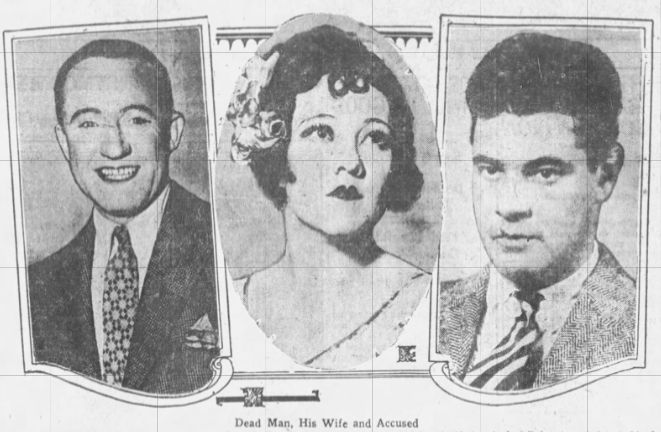
However, Dorothy paid the doctor, who happened to be a friend of hers, $500 to list the cause of death as “natural causes”. Someone who worked in the hospital, notified the newspapers that an actor died by being badly beaten. Consequently, the police were contacted and another autopsy was ordered. The later autopsy found that Raymond died from brain hemorrhaging caused by the beating. Kelly and Dorothy were arrested; she hired Bingham Gray to represent her. Kelly and Dorothy’s trial was one of the most sensationalized hearing of the 1920s. Their love letters were read in court; one of Kelly’s letters to Dorothy was written in pig latin. For years to come, jokes about pig latin were told via newspapers. When Dorothy took the stand, others noticed that she was very plain and spoke with a lisp; she was ridiculed for being part of a love triangle. However, she declared that she and Kelly were never lovers and when she spoke, she had a tone of superiority and was part of the Hollywood elite. The DA was able to discredit her by using her own words against her. Kelly’s houseboy and Raymond’s maid also testified to what they observed. Kelly was sentenced to 10 years in the San Quentin Prison and Dorothy got 1-3 years in the San Quentin Prison for Women.
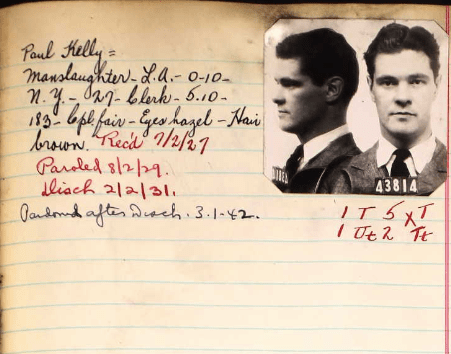
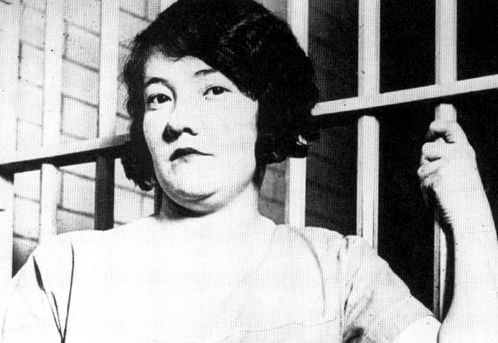
Before they were sentenced, Dorothy told Kelly that she would wait for him until he got out of prison. She also told him that he was young enough to be able to get some acting parts when he was released. She was released after one year. In prison, Kelly practiced his acting technique and when he was released after serving only 25 months. They got married in 1931 and Kelly helped to raise Dorothy’s daughter, now named Mimi Kelly. They resided in Whitley Heights at 2055 N. Las Palmas Blvd. after they got married.
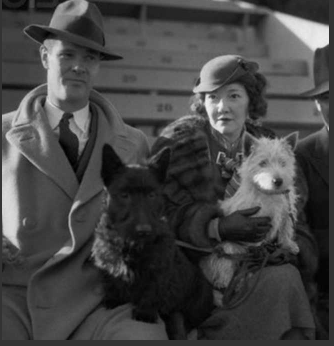
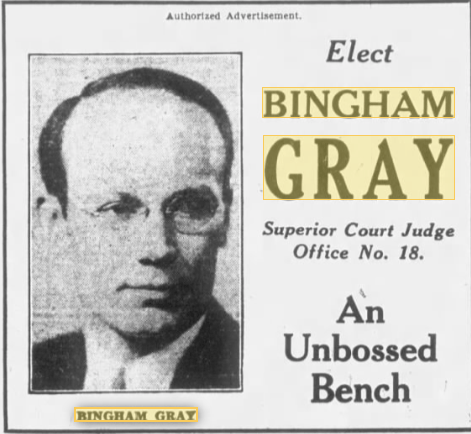
Bingham was busy representing his clients in the 1920s and 1930s. He even ran for judge of superior court in 1932 and was endorsed by actors Gary Cooper and Warner Baxter. However, some of his law practicing techniques may have been questionable, even unethical. In 1932, in 1932, the Red Pacific Electric Company accused him of selling affidavits of perjury by witnesses on a former case. His former client had sued Red Pacific and he allegedly paid witnesses to lie about the severity of the accident. This accusation went to the State Bar in 1933 and Bingham was looking at a year suspension. The complaint hurt his campaign, which he lost, but he was exonerated by the State Bar and was not suspended.
Bingham continued to get clients after the complaint. In 1940, Bingham was in trouble again. Another railway company that he had sued for a client, found out that he, once again, had witnesses lie under oath to make the accident look worse than it was. This time Bingham was arrested and released on $5,000 bond and would face a jury trial. On March 28, 1941, he was found guilty of grand theft, extortion, and perjury solicitation, a total of 18 felonies and sent to San Quentin for 1-14 years. Due to his prison sentence, he lost 6717 Whitley Terrace, which was put up for auction. Bingham appealed, which he lost and was ultimately disbarred from ever practicing law again.
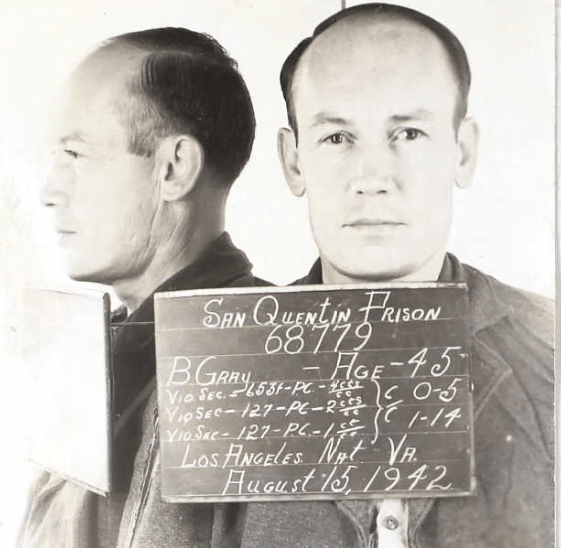
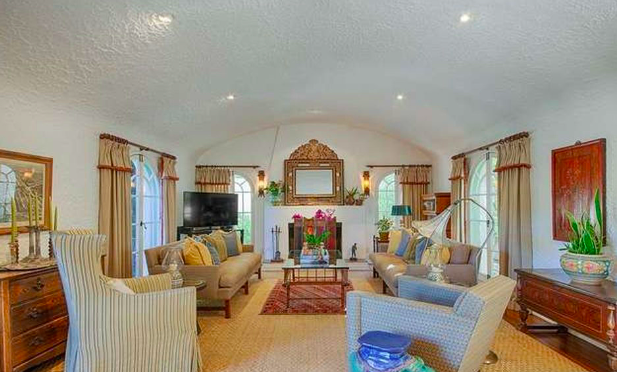
Bingham did not stay long at San Quentin; he was transferred to Chino Work Camp and then released after serving only one year. In 1944, he returned to Los Angeles and found a governmental job with the Navy, which he resigned from after suffering from a nervous breakdown. His sister, Mary, and brother, Robert, were both worried about him. On November 9, 1944, shortly after he had quit his job, he gave Mary all of his money indicating he would not need it anymore and then went to Echo Park. Mary called Robert and they both rushed to the park. Bingham was found dead, floating in the lake. Robert thought that Bingham may have possibly taken poison before he went into the lake. Below is the living room of 6717 Whitley Terrace which is to the right of the entryway.
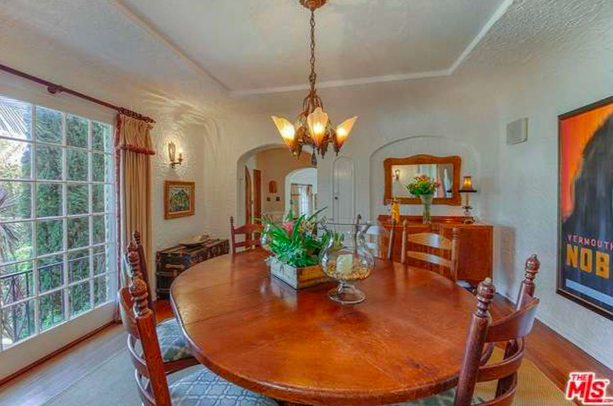
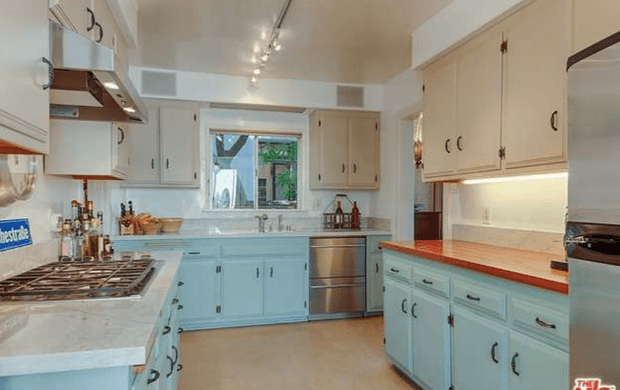
To the left of the entryway, sits the dining room and kitchen.
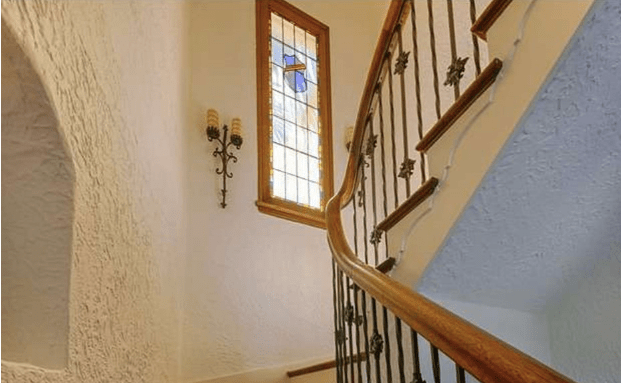
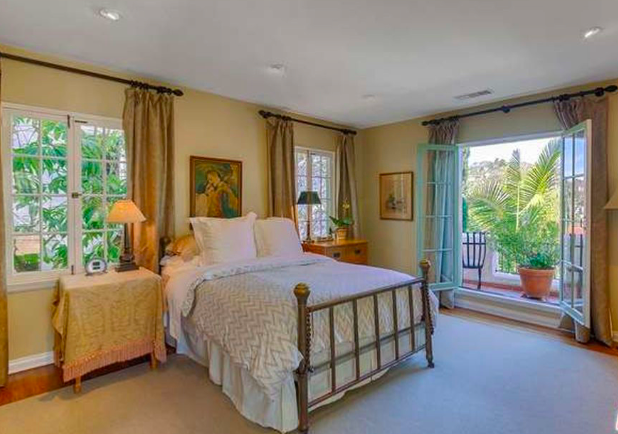
Upstairs are the four bedrooms of the main house.
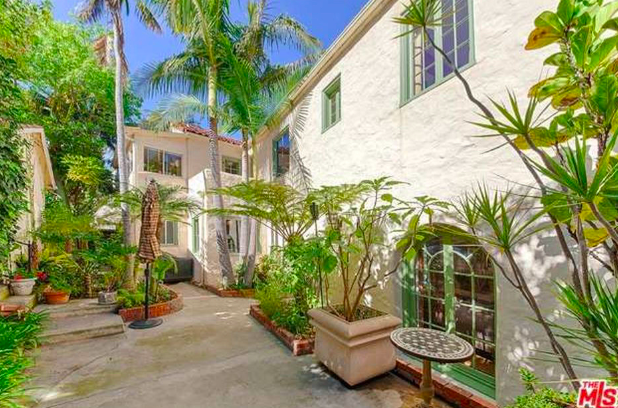
There is a spacious patio in the rear of the property which can be accessed by a gated driveway on Grace Avenue.
 Whitley Heights 101
Leave a comment