2058 Watsonia Terrace
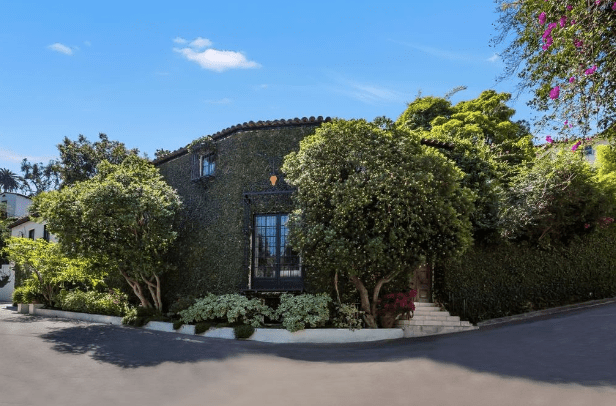
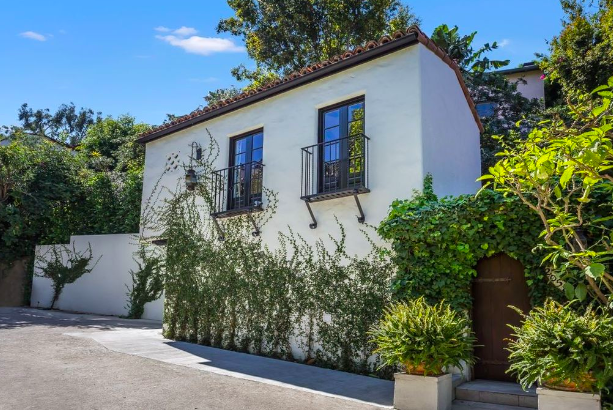
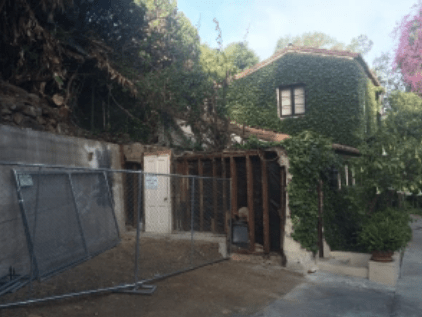
Watsonia Terrace was named after developer Arthur C. Watson who hired set designer and architect Harry McAfee to build a Normandy cottage at 2058 Watsonia Terrace in 1924. Below, one of the earliest photographs of the property, which is on the bottom and just under 6717 Milner Road.
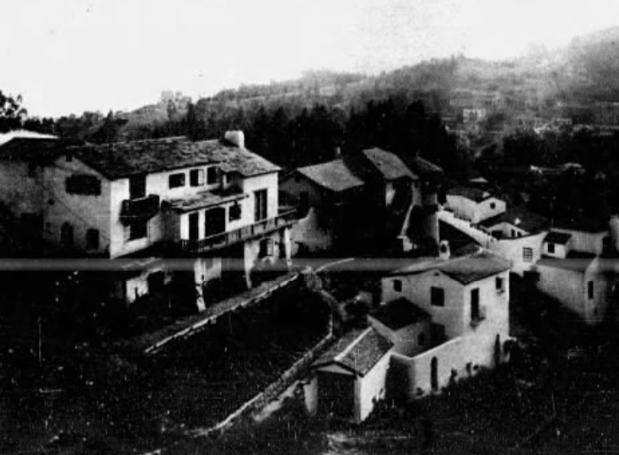
McAfee, who worked as an art director and set designer for MGM studios, contributed to over 60 films between 1933-1955. His films included: Presenting Lily Mars (starring Judy Garland) in 1943, Ship Ahoy (Eleanor Powell and Red Skelton) in 1942, After the Thin Man (William Powell and Myrna Loy) in 1936, and Everybody Sing (Judy Garland) in 1938. McAfee’s architectural accomplishments include residences at 912 N. Rexford Drive, Beverly Hills (1925), 7475 Hillside Avenue, Los Angeles (1926), and 6708 Milner Road, also in Whitley Heights (1926). The Rexford Drive property was torn down in 1988. 7475 Hillside Avenue (pictured below), sits just below Runyon Canyon. 6708 Milner Road is located just above Watsonia Terrace in Whitley Heights.
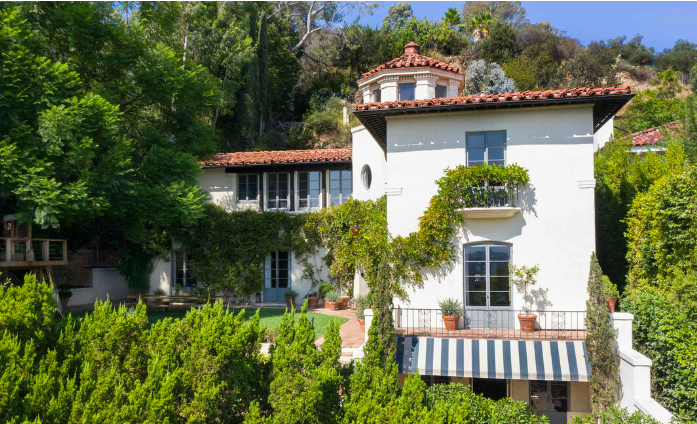
Watson did not keep the property long and sold it to tax attorney Erwin “Pete” Werner and his wife, Helen in September of 1925. The Werners transformed an outside patio into a dining room as soon as they took possession of the home. In 1926, the house was burglarized and Mrs. Werner’s fur coat was stolen. In 1929, the Werner’s were trying to swap this house for another in Pasadena but were unsuccessful so they remained at the residence. In June of 1932, the house was for rent for $125 a month. They must have rented the house to William Faulkner during this period. Below is what the property looked like prior to ivy growing down the front of the home. McAfee’s other home that he designed is the house in the back behind 6727 Milner Road (left) and 6717 Milner Road (right).
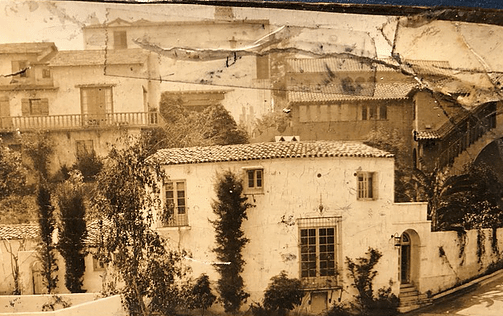
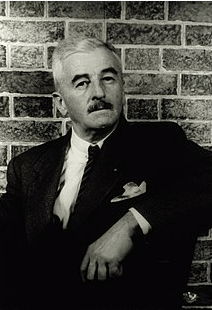
Faulkner, who was known for his novels and short stories that were set in Mississippi, was offered work by MGM Studios as a screenwriter in 1932. Since he was in need of money, he accepted the position and arrived in Culver City that same year. From 1932 to 1954, Faulkner worked on approximately 50 films including, To Have and Have Not (1944), Mildred Pierce (1945) and The Big Sleep (1946). Although his home remained with his family in Mississippi, he would travel to Hollywood and live like a vagrant. His temporary addresses included the Highland Hotel at 1921 N. Highland Ave. in Hollywood; the Garden of Allah apartments on Sunset Blvd.; a house on El Greco St. in Santa Monica; and 2058 Watsonia Terrace, which he used as his studio. Faulkner battled alcohol addiction and was known to go on long Whiskey binges which eventually affected his health. During a 1937 visit to the Algonquin Hotel in New York, after a days-long bender, he passed out against a steam radiator and severely burned his back. Faulkner received the Nobel Prize for Literature for 1949 and he received two Pulitzer Prizes, for “A Fable” in ‘1955 and “The Reivers”, which was published shortly before he died in 1962.
The Werner’s owned the home through the 1930s. Helen married Pete, a successful lawyer, in Los Angeles in 1920 and she determined that he would be governor someday. Known throughout Los Angeles as “Queen Helen”, she maneuvered her husband’s political career onward and upward as he successfully ran for city attorney and won in 1929. Queen Helen was so important politically that she found it necessary to open a downtown office to handle the stream of political callers. She widened her circle of friends tremendously after she acquired Magnolia Farm outside of Los Angeles and built a fine colonial home.
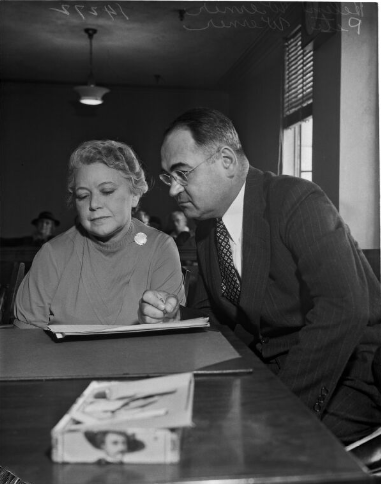
There she entertained all the bigwigs she thought might help her to realize her political ambitions. Her lavish parties became known to the media, but none were ever fortunate to attend since Helen stayed away from any publicity. They were able to report second-hand accounts of an elaborate bridge party she gave for a large group of ladies. The guests appeared wearing gaudy pajamas and blonde wigs if their hair had not been bleached as had their hostess’s. Queen Helen outdid all of them by wearing black lace pajamas over white tights. On another occasion she courted future votes by inviting members of a victorious USC football team to Magnolia Farm and fed them a seven-course dinner that began with nine rounds of cocktails and unlimited champagne. Soon Queen Helen seemed to have made herself more important in her unofficial position than many an elected officer. Helen and Pete Werner in court, pictured below.
However in 1934, Helen was being investigated by the Federal Government in a mail fraud case against certain oil company officials, Helen, and other officials as they allegedly bribed other Federal officials in the interest of the defendants. Their investigation resulted in indictments against Queen Helen, Justice Gavin Craig of the District Court of Appeals and a minor politician named Joseph Weinblatt. Justice Craig and Weinblatt were convicted and sentenced, but Queen Helen was freed.
So the state of California charged Queen Helen, husband Pete and Weinblatt with grand theft, soliciting a bribe and conspiracy. During the trial, the most damaging testimony came from red-haired Gertrude Davey, who owned Lon Chancy, Jr. Cafe in Hollywood. Davey stated that she went to Pete Werner’s office and paid Queen Helen $250 of a $500 installment she was told it would cost to recover her revoked liquor license from the State Board of Equalization. Queen Helen, she said, boasted that she controlled three members of the Board, exclaimed: “My dear, these things come high. You see, there are railroad fares and hotel bills and we have to take care of the boys.” Joseph Weinblatt said, according to Mrs. Davey: “Getting a liquor license through Mrs. Werner is just like getting a special dispensation from the Governor and, in addition, the boys won’t bother you.” All were found guilty in 1939, but won an appeal. Queen Helen would die a few years later and Pete went on to own the Los Angeles Times and eventually remarried.
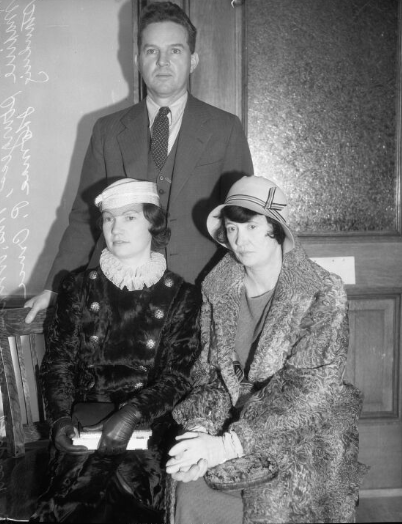
Between 1929-1932 attorney Thomas Cruce and his wife, Elinor rented the home from the Werners. Cruce was a well-known criminal defense attorney in Los Angeles. He represented silent screen actress Mae Murray in 1928 on a charge of “forcible entry” and was found not guilty after a trial. Murray poured on the drama in court and fainted after hearing the verdict. Perhaps the most well-known case the Cruce was involved in was defending Maxine Sturgess and Anna Laura Lowe. In 1933, Lowe was sued by her millionaire Native American husband, Jackson Barnett, for marrying him only to gain access to his money. Jackson’s Oklahoma shack happened to be over an oil mine so he struck it rich! Lowe stirred controversy again in 1934 after Jackson died and she had him buried at Hollywood Cemetery with a Christian funeral service. She then fought for his fortune but the courts rules that their marriage was not valid. When Federal agents tried to serve her an eviction notice, she and her daughter, Maxine, fled from them and both were arrested. Lowe and her daughter were living in the deceased man’s mansion on Wilshire Boulevard and refused to leave when the court invalidated their marriage. Below is Cruce with Lowe and daughter, Maxine.
Socialite Edith Hoffenstein, pictured below, purchased 2058 Watsonia Terrace in 1940 after she divorced her husband, MGM scenarist and poet Samuel Hoffenstein. The two married in Long Island, New York in 1927 and Edith sued him for mental cruelty. Edith showed the judge threatening poems that he would leave her and indicated he was controlling to the point that he would not even allow her to play tennis with friends. Hoffenstein was ordered to pay his wife $4OO a week for 89 weeks and $225 a week for 104 weeks, a total of $69,000. Samuel had also worked for Paramount Studios and 20th Century Fox and was known for films such as Dr. Jekyll and Mr. Hyde (1931), Laura (1944), Phantom of the Opera (1943) and The Wizard of Oz (1939).
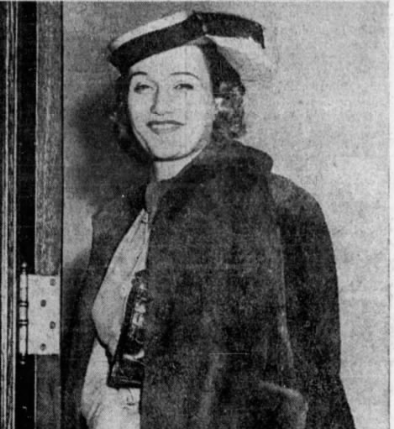
Edith then married author and newspaperman Gerald Breckenridge circa 1942. Gerald was employed as a scenarist for Columbia Studios, but then entered the draft and left overseas for World War II. In 1943, Gerald was reported missing somewhere in the Asian seas and never heard from again. Before Edith sold the home in 1951, she had rented it to actress, Gloria Swanson while she was filming Sunset Boulevard.
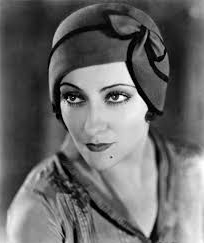
Swanson started in silent movies in 1915 and it was Cecil B DeMille who transformed her from into a movie star. Swanson collected husbands, she was married six times, and even lovers, as she was rumored to be having an affair with Joseph P. Kennedy, the father of John F. Kennedy. It was Joe Kennedy that produced her movie, Queen Kelly (1932) and directed by Erich von Stroheim. Years later, Gloria and von Stroheim starred together in Sunset Boulevard and it was von Stroheim’s copy of this film that Swanson was watching as Norma Desmond in Sunset Blvd. (1950) when she leaped into the projection beam shouting, “Have they forgotten what a star looks like? I’ll be up there again, so help me!”–ironic in that the butler-projectionist was, again, von Stroheim. Swanson was nominated for Best Actress for Sunset Boulevard but lost to Judy Holliday. Below is Swanson and her daughter circa 1950 and possibly in the Watsonia Terrace house.
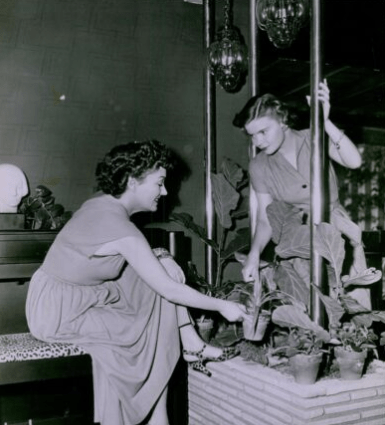
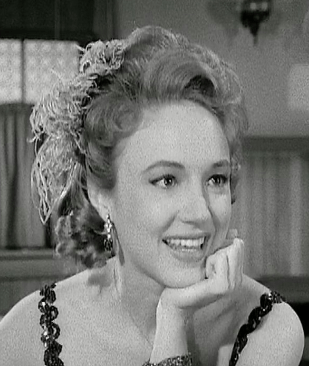
Richard and Frances Whitfield bought 2058 Watsonia Terrace in the early 1950s. Their daughter, actress Anne Whitfield, pictured below, resided with them. Anne was born in 1938 in Oxford, Mississippi, and began acting at the age of 7 in 1945. She is known for her role as Susan Waverly in White Christmas (1954). She has starred in numerous television shows including; Father Knows Best, The Donna Reed Show, Bonanza, Rawhide, 77 Sunset Strip, That Girl, Days of Our Lives, Perry Mason, Gunsmoke, Adam-12 and Emergency! Whitfield’s parents, Richard and Frances, owned this property during the 1950s through the 1990s as she was still listed in the city directory. In September of 1956, they gave Anne a surprise birthday party at the home for her 18th birthday.
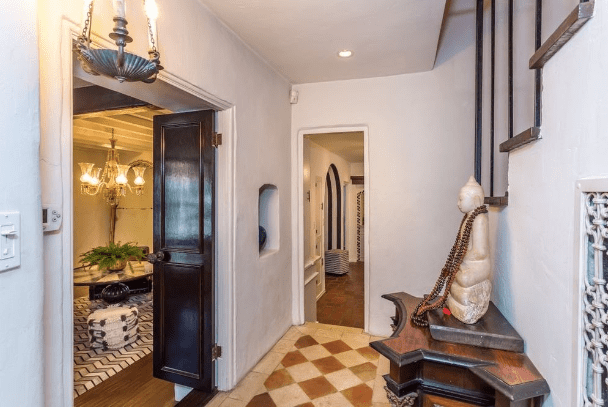
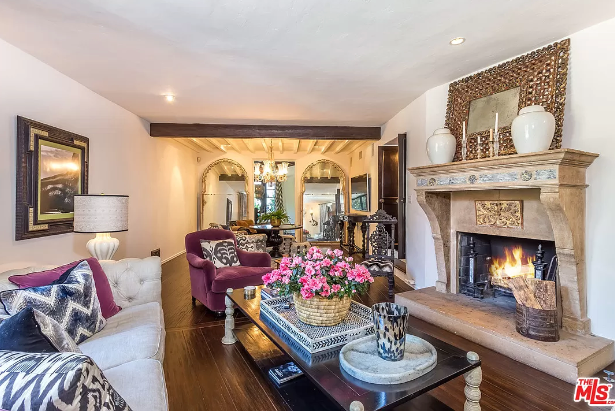
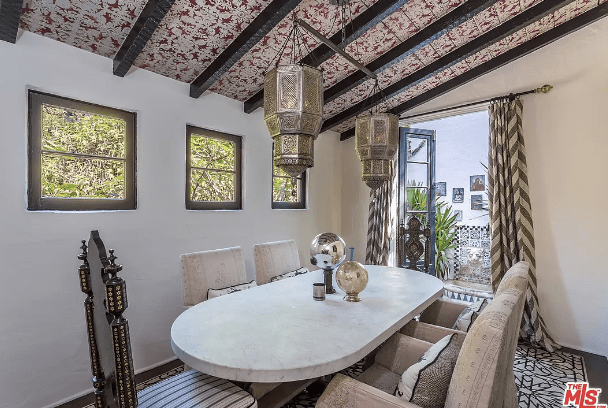
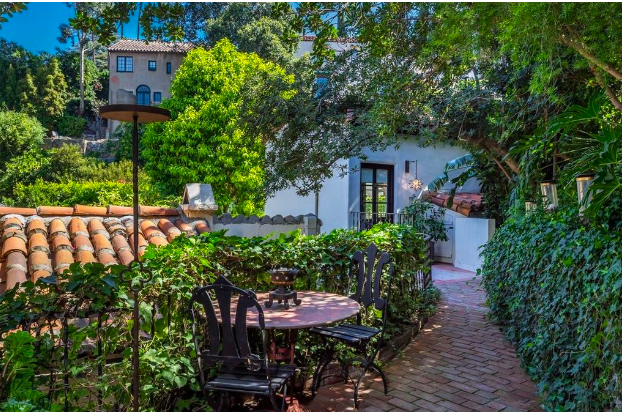
Interior Designer Martyn Bullard purchased the home in 2001. Martyn Lawrence Bullard is a multi-award winning Los Angeles-based interior designer, has been consistently named one of the world’s 100 top interior designers by Architectural Digest, featured permanently in Elle Decor’s A-List, and listed among the top 25 designers by The Hollywood Reporter. Martyn’s A-list clientele include Kylie Jenner, Khloe Kardashian, Kourtney Kardashian, Tommy Hilfiger, Cher, Ellen Pompeo (he decorated her Whitley Heights home on Wedgewood Place when she lived there), and Eva Mendes, to name a few. Bullard also decorated the Prospect Hotel in Whitley Heights and the Colony Palms Hotel in Palm Springs. He also has a collection of exterior and interior fabrics, wallpaper, furniture, and home accessories available through his firm. His style and design can be seen throughout the photos of 2058 Watsonia Terrace.
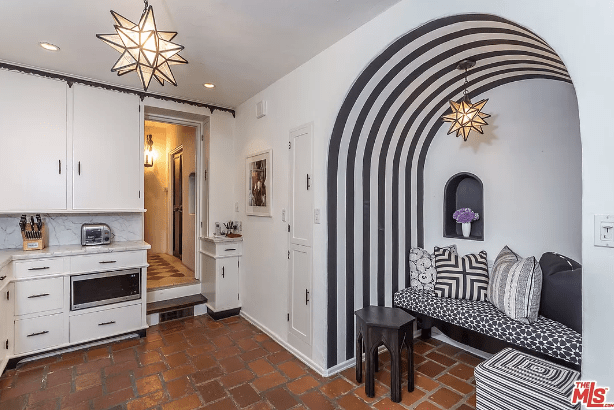
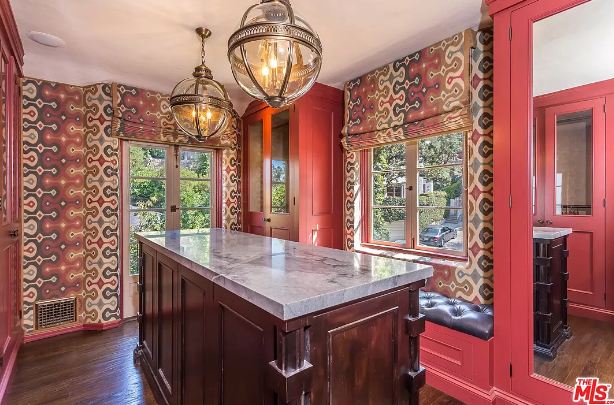
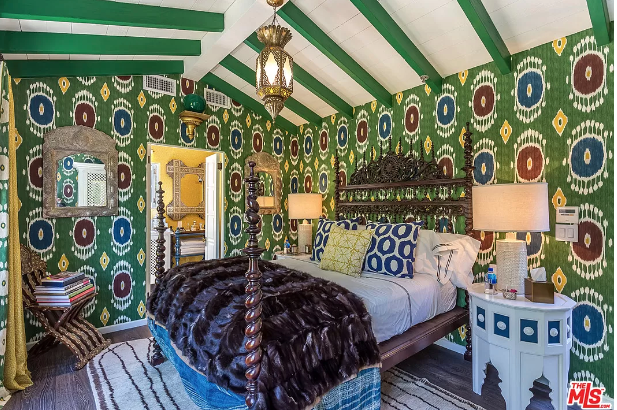
In 2014, Bullard demolished the garage and rebuilt it with a recreational room and half a bathroom over the garage.
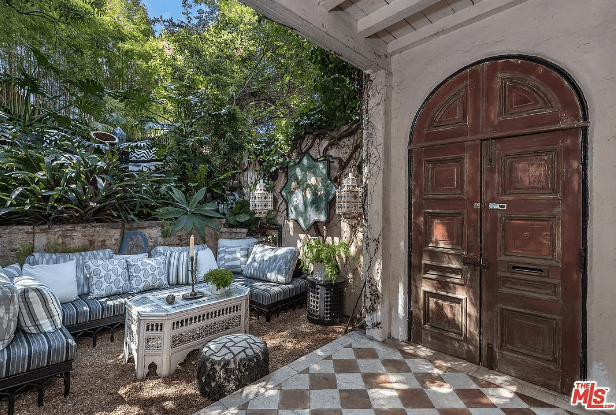
The outside patio areas are also decorated around the lush landscaping, giving much privacy.
 Whitley Heights 101
Leave a comment