2145 Whitley Avenue
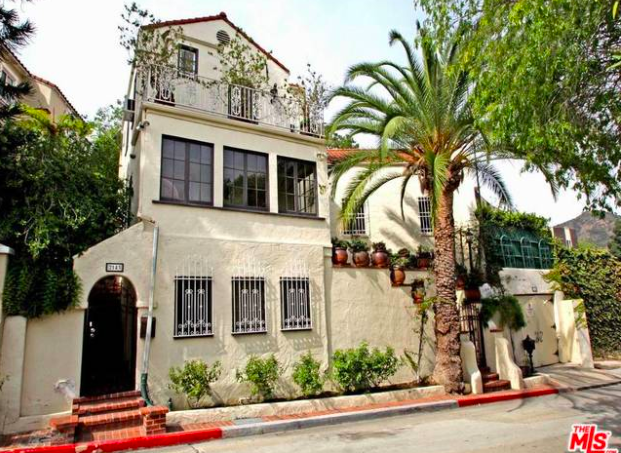
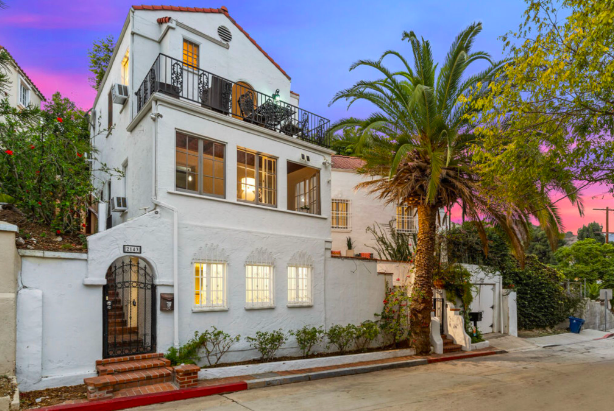
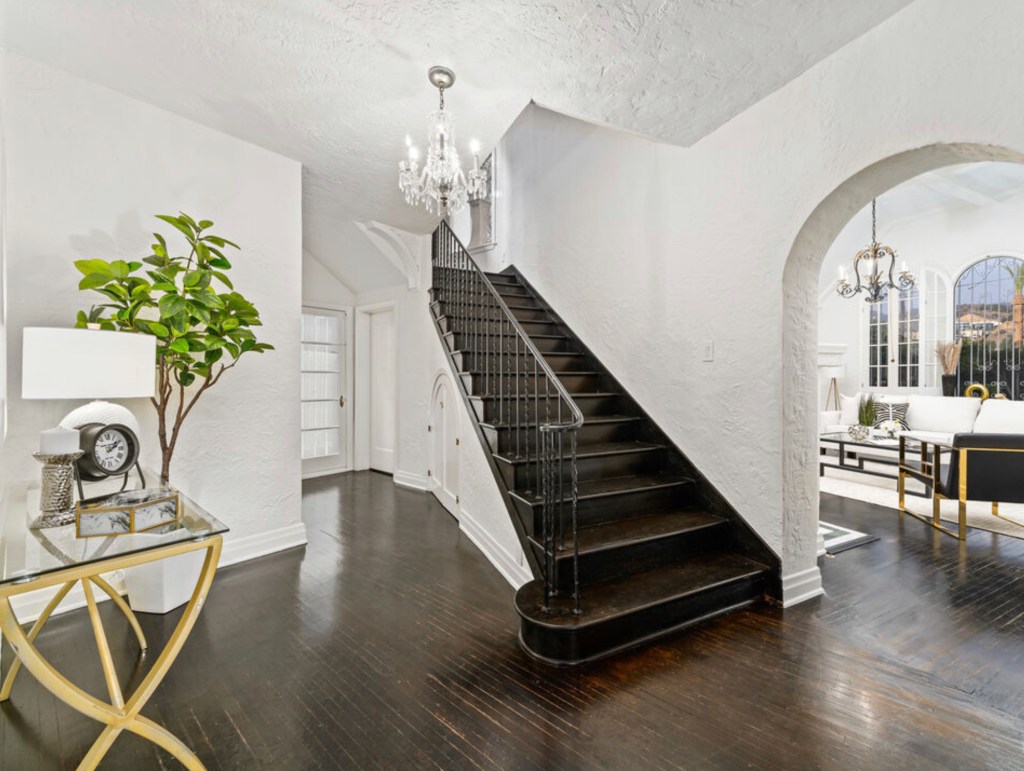
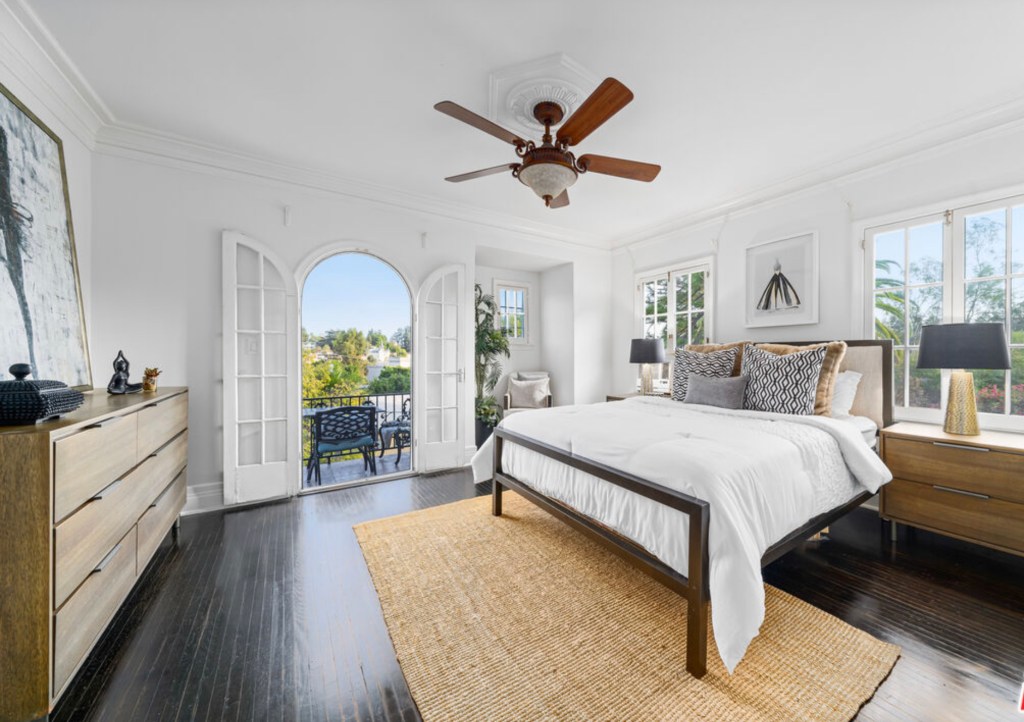
2145 Whitley Avenue was built in 1924 by architects, Fowley and March, who were hired by a retired publisher, Walter E. Tijou. Walter moved into the home with his wife, Carrie and daughter Hilda. 2145 Whitley Avenue has a formal dining room, a breakfast room/den, a kitchen, living room with high beamed ceilings, high arched windows, and a fireplace. There is a balcony off of the master bedroom in the front of the home. A detached one-car garage is adjacent to the home and a lower level studio that has a 3/4 bath, a kitchenette and a private entrance which was added in 1950. This property is on the other side of the 101 Freeway, just below Iris Circle.

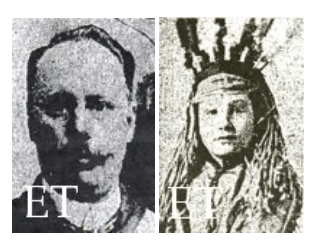
The Tijou’s were from Bromley, England and had recently purchased a home in Los Angeles on 48th Street and intended to sail back to England and bring his family to Los Angeles. Walter Tijou’s father died a few years prior and he inherited a Canadian estate and made annual boat trips to Toronto to check on the holdings. On this occasion, he brought his son, Howard, to Los Angeles. Although only ten, Howard, had already lived an adventurous life. The previous summer, while away at school in Europe, he had been trapped by the outbreak of war and, according to his mother’s account, escaped by train after his father went behind enemy lines to recover him. A few years prior to that, while accompanying his father on a business trip, he had been caught in Mexico during Pancho Villa’s revolution. Below, Walter and Howard Tijou are pictured.
En route back to England, Walter and Howard boarded the RMS Lusitania on May 1, 1915. During this time, the United States was not on best terms with Germany and was worried that Germany may attack one of the ocean liners. The German Embassy decided to print a warning advertisement in 50 American newspapers:
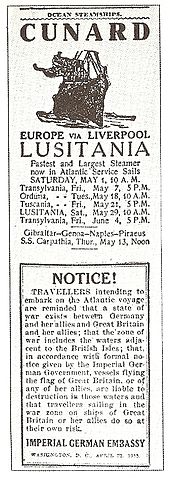
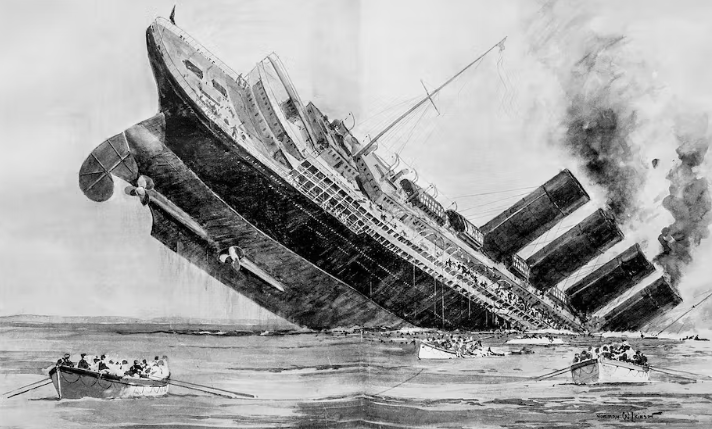
The boat had already left the port when Howard saw the above advertisement in the newspaper he was reading. All was well until the Lusitania arrived off of the coast of Ireland and the boat was struck by a German submarine. Walter had been in the bathroom when he heard the explosion. He found the door jammed, but by his strength and three pulls he got the door open and ran with two lifebelts on deck shouting ‘Howard! Howard!’ But there was no answer, and Walter waited until the boat turned over and he had to jump into the sea. Some man pulled him on an upturned boat, then a small fishing boat brought them to land. Walter Tijou returned to Bromley alone, his 43rd crossing at a tragic end. Sick from his experience, and full of regret at not finding his son before the ship sank, this would be his son’s 11th and final transatlantic crossing.
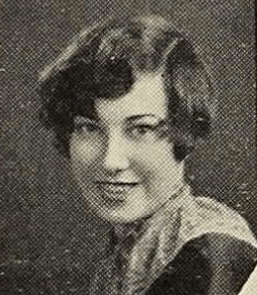
The Tijous would learn that their son had been playing on deck with some other boys when the ship was torpedoed. His body was never recovered. Walter was awarded $5,000 for his injuries and $500 for lost possessions. He was advised by doctors to move to a “warm and dry climate”, so in November 1919 he moved to the United States. Walter, Carrie and Hilda moved to Los Angeles and start a new life settling in at 1150 W. 48th Street in Los Angeles. Walter was in the publishing business and was able to save money in order to build the Mediterranean villa in Whitley Heights. Hilda was a beautiful girl and attended Hollywood High School as seen in her 1927 yearbook photograph below:
However, the new house did not change the way Carrie felt; she was still devastated by the loss of her first son. On April 14, 1928, she swallowed a bottle of poison and killed herself at the age of 45. Hilda, heartbroken by this event, rushed into marriage to Donald D. Hook the next month and the two lived with her father on Whitley Avenue. After the grief wore off, Hilda came to her senses and had the marriage annulled.
Hilda remarried to Homer Rhoads sometime in the 1930s, they had one son, John, and moved out of Whitley Heights.
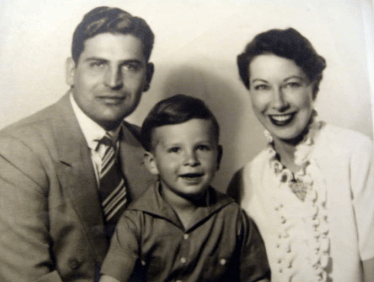
Homer started in real estate and then went on to finance and made millions of dollars. Walter sold 2145 Whitley Avenue and moved in with them and died in 1941. The Rhoads eventually settled in a mansion located at 291 Delfern Drive. For a period of time, Hilda attempted to start an acting career. She had minor roles in four movies: You Can’t Take it With You (1938), Weekend at the Waldorf (1945), Undercurrent (1946), and The Postman Always Rings Twice (1946). In 1952, the Rhoades had another baby, a daughter named Christina.
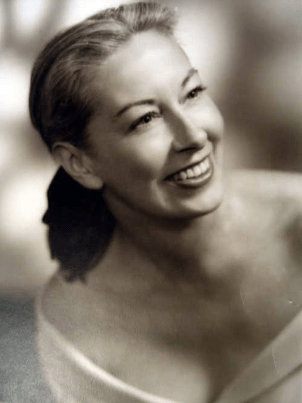
It seemed like a fairytale for Hilda-marrying a handsome husband, having a baby and living a luxurious lifestyle, hosting charity events and decorating her Holmby Homes estate. Delfern Drive ran through Beverly Hills and hosted a cast of notables including; Mia Farrow, Eva Gabor, Audrey Hepburn, Anita Louise, Frank Sinatra, and Bugsy Siegel (where he was murdered). Actor Paul “Brinkman” Brooks and his wife, actress Jeanne Crain, lived next door. Although Paul starred in ten movies with minor roles, Jeanne had a more sustainable career, starring in almost 60 roles. Jeanne attended UCLA to study acting and at the age of 18, got a small part on The Gang’s All Here (1943) and a contract at Fox Studios. She starred in State Fair (1945) and then married Paul; they ended up having seven children. Between her pregnancies, Jeanne starred in Pinky (1949), in which she was nominated for Best Actress. Jeanne’s last film was in 1972.

Despite her busy career and motherhood, Jeanne was known around town as a “partygirl” and it was no surprise that her husband found out that she was cheating on him. The joke was on Hilda when she found out that it was with her husband, Homer. Apparently, Homer kept a secret apartment located on 1218 Mt. Larrabee Street in West Hollywood.
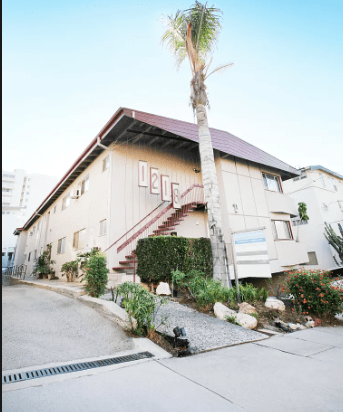
In December of 1956, Homer was at the apartment and an associate named Tim Ryan had visited him there. Although Jeanne divorced Paul Brinkman, they got back together. However, it was rumored that Jeanne was still seeing Homer. Paul Brinkman went over to the apartments and saw Ryan’s vehicle parked in Homer’s garage; thinking it was Homer, Paul went over and assaulted Ryan. Brinkman was arrested and took the case to trial and was found not guilty. Brinkman claimed that Ryan tried to run him over in his vehicle. A tenant who lived in the building testified that he heard the car crash into a retaining wall. In 1961, Ryan sued Brinkman for $95,000 due to permanently damaging his eye and received a $5,000 settlement.
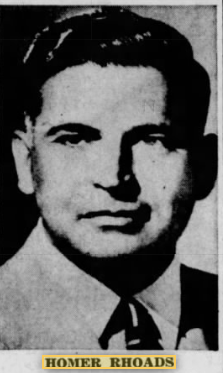
Hilda had enough of Homer’s lies and divorced him in 1961 and won a 1.2 million dollar property settlement from their house. Hilda and Christina eventually moved to Pebble Beach and would both relocate to Lake Tahoe where Hilda died in 1989. Their son John moved to Mexico City and worked in the securities field. Now back to 2145 Whitley Avenue…

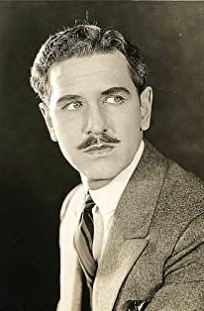
Between 1936-1938, actor John Roche resided at the property. Roche also resided at 6754 Wedgewood Place from 1928-1930. In 1922, he broke into the film industry with a featured role in The Good Provider. During the 1920s, he acted in both films and on stage, including several roles in Broadway productions. In the mid-1930s he took a break from films, focusing on the stage, including directing the play, Mackerel Skies, which had a short run at the Playhouse Theater in New York in 1936. Roche moved into this home after returning from New York. Roche returned to films in 1941, with a small role in the Norma Shearer vehicle, We Were Dancing. Over the course of his career he was involved in over six Broadway productions and appeared in over 50 films. His final screen appearance was in 1946’s The Brute Man. Roche died in Los Angeles in 1952.
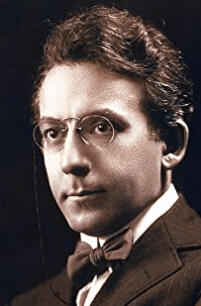
Actor Maurice Cass and his wife, Fay, resided at 2145 Whitley Avenue from 1938-1941. Maurice Cass was born on October 12, 1884, in Vilnius, Lithuania (then Vilno, Russian Empire). He emigrated to the United States to pursue an acting career and he began as an announcer and comedian in New York. Cass had a pleasant face, a small body and a big voice. With his nearsightedness, Cass was destined to play professors, doctors, writers, and managers. He started playing bit parts, often uncredited, and made a career as a character actor in more than 120 film and television productions. His best known work was Professor Newton, a supporting role in a series of space adventure movies made for TV and shown over the period from 1954 to 1956. Professor Newton had his own observatory (which was filmed at the Griffith Observatory in Los Angeles) and although elderly, he would often accompany the astronauts on their adventurous space flights. Maurice Cass’s character, Professor Newton, was replaced by Professor Mayberry upon Cass’s death of a heart attack, at the age of 69, on June 8, 1954, in Hollywood.



 Whitley Heights 101
Leave a comment