6707 Milner Road
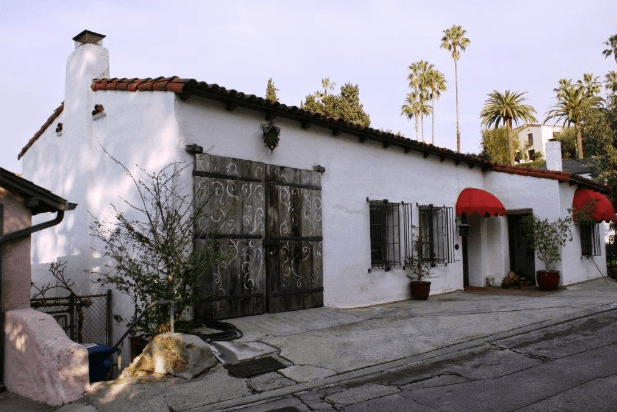
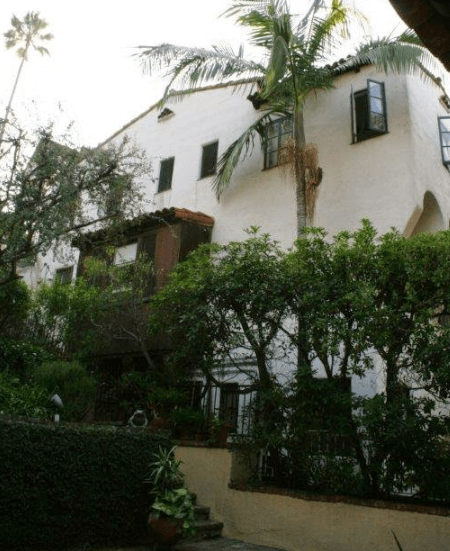
6707 Milner Road is the second home that was built by Kem Weber and the West Brothers in 1925. Kem and his family resided in this home until 1946. The Spanish style home consists of 3,504 square feet with 4 bedrooms and 4 bathrooms. The home sits on a downslope on Milner Road and contains three stories.
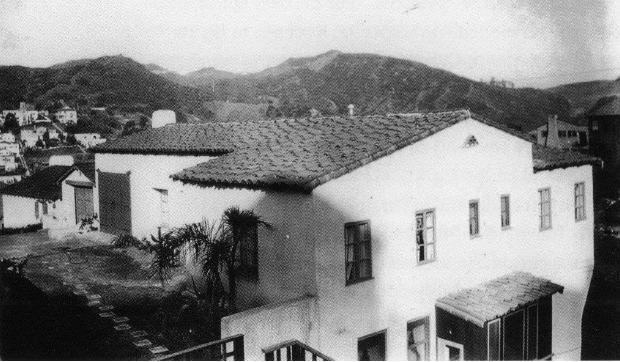
Karl Emanuel Martin “Kem” Weber (1889–1963) was an American furniture and industrial designer, architect, art director, and teacher who created several iconic designs of the ‘Streamline’ style. In the early summer of 1914, he traveled to San Francisco to supervise the building of the German Pavilion for the Panama-Pacific International Exposition, but when the war erupted in Europe in August, he found himself stranded in the United States. Born in Germany, Kem (he started using his initials as his first name) Weber became a US citizen in 1924. Weber moved to Los Angeles in 1921 and began working in the industrial and product design field for which he is perhaps best known.
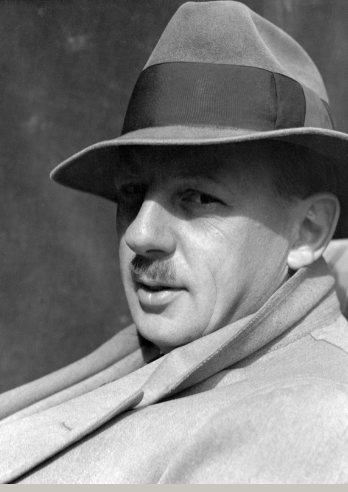
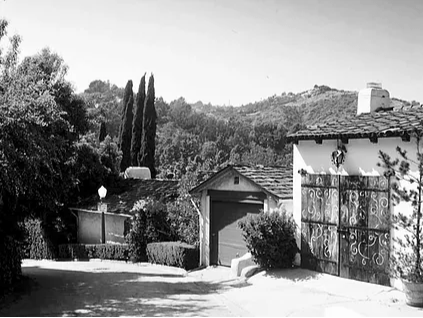
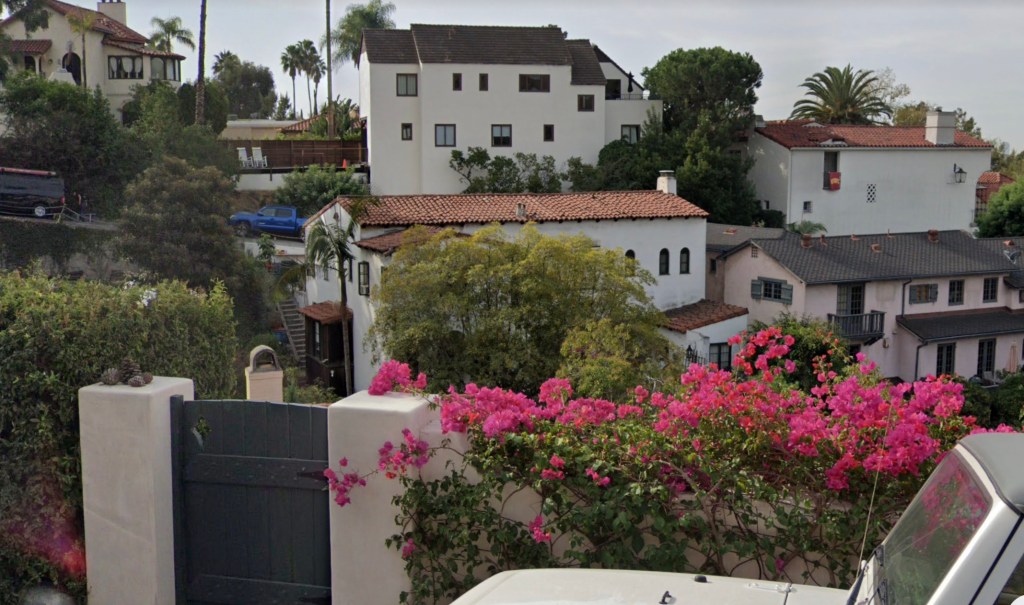
For the next several years, Weber did anything he could to make money. He worked for an advertising agency in San Francisco and operated a modern design studio in Berkeley. After the sinking of the Lusitania, which triggered anti-German sentiment, Weber, faced prejudice and was unable to find clients. He was forced to work as a lumberjack in the High Sierra. Toward the war’s end, he operated a chicken farm in Los Gatos with his young wife, Erika. In 1918 they moved to Santa Barbara where Weber taught art classes and opened a small factory in an old church to produce modern and period furniture. In 1921, Barker Brothers, impressed with his work, offered him a position in their design department, he jumped at the opportunity, which he remained there for the next three years. Weber then established an independent industrial design studio in Hollywood, where he also designed modern sets for films and private residences. Below the garage of 6707 Milner Road can be seen on the right.
Weber’s most famous work is probably the “Airline” chair of 1934, which exemplified the clean, streamlined style of the age, with its seat supported by a cantilevered frame reminiscent of wooden aircraft components. Practical, stylish and economical to construct and ship, the Airline chair failed to find a manufacturer. Most surviving examples come from the batch of 300 made for the Walt Disney Studios, largely handmade. Weber is also noted for being the main architect of the Walt Disney Studios complex in Burbank, California.
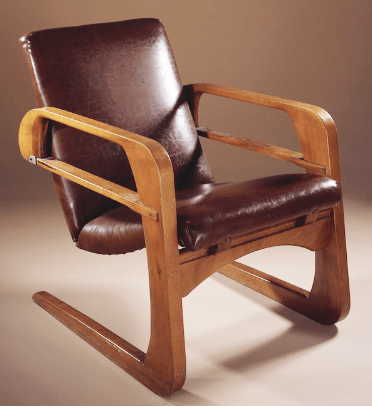
As chief designer for the Walt Disney Studios in Burbank in 1939, Kem Weber also designed the specialized animation furniture that went into the then new studio complex. The Disney animation furniture was designed for specific animation purposes with input from the artists who would be using it. It was all part of Walt Disney’s desire to create an utopian workplace for animated film production. Below the rear of the property can be seen with a partially obstructed view from a tree.
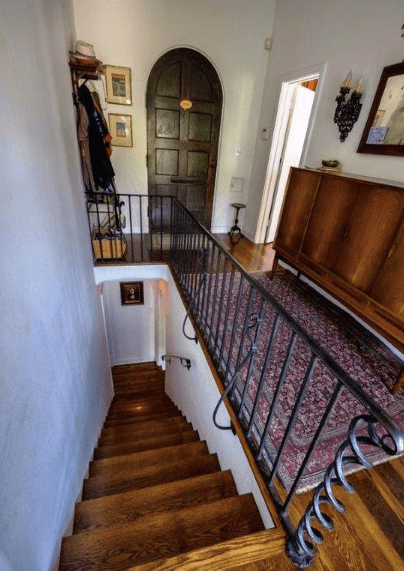
While working for Barker Brothers, he was able to study abroad in Europe, specifically Spain and France, where he brought back the idea to trend more to modern style furniture. The outbreak of World War II curtailed Weber’s design work. He tried to interest the government in a panelized construction system he had invented for defense-related housing projects, but could not secure a contract. After the war he moved back to Santa Barbara and worked mostly as an architect, building a handful of houses there and in nearby Montecito. By the late 1950s, his health began to fail and he died in 1963. Below the front door is on the upper floor which the stairs leading down to the main living area.
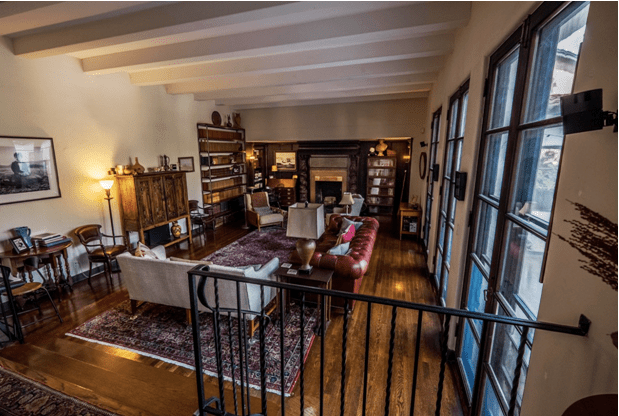
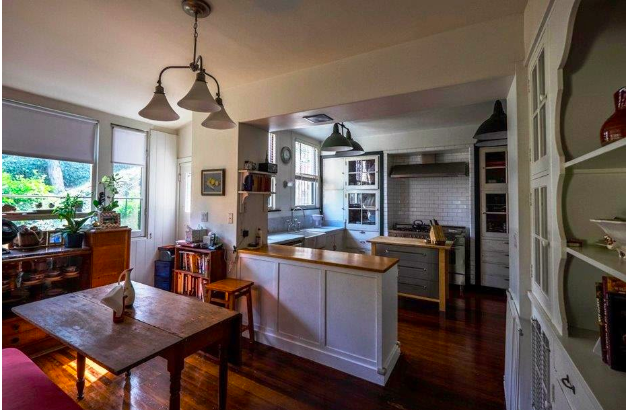
Kem and his wife, Erika had four children: Peter, Ursula, Anna and Erika. Peter went to college at California Polytechnic State University and became a Merchant Marine and was stationed at Catalina Island. In 1942, Peter married a former Fiesta Queen and Poly Royal Princess, Josephine Rizzoli and settled at 323 Metropole Street in Catalina. Below is the living room area and the view of Watsonia Terrace.
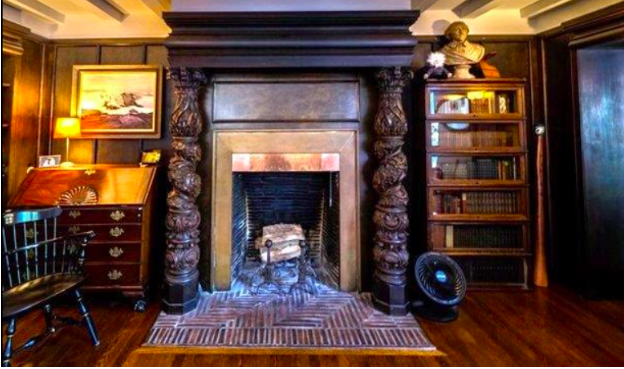
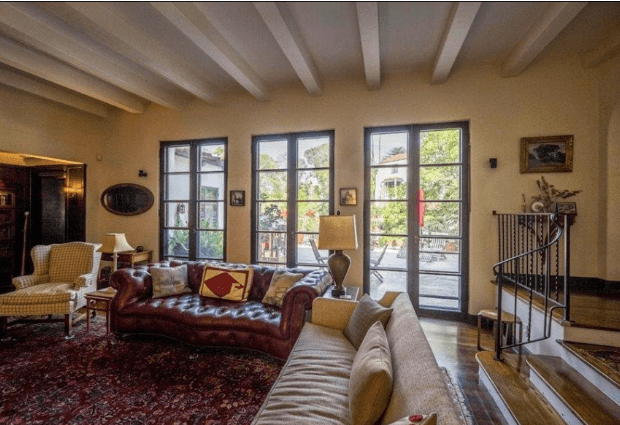
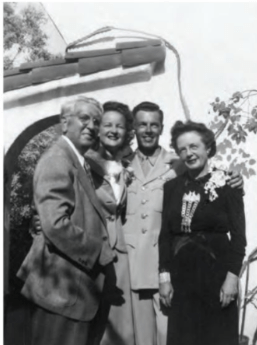
In 1943, Ursula became engaged to and married Alfred E. Stendahl, who was in the Army. Below is a photograph of Earl and Enid Stendahl (far left and right), with their son, Alfred and Ursula on their wedding day taken at the Weber residence in Whitley Heights.
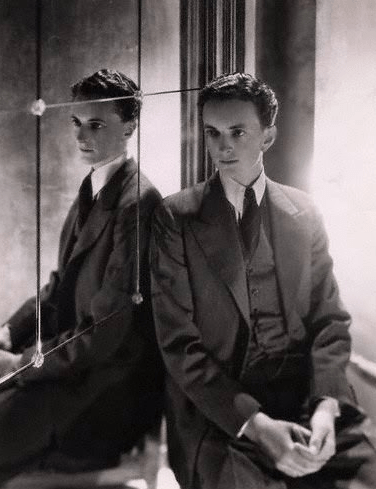
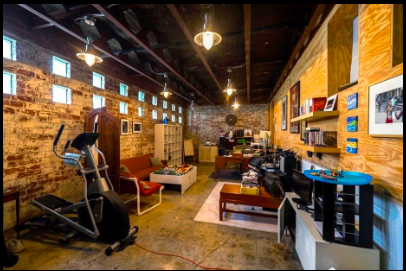
After the Weber’s moved out, 1940’s Edward James (see below), a noted English poet and surrealist art collector, moved into the home. He was an important patron of Salvador Dali and Rene Magritte in the 1930s. James stored his vast art collection in the room below (bottom floor of the property) during the war years until he relocated to Xilitla, Mexico near the end of the decade where he would later create the fantasy world of Las Pozas.
 Whitley Heights 101
Leave a comment