6746 Wedgewood Place
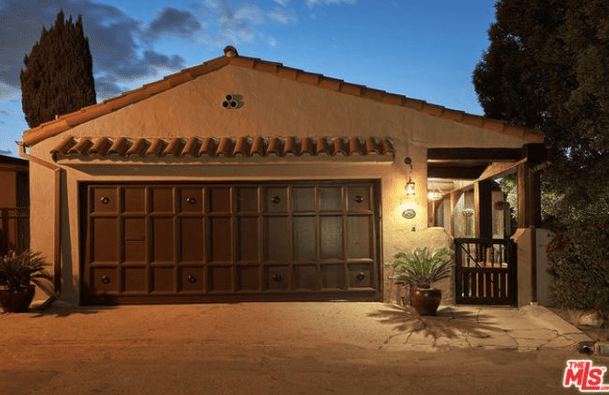
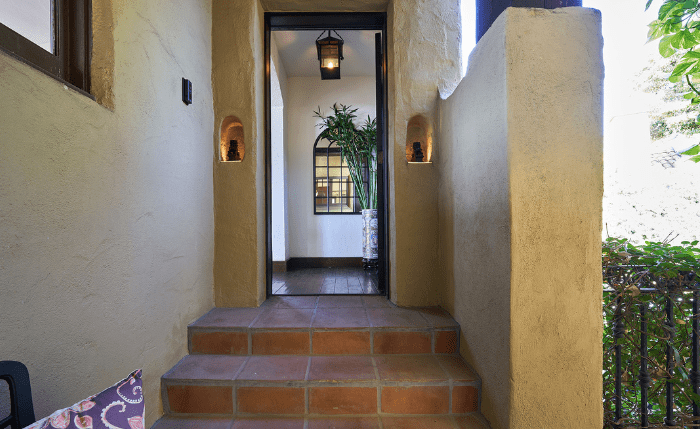
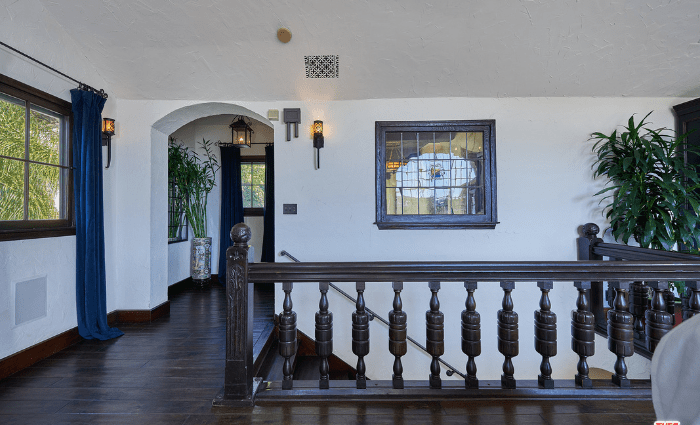
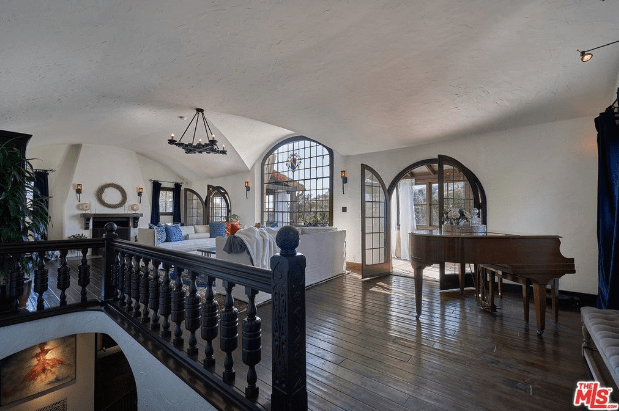
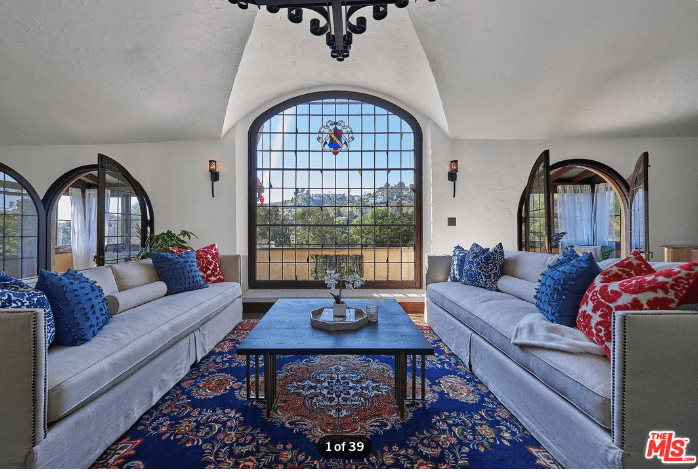
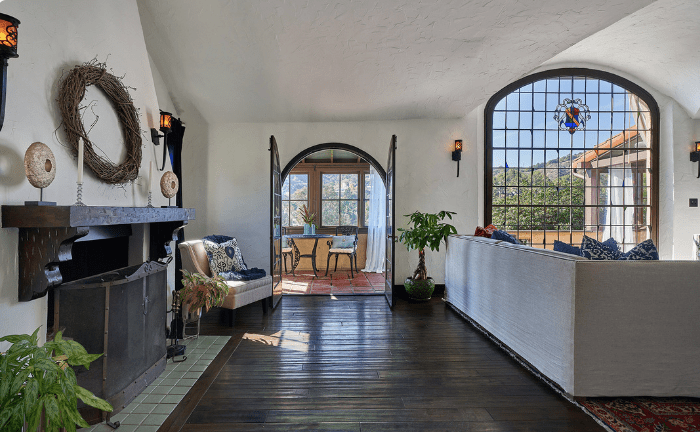
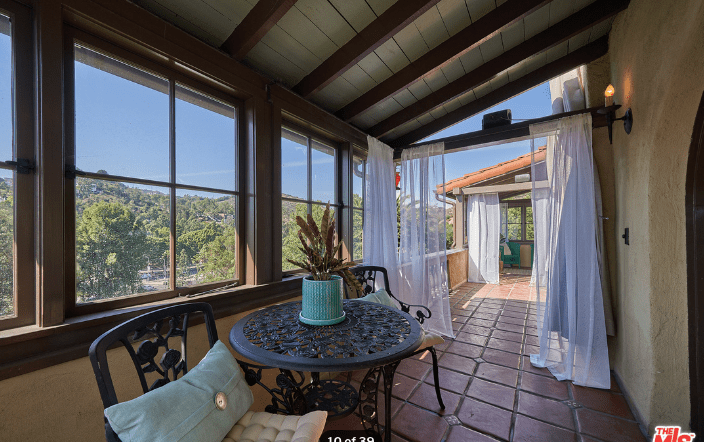
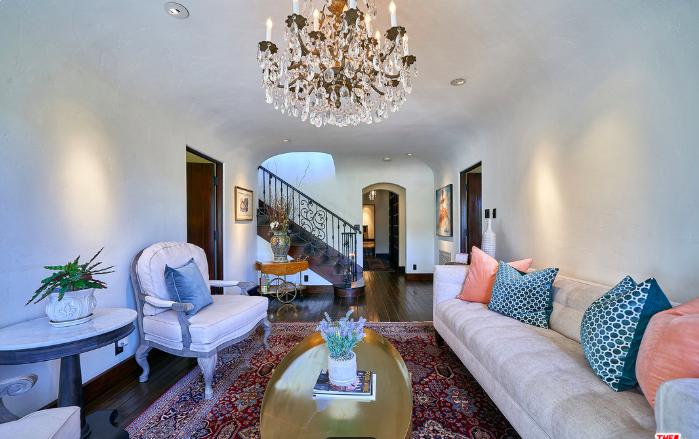
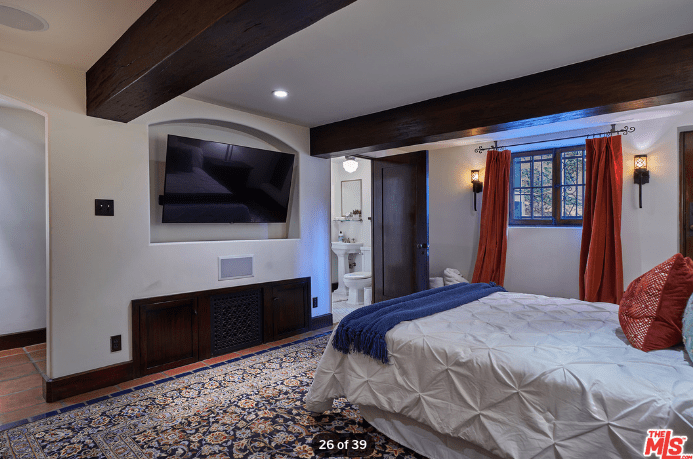
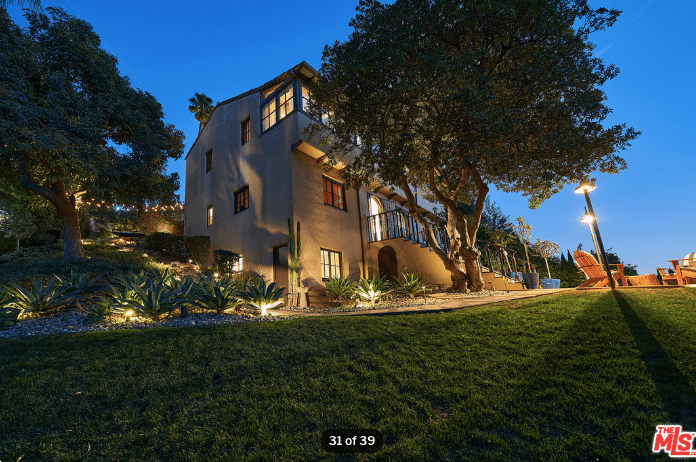
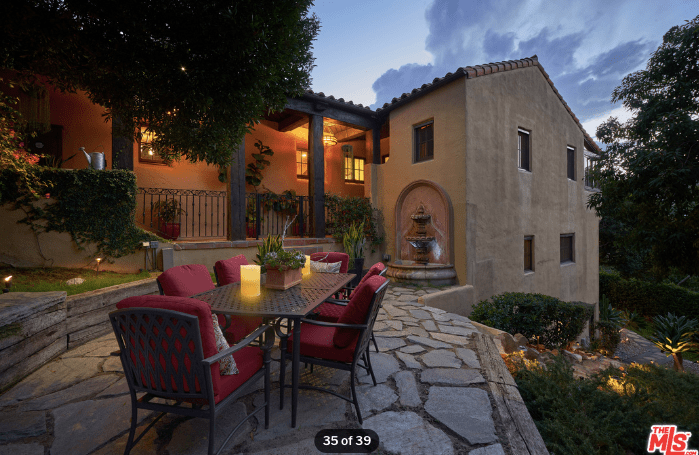
6746 Wedgewood Place was built in 1923 by owner and auto dealership owner H.Y. Stebbins and architect Cornelius Blaisdell. The 2,706 square foot home sits on the downslope of Wedgewood Place and consists of four bedrooms and four bathrooms. Upon entry of the upper floor, which has access on Wedgewood Place, the living room overlooks a view of Hollywood Hills. There is also the kitchen and dining area on the upper floor. There is an oblong balcony outside of the living room which is covered in both corners. Downstairs is a family room and all of the bedrooms.
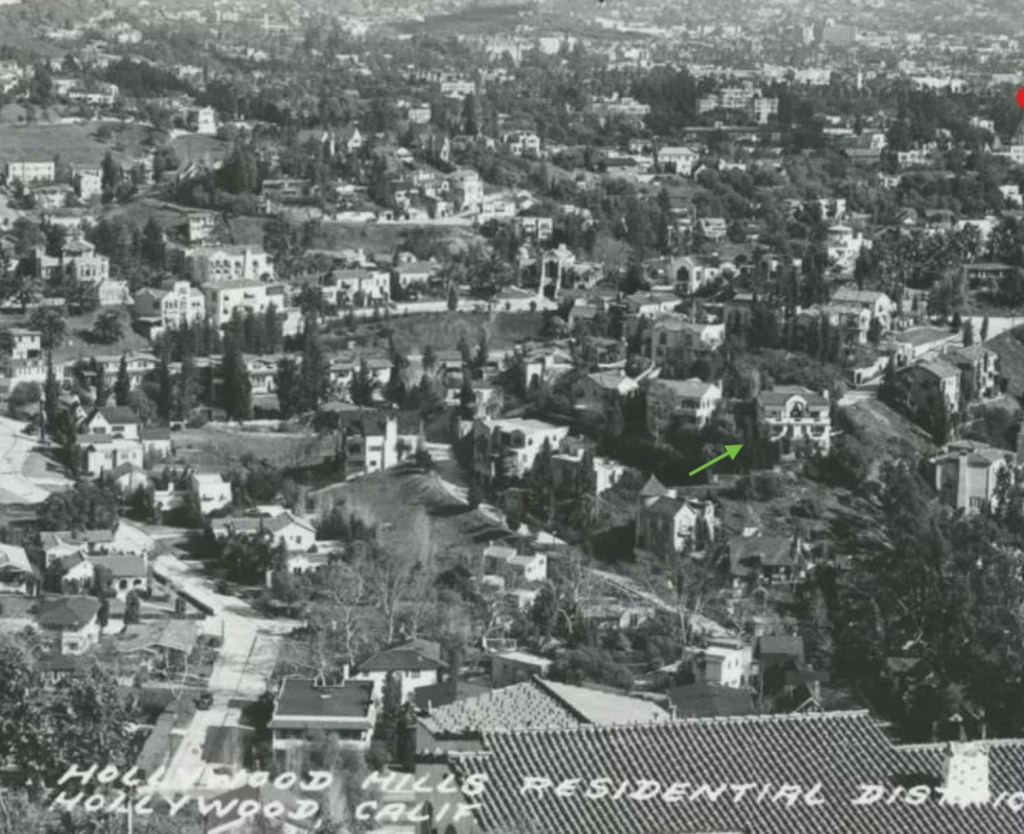
Below, 6746 Wedgewood Place can be seen in an aerial photograph taken in the early 1920s sometime after 1923. The green arrow indicates the location of 6746 Wedgewood Place. Below the green arrow is Fairfield Avenue and Odin Street prior to their partial demolition in the 1950s.
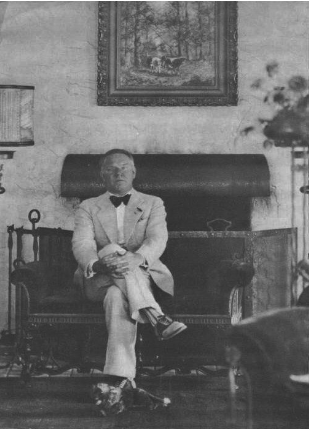
One of the earliest renters was actor W.C. Fields in 1927 and 1928. Fields lived on Wedgewood after he signed a contract with Paramount Studios and was filming “Running Wild”. Fields starred in 41 films between 1915 and 1944 and was probably best known for the role as Cuthbert Twillie in “My Little Chickadee”, also starring Mae West. Below, Fields, is sitting in front of the fireplace in the living room in 1927.
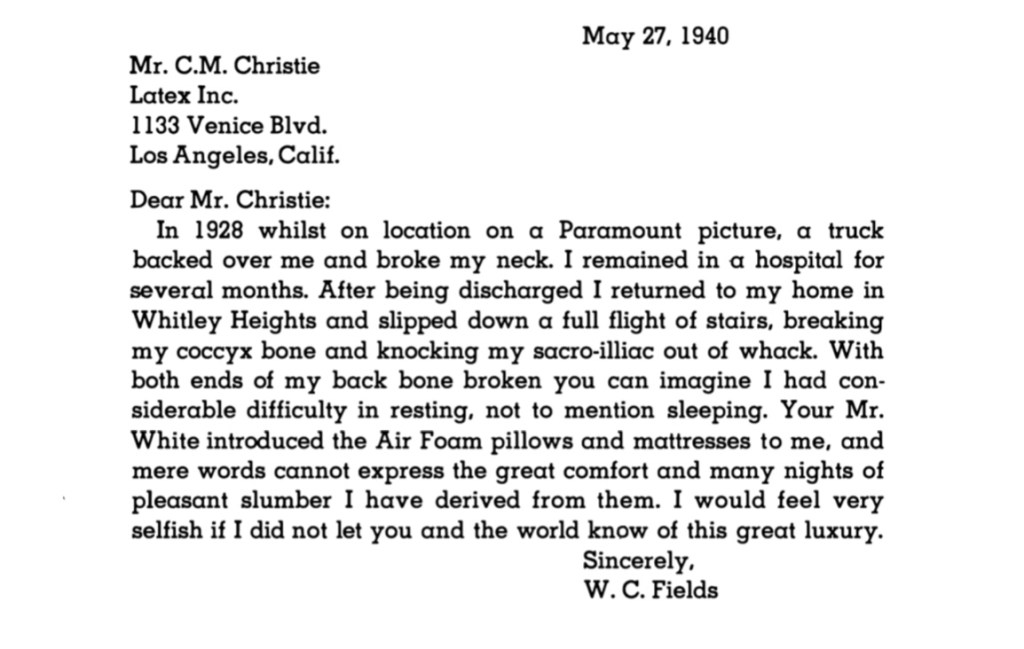
Fields had documented residing at 6746 Wedgewood Place as he wrote a letter to C.M. Christie in 1940 citing that he fell down the stairs in the home in 1928:
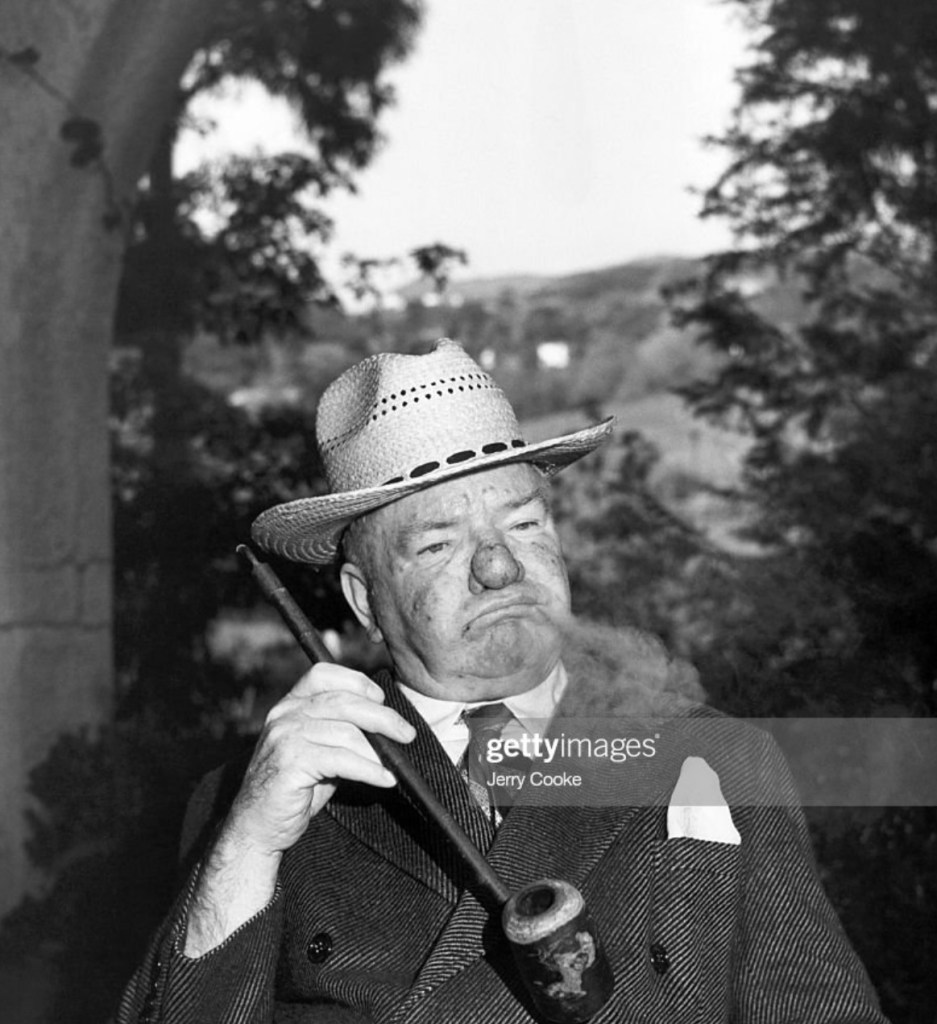
Born William Claude Dukenfield in 1880, Fields was an American actor, comedian, juggler, and writer. His funny and warm-hearted persona on stage and in film, was the opposite of his hard-drinking, hateful view of the world that he lived in. Not only did Fields claim to be an atheist, he made it known that he hated both children and dogs. Fields fraternized at his many homes with actors, directors and writers who shared his fondness for good company and good liquor. John Barrymore, Gene Fowler, and Gregory La Cava were among his close friends. Perhaps karma played a role in the fateful tragedy which occurred at his home at 2015 DeMille Drive in 1941. On March 15, 1941, while Fields was out of town, Christopher Quinn, the two-year-old son of his neighbors, actor Anthony Quinn and his wife Katherine DeMille, drowned in a lily pond on Fields’s property. Grief-stricken over the tragedy, Fields had the pond filled in.
His alcoholism eventually caught up to his health as he spent the last 22 months of his life at the Las Encinas Sanatorium in Pasadena where he died on Christmas Day in 1946 from a major gastric hemorrhage. (Fields actually quit drinking for a year during his career after a close friend had died due to alcoholism, but went back to the bottle). His drinking was well-known by others and had caused chaos throughout even after he had died. Fields once slipped a dose of gin into Baby LeRoy’s milk bottle during a movie shoot, when the set nurse left for a bathroom break; production had to stop for a day until the child could sober up (Fields reportedly sent money later to LeRoy’s family, after the boy’s screen career ended and they had financial trouble). On another occasion, on the set of You Can’t Cheat an Honest Man (1939), a stagehand was cleaning out Fields’ dressing room and accidentally bumped into a table on which Fields had placed a bottle of whiskey. He caught the bottle before it hit the floor, but the cork had popped out and he couldn’t find it. He placed the bottle back on the table and left. Fields later came back to the dressing room, and a few minutes afterwards stormed out, roaring “Who took the cork out of my lunch?”. When Louise Brooks was with the Ziegfeld Follies, she was often a drinking companion with Fields after the shows.
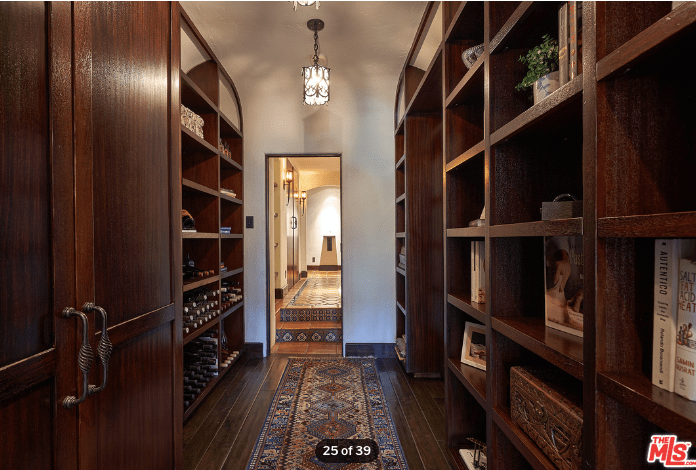
In 1932, Fields agent, Charles Beyer purchased 6746 Wedgewood Place; the home would remain in the Beyer family for over thirty years! This property has a large wine cellar and Beyer allowed Fields to keep his stash of alcohol on the property when he was living in the sanitarium. For the last 13 years of Fields life, his mistress, Carlotta Monti, lived with him and would bring him bottles and sometimes, cases of his liquor when she visited him on a weekly basis. Although the staff at Las Encinitas did not want Fields to drink, his stardom kept them from interfering with the constant alcohol deliveries by Monti. After Fields died, several members of his family, including his ex-wife and two siblings contested the will. In 1952, the judge split up the remains of Field’s liquor to the three which included: three cases of bourbon, 8 cases of French cognac, 2 cases sparkling Burgundy, 2 cases Rum, and 2 cases Chartreuse wine, all assessed over $1,500. Also included in the will was Field’s 1938 Cadillac, his typewriter and an old fashioned ice box. Also interesting is the fact Fields had one son, whom he adored by his first wife and that he donated part of his estate of an orphanage.
Just prior to Charles Beyer purchasing the Wedgewood property, musician Morton Downey, Sr., and his new wife, actress Barbara Bennett rented the home for a year in 1930. Downey, who was born in 1901 in Wallingford, CT, started his singing career in a Greenwich Village movie theater and then became part of the Paul Whiteman orchestra aboard the SS Leviathan. In 1927, he toured Europe and then opened his own nightclub, the Delmonico in New York, in 1930, which offered the chance to sing over radio. He was also a member of the board of directors of Coca-Cola and other corporations. Joining ASCAP in 1949, his chief musical collaborators included Dave Dreyer, Paul Cunningham, James Rule, and Dick Sanford. His other popular-song compositions include “California Skies”, “All I Need is Someone Like You”, “In the Valley of the Roses”, “That’s How I Spell Ireland”, “Sweeten Up Your Smile”, “There’s Nothing New” and “Now You’re in My Arms”. He married his first wife, Barbara, on January 28, 1929 and together they had five children before divorcing in 1941.
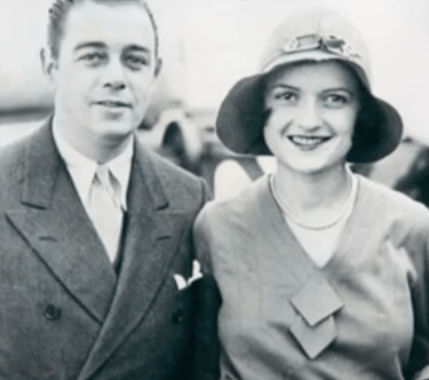
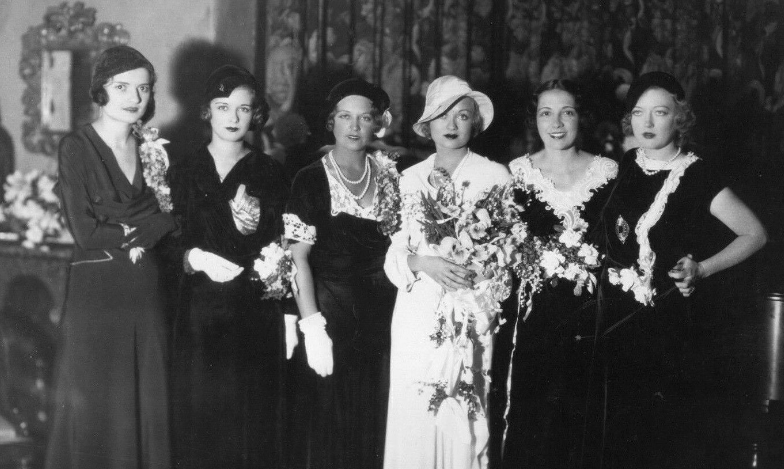
Barbara, who was sister to actresses Constance Bennett and Joan Bennett, came from a family of entertainers as their parents were actors Richard Bennett and Adrienne Morrison. Barbara only starred in 5 movies between 1916 and 1930 and was known for the role of Fleurette Sloane in the 1929 film, Syncopation, and where she met Downey and married soon after. Bennett, who showed promise for a promising career as her two sisters, was short-changed due to her turbulent relationship with Downey. Barbara was also inflicted with alcoholism and depression, eventually took her own life after the court awarded Downey custody of their children. Her daughter, Lorelle Ann Downey, had a nervous breakdown at age 14 and showed behavioral problems. Below, Barbara Bennett Downey (far left) at the wedding of her sister, Constance (center, dressed in white). Her sister, Joan Bennett, is next to Barbara on the right. Actress Marion Davies in pictured on the far right.
Downey had Barbara institutionalized in Pennsylvania and while there, she underwent a frontal lobotomy. She was smothered to death in 1977 by a fellow mental patient. However, doctors later informed her son, tv talk show host, Morton Downey, Jr., that his mother actually died of a herniated diaphragm and it is suspected that she had suffocated herself. Over the course of her life, Bennett attempted suicide four times. As the circumstances surrounding herself were vague and Bennett’s sister Joan refused to discuss the details of her death, rumors arose that Bennett had finally succeeded in ending her life. In her 1982 memoirs Lulu In Hollywood, longtime friend and actress Louise Brooks wrote of Bennett, “Barbara made a career of her emotions. Periods of work or marriage were terminated by her frightening, abandoned laughter of despair and failure”. Only her death, in 1958, achieved in her fifth suicide attempt, could be termed a success.
Downey’s second wife was Peggy Boyce Schulze (1922–1964), the former wife of Prince Alexander zu Hohenlohe-Waldenburg-Schillingsfürst and the granddaughter of Colorado mining industrialist William Boyce Thompson. Downey owned a house at Squaw Island, Hyannis Port, Massachusetts, next to Joseph P. Kennedy’s house. John and Jacqueline Kennedy rented Downey’s house in the summer of 1963. Downey’s third wife was Ann Trainer, the widow of Howell Van Gerbig and the former wife of John Kevin Barry; they married in 1970. Downey died following a stroke in 1985 in Palm Beach, Florida, aged 83, and was buried in the local Catholic cemetery in his hometown of Wallingford, Connecticut.
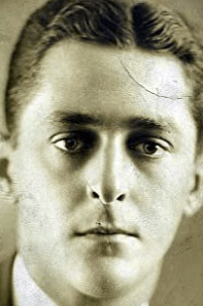
Former actor-turned-agent Charles Beyer bought 6746 Wedgewood Place in 1932 where he lived with his wife, Dorothy until his death in 1953. Born Charles Byer in 1893, he acted in 32 silent films between 1916 and 1929. He starred in “Dead Man’s Curve” with Douglas Fairbanks, Jr. in 1928 and was also known for Beautiful But Dumb (1928), Red Riders of Canada (1928) and Side Street (1929). Beyer also started his career in 1920 as a talent agent and represented such stars as: W.C. Fields, Lowell Sherman, May Robson, Richard Dix and Victor McLaglen. He later owner the Charles Beyer Agency and represented A-list actors such as Dolores Costello, Bela Lugosi, Charley Grapewin and Warner Brothers cowboy actor Whip Wilson.
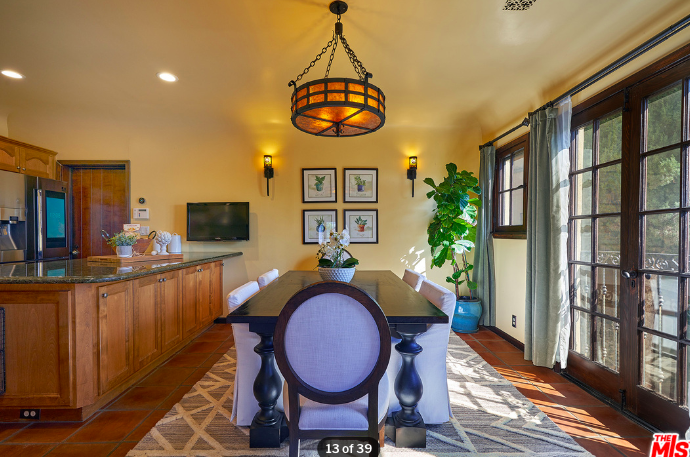
Following her husband’s death, Dorothy continued to live in the Whitley Heights home. She remarried to dairy farm owner L.T. Brown and continued to live in the home. Brown died in the home in 1966 and Dorothy followed in the early 2000s. Since then, the home has changed ownership several times. In 2007, the owners undertook a complete interior remodeling. Below is the kitchen and dining area of the home.
Below is the stairway on the lower floor where the family room and bedrooms are maintained.
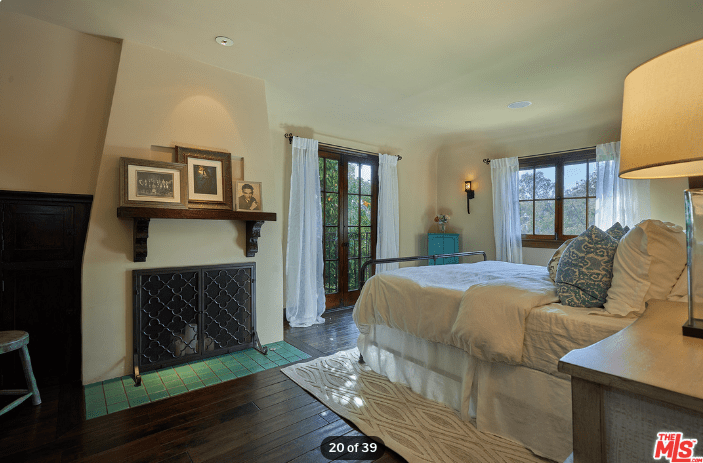
A photograph of former owner, Charles Beyer, is seen on the mantle above the fireplace in one of the bedrooms below.
Below is the wine cellar where W.C. Fields liquor collection was stashed.
Past tenants included; Max Steiner, in 1934, the music director who did most of the score for “Gone with the Wind” during a 3 week post-production stint. Screenwriter, Gene Markey, who completed 38 screenplays between 1923-1956, including; On the Avenue (1937), The Hound of the Baskervilles (1939) and Submarine Patrol (1938). Markey was previously married to actresses Myrna Loy, Hedy Lamarr, and Joan Bennett (yes, Barbara Bennett’s sister). His first marriage, to Joan Bennett, from 1932 to 1937, produced a daughter, Melinda, in 1934. He was married to Hedy Lamarr from 1939 to 1940 and to Myrna Loy from 1946 to 1950.
 Whitley Heights 101
Leave a comment