6662 Whitley Terrace
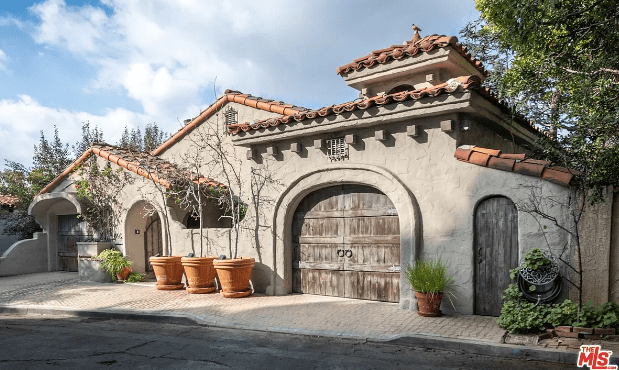
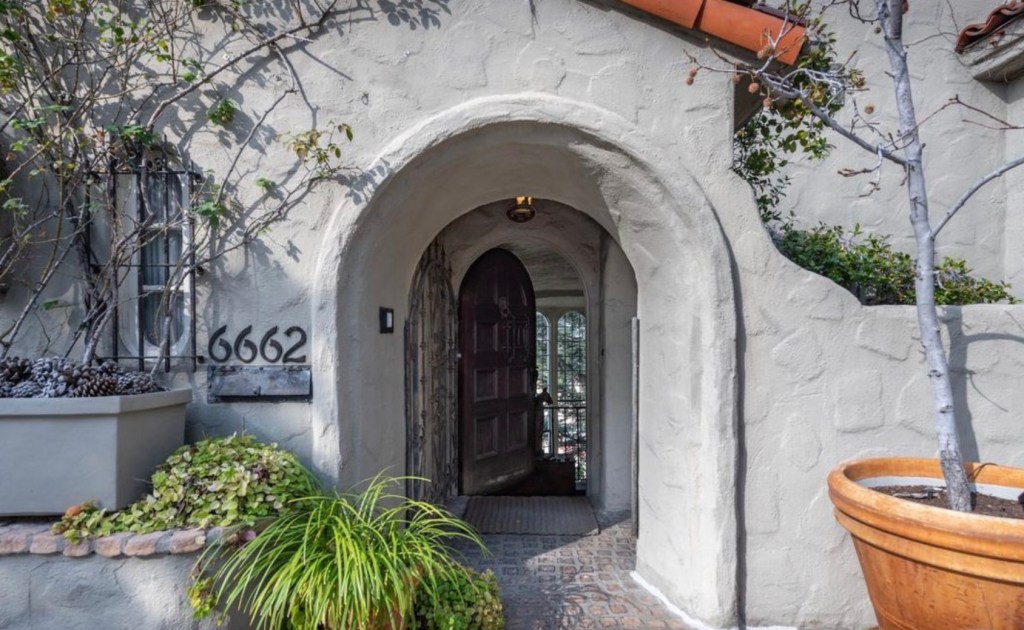
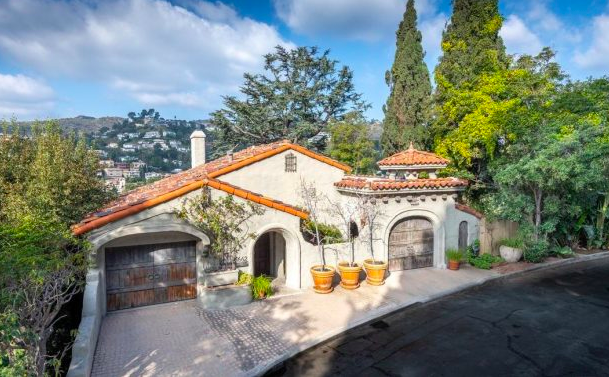
6662 Whitley Terrace was built in 1922 by famed architect Arthur S. Barnes. The Mediterranean style three-story residence sits on a downslope with access on Whitley Terrace. There is 3,087 square feet which contains three bedrooms and three bathrooms. There are two fireplaces-one in the living room and the other in the master bedroom. In the back, there is a detached guest house and a spa.
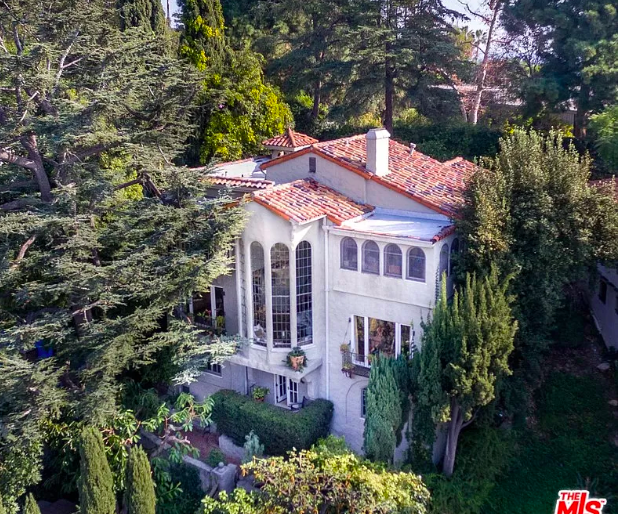
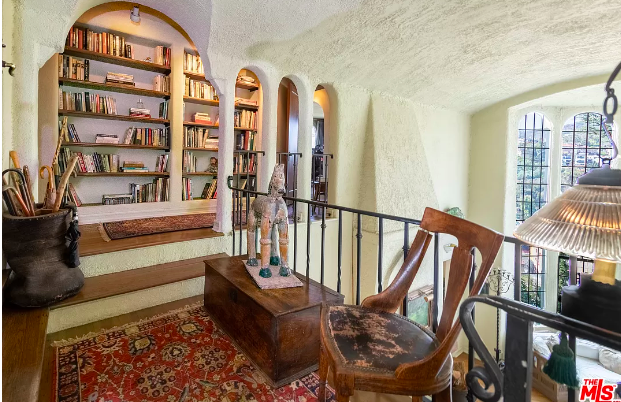
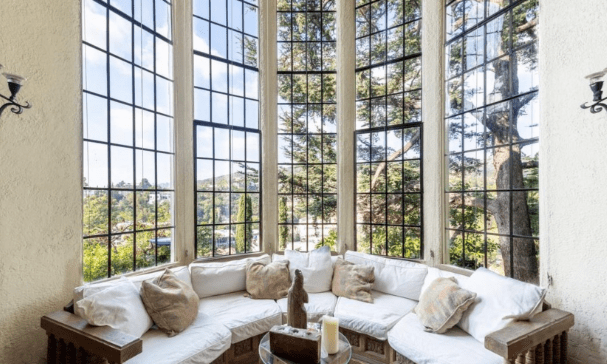
Characteristic of homes at sit on a downslope, the residence is entered on the top floor where there a stairs leading down one floor to the living room. There is a 25 foot leaded glass picture window that overlooks a view of Hollywood.
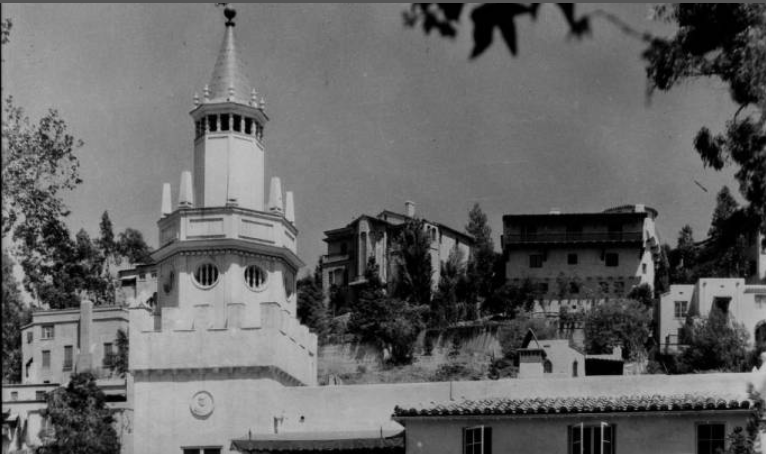
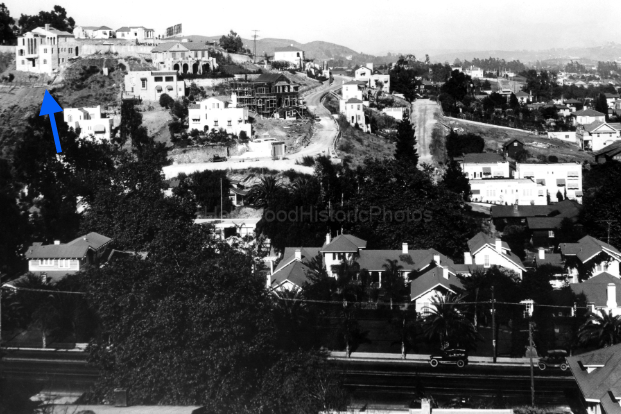
Below, is a view of 6662 Whitley Terrace (left) and 6660 Whitley Terrace (right) as seen from the historic Roman Gardens Apartment Complex which was built in 1926. The apartments are now known as “The Valentino”.
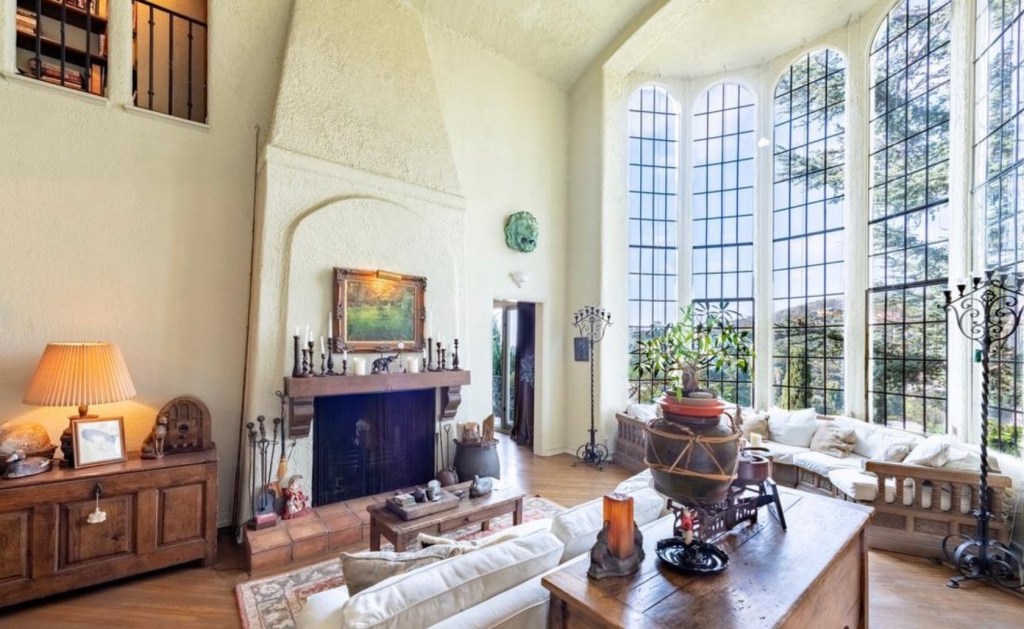
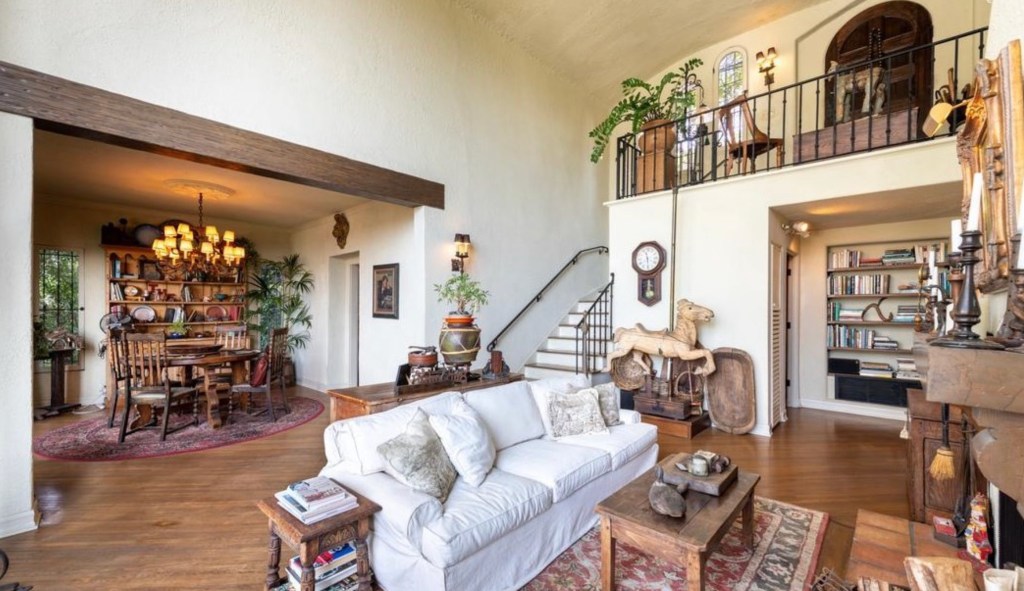
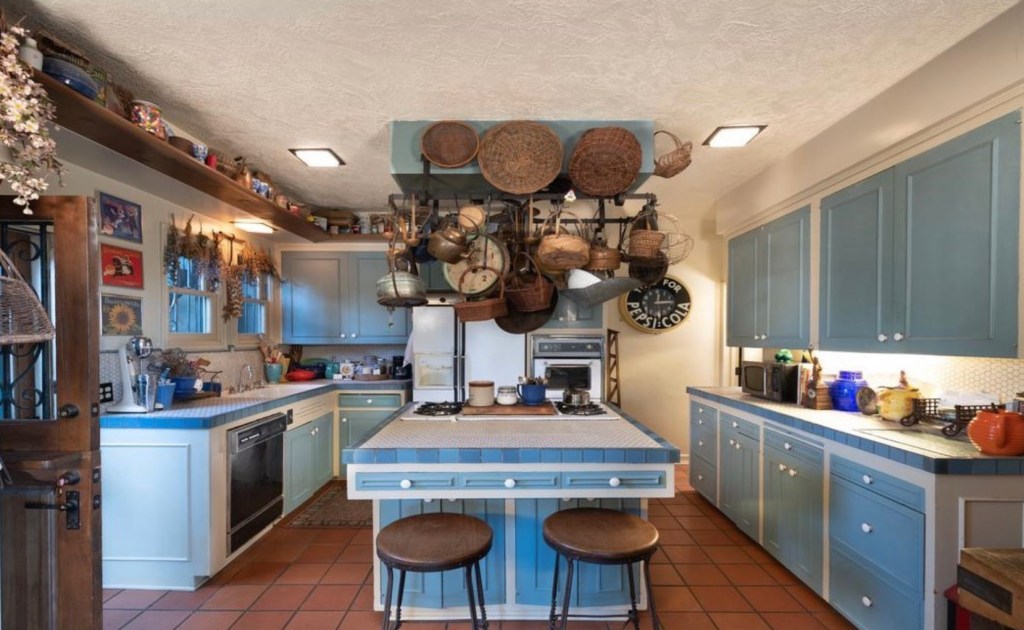
If facing the front of the home, there is a dining room and kitchen to the right. The cook’s kitchen has a vintage O’Keefe & Merritt stove, a large center island, both open and closed shelving, and a “kitchen pot rack chandelier.”
To the left of the living room, is the family room/sitting area.
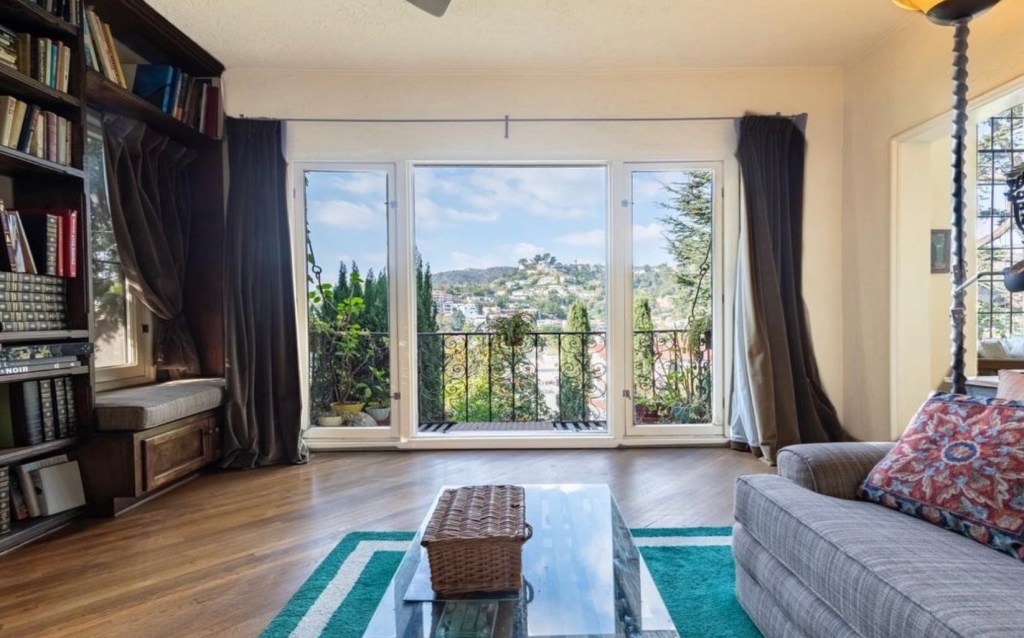
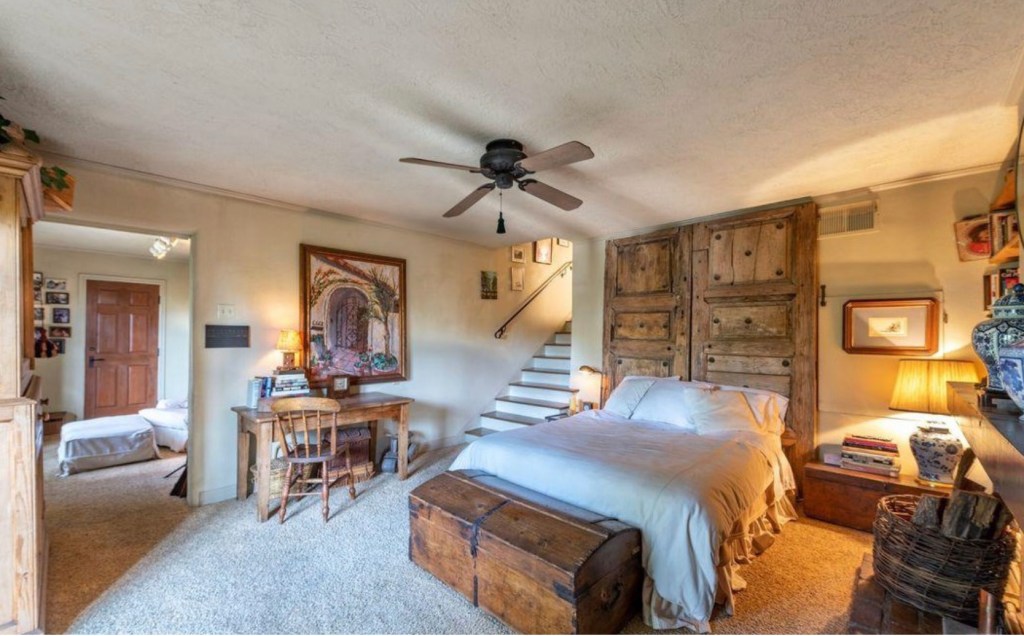
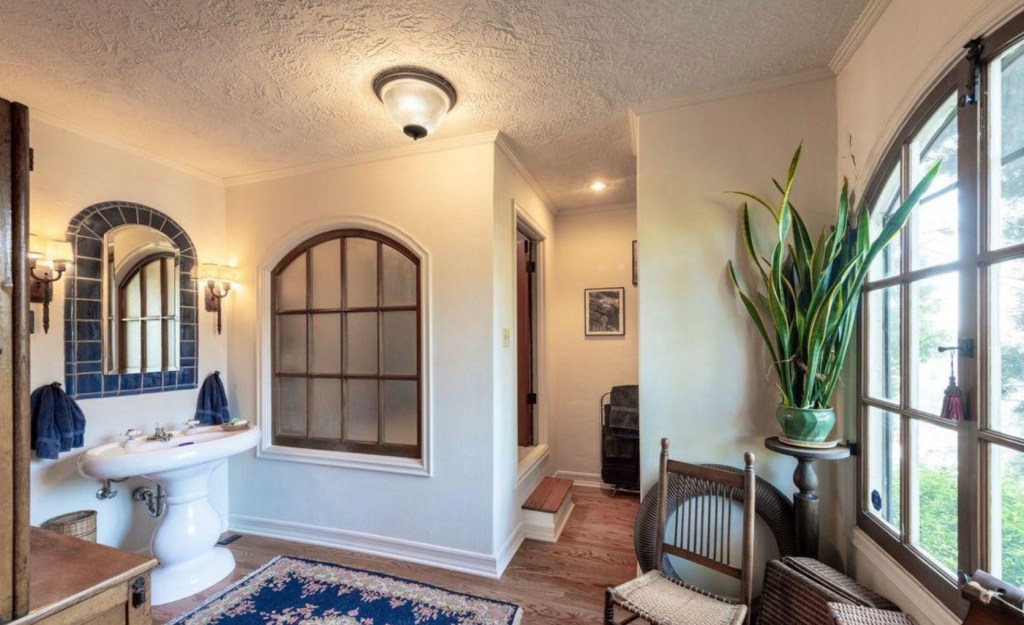
The floor below contains the bedrooms. The master bedroom has its own fireplace and also contains an attached office/library/artist’s suite. The home includes two other bedrooms and two more baths.
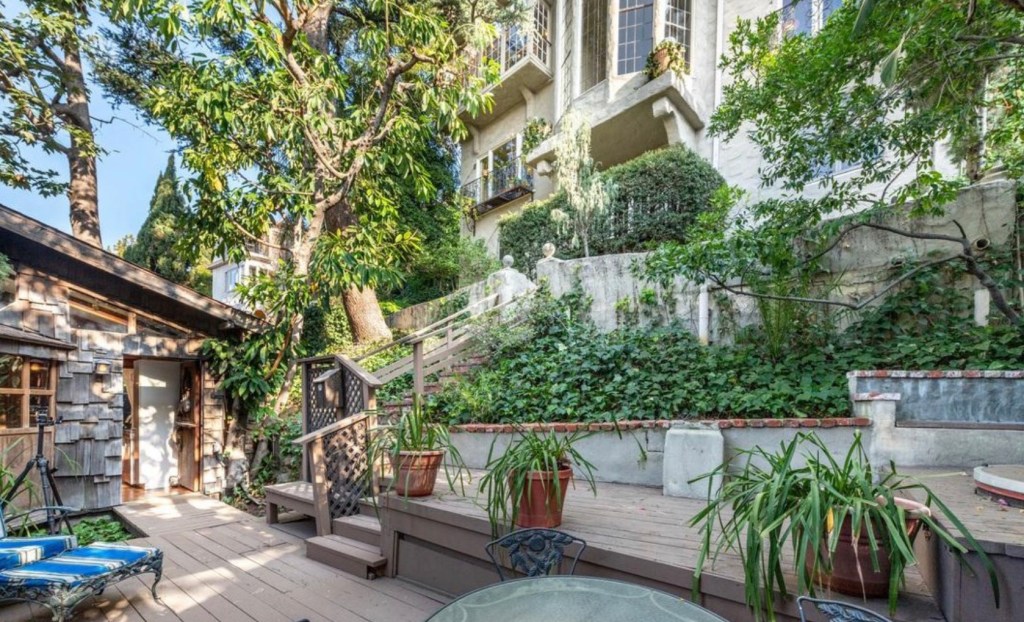
In the backyard, there is a spa and a detached guest house nicknamed, “Woodstock”.
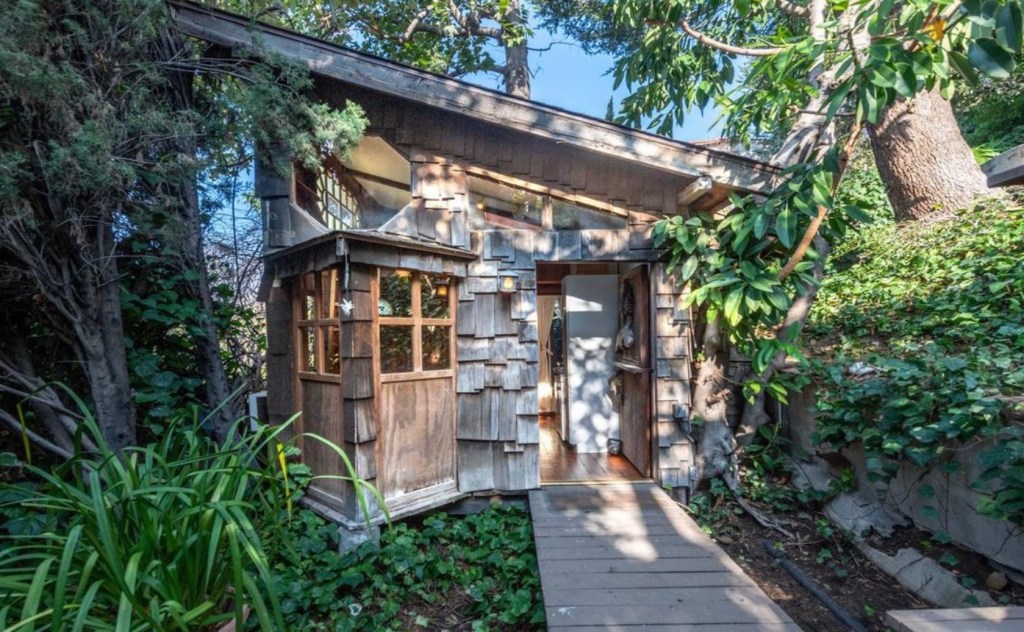
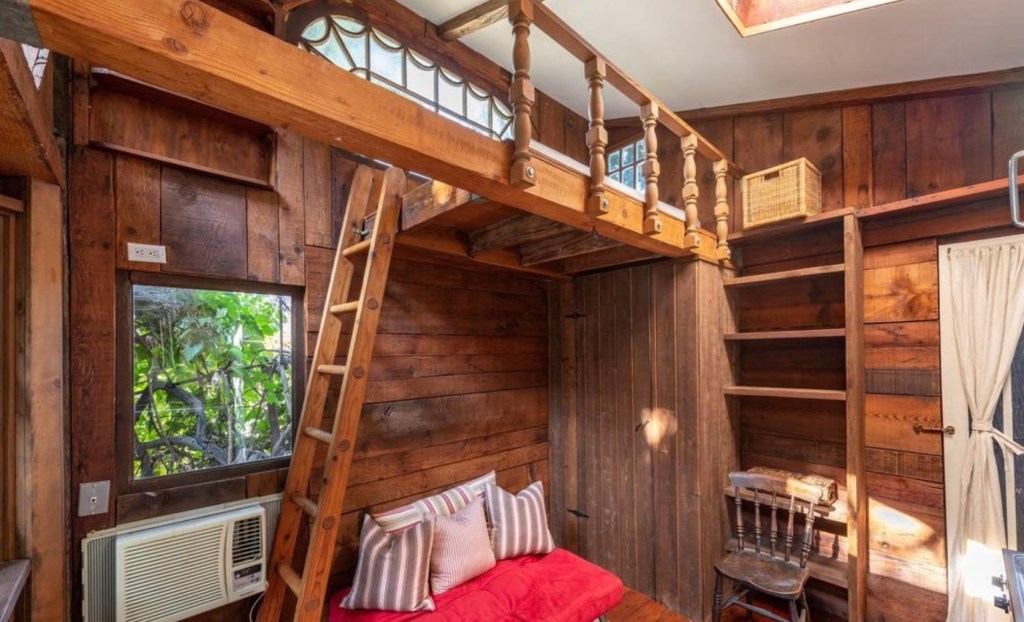
By 1924, director, screenwriter and producer Roland West and his wife, actress Carmel Jewel, purchased the home and the first thing they did was enlarge the garage and improve the exterior features of it. The house was described in the book, The Life and Death of Thelma Todd, by William Donati, “The Wests lived in a home at 6662 Whitley Heights, a two-story residence on a steep street. Though located in an exclusive neighborhood, the home was peculiar, since the roof was practically level with the street. Visitors had to use a descending walkway to enter. Roland and Jewel took a special interest in their garden which was filled with plants and exotic flowers. They paid a gardener $32.50 a month to tend to it.”
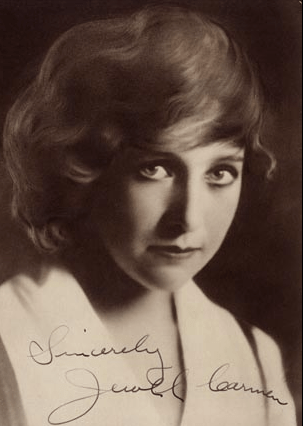
Jewel Carmen was born Evelyn Quick in Portland, Oregon in 1897. After graduating high school, she moved to New York City to become an actress. She appeared in her first production in the lead role in Daphne and the Pirate (1916) when she was 19 years old. Six more films followed,including Sunshine Dad (1916) and Manhattan Madness (1916). She went on to six movies in 1917 and five in 1918. She met and married Roland West in 1918 in New York. After Confession (1918) she left the film industry for three years before returning in Nobody (1921), which Roland West wrote the screenplay and directed the film. Her last film was The Bat in 1926 which was also directed by West.
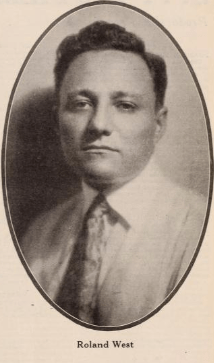
Roland West was born in 1885 in Cleveland, Ohio, and became an actor in the theater and vaudeville as he got his start in New York City. He later worked as general manager of production for producer Joseph M. Schenck, and directed several comedies and dramas. He gained a reputation for moody, atmospheric horror films in The Monster (1925), The Bat (1926) and The Bat Whispers (1930). his last film as director was Corsair (1931), starring Chester Morris and Thelma Todd.
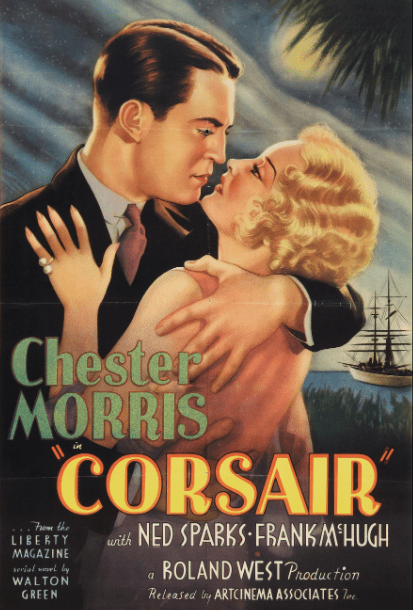
It was during filming Corsair that West met and had an affair with actress, Thelma Todd. West retired from directing after Corsair was filmed and went into business with actresses Jewel Carmen and Thelma Todd in a restaurant on Pacific Coast Highway in Santa Monica called Thelma Todd’s Sidewalk Cafe.
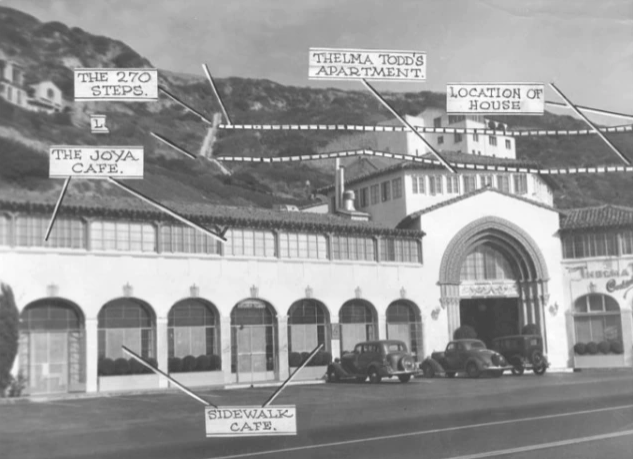
The West’s moved into Jewel’s parents home located just above the restaurant at 17520 Revello Drive: “Castello del Mar”. During this time, Jewel was well aware that Roland was having an affair with Thelma Todd as they all were co-owners of the restaurant. When Thelma’s Sidewalk Cafe finally opened in 1934, Jewel had had enough of their affair and separated from West while she continued to live at Castello del Mar and West shared an apartment with Todd over the restaurant.
Todd was born in 1906 in Lawrence, Massachusetts, was spotted by a Hollywood talent agent while representing the state of Massachusetts as “Miss Massachusetts” in 1925 and was offered a contract at Paramount Studios in New York. She later moved to Hollywood and worked at Hal Roach Studios in 1929. Then she met West while filming the movie Corsair in 1931. However, Todd married Pat DiCiccio in 1932, who supposedly had ties to the mob. The relationship was volatile with DiCiccio being very abusive to Todd, resulting in her filing for divorce in 1934 and changing her will to only leaving him $1- so he couldn’t contest it and try to get more. The restaurant gained the reputation of being a hangout for the mob and there were rumors of Todd and West being pressured by mob figures to use the place as a front to enable them to get their wealthy Hollywood friends drunk and in compromising positions so they could be blackmailed.
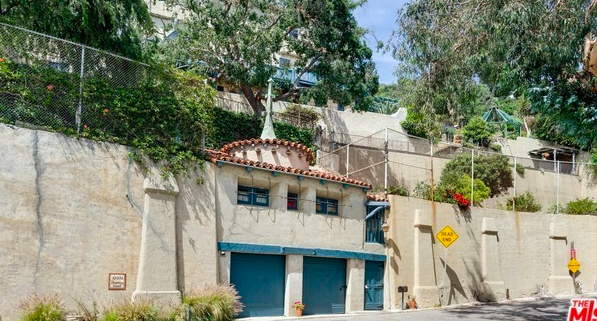
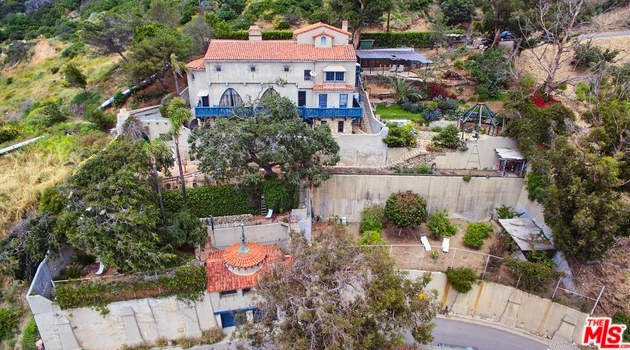
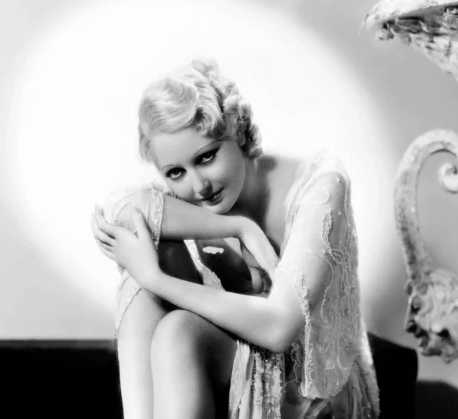
In 1935 Todd (pictured below) was found slumped over the steering wheel of her car, with the engine still running, in the garage of 17520 Revello Drive (pictured above), the victim of “accidental carbon monoxide poisoning”, although many believed she was murdered by the mob because she wouldn’t let them use her restaurant for their activities. Others believed she was killed by West himself, who was known to have a violent temper and to have fought with Todd on numerous occasions. Her murder is still listed as unsolved. After the scandal broke, Roland and Jewel’s marriage ended with both retiring from the “public eye”.
After the Wests put 6662 Whitley Terrace up for sale in 1928, the house sat on the market for over year before actor Chester Morris purchased the home. Morris became a good friend of West after the two met on the movie set. Morris was born in 1901 in New York City where he began his acting career on the stage. Morris had made his movie debut in Van Dyke Brooke’s An Amateur Orphan (1917), but he didn’t really become a movie actor until the sound era. He was one of the first actors to be nominated for an Academy Award when in 1930 as Best Actor for Alibi (1929), his first talking picture. His appearance in The Big House (1930) and The Divorcee (1931), the films for which he is best known and also his portrayal of Boston Blackie in the detective series in the 1940s. Morris met West during the filming of Corsair with Thelma Todd in 1931. Morris lived at this residence with his first wife, Suzanne and put the home up for sale in 1932 which was listed as a “Movie Star’s Home”.
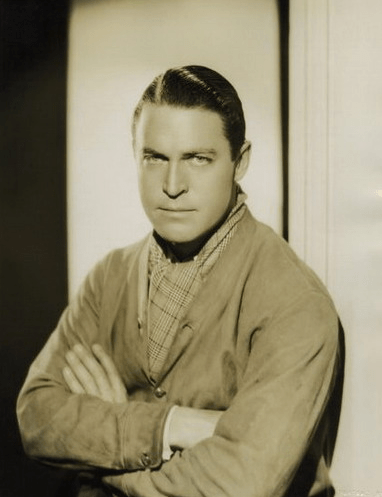
Morris and West remained close friends until West’s death in 1952. West allegedly made a deathbed confession to Morris, at St. John’s Hospital in Santa Monica, that it was indeed he who murdered Thelma Todd in 1935. Morris continued his acting career until his death in 1970. At the age of 69, the actor overdosed on barbiturates in room 202 in a Holiday Inn in New Hope, PA. No suicide note was ever found, but he was known to be dying of cancer and so the prevailing belief has always been that he deliberately took his own life. At the time of his death, he was appearing in a stage production of The Caine Mutiny Court Martial at the Bucks County Playhouse in New Hope, Pennsylvania.
In the mid-1940s brewery king, Paul Kalmanovitz, and is wife, Lydia, purchased 6662 Whitley Terrace. Paul Kalmanovitz (1905–1987) was a millionaire brewing and real estate investor best known for owning all or part of several national breweries and their products, including Falstaff Brewing Company and Pabst Brewing Company. After both immigrated to the United States in 1920s, Paul and Lydia met in New York City and got married. They moved to Los Angeles in 1935, where they bought their first real estate investment-a gas station, where Lydia pumped the gas!
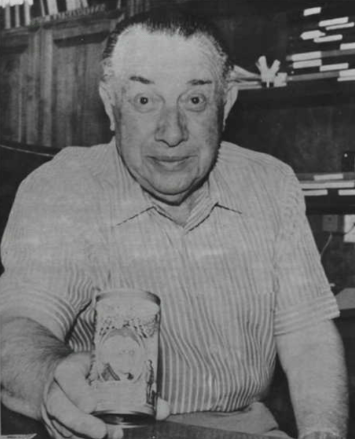
Prior to getting into the beer business, Paul had worked as a staff member for Franklin D. Roosevelt, William Randolph Hearst, and Louis B. Mayer. According to some sources, his specific mausoleum spot was chosen because it has a good view of the Hearst mausoleum just down the road. Kalmanovitz worked for Hearst in the late 1920s and was reputed to be his bootlegger during those Prohibition years. Kalmanovitz is reported to have said that he wanted a spot at the cemetery where he could keep an eye on his patron, William Randolph Hearst. Personally, he has been described as mean-spirited, controlling and eccentric. He banned telephones from his office and every time he would catch his employees installing a line, he would rip it out. After his death, a former legal secretary said, his associates toasted him with Jack Daniel’s, saying, “Ding dong the king is dead.”
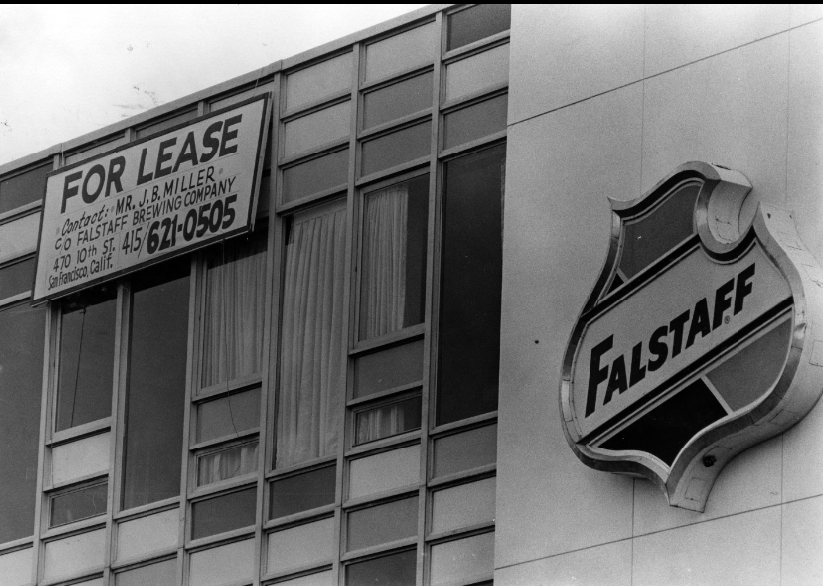
In 1975, Paul purchased Falstaff Brewery, the 4th brewery he had bought since 1971. He moved Falstaff’s headquarters from St. Louis to San Francisco and in the process laid off more than 175 of Falstaff’s corporate employees, but not before cutting back their severance packages. Meanwhile the SEC opened an investigation into the Falstaff purchase and concluded Kalmanovitz provided his investors with false information in order to benefit his position. As a result Falstaff was prohibited from trading on the Stock Exchange. Then Kalmanovitz began stripping the assets from his brewing empire. One by one he scraped his breweries and destroyed the reputation of their brands
Paul Kalmanovitz, whose mother and brothers died in the ghetto of Lodz and the Auschwitz concentration camp, denied he was Jewish until he died. In addition he told all of his associates that he had no family left alive, while to the contrary his nephew, Stanley Kalmanovitz, and his niece Sophie Kalmanovitz (who died in 2015), both of whom survived Auschwitz, were alive during his life. Paul and Lydia were generous, donating to colleges and hospitals. Their legacy lives on with Kalmanovitz School of Education at Saint Mary’s College of California.
 Whitley Heights 101
Leave a comment