6860-6862 Iris Circle
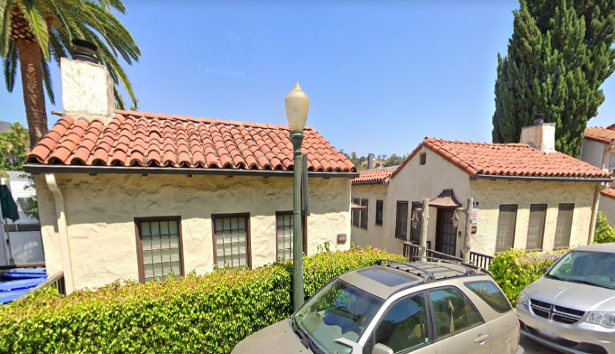
6860-6862 Iris Circle is part of an 8 unit apartment complex which sits on a downslope on Iris Circle and drops down to Cahuenga Boulevard. Originally named Linda Vista Court, the units were built in 1925 by architect Henry B. Pentland, who was also a pilot from World War 1. A few years later Pentland became the trade commissioner for the Department of Commerce and died in 1932 in the Yucatan while traveling home from Panama; he died of typhoid at the age of 38. Ms. Jessie M. Wade hired Pentland to design and build this apartment complex:
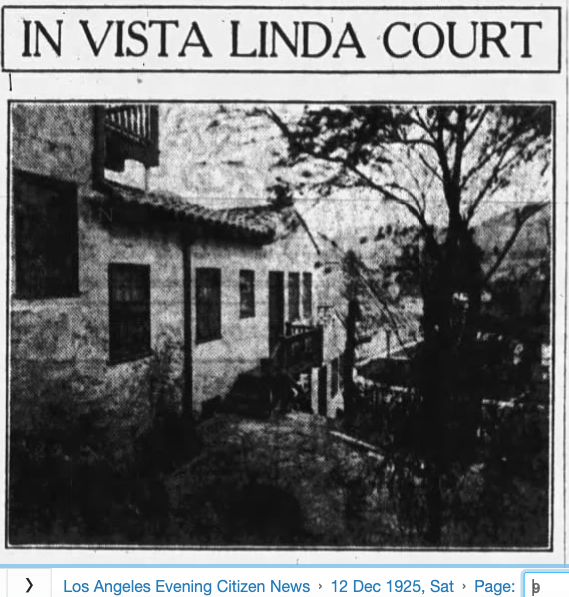
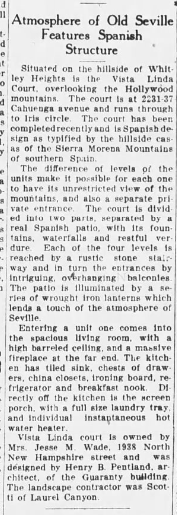
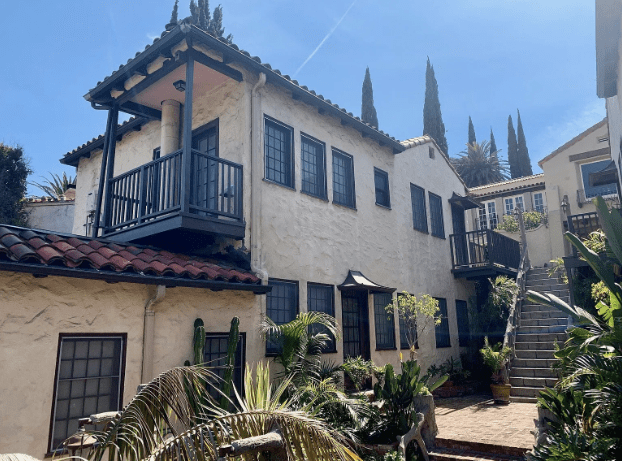
All of the units have a fireplace, kitchen, one bedroom, and one bathroom and are approximately 660 square feet. There are 4 units each in two buildings and each apartment has its own tier which cascades down to Cahuenga Blvd. Below are photographs of the exterior of the complex, now owned by Cahuenga 8 LLC:
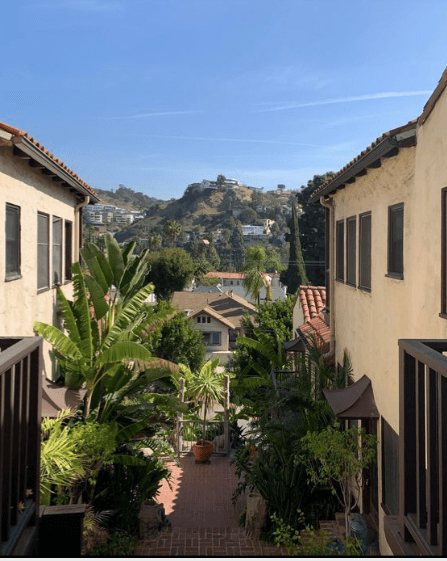
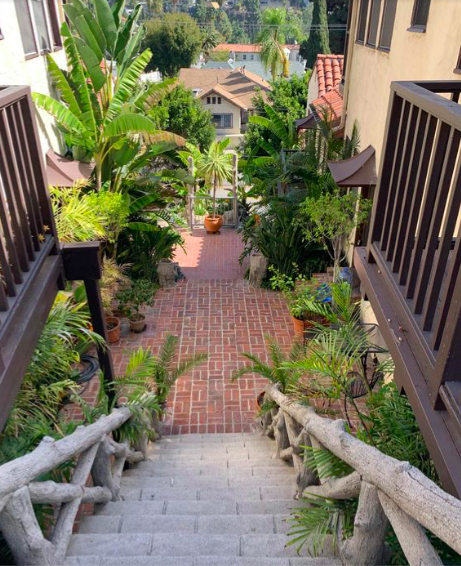
Below, the stairs between the two buildings go straight up to Iris Circle where 6861 Iris Circle can be seen at the top of the photograph, where Carole Lombard and William Powell once lived after they were married.
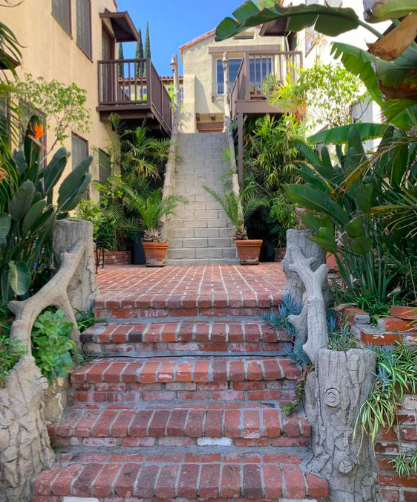
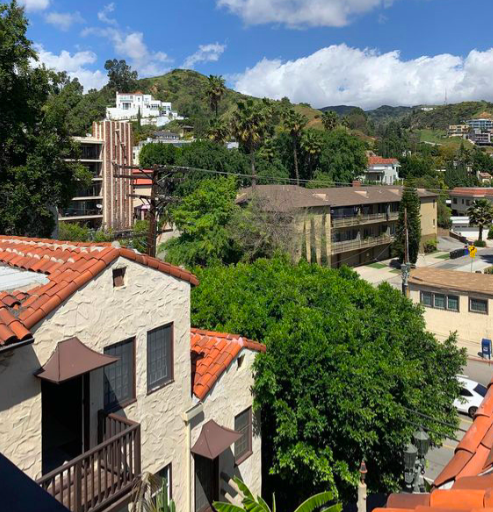
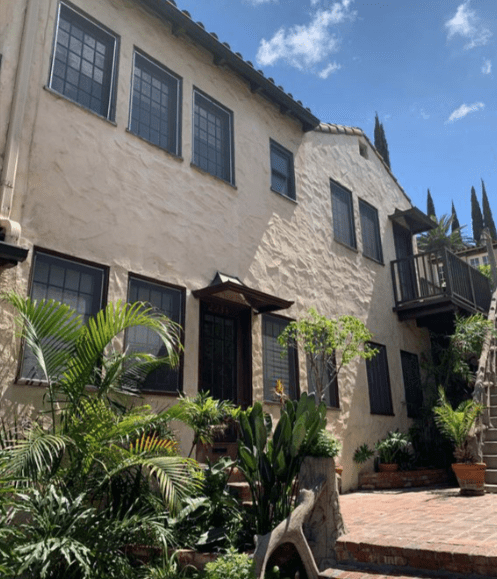
Two sets of stairway lead down to Cahuenga Boulevard which are both gated.
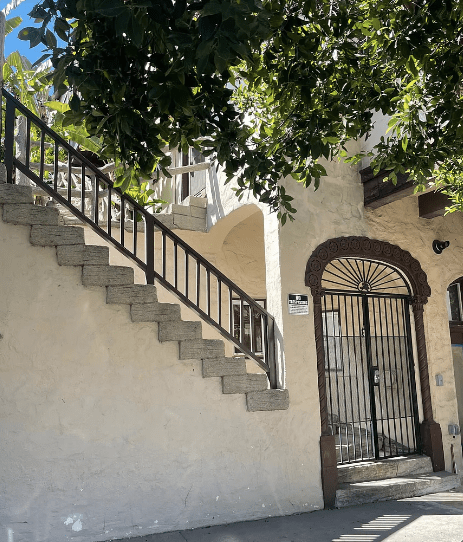
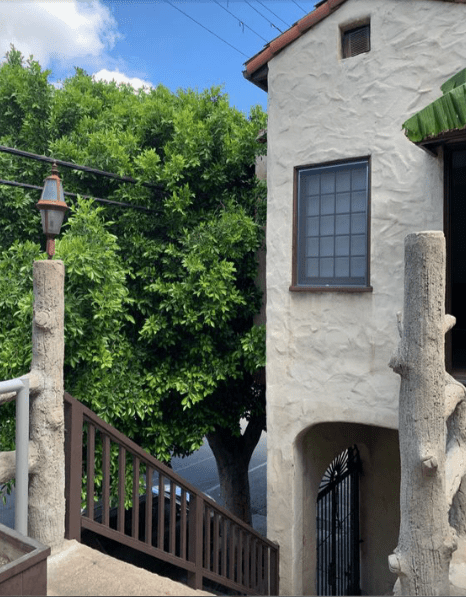
The first unit, 2229 1/2 Cahuenga Blvd., housed Cecil Evans in 1987. Evans worked in the transportation department for several movie productions starting in 1987 and is credited for 28 films. His known films include: Dazed and Confused (1993), Flesh and Bone (1993), Michael (1996), The Newton Boys (1998), The Faculty (1998), Spy Kids (2001), Spy Kids 2 (2002), and last film Machete (2010). The second unit is 2231 Cahuenga Boulevard where the owner, Jessie Wade, resided in 1927.
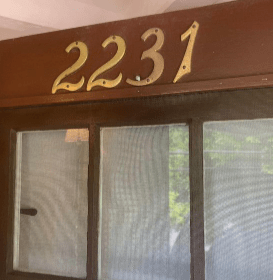
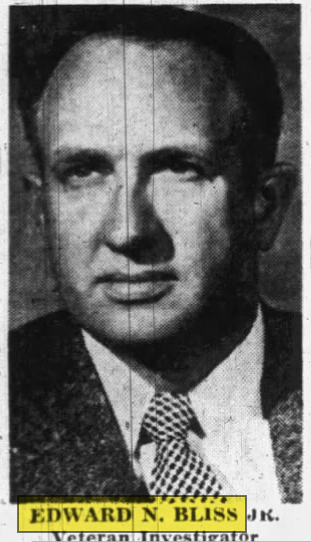
Edward N. Bliss and his wife, lived in 2231 in 1934. Bliss was the technical advisor of the tv series Public Defender for 46 episodes between 1954-55. Prior, he was the chief investigator for the public defender’s office starting in 1946, when he became the nation’s first Public Defender investigator and worked over 12,000 cases. Bliss was well known in Los Angeles and would often be a guest speaker for many local organizations. However, in 1961, Bliss was forced to resign his position as the District Attorney’s Office sought Grand Jury indictments on him for “irregularities in the organizations books” with four counts of grand theft and five counts of violating the state corporation code. Between 10,000 to 15,000 dollars were missing from the insurance account at the County Peace Officers Association. In March of 1962, Bliss pled guilty to all of the charges and was placed on five years of probation and was now working in a liquor store. Despite his criminal acts, Bliss remained active in the community and was one of the officers of the Woodland Hills Chamber of Commerce in the 1960s.
Also residing in 2231 Cahuenga, was dialogue coach Marty Nedboy in 1987. Nedboy, who died in 2007, after suffering from a fall, was the dialogue coach and lasting friend of actor George Lopez. Nedboy was 70 years old when he worked on the set of The George Lopez Show in 2002 and what was known as a “bum arm” after contracting polio as an infant. Nedboy worked on the show for six seasons and was the son of Jewish immigrants who grew up on the Lower East Side of New York City during the Depression. Nedboy, who was a natural “funnyman” actually appeared on a few episodes of the show because he was so funny. Nedboy worked on several other shows including, Mork and Mindy, Moonlighting, Head of the Class, Love & War, and Suddenly Susan.
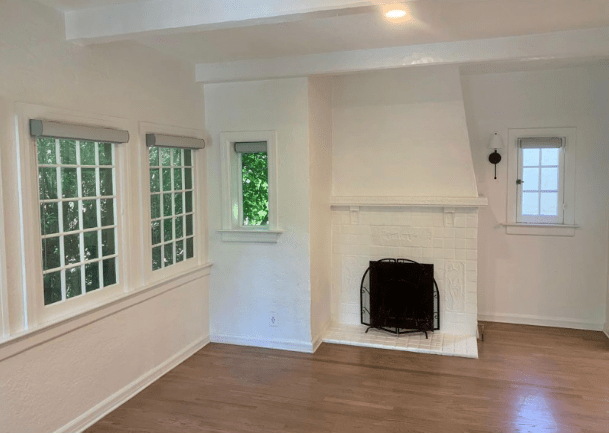
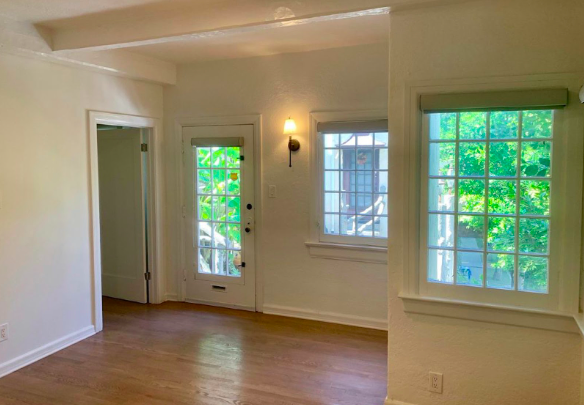
Each apartment has their own original fireplace and there is something original and unique about each unit.
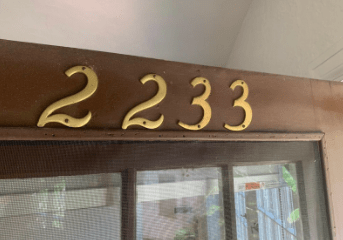
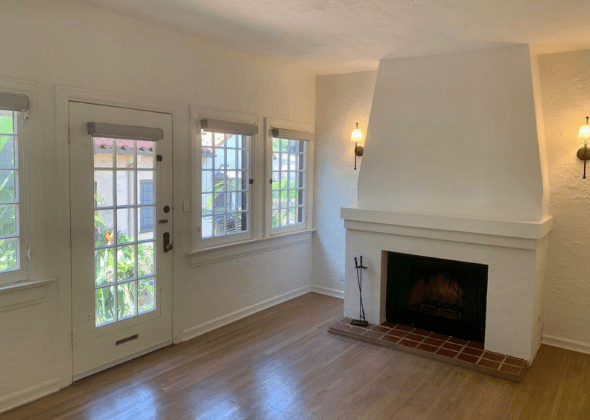
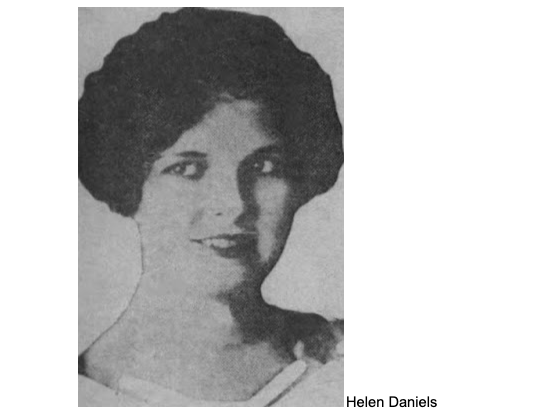
2235 1/2 Cahuenga Boulevard was the apartment with the most negative history. Located on the second highest tier on the northern building, the unit was inhabited by screenwriter Arthur F. St. Clair Evans and his young bride and want-to-be actress Helen Daniels St. Clair in 1927.
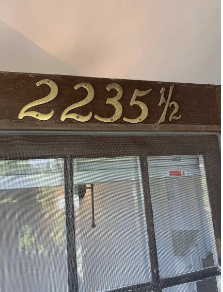
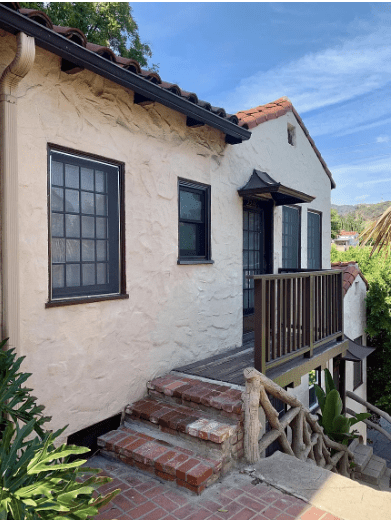
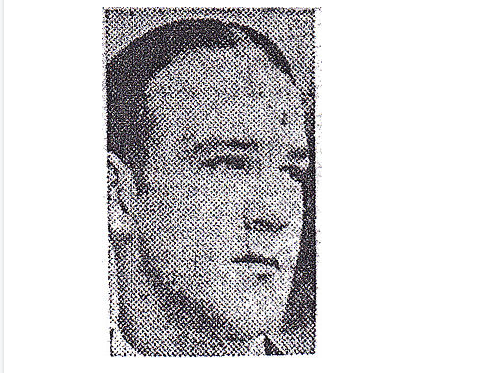
On June 7, 1927, Helen St. Clair, the bride of only three months, swallowed a bottle of antiseptic lotion in the bathroom while Arthur, pictured below, worked on a screenplay in the living room. This happened after they got into a fight about how they were going to spend the evening. Helen wanted to go out to a performance while Arthur wished to remain home and work. Edwin’s friend, writer/director, Edwin Bower Hesser, had taken them to the police station to get help with their heated quarrel and then they returned to the apartment. A few hours later, the police received a distress call that Helen was dead. The police arrived and found Helen on the bathroom floor with no pulse. Arthur told the police that she went to the theater alone and then returned home and swallowed the bottle of lotion.
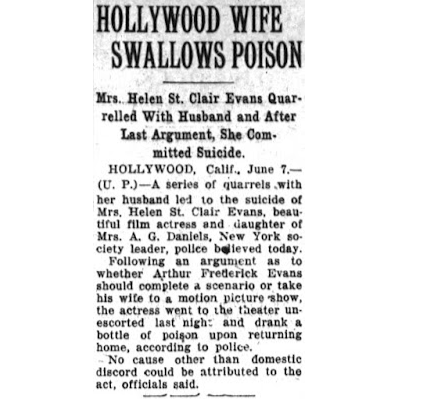
The case was ruled a suicide, which did not sit well with Helen’s parents, who lived in New Jersey. In February of 1928, they supplied new information to the police and both Arthur and Edwin were arrested. Arthur was arrested for suspicion of murder, suspicion of a statutory offense, suspicion of violation of the Harrison act. Hesser was arrested for impersonating an officer, battery, and suspicion of violation of the Harrison act. The parents indicated Hesser threatened them of getting arrested as he was not supposed to talk to them about the case. Apparently, Helen went to the police on Saturday, June 4, before her death on Monday. She begged police protection because her husband threatened her as she was going to leave him. He hid all of her clothes as an attempt to keep her in their apartment.
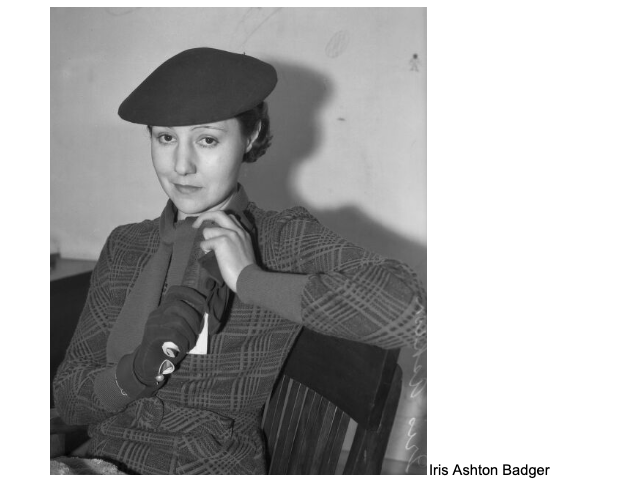
The jury did not find enough evidence to convict the men as the coroner stood by his original autopsy that Helen died of suicide. Arthur did not exactly act innocent. Arthur Evens, who used the name Arthur St. Claire, wrote scenarios in Hollywood from the 1920s until the late 1940s. He recycled some of the events of his wife’s suicide in fictional form in his screenplay, Delinquent Daughters (1944), the story of how a town is shocked when a high school girl commits suicide. Arthur thereupon married Iris Ashton Badger, a 29-year-old actress with whom he had been living for months. At the same time, he was convicted of vagrancy and sentenced to 60 days in jail. Evans married Iris Hanford Badger (who had just divorced William Badger), six months after first wife’s death. Iris Ashton Badger was legally married April 20, 1928 by a judge before he was arraigned before Judge Gray. They thought they were legally married last November and were not due to missing paperwork. This was his third marriage and the judge did not believe he did not know about the paperwork. The two eventually divorced and Arthur married for the fourth time before his death in 1950.
Between 1930-35, actress Rae Daggett lived in the apartment with her mother, Harriett, and her sister Frances. At the time, her mother managed Linda Vista Court. Rae, legally named Rachel Erwin Daggett , was born on July 24, 1905 in Vancouver, British Columbia, Canada. She was an actress, known for Early to Bed (1936), The Moth (1934) and Broadway to Cheyenne (1932). She also filmed Queen Kelly (1932), starring Gloria Swanson. She was previously married to Victor Noerdlinger and George Julian Sinclair. She died on March 17, 1977 in Los Angeles.
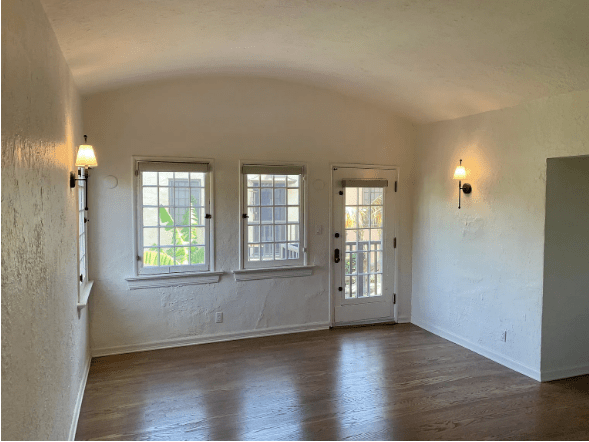
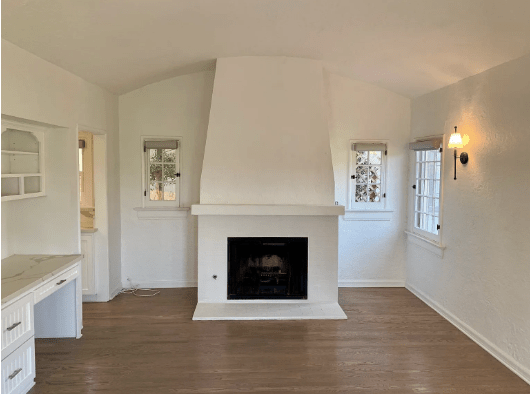
In 1967, 35 year old Bob Sands was residing the same apartment where Helen committed suicide and was boiling eggs on the stove. Sands, who was also smoking a cigarette, was not paying attention to the gas lit stove and the water spilled over the pot putting out the flame. It is odd that it caused a gas leak which caused an explosion due to the lit cigarette:
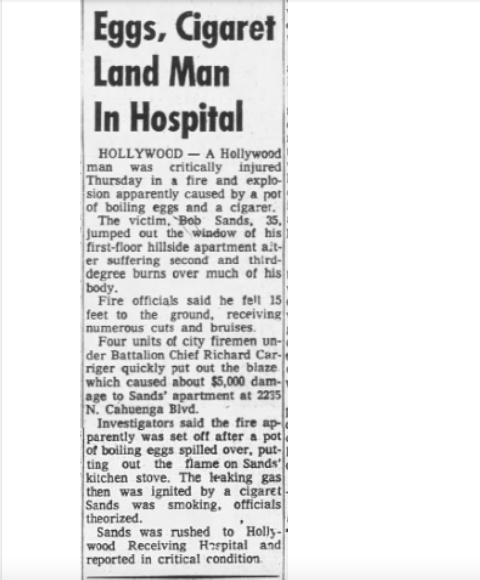
No word on whether Sands survived, but the apartment was remodeling and rented out within a year.
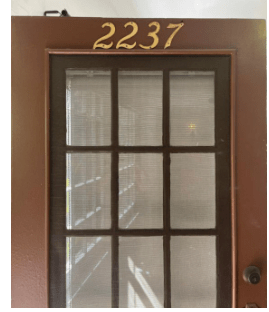
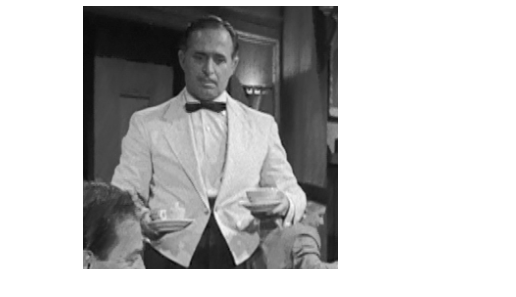
2237 Cahuenga Blvd. was home to actor Victor Romito and his wife, Jewell, in 1942. Victor Romito was born on March 11, 1908 in Livorno, Italy. He was an actor, known for The Adventures of Robin Hood (1938), Citizen Kane (1941), Casablanca (1942), Saratoga Trunk (1949), Singin’ in the Rain (1952), Alfred Hitchcock Presents (1955), The Gallant Men (1962) and Passport to Danger (1954). He died on May 13, 1980 in Los Angeles. He was the son of opera singer Raoul Romito. Victor was also the assistant director of Ben Hur. He had 223 film/television show credits between 1938-1976. The character actor also guest starred on Bonanza and Gunsmoke.
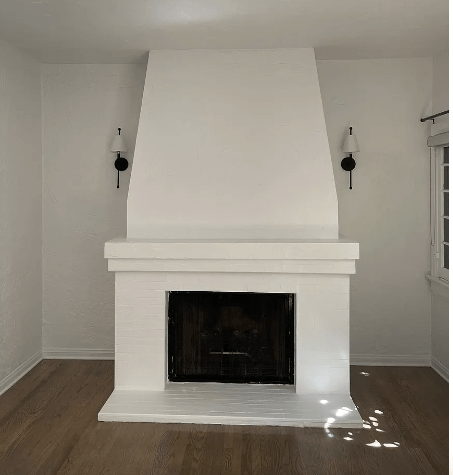
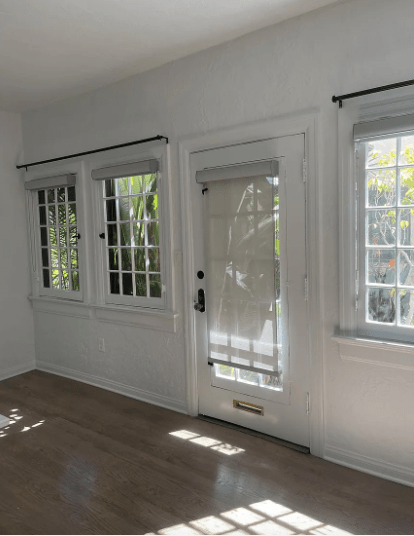
6860 Iris Circle is located on the left side building.
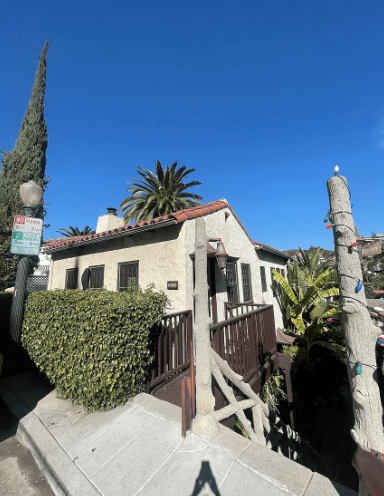
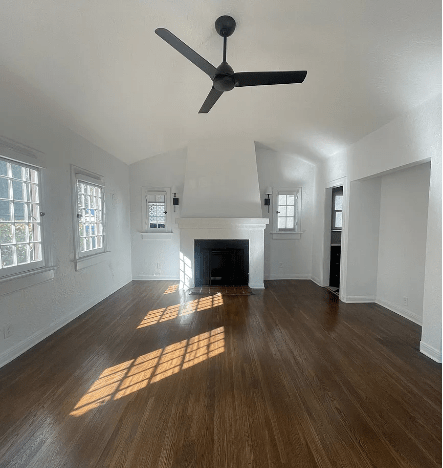
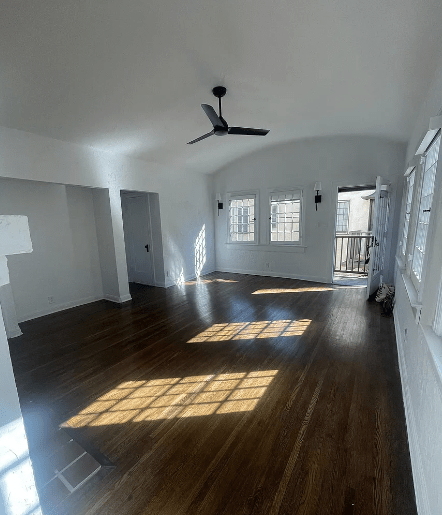
The last unit is 6862 Iris Circle, which is on the right side and was home to vocalist John Raring in 1942. John Arthur Rarig was born on May 23, 1912, in Mercer Island, Washington, USA. John started out in radio working with Phil Harris, Jack Benny, and Meredith Willson. Also worked as an organizer and sometimes a singer with the Sportsmen Quartet on Jack Benny’s television show. John also was the organizer and bandleader on Doris Day’s first album. He is known for his work on Lady and the Tramp (1955), Sleeping Beauty (1959), and Mr. & Mrs. North (1952). He was married to Jean. He died on January 2, 1991, in Mariposa, California.
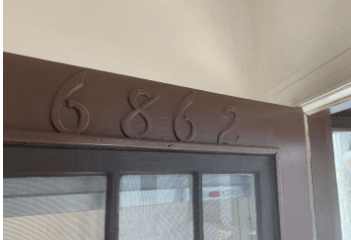
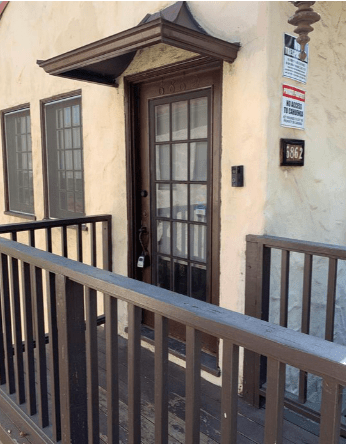
Singer, Maxwell H. Smith, lived in the same apartment around the same time as Raring. He was known for his musical voice on Alice in Wonderland (1951) and 101 Dalmatians (1964), He also founded The Mellomen. The Mellomen were a popular singing quartet active from the late 1940s through the mid-1970s. The group was founded by Thurl Ravenscroft and Max Smith in 1948. They recorded under a variety of names, including Big John and the Buzzards, the Crackerjacks, the Lee Brothers, and the Ravenscroft Quartet. They were sometimes credited as the Mellowmen, the Mello Men, or the Mellow Men. They sang backup to some of the best-known artists of the day, including Rosemary Clooney, Bing Crosby, Doris Day, Arlo Guthrie, Frankie Laine, Peggy Lee, Elvis Presley, and Jo Stafford. 2nd Tenor 1948-1966.
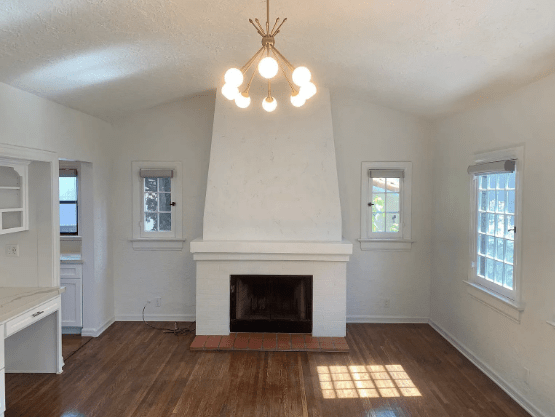
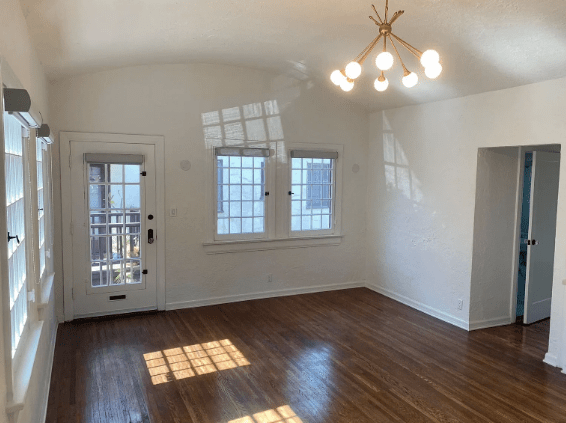
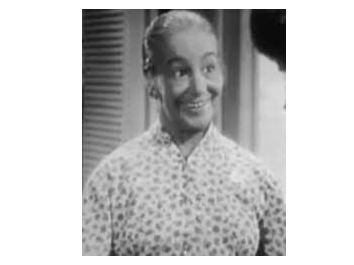
Perhaps the longest tennant in the building was actress Connie Leon, who resided at 6862 Iris Circle from 1942 through 1954. Born Ann MacDonald Moore, she was born in 1891 in Cheshire, England. Leon had 54 film credits between 1934-1949. She starred in minor roles including; The Adventures of Robin Hood (1938), Mrs. Miniver (1942), and Love Letters (1945). She lived here with her sister, writer Viola MacDonald Moore.
 Whitley Heights 101
Leave a comment