The French Village
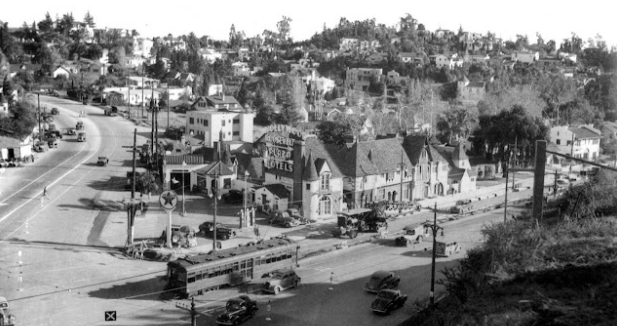
Architects Walter S. Davis and Pierpont Davis created two “villages” on the outskirts of Whitley Heights: The French Village, located on the corner of Highland Avenue and Cahuenga Blvd. and Roman Gardens, 2000 N. Highland Blvd. Unfortunately, the French Village was torn down to make way for the Hollywood Freeway, but the Roman Gardens exists today and is now called La Villa Valentino. The Davis brothers were born in Baltimore, Maryland: Frances Pierpont in 1884 and Walter in 1888. Their father, Frank E. Davis, was also a gifted architect who practiced in Maryland until 1914 when he retired and moved Los Angeles to be near his two sons. The Davis brothers were responsible for several residential and commercial properties that are still standing today, notably: Villa Capistrano in Silver Lake (1918), Pierpont Davis Home, 500 N. Rossmore Avenue (1921), La Venta Inn, Palos Verdes (1923), St. John’s Episcopal Church (1925), Roman Gardens (1926), Villa d’Este Apartments, 1355 Laurel Avenue (1928), and Los Angeles County General Hospital (1930s). When they designed the French Village, they built one residence at a time, until they created an artist’s village at the bottom of Whitley Heights where many notable artists and movie industry people would live; some stayed a few months while others stayed for many years. Below is the tract map which shows lots 1, 2, and 3 where the French Village was located.
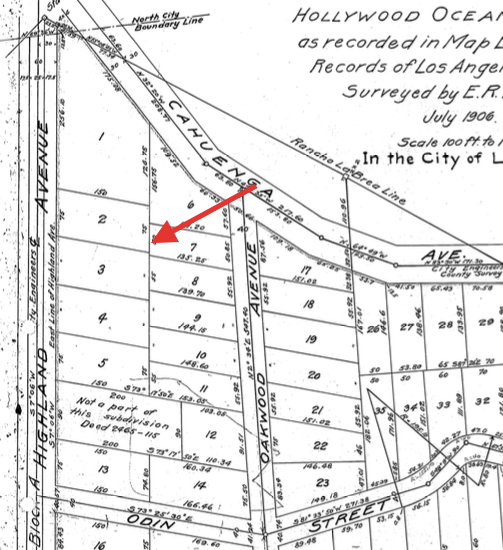
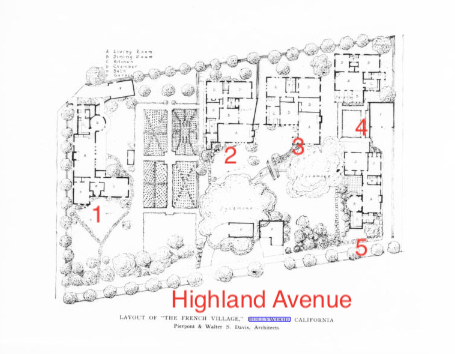
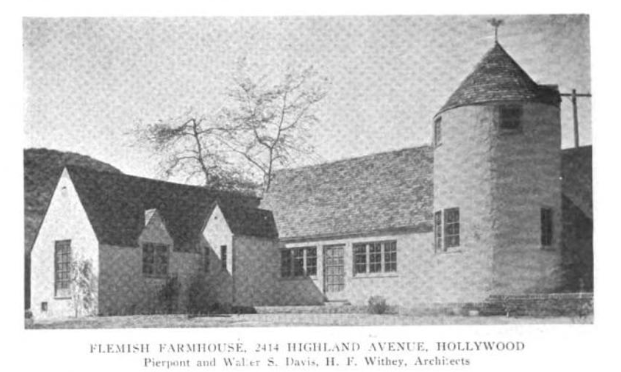
The French Village comprised of lots 1, 2 and 3 of Lockland Tract in the early 1920s. The first building to be erected was on lot one, 2414 N. Highland Blvd.-a 6 room residence with a garage in 1919, known as the Flemish Farmhouse or Original Tower House (#1 below). A few months later, on lot one, they built a 7 room residence, which was eventually converted to a garage and restroom for the Texaco gas station. In 1920, they started building on lots 2 and 3: 2402 N. Highland Avenue, known as the Monkey House or The Chateau (#2 below), 2400 N. Highland Avenue, known as The Sycamore House (#3 below), 2314 N. Highland Avenue, the second Tower House (#5 below), and 2316 N. Highland Avenue, a 5 room French Normandy home (#4 below). In 1925, the Davis’ then remodeled the French Village to make the homes into apartments and expanded the buildings to create the front apartments and studios that faced Highland Avenue. Below, is the map of the original five dwellings that they built. The Original Tower House (#1) had a garage in the rear of the house which was accessible on Cahuenga Blvd. There were two garages on Highland Avenue in front of The Monkey House (#3) and another garage next to house #4, which was accessible from Highland Avenue.
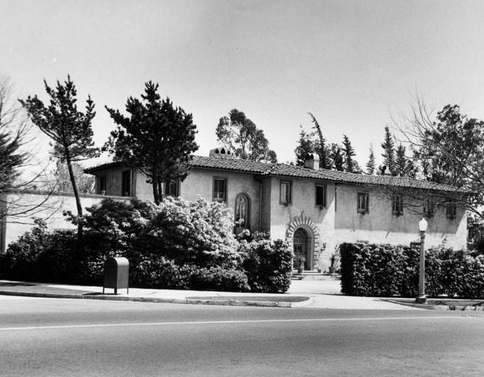
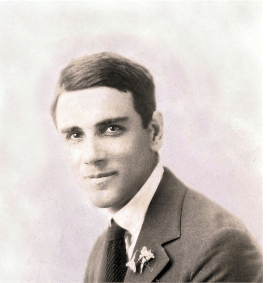
The Davis brothers moved to Los Angeles from Baltimore circa 1910 and eventually had an office in the Exchange Building in Los Angeles. Frances Pierpont Davis was eldest of five children born to Frank and Annie Davis. “Frank” married Gertrude Churchill, the daughter of Owen Humphreys Churchill in 1909. Churchill was a prominent businessman in California and the Davis’ built his house, which is now an historic landmark, located at 108 N. Las Palmas Avenue in Hollywood (south of Beverly Blvd.). Frank and Gertrude had two daughters and lived primarily at 500 S. Rossmore Avenue in Hancock Park since 1921 (see below). With other California architects, Pierpont designed the Pentagon building in Washington DC in 1941 and raced sailboats and won a gold medal for the eight-meter yacht race in the 1932 Olympic Games held in Los Angeles, after which the city’s Olympic Boulevard is named.
Pierpont Davis (below)
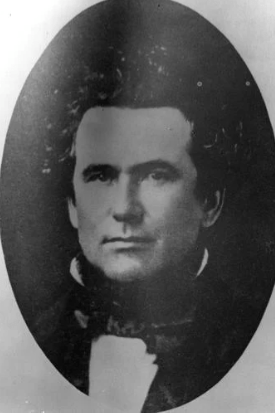
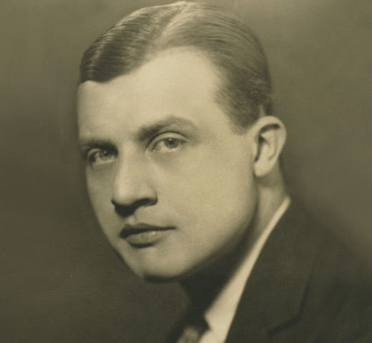
Walter S. Davis (pictured below) was the second of five children and married Alice Mumper in 1917 right before he left for the Army during World War 1. Walter and Alice resided locally as they enjoyed living in the center of all the activity that they created. They lived at several residences in French Village and even rented an apartment at Roman Gardens. Alice’s parents, William and Amelia Mumper, moved to Los Angeles from Trenton, New Jersey and resided in the French Village at 2314 Highland Avenue, the second tower house, until William’s death in 1931.
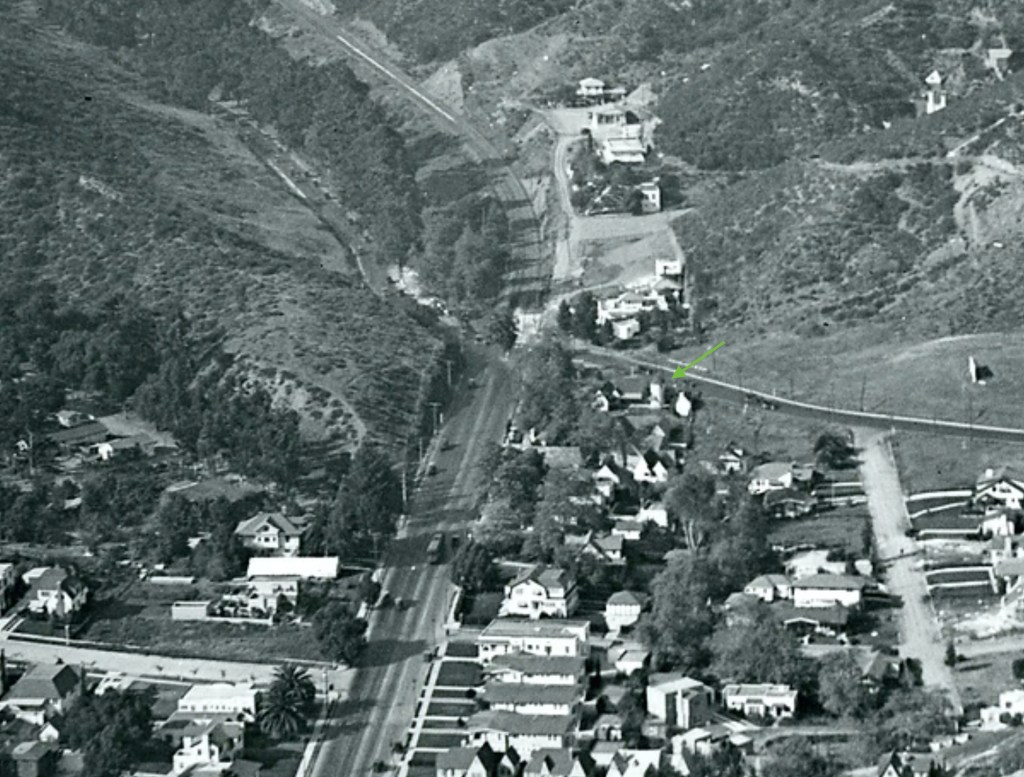
One of the first homes built, 2414 N. Highland Avenue was built in 1919 and is indicated by the green arrow below. The seven room house, called the Flemish Farmhouse, had a detached garage in the back of the house which was accessible on Cahuenga Blvd. The house was built by the Davis brothers and their partner, H.F. Withey. By the mid 1920s, with the widening of the roads and Texaco Gas Station now located on the corner, the property was remodeled into a service station and restrooms on the corner of Highland and Cahuenga.
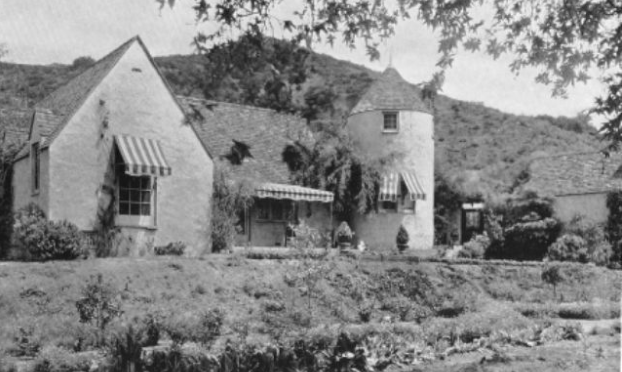
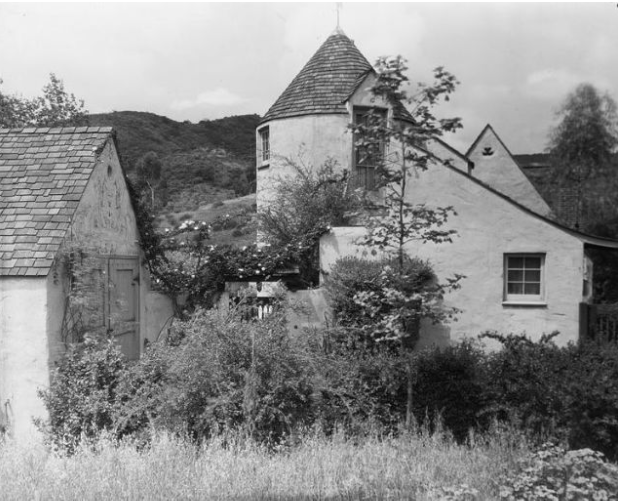
2402 N. Highland Avenue (The Monkey House), was built next to the Original Tower House. Notable inhabitants include: interior decorator Minnie Sweet Muchmore (1921-1923), interior decorator Boyd Callaghan (1927), clothing designer Gilbert Adrian (1929-1931), Walter and Alice Davis (1934-1935), and song writer Doris Harman (1939-1942). In 1936, the building was remodeled into an apartment complex-adding two new bathrooms, three showers, toilets and closets. There was a fire in 1945 so new rafters, roof shingles, replastering, plumbing and electric had to be replaced. Due to the construction of the 101 Freeway, this building was relocated to 3111 Alhambra Avenue, but torn down in 1953. Callaghan worked for a prominent interior design company called Cannell & Chaffin, who decorated mid-century homes designed by architect Philler J. Ellerbroek in the 1950s. Doris Harman was the president of the Artists’ and Models’ Club in the Los Angeles area, beginning in 1933 to counteract the low employment rate for artists and models.
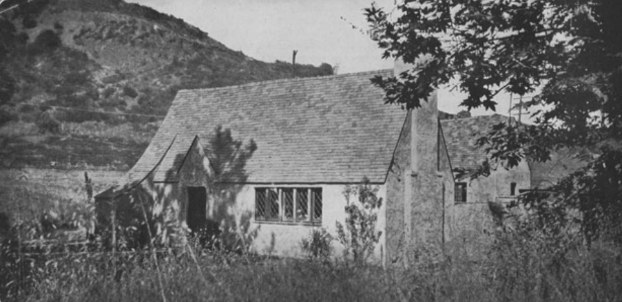
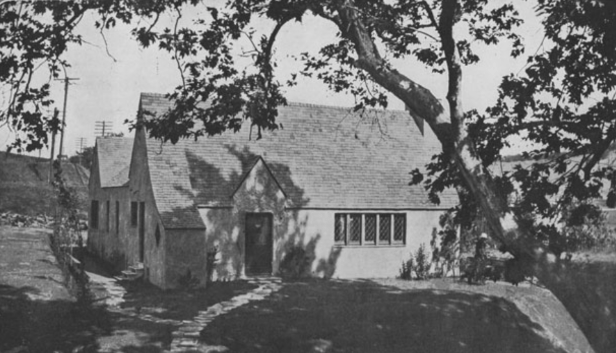
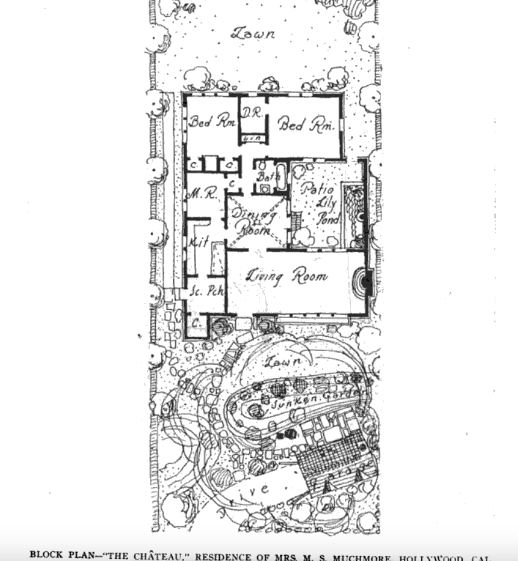
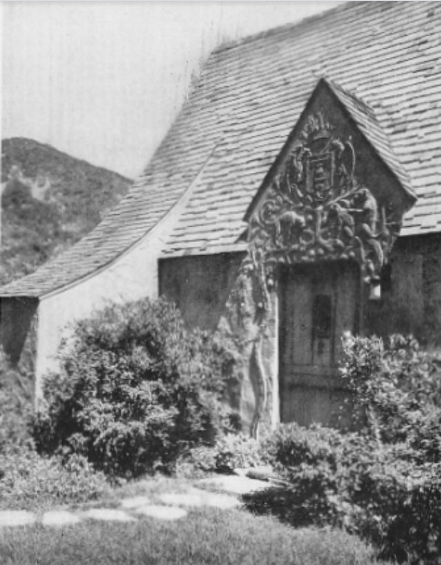
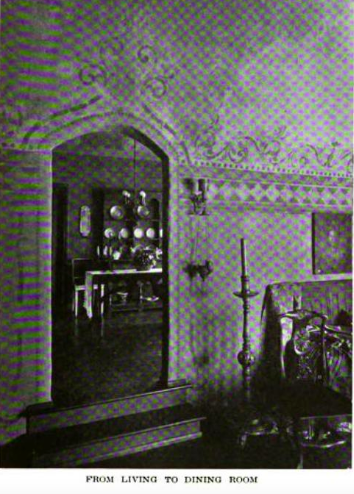
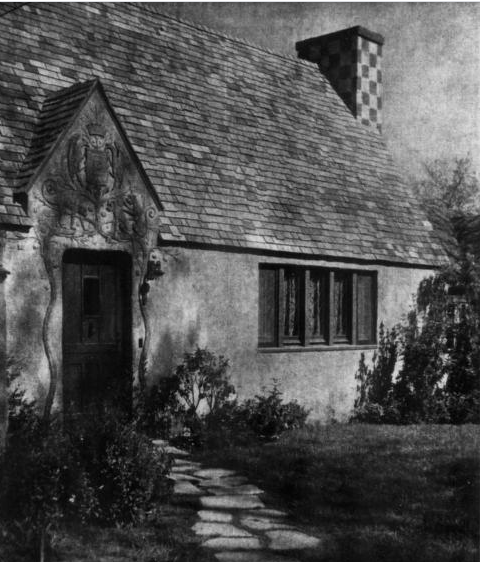
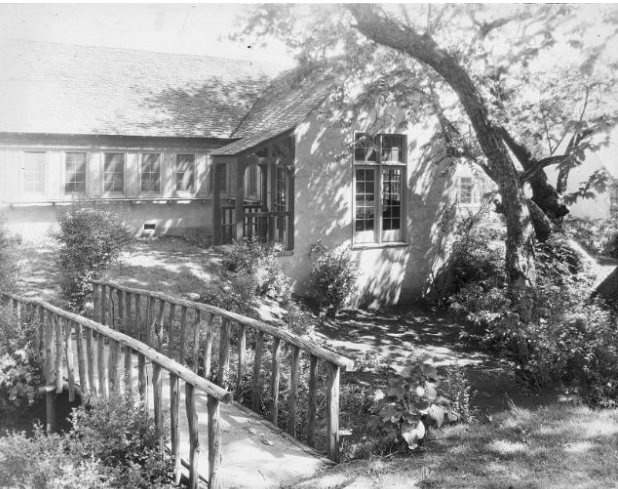
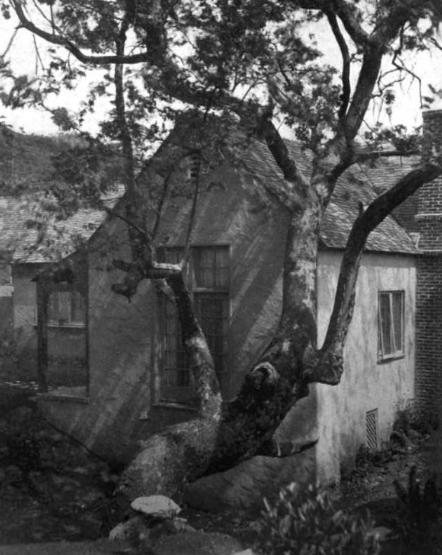
Pierpont and Walter Davis built the house in which they called “The Chateau” for Minnie Muchmore and decorated the inside to match her personality. They used an all plaster surface on the walls in order to stencil various decorations on the walls. They had used “crude” color schemes throughout the inside of the house. Their inspiration for building the house was an old sycamore tree that stood on the property and their visit to the Cote D’Or in Burgundy-seeing all the charming cottages. However, due to the scripture over the exterior front door, the house was known as “The Monkey House”. Their work on this house and other homes in Los Angeles was displayed in Pacific Coast Architect (1920), volumes 19 and 20 and Architectural Record (1921), volume 50. In addition, they published house plans in a book, “Ideal Homes In Garden Communities” in 1915, along with their brother, Henry, who was listed as the landscape architect.
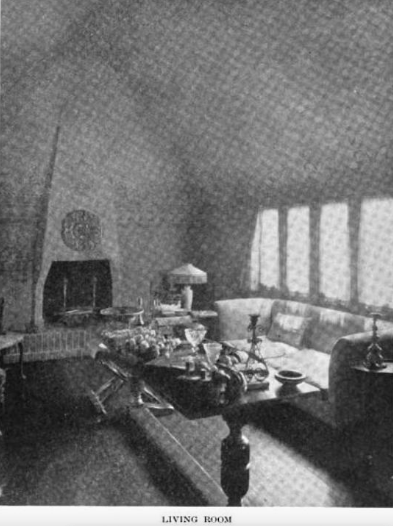
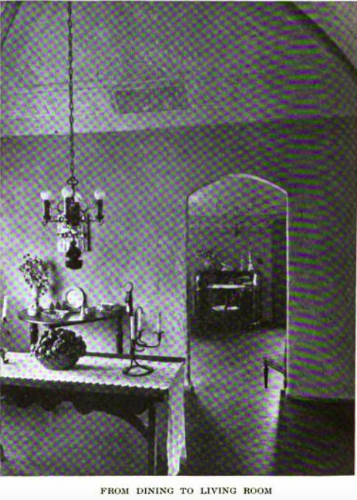
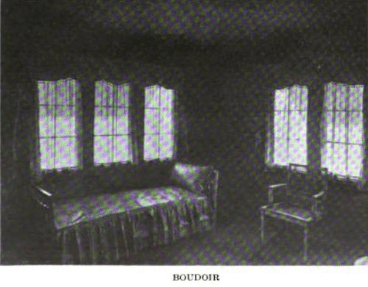
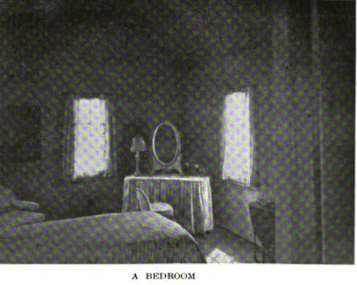
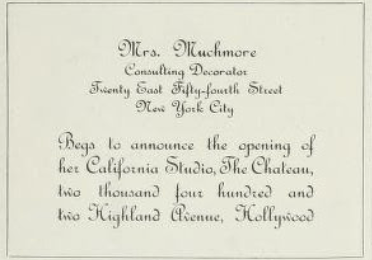
Minnie Sweet was born in 1855 in Rochester, New York and married oil merchant John E. Muchmore in 1880 in Detroit, Michigan and they resided in Chicago, IL. They divorced in 1903 after she accused her husband of setting up “an establishment in London with another woman”. Following the divorce, Muchmore opened up a decorating store in New York City and was only one of three woman in the industry at that time. In the early in 1920s, Muchmore also had a studio in London and Los Angeles (see below). She founded the Pen and Brush Club of New York. In 1919, she decorated the Wellington S. Morse house in San Rafael Heights. By 1929, Muchmore was living on North Alpine Drive in Beverly Hills and her circle of friends included the wives of director Sidney Franklin and actor Conrad Nagel. Muchmore died in Los Angeles in 1943 at the age of 88. Her New York basement apartment was featured in Good Housekeeping Magazine, volume 42 in 1906.
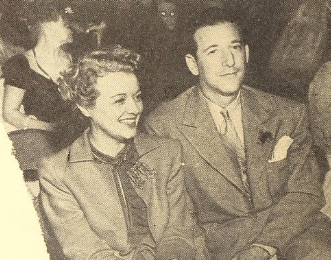
Between 1929 to 1931, clothing designer Gilbert Adrian resided in The Monkey House, according to the 1929 and 1931 Los Angeles City Directories. He was listed at 2406 N. Highland Avenue in 1927. Born Adrian Adolph Greenberg in 1903, he was a famous clothing designer for over 300 MGM movies and was known by “Adrian”. Adrian styled actresses such as Greta Garbo, Norma Shearer, Jean Harlow, Katherine Hepburn, and Joan Crawford. Adrian also designed the red Ruby slippers worn by Judy Garland in The Wizard of Oz. Adrian married actress Janet Gaynor (both pictured below) in 1939 and they had what was known as a “lavender marriage” since Adrian was openly gay and Gaynor was rumored to be gay or bisexual. They had one son named Robin in 1940 and remained married until Adrian’s death in 1952. In 1934, Adrian moved to 2074 Watsonia Terrace in Whitley Heights.
The Sycamore House, located at 2400 N. Highland Avenue, was a six room residence built in 1920. Notable residents included: actor Wallace Beery (1924), publicity agent Margaret Ettinger (1929-1932), publicity agent Daphne Marquette (1930), costume designer Earl Luick (1932), architect Bertram Teitelman (1935), Walter Davis (1936-1941), and actor Russell Collins (1940-1942). This structure was one of the building that relocated to Alhambra Avenue in 1951 and then demolished in 1953. Earl Luick, was a costume designer, who worked for Warner Brothers from 1928 to 1933, and 20th Century Fox from 1942 to 1943 and worked on almost 100 films.
Wallace Beery was born in 1885 in Kansas City, Missouri and at the age of 16 joined the Ringling Brothers Circus as an assistant to the elephant trainer. He left two years later after a leopard clawed his arm. He moved to New York and found work in musical variety shows and headed to Hollywood in 1913 in pursuit of making movies. He worked with actress Gloria Swanson (both pictured below) in 1915 and they quickly married. According to Swanson, Beery was a heavy drinker and raped her on their wedding night. After the wedding, they moved into Beery’s parent’s house. Nothing seemed to improve for the newlyweds, with Beery’s infidelities, heavy drinking, gambling debts and an uncertain acting career made his and Swanson’s life miserable. A month later Swanson found she was pregnant. Beery, still wanting to keep the marriage together for the sake of his career, told his wife everything would get better and appeared overjoyed at her news. A couple days later after suffering stomach pain, Beery gave Swanson a handful of tablets he claimed to have gotten from a pharmacy. Swanson was rushed to hospital and, near death and in excruciating pain, she was told she had lost her baby. When she recovered, she later found the pills were used to cause miscarriage and that Beery had knowingly aborted her child. After this incident, Swanson separated from Beery although they starred in another movie together. While filming, Beery deliberately used excessive force on Swanson which caused keep bruising on her arms. The two divorced in 1919.
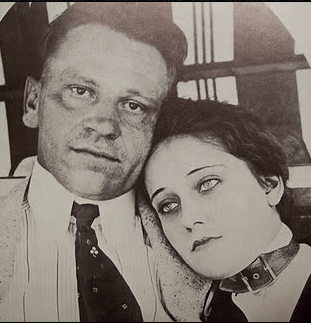
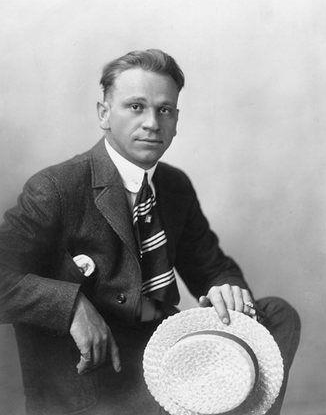
MGM executive Irving Thalberg saw something in Beery and hired him for the studio. Thalberg cast Beery in The Big House (1930), which was a big hit and got Beery an Academy Award nomination. In 1931, he won Best Actor for his role in “The Champ”. Beery worked up until his death in 1949 when he died of a heart attack. Beery was credited for 241 roles between 1913-1949.
Publicist Margaret Ettinger lived here between 1929 and 1932. She had another publicist, Daphne Marquette stay with her in 1930. A 1930 census has her living at the address of 2320 N. Highland Avenue and the 1932 Los Angeles City Director also places her at 2320 N. Highland Ave.
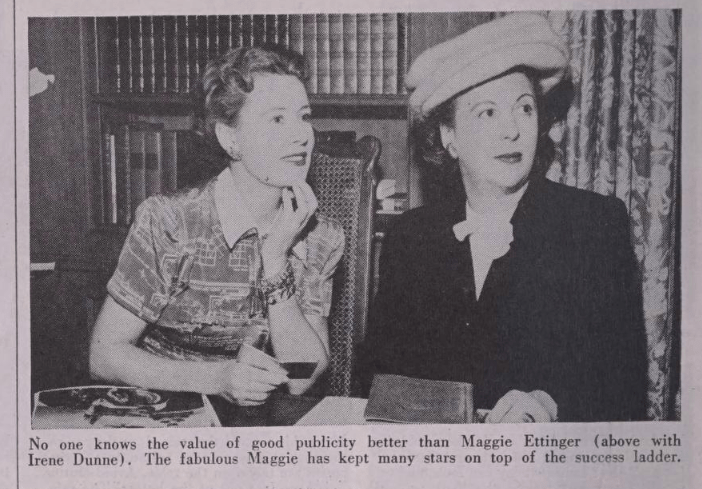
Margaret was gossip columnist Louella Parsons cousin, was known to work with A-List celebrities and being able to get them good scripts. Ettinger worked with Irene Dunne:
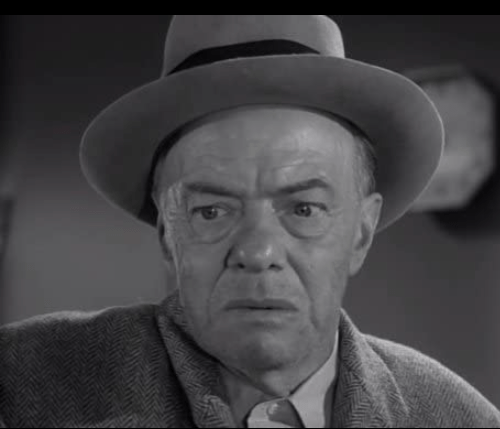
Actor Russell Collins lived at the Sycamore House between 1940-1942. Collins began his acting career in 1935 and was credited for 99 roles in films and television shows until his death in 1965. He was known for roles in: Niagra (1953), The Rifleman (1958), Bonanza (1961), Alfred Hitchcock Presents (1956-1961) 9 episodes, The Twilight Zone (1962), The Untouchables (1961-62), Perry Mason (1963), The Beverly Hillbillies (1964), and The Fugitive (1964).
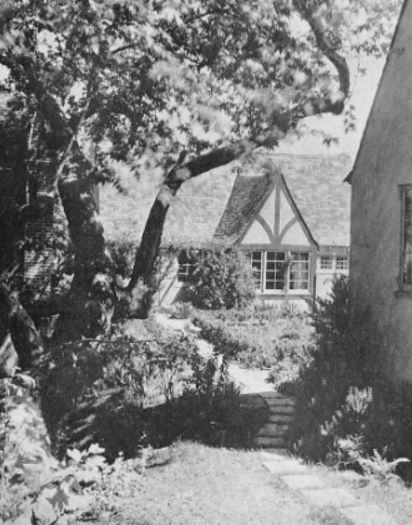
2316 N. Highland Avenue, the house in the upper right corner, was a 4 room French Normandy residence built in 1920. Notable residents included: MGM casting director Robert B. McIntyre (1922), actor Edward Mortimer (1925-1926), and actor Dwight Frye (1938-1940). In 1951, this residence along with a duplex located at 2313 Fairfield Avenue were relocated to 4013-4015 Sequoia Street in Atwater Village, Los Angeles. Robert B. McIntyre moved to 6757 Milner Road in Whitley Heights from 1944 to 1952.
Dwight Frye (1899-1943), pictured above, was an character actor who was credited in 67 films between 1918 to 1943. Frye was known for his horror roles in Dracula (1931), Frankenstein (1931), The Invisible Man (1933), The Bride of Frankenstein (1935), The Shadow (1937), and Son of Frankenstein (1939). Frye looked identical to then-Secretary of War Newton Baker which led his to being signed to a substantial role in Wilson (1944), based on the life of U.S. President Woodrow Wilson, but Frye had a heart-attack on a crowded bus a few days after being cast while returning home from a movie with his son. He was buried at Forest Lawn Cemetery in Glendale, California.
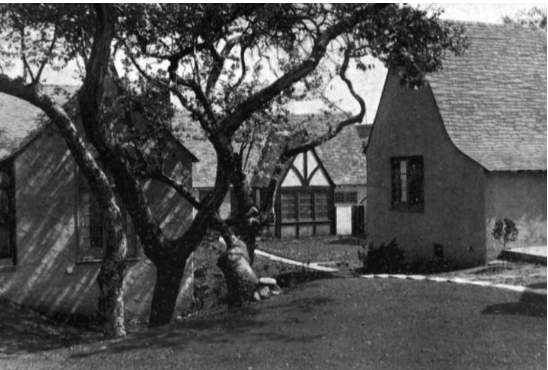
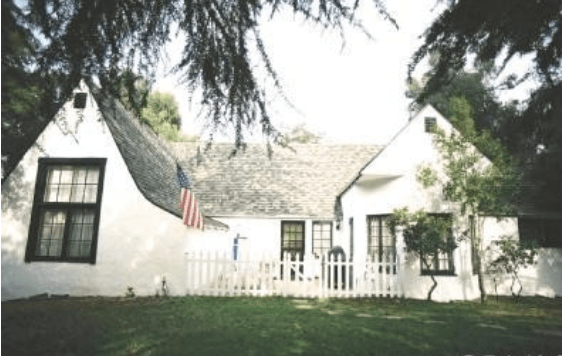
The house, now located at 4015 1/2 Sequoia Street, Los Angeles, is located in the rear of the property as pictured below. W. Muldery also bought a duplex in Whitley Heights, located at 2313 Fairfield Avenue and moved both buildings to 4013-4015 Sequoia Street; the duplex was placed in the front of the property and the French Village house is hidden in the back.
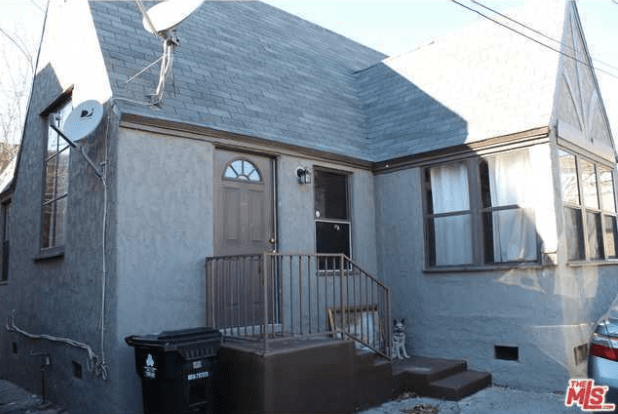
The second tower house, was built in 1920, 2314 N. Highland Avenue, consisted of six rooms and a separate garage. Walter’s father-in-law, a retired Physics professor William Mumper, moved from New Jersey and resided in the home until his death in 1931 at the age of 72. His wife continued to reside at for at least another year. However, screenwriter and director, Albert Raboch, was listed as living in the home in 1926. Raboch wrote “Driven” in 1923 and “Obey the Law” in 1926. In 1925, he was the assistant director of Ben-Hur and in 1927, he directed “The Devil Dancer” and was the assistant director of “An American in Paris” in 1951. In 1934, Highland Avenue was widened so half of the kitchen was cut in half and then remodeled.
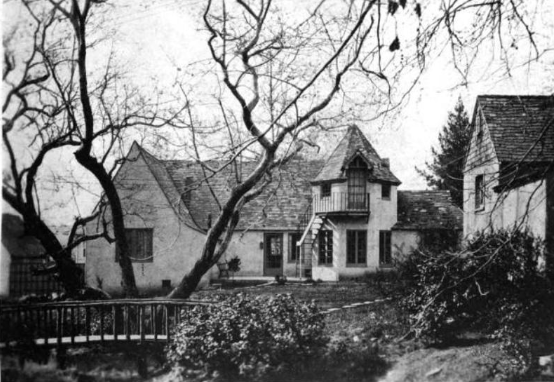
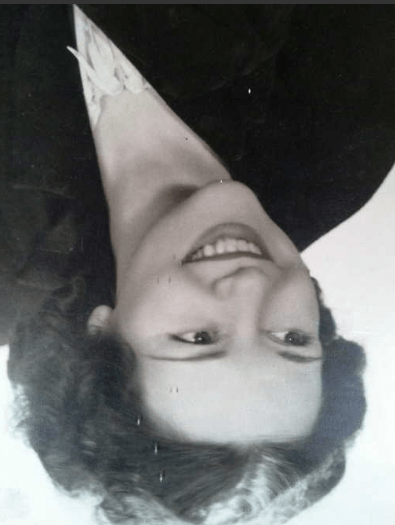
Actress and singer Neyneen Farrell (born Luna Farrell) lived at 2314 N. Highland Avenue in 1941 and 1942. Neyneen Farrell was born in Rotterdam, Holland, where her Mormon parents were on a mission (her great-great-grandfather was Brigham Young). She was raised in Logan, Utah, where her father Alfred Lundberg Farrell was a music teacher. Neyneen became his accompanist at the age of 12. When she was 16, Hollywood director Victor Schertzinger saw Neyneen sing and signed her to a movie contract. As far as is known, she made three films: Dollar Devils (1923) in the role of “Helen Andrews” and Frozen Justice (1929) in the role of “Yukon Lucy.” She had a part in The Marx Brothers film A Night at the Opera (1935) but it was cut out. Neyneen married Wade Hamilton, a well-known organist, in 1921 in Ogden, Utah. Neyneen and Wade gave birth to Gloria Hamilton in 1923, who became a famous Broadway actress and appeared on the Ed Sullivan Show in 1949. She became a voice teacher and pianist for Harold Hurlbut, until she opened her own studio in 1937 and used this house as a vocal studio.
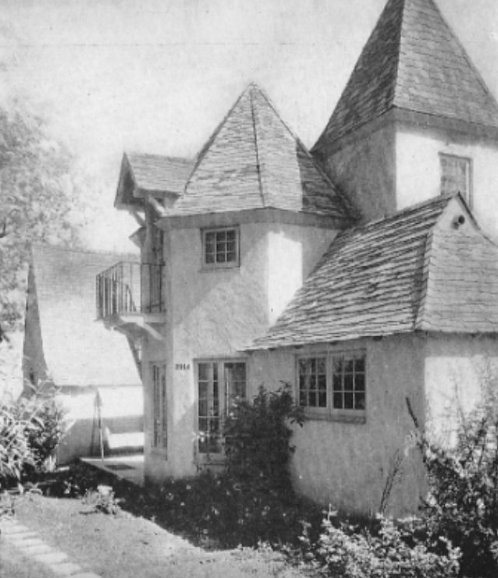
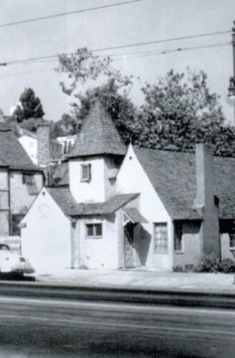
In 1951, the house was relocated to 10343 Silverton Avenue in Tujunga and is listed as 1,084 square feet with 2 bedrooms and one bathroom. The bottom of the tower is still present, but the top is now a roof. Above is the side view of 2314 N. Highland as it sat on Highland Avenue.
Starting in 1925, additions were made to the French Village as there was now a row of different buildings after the Texaco Station on Highland Avenue. The Davis brothers were still involved with the latest additions. This time, they named the updated units The French Pavilion, The Studio House, The Gargoyle House, The House of the Virgin Mary, and House of Jonah and the Whale.
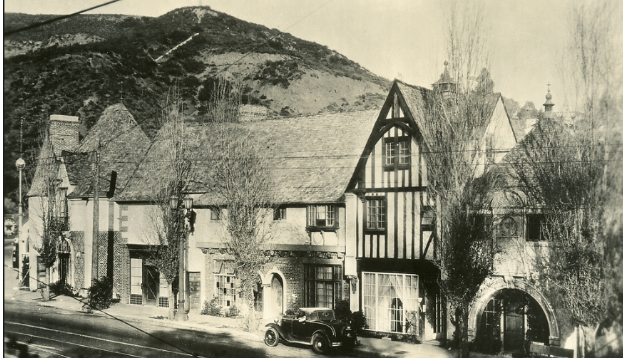
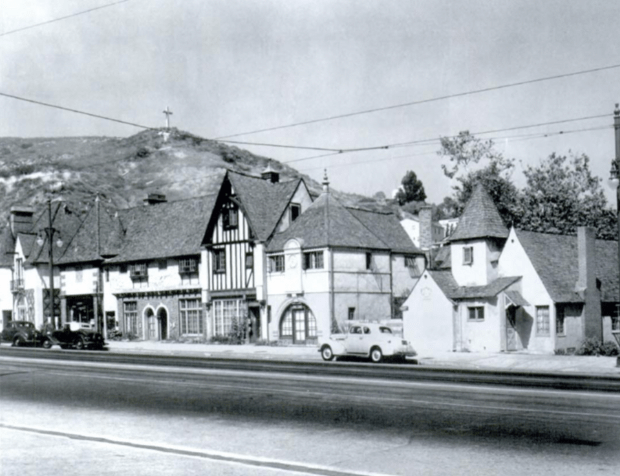
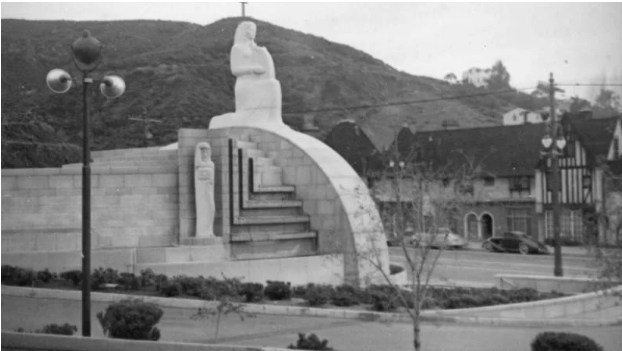
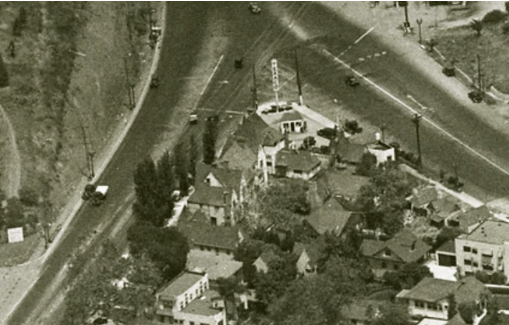
The entrance to the Hollywood Bowl was directly across the street from the French Village before its demise.
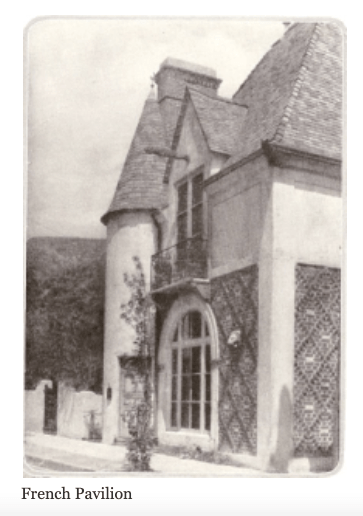
On the northern end of Highland Avenue, just after Texaco Gas Station, was the building called the “French Pavilion” with a listed address of 2406 and 2406 1/2 Highland Avenue. Notable inhabitants included; actor Jules Fontaine (1929), actress Jean Allison (1929), designer Charles Radigan (1931), designer Dorothy Worth (1935), and cartoonist William McIntyre (1942). The next section of buildings were 2320-22 and 2324-28 Highland Avenue. 2324 Highland was rented by writer Sanford Hewitt in 1929, photographer Carl Von Winther in 1931, actors Robert H. Allison and Thomas Yaconda in 1932, artist Paul E. Peterson in 1935, radio entertainer Arthur Bell in 1938 and screenwriter Nathalie Bucknell between 1940-42. 2326 N. Highland Avenue was home to actor and director Dayton Lummis in 1929. Lummis was credited for 143 roles between 1946-1975, including; The Lone Ranger (1953), How to Marry a Millionaire (1953), Dragnet (1954), I Love Lucy (1953 & 1955), Bonanza (1960-5) and his last appearance, Gunsmoke (1975). 2328 N. Highland Avenue was home to director Mitchell Leisen between 1927-1928. Leisen directed 52 films and television shows. He directed two actresses to Oscar nominations: Olivia de Havilland (Best Actress: Hold Back the Dawn (1941) & To Each His Own (1946)) and Thelma Ritter (Best Supporting Actress: The Mating Season (1951)). De Havilland won an Oscar for her performance in the 1946 film, continually citing Leisen as the favorite among her directors. In 1930-1931, fashion designer Irene Lentz Jones used 2328 N. Highland Avenue as her studio. Below is Lentz and her lover, actor Gary Cooper.
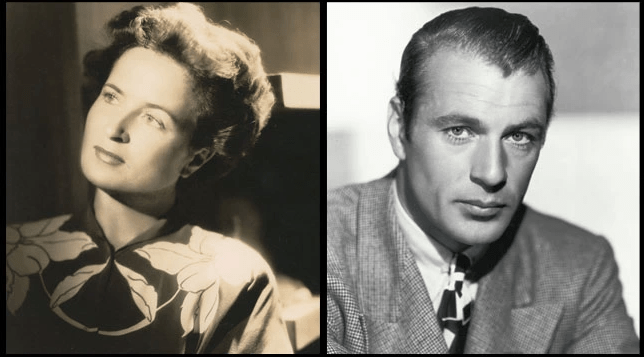
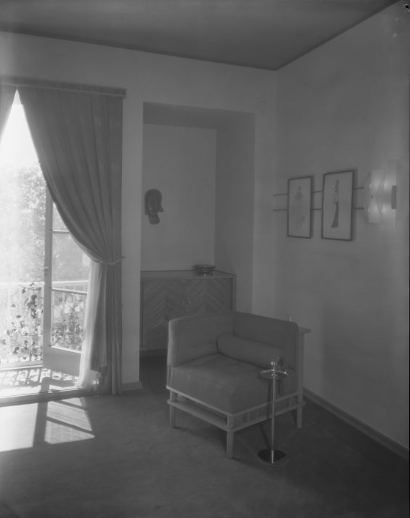
Lentz moved to Hollywood to become an actress when she was a teenager. She found work as a Mack Sennett bathing beauty and appeared in the comedies Picking Peaches (1924) and A Tailor-Made Man (1922). Irene married director F. Richard Jones in 1929. Tragically he died a year later from tuberculosis. To make extra money Irene decided to open a dress shop located in the French Village. Below is the inside of her dress shop located in the French Village.
In 1933 she was asked to design the clothes for Lili Damita in Goldie Gets Along (1933). She quickly became one of Hollywood’s top costumes designers. Irene had a passionate affair with actor Gary Cooper. She later said he was the only man she really loved. In 1936 she married Eliot Gibbons, a writer. Irene became the head costume designer at MGM where she created iconic costumes for Lana Turner and Judy Garland. She was nominated for an academy Award in 1948 for her work on B.F.’s Daughter (1948). Unfortunately her marriage to Elliot was troubled and they began living apart. In 1960 Irene’s close friend Doris Day asked her to design the clothes for Midnight Lace (1960). She received her second Academy Award nomination for her work on the film. By this time Irene had a serious drinking problem and was suffering from depression. On November 15, 1962 Irene checked into the Knickerbocker hotel in Hollywood. She committed suicide by jumping out of a bathroom window after drinking a lot of alcohol. She first attempted to slit her wrists unsuccessfully. Irene was sixty-one years old. In her suicide note she wrote “”I’m sorry. This is the best way.”
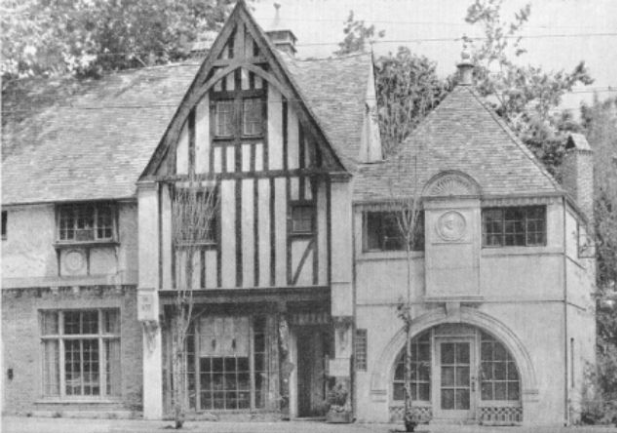
During the early 1930s, writer Cyril Hume and his wife, actress Helen Chandler lived in the French Pavilion. Helen Chandler was an actress, best known for her role in Dracula (1931), as the victimized Mina who was chased by Bela Lugosi. Chandler’s movie career started in 1927 after a successful stage career. She was credited for 27 roles until 1938 as she wanted to return to theater. In 1930, she married screenwriter Cyril Hume, who was known for his movie and television scripts (The Rifleman, The Magical World is Disney, the original Great Gatsby). Hume also discovered Tarzan actor, Johnny Weissmuller. Chandler and Hume had worked together at MGM and for a time, they kept the marriage a secret as the newlywed couple moved into the French Pavilion house in the French Village. Below are photographs of them in the village. They then moved into a home in the Hollywood Hills with Cyril’s 5 year old daughter from his first marriage.
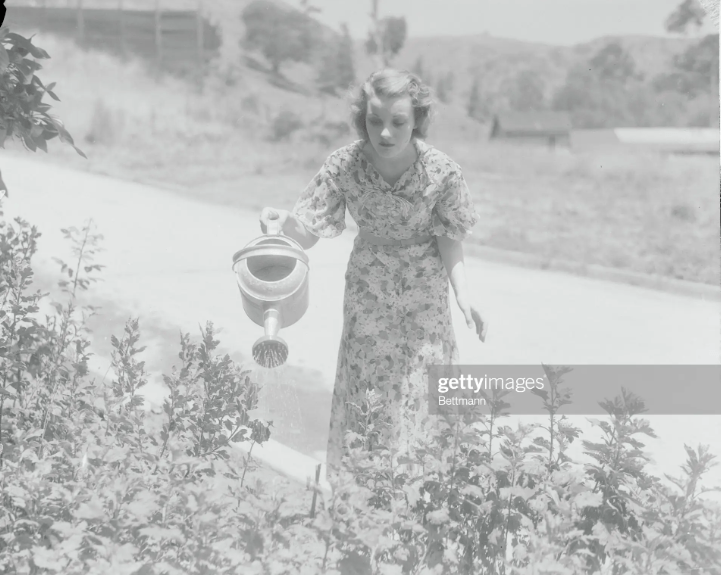
Along the line, Helen developed a drinking problem. According to her sister-in-law, who she lived with between husbands, Helen would work all day and then drink at night while reading a book in bed. Geraldine indicated that when Helen moved out of the her house, she found bottles of alcohol in the bedroom closet that she stayed in. After Helen and Cyril divorced, Helen married actor Bramwell Fletcher, who allegedly married her so he could ride on her coat tails to fame. However, Helen caught him with actress Mary Astor, one of his many infidelities. Helen’s drinking problem and sleeping pill addiction did not help the marriage either and the two divorced. Helen had a complete break-down so her brother had her institutionalized at La Crescenta Sanitarium and just like that, her career ended.
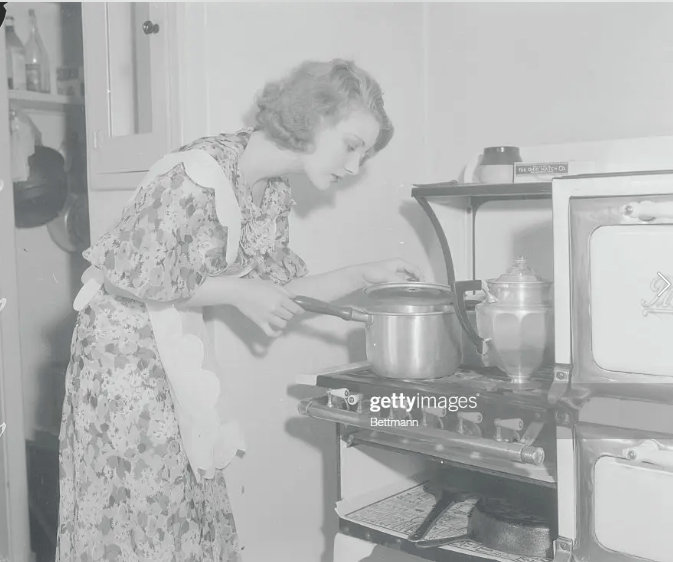
In 1950, Helen was residing at the Fleur-de-Lis Apartments, 1825 Whitley Avenue, and fell asleep with a cigarette and a drink and burned herself severely. She had burned her face and upper part of her body which remained scarred. Helen would have died if it was not for her apartment manager smelling the smoke and breaking into her apartment just in time to save her life. Once again she was committed and spent five years in a state hospital. Helen spent her final years living in Venice, California and was admitted to the hospital in April of 1965 due to a bleeding ulcer where she died due to post-operative renal failure and cardiac arrest, dying at the age of 57.
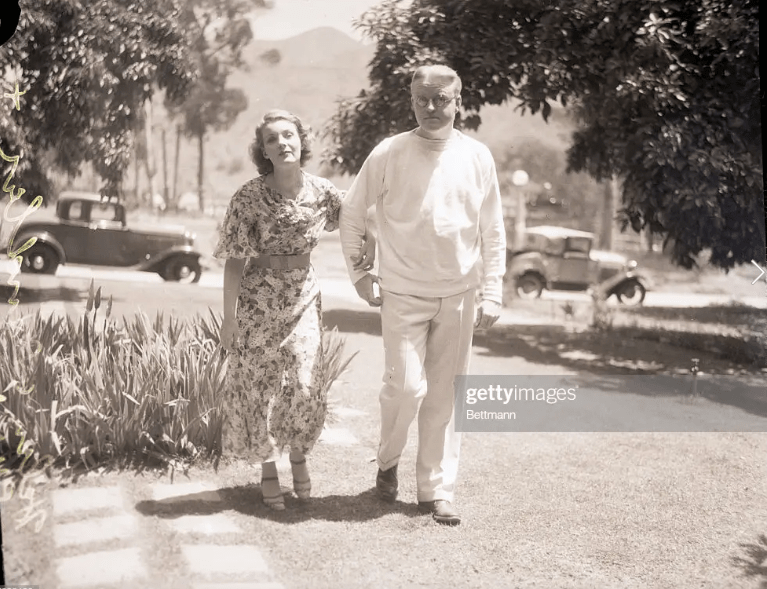
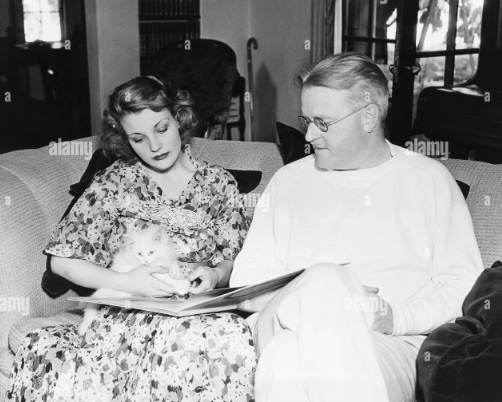
2326 N. Highland Avenue was home to Dana Art Studios (Louis and Thorwald Madsen) and vocalist Johanna Madsen in 1927, artist Irma Archer in 1934, and studio worker Henry A. Long in 1940. 2328 N. Highland Avenue also housed singer Ediana Leori in 1936, musician Mrs. Clyde W. Spears in 1938, and artist William H Citrin in 1941. The French Village closed all of its door in January 1951:
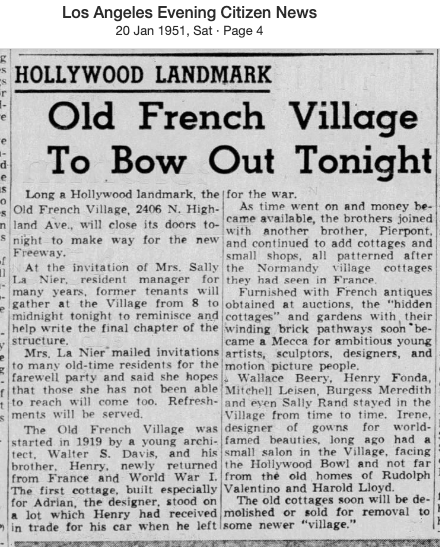
This article in a Los Angeles newspaper indicated that others such as actors Henry Fonda (Fonda may have lived at Normandie Village), Burgess Meredith, and Sally Rand once lived in the French Village. Author E.J. Fleming in the book, The Movieland Directory insinuated Gloria Swanson lived in the “bungalow village” with Wallace Beery. Director Raoul Walsh may have lived here with his young bridge and actress Miriam Cooper. The French Village may have been home to actresses Theda Bara and Leatrice Joy back in the early 1920s. “The old cottages soon will be demolished or sole for removal to some newer “village”. The front buildings were indeed sold and moved to 3111 Alhambra Avenue in Los Angeles, were they were torn down less than 2 years later. The only remnants of the village are the two houses on Sequoia Street and Silverton Avenue.
 Whitley Heights 101
Leave a comment