6734 Wedgewood Place
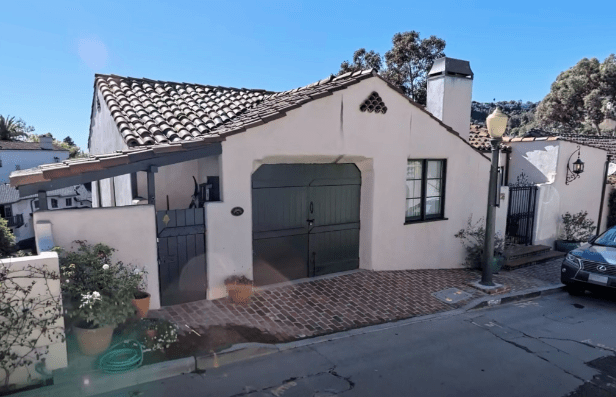
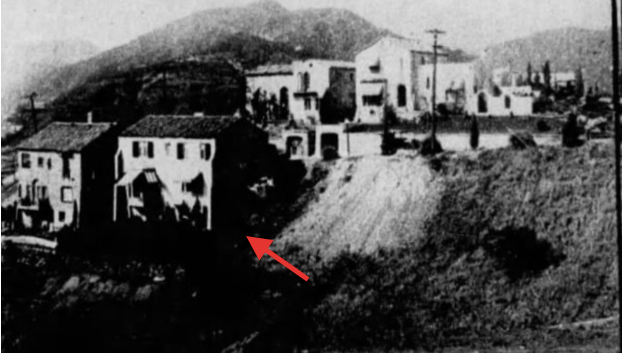
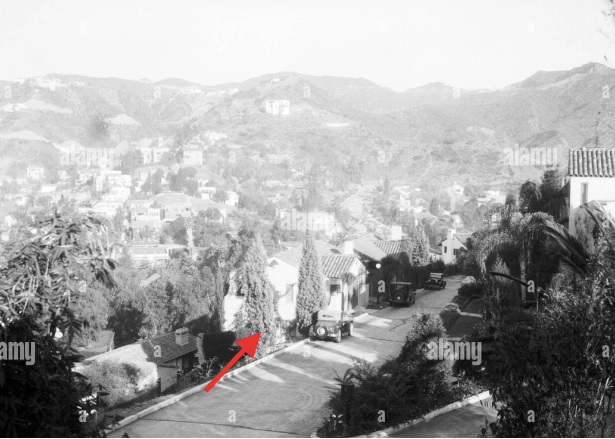
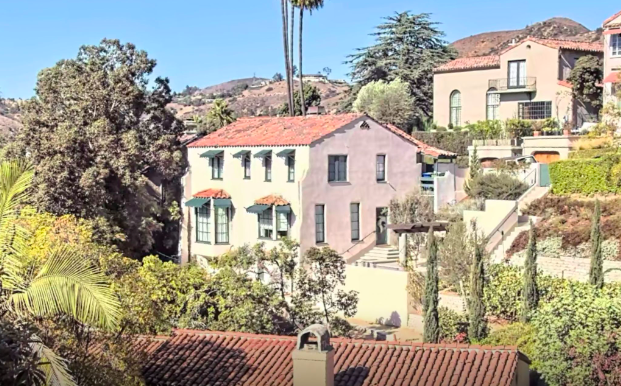
6734 Wedgewood Place was built in 1922 by architect Arthur S. Barnes for actor Edward J. Flanagan and his family. The 2-story Mediterranean home sits on a downslope, consists of 2,499 square feet with 3 bedrooms and 3 bathrooms. The home has a mission style roof, an enclosed patio entry into the home, a basement, and French doors and windows. Below are some rear view photos of the home and the Cahuenga Pass area after it was build in the 1920s.
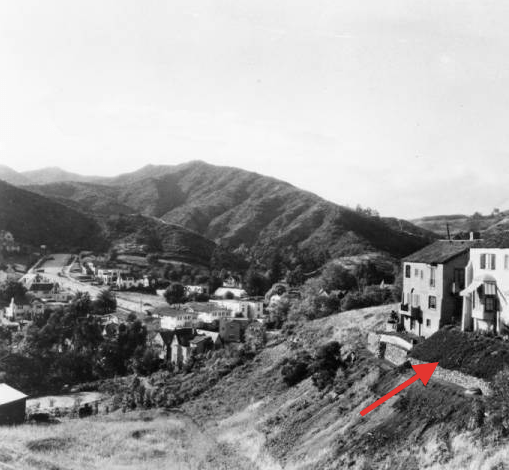
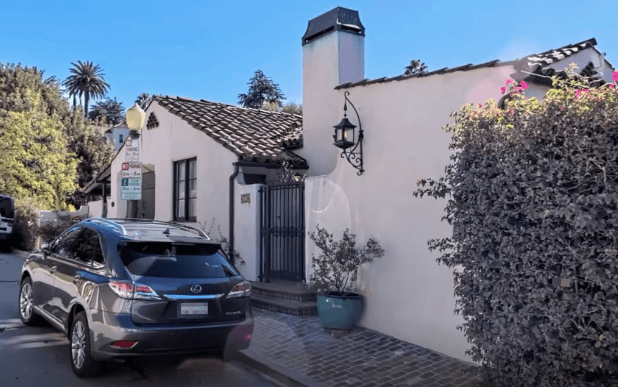
Below, 6738 Wedgewood Place is to the left and was also built in 1922. 6735 Wedgewood Place in across the street from 6734 Wedgewood Place and was built in 1923 and 6733 Wedgewood Place is to the right of 6734 Wedgewood Place and was built in 1921. 6738 and 6733 Wedgewood Place were also designed by Barnes. 6734 Wedgewood Place was originally owned by actors Edward J. and Charlotte Flanagan. The Flanagan’s moved to Hollywood circa 1920-21 and moved to 1726 Hudson Street with their 11 year old son named Edward Jr. and Charlotte’s daughter, Hortense, age 20. Charlotte was six years older than Edward and when they moved, he was 39 and she was 45 years old.
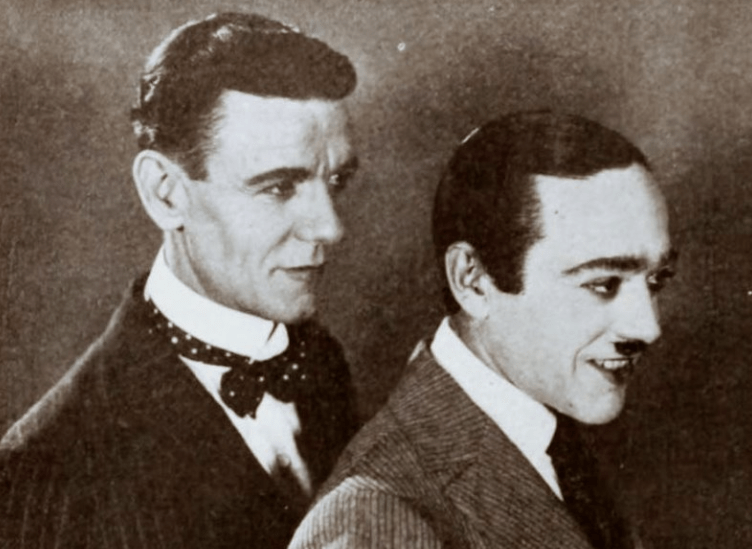
Edward J. Flanagan, born in St. Louis in 1880, was an actor who started in vaudeville and then transitioned to silent film after moving to Hollywood in the 1920s. He met his wife, Charlotte Rix Ravenscroft while traveling as she also acted, sang, and played the violin in the same circuit. They married in New Orleans in 1907. Charlotte, who was born in 1872 in Michigan, was first married to a another stage actor and singer named Horace Ravenscroft in 1897 and they had a daughter named Hortense who was born in 1899. Horace died a few years later in 1902 in Brooklyn, NY. When Flanagan was not working with his wife, he teamed up with actor Neely Edwards, billed as “Flanagan and Edwards, the Rollicking Twosome”. In 1919 and 1920 the pair appeared in silent comedies together (The Hallroom Boys and other series). The duo, pictured below, depicted a pair of New York bums both on stage and in silent film.
Flanagan left the team in 1920 and starred in several other films including; Don’t Call Me Little Girl in 1921, starring Mary Miles Minter and his last film also in 1921 called The Hunch. Flanagan was performing at the Metropolitan Theatre on August 13, 1925 and was taken ill and rushed to Hollywood Hospital. He had an operation due to severe stomach ulcers and developed peritonitis and died on August 18, 1925 while he was residing at 6734 Wedgewood Place. Charlotte and her two children continued to reside on Wedgewood Place until 1929. Edward Jr., who was also known as “Bud Flanagan”, followed his parents footsteps and began acting on stage as a child. In 1930 he began to work in films as an extra, usually as a party guest or in crowd scenes and appeared in over 200 films. With a good word from Clark Gable, whom he worked with on Saratoga (1937), he began to get bigger roles under his new screen name Dennis O’Keefe. That same year he married B movie starlet Louise Stanley; the marriage lasted only a year and a half. In 1938 he got his first screenwriting credit under the name E.J. Flanagan, a boxing picture called The Kid Comes Back, a.k.a. Don’t Pull Your Punches. In 1940 he married Hungarian born dancer and actress Steffi Duna who appeared in Waterloo Bridge and The Great McGinty that same year. The two remained married until his death in 1969 and had two children. Their son, James O’Keefe also became part of the entertainment industry, producing hit shows such as Mork & Mindy, Full House, Perfect Strangers, and Family Matters.
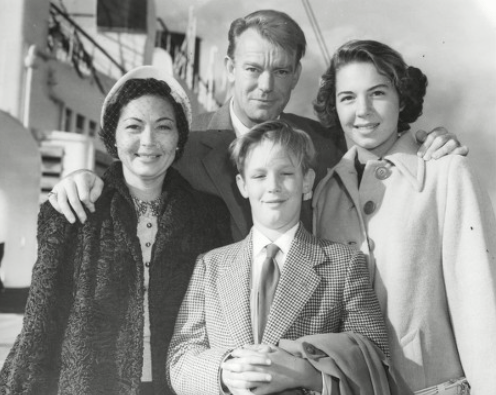
Dennis O’Keefe’s most memorable leading roles include; Girl From Havana (1940), Brewster’s Millions (1945), Mr. District Attorney (1947), and One Big Affair (1957). In the 1950s O’Keefe made several guest star appearances on television and had his own show called, The Dennis O’Keefe Show between 1959-1960. Duna was born in Hungary in 1910 and trained as a ballet dancer performing all over the world. She came to the United States in the 1930s before moving to Hollywood circa 1933 and married actor John Carroll in 1935 and giving birth to a daughter (pictured above). Duna and Carroll divorced one year later and then she married O’Keefe in 1940.
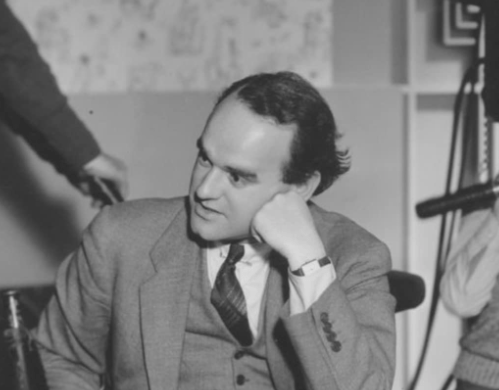
Between 1930-1931 28 year old director Hamilton McFadden (pictured below) and his 24 year old wife, actress Violet Dunn lived at 6734 Wedgewood Place. McFadden, a graduate of Harvard Law School, had just been signed by Fox Studios and was credited for 29 directing roles between 1930 to 1945. He is best known for directing several Charlie Chan films, Shirley Temple’s “Stand up and Cheer” (1934), and Helen Twelvetrees “She Way a Lady”” (1934). When Fox Studios merged with 20th Century Production in 1934, his contract was not renewed so McFadden turned to minor acting roles. McFadden married his second wife, Violet Dunn in 1929. Dunn was only credited for 5 minor roles including Doctor’s Wives (1931) and The Black Camel (1931). After divorcing Dunn in 1933, he married actress Ruth Channing a year later. After having three children together, he divorced Channing in 1949. McFadden died in New York in 1977 at the age of 76.
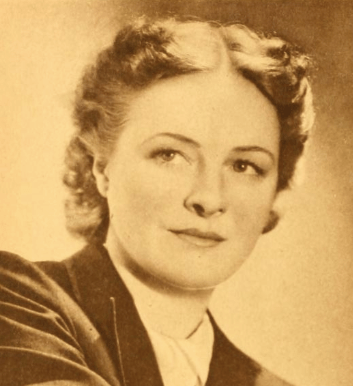
Between 1934-1936, actress Dorothy Peterson resided in the home. Peterson was born in Hector, Minnesota in 1897 and after acting on Broadway, Peterson moved to Hollywood in 1930 and was credited for over 100 roles in film and television until 1964. Peterson had minor roles in Emma (1932), Treasure Island (1934), Dark Victory (1939), and Mr. Skeffington (1954). Peterson also guest starred in several tv shows including her last role on the Patty Duke Show in 1964. Peterson was often typecast as wives and mothers who were suffering and worked with Bette Davis, Gloria Stuart, Joan Bennett and Spencer Tracy. Off camera, Peterson kept a private life, but according to the tabloids, a red rose or other romantic gifts were delivered daily to the Whitley Heights home. When asked about the gifts, Peterson would give a wink and indicate they were “just friends”. Peterson was considered an “intellectual” and once had dinner with Albert Einstein at the home of Upton Sinclair in 1933. In 1943, Peterson married actor Guinn “Big Boy” Williams, a western actor, remaining married until his death in 1963.
Between 1941 and 1952, screenwriter Peter Milne and his wife, Janet, resided in the home. Until the 1950s, little had been done to the house. In 1952, Milne decided to enclose the downstairs porch and convert the upstairs porch into a dressing room. Milne was born in New York City in 1896 and was credited for writing over 60 screenplays. His best known work includes; The Woman in Red (1935), starring Barbara Stanwyck, The Walking Dead (1936), starring Boris Karloff, and Step Lively (1944), starring Frank Sinatra.
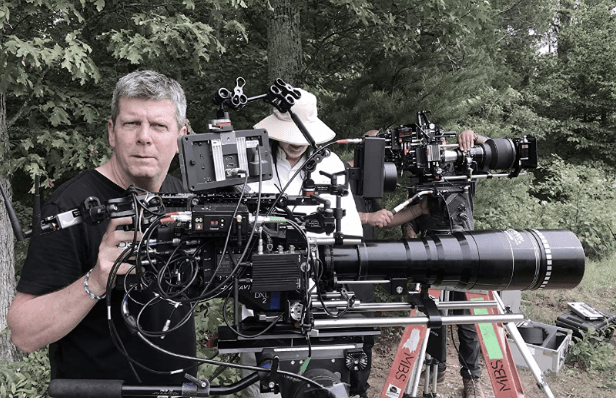
Between 1987 to 2013, cinematographer Peter Deming resided in 6734 Wedgewood Place. Deming is credited as the director of photography for over 85 films since 1982. His best known work includes; My Cousin Vinny (1992), Son-in-Law (1993), Scream 2, 3, 4 (1997-2011), Mulholland Drive (2001), Rumor Has It… (2005), Twin Peaks (2017), and Capone (2020). Deming has been nominated for 11 awards for his work on Mulholland Drive and Twin Peaks. In 1990 he won the cinematography award at the Sundance Festival for his work on “House Party”. He most recently worked on the new John Wick film.
 Whitley Heights 101
Leave a comment