2303 Fairfield Avenue
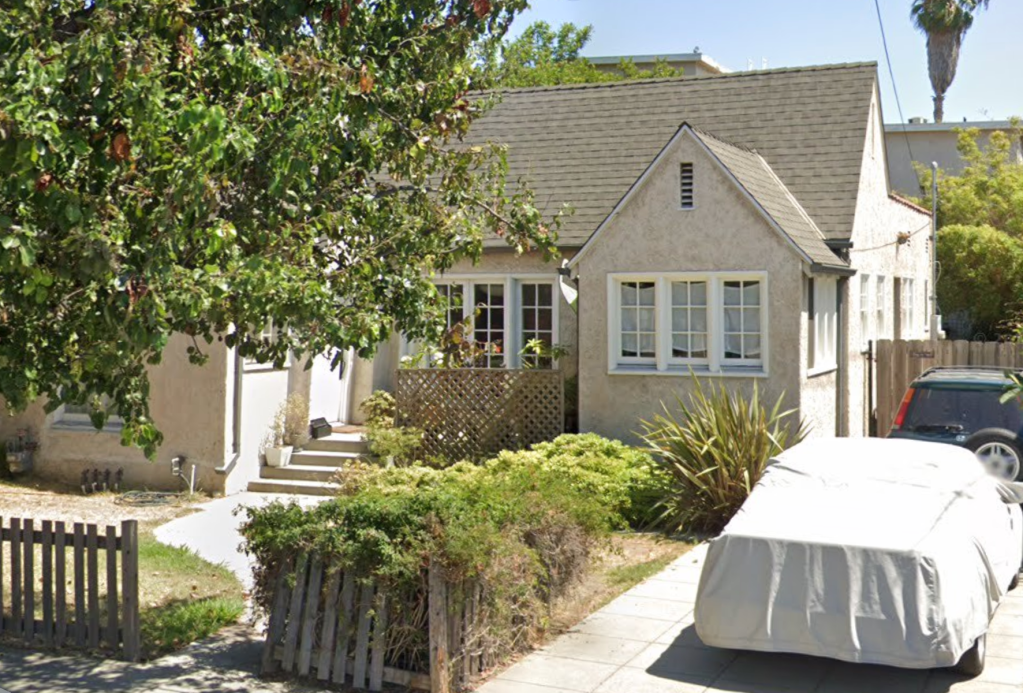
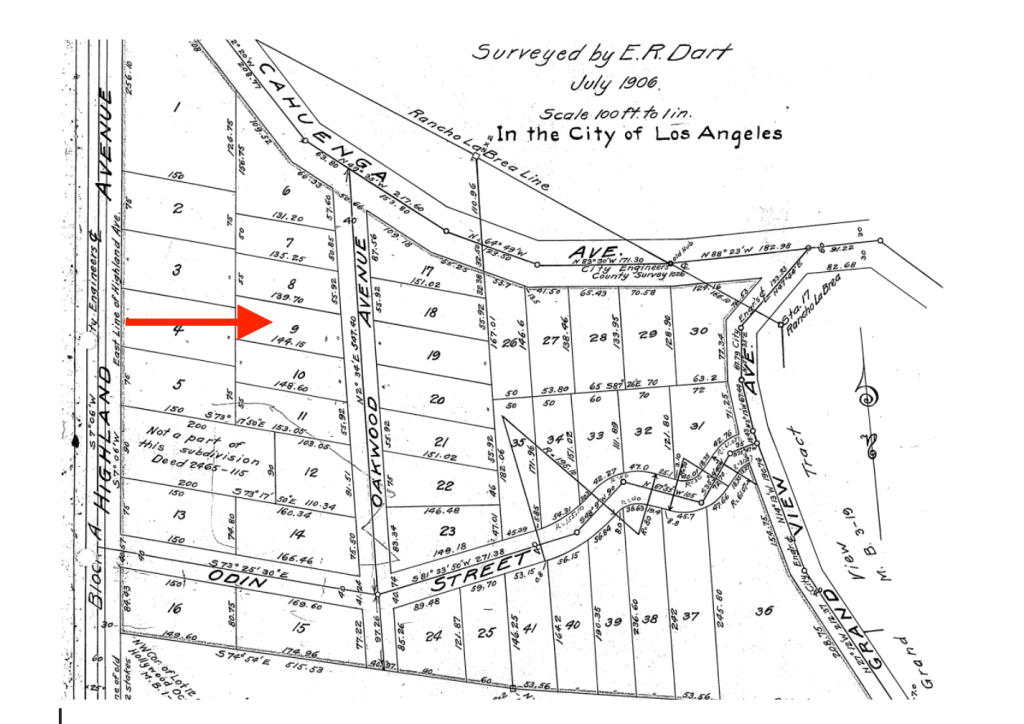
The 2303 Fairfield Avenue history is somewhat confusing as there were 2 permits for new construction on lot 9 on the Lockwood Place Tract. In 1918, silent screen actor Forrest Seabury and his wife, Charlotte, built a one story, 5 room cottage (32 x 32.6) while they were living at 1928 Highland Avenue. Then in 1926, Ida Beyea built a 5 room cottage (37 x 42) with a private garage. The house and garage were relocated in 1950 to 10752 Charnock Road in the Palms-Mar Vista area of Los Angeles. According to the permit to move the house and garage, the size of the house was 37 x 42, the size of the later built home. Both permits have the same information: 2303 Fairfield Avenue, on lot 9 of Lockland Place Tract, book 11, page 15 of the county recorder. The earlier built home seemed to vanish after the Seabury’s moved out and Beyea built the new house and moved in.
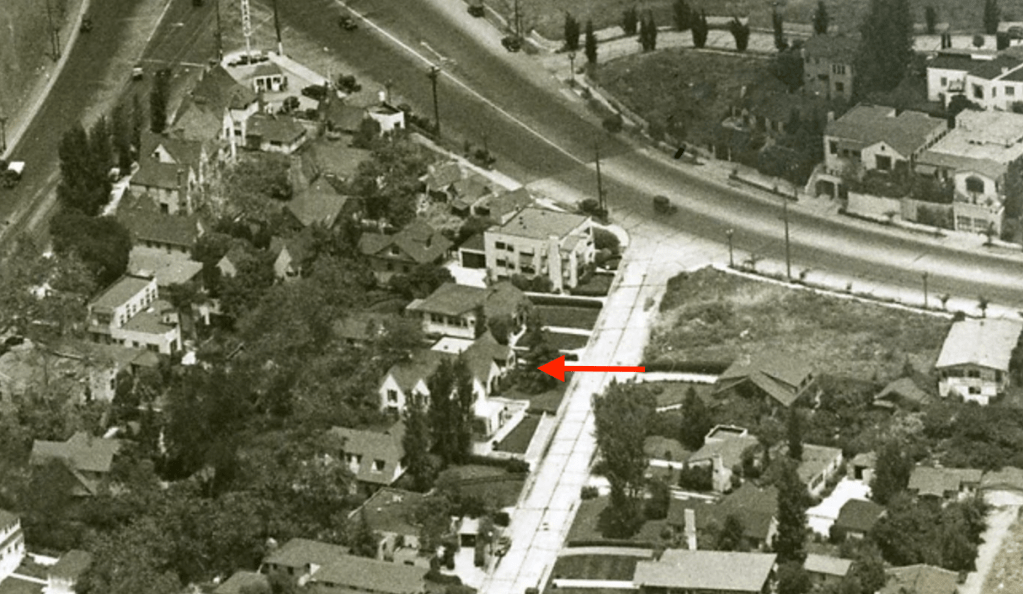
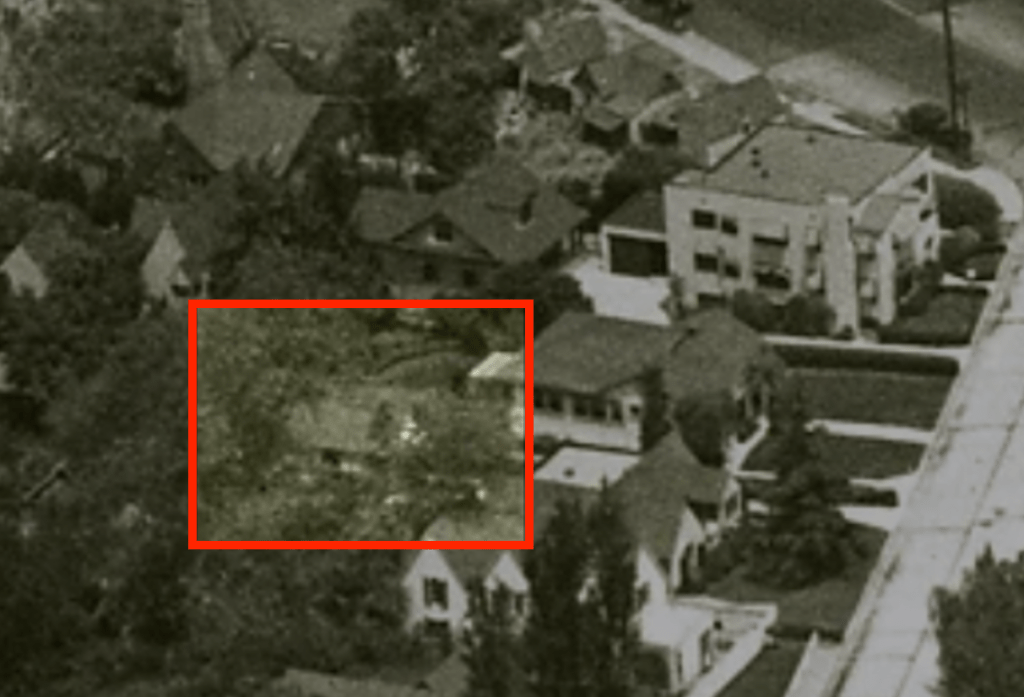
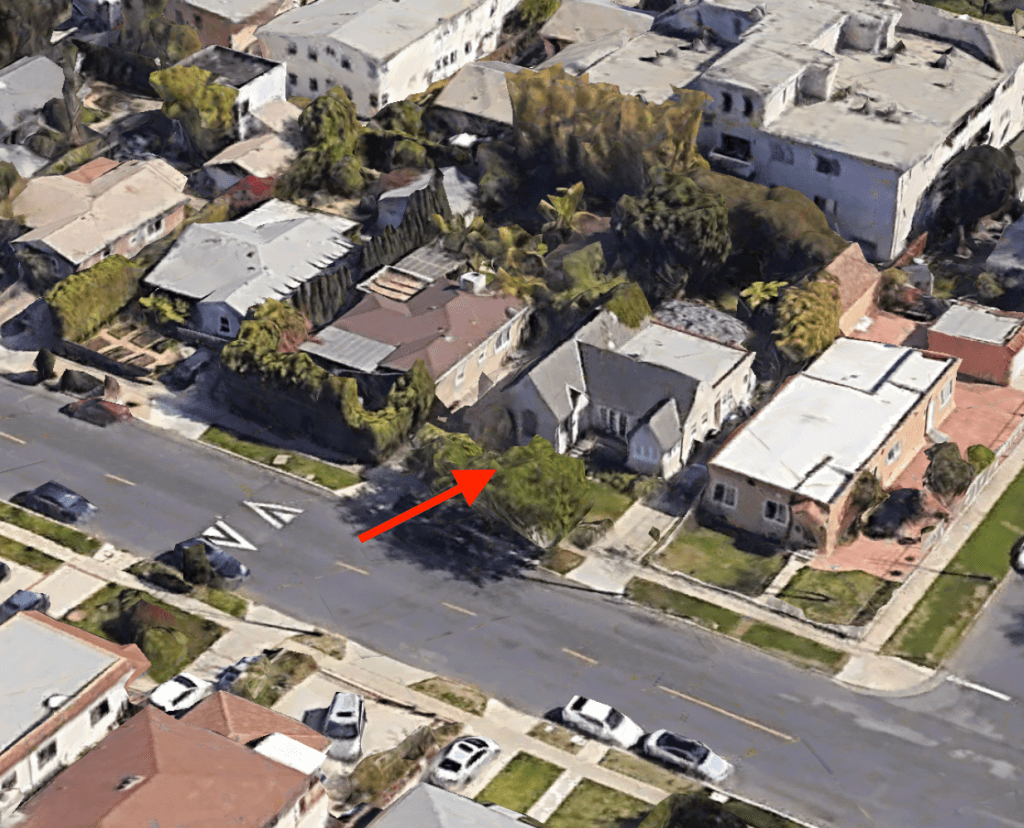
Were there 2 homes of the property? Was the earlier home mislabeled by the county recorders office or was it torn down before the second house was built? From the photo above, there appears to be another building in the trees behind the home identified with the arrow. According to the Los Angeles City Directories, Forrest Seabury resided at 1928 Highland Avenue in 1918 and then 2303 Fairfield Avenue that same year. Ida M. Beyea was residing at 2060 N. Highland Avenue in 1926 and 2303 Fairfield Avenue after the house was built in 1926. Both are listed with the same address! However, by 1929, Forrest and Charlotte Seabury were then living at 9037 Burton Way. Ida remained at 2303 Fairfield Avenue until at least 1932; in 1937, she was living in another home. In addition, a search of 2303 Fairfield Avenue showed only one family residing at the address at one time. The later built home was definitely relocated to Charnock Avenue. Could the first home have been renumbered to another Fairfield Address?
A search of lot 9 of Lockland Place Tract yielded no address changes and 2301 and 2305 Fairfield were addresses that were not used. 2307 Fairfield Avenue belonged to the house of lot 8, 2311 and 2313 Fairfield Avenue were on lot 7. 2316 Fairfield was lot 6. Lot 10 was 2225 Fairfield Avenue. A search of odd number addresses between 2225 and 2303 Fairfield did not produce a home address. What happened to the house that the Seabury’s were living in?
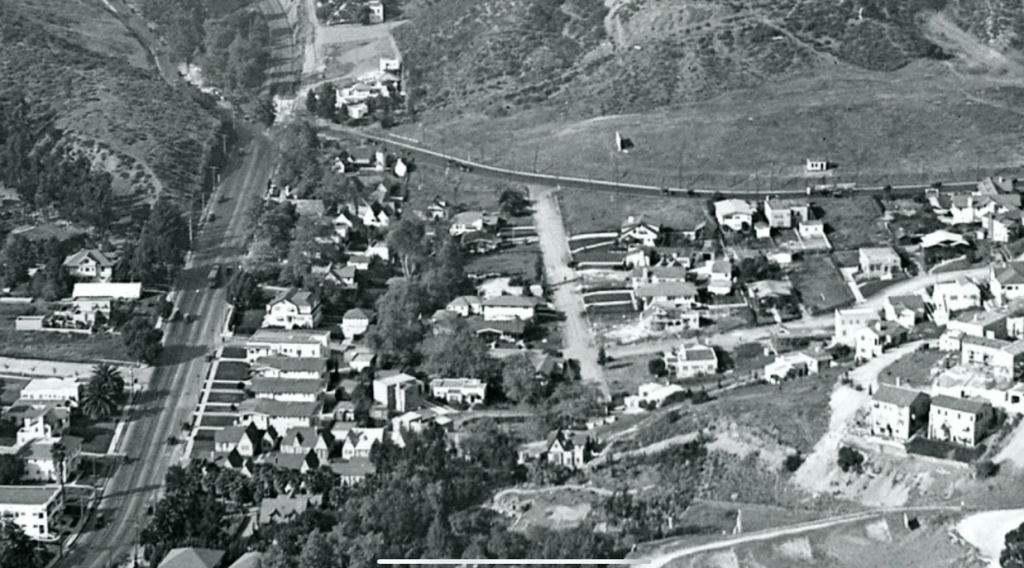
When Ida Beyea built the 5 room house and garage, the permit stated that there was not any exist building on the lot. Could it have been torn down? Based on the photo below, there does appear to be another building behind the house and it is probably the detached garage that was also relocated in 1950. It is probable that the Seabury home was torn down before the 1926 home was built and that building behind the house is the detached garage.
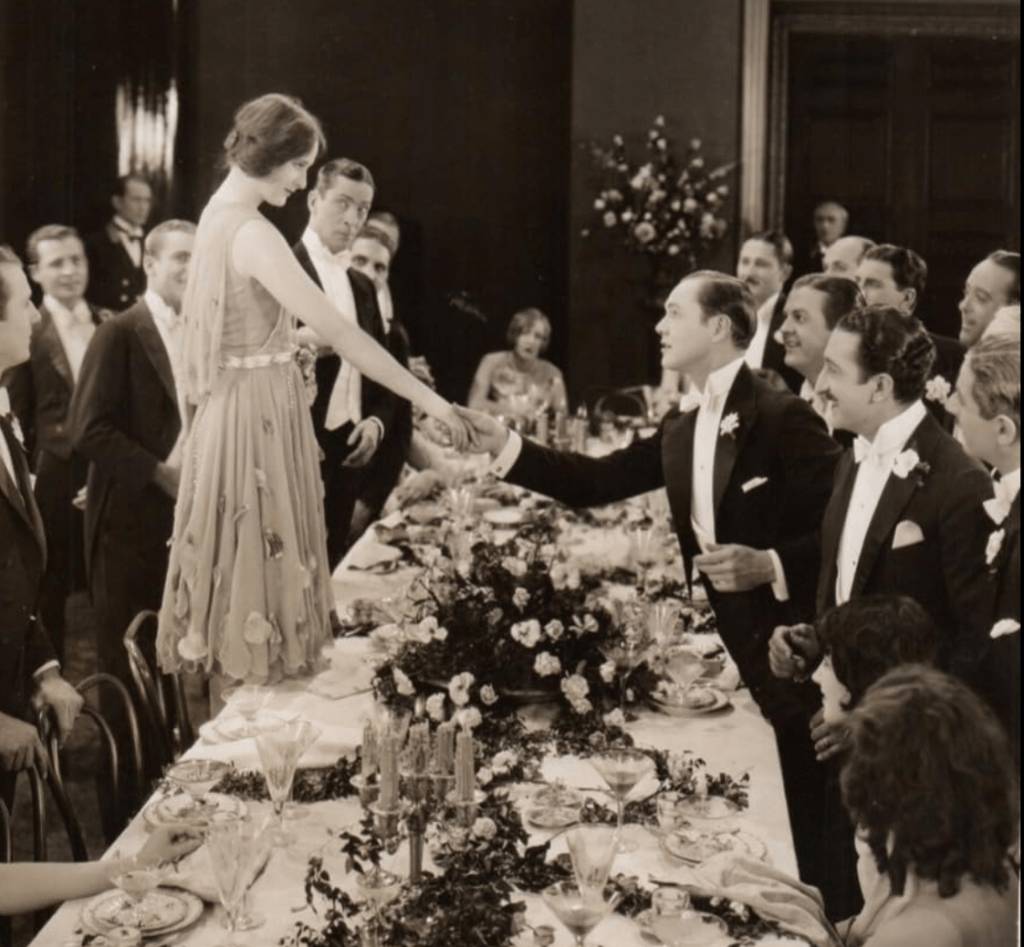
Forrest Seabury was born Sumner Forrest Seabury in 1877 in Oakland, California. His father, Forrest Seabury, Sr. worked as a scenic artist in the theater business so acting came naturally for his son. His mother, Mary Seabury, took her own life in 1895 in San Francisco by swallowing carbolic acid poisoning when Forrest Jr was 18 years old. His father died later that year after he finished a scene at a local theater and was talking to a co-worker and literally dropped dead. Forrest married Charlotte and they had two daughters: Ynez (1907-1973) and Marion (1917-2006). He was able to transition from theater to the silent screen and was credited for 9 films between 1917 to 1926 as a character actor. Seabury was able to work with A-list stars such as Douglas Fairbanks, Lila Lee, Jack Mulhall, Wallace Beery, Eleanor Boardman, and Richard Barthelmess. Below, Seabury is one of the actors during a scene from “The Auction Block” in 1926, starring Eleanor Boardman. Seabury died in Los Angeles in 1944.
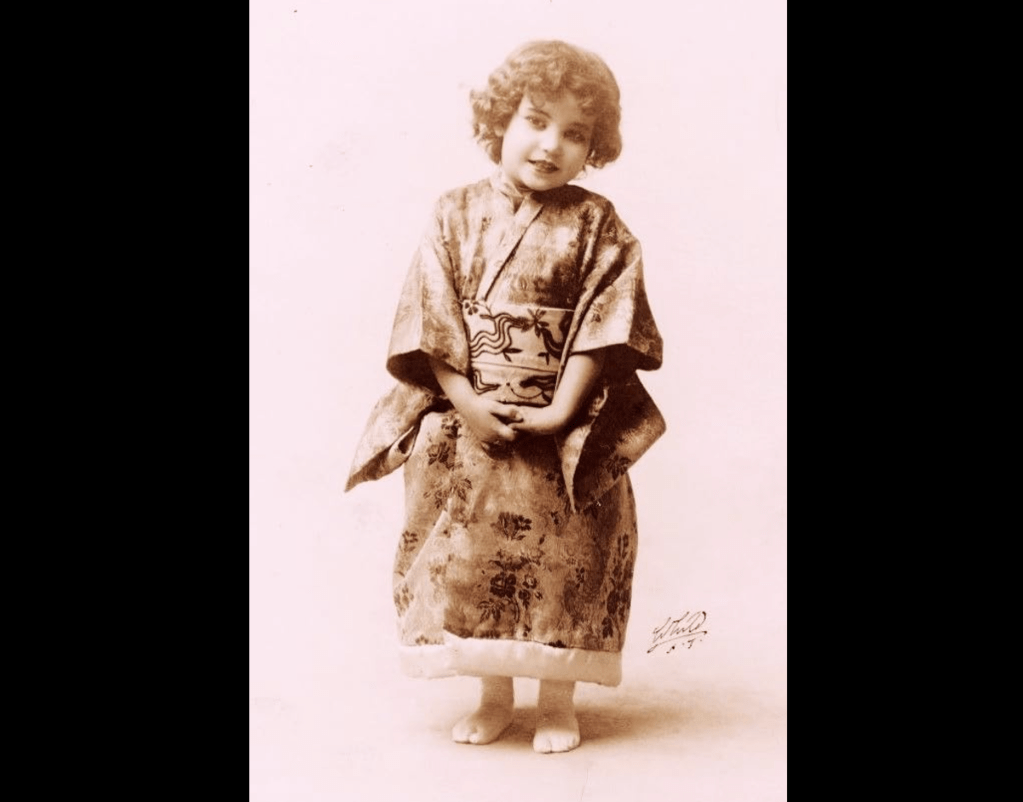
Acting ran in the Seabury family. Ynez was a popular child actress dubbed “The Biograph Baby”. She first starred in D.W. Griffith’s “A Trail of Books” and “The Miser’s Heart” in 1911 at the age of four. Ynez was credited for 34 films until 1949 including minor roles in Cleopatra (1934) and Sampson and Delilah (1949).
Between 1933-1934 actor Harold “Alan” Dinehart lived at 2303 Fairfield Avenue. Dinehart (1889-1944) had 27 appearances on Broadway and 89 film credits starting in 1918 and worked up until his death in 1944. Known for playing blustering or shifty businessmen, crooked politicians or racketeers, his notable exceptions being the MGM musical blockbuster Born to Dance (1936) and the 20th Century-Fox classic family drama Rebecca of Sunnybrook Farm (1938).
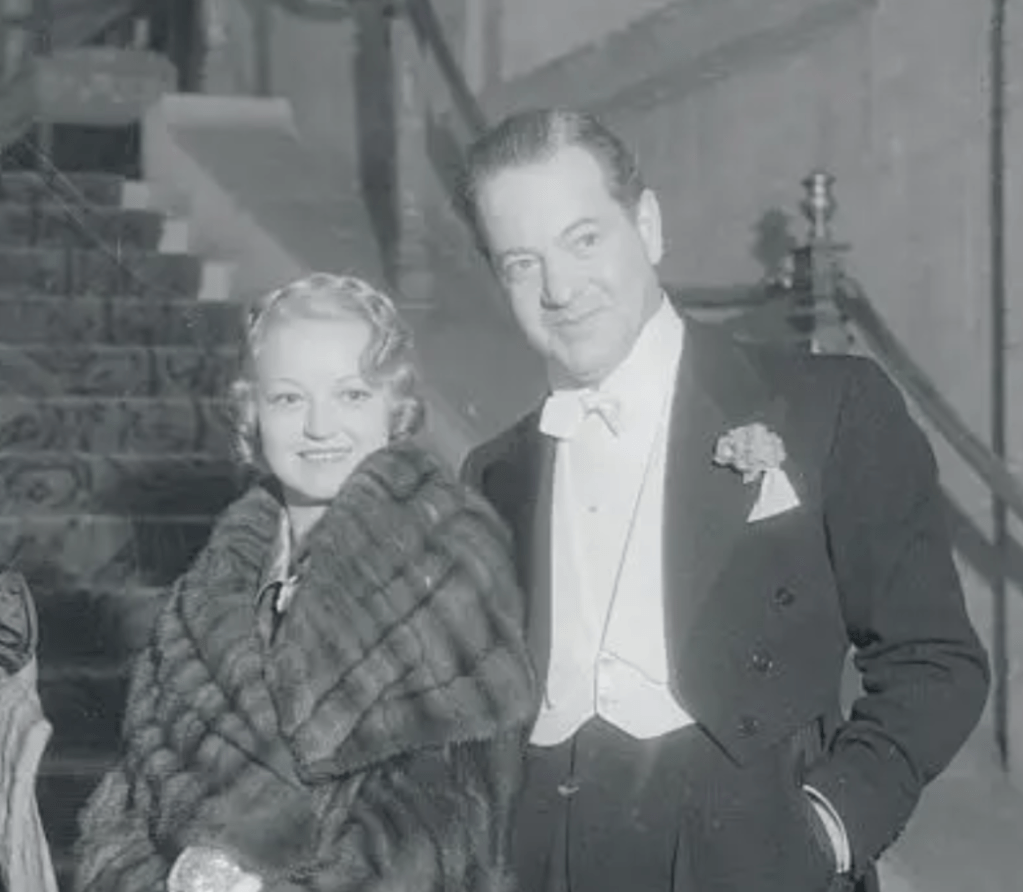
Dinehart moved to Fairfield Avenue after he divorced his first wife and it was announced shortly thereafter, in July of 1933, that he would marry actress Mozette Britton. Britton (1912-1953) was a casting assistant for six films in 1933 and had 4 minor roles between 1930 to 1936. Her most notable part was as a chorus girl in the music revue “Paramount on Parade” in 1930 starring Jean Arthur, Clara Bow, and Maurice Chevalier. Dinehart’s first son from his first marriage, Alan Dinehart Jr., became a voice actor and worked on 85 episodes of Battle of the Planet between 1978-1980. Mason Alan Dinehart was his second son from his marriage to Britton. Mason also got into acting and starred in mostly western films and television shows, including The Life and Legend of Wyatt Earp from 1955-1959.
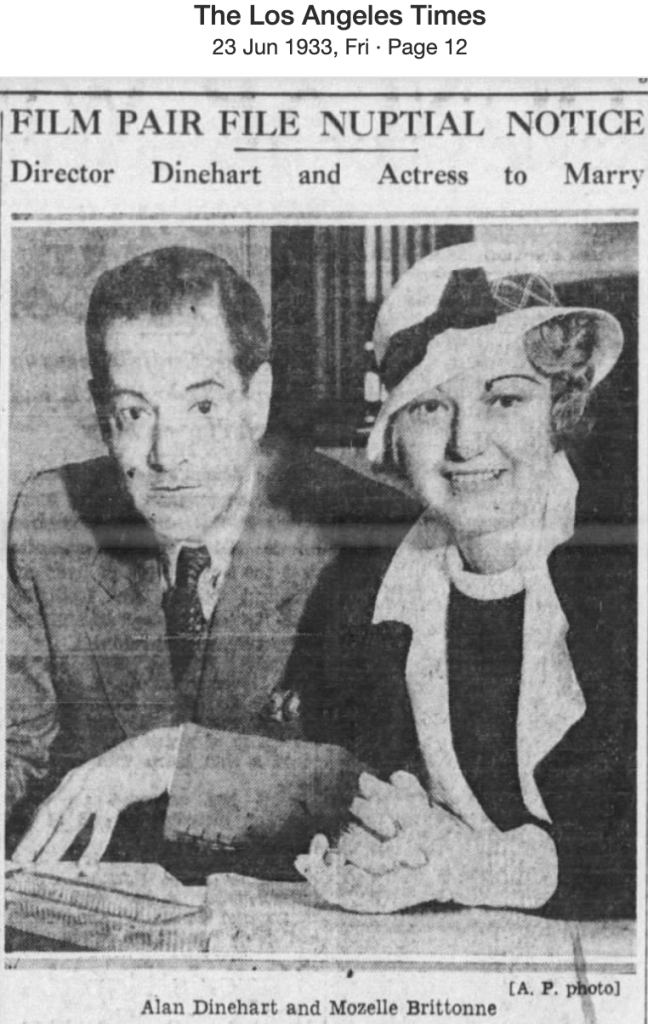
Dinehart and Britton married on on June 28, 1933. They met while both were working on the same movie set. As both were practical jokers, they played a joke on their friends – while 4 of their friends were waiting in the living room at Dinehart’s house at 2303 Fairfield Avenue to watch the couple get married, they got married in another room by a minister and then announced that they just got married. However, the joke was on them because not long after they were married, Dinehart got sued by ex-follies dancer, Betty Kaege and it was all over the media. Kaege was suing Dinehart for $250,000 claiming he had promised to marry her after his divorce was granted from his first wife. They ended up settling the case out of court for an undisclosed amount of money.
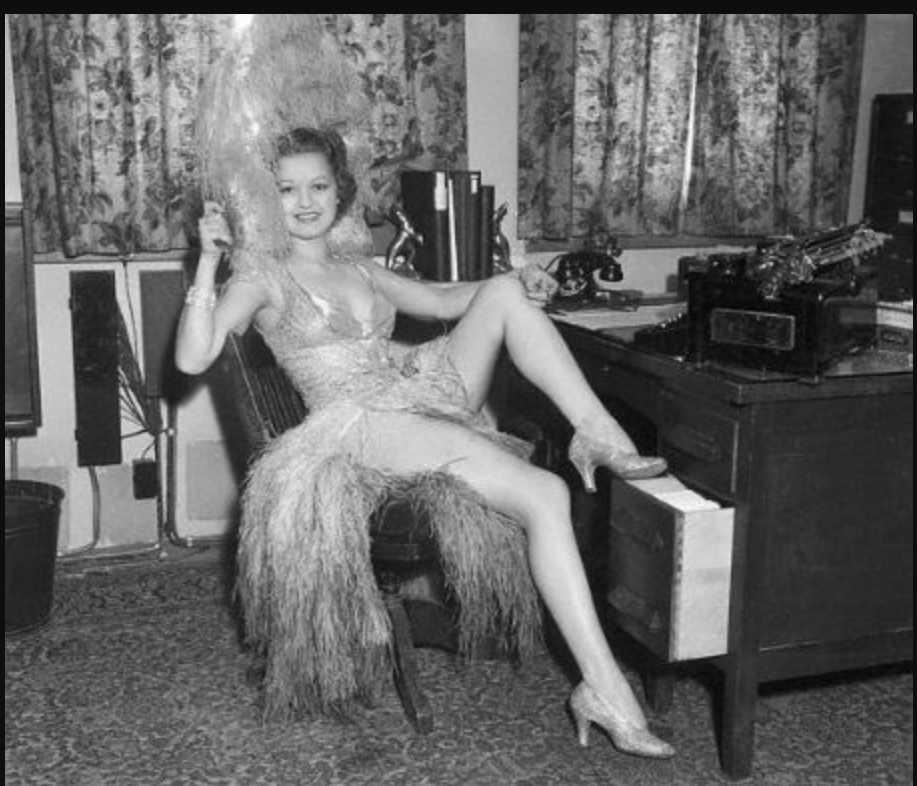
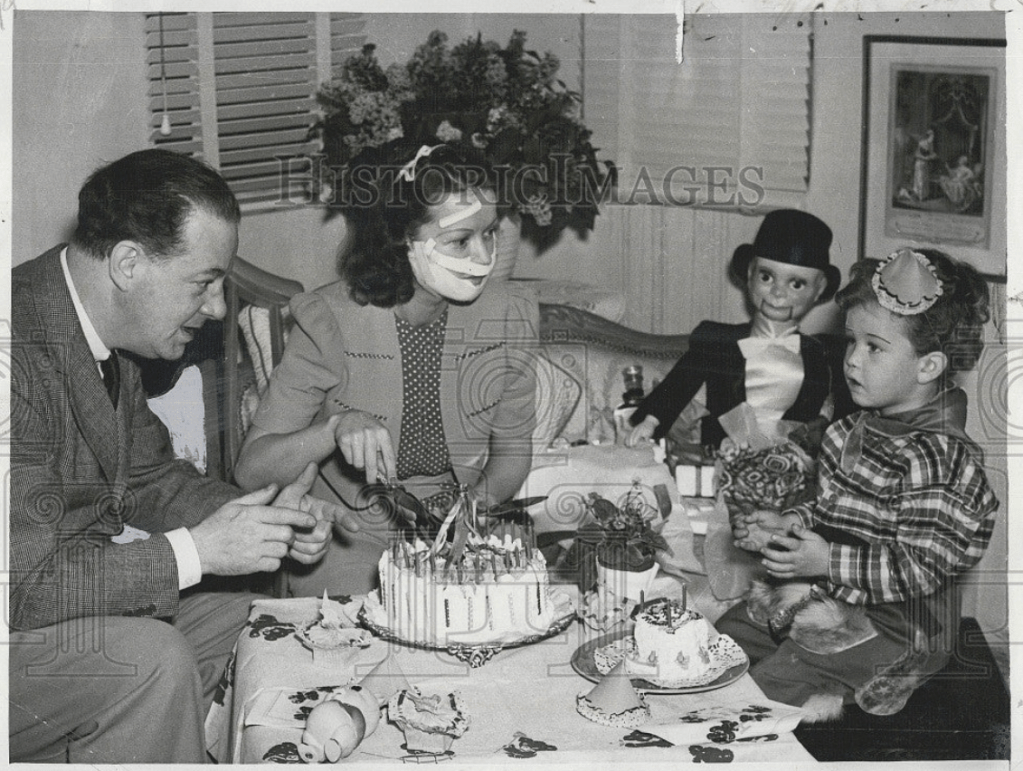
After giving birth to their only child, Mason Alan Dinehart in 1936, the couple was now living in Beverly Hills. In 1939, they were in Dinehart’s car together when they got into a serious car accident. Britton went head and shoulders through a windshield and also broke her ankle. Dinehart was driving and wearing a heavy overcoat which protected him from also going through the window. The steering wheel broke off but the coat protected Dinehart from being thrown out of the car. Britton was treated by a reputable plastic surgeon who believed that she would recover without permanent scars. After the surgery and 127 stitches on her face, it took her 6 weeks to recover. Below is the Dineharts celebrating Mason’s birthday with Britton’s face bandaged from the surgery. In reality, it took Britton longer to recover and she suffered a mental breakdown, ending up in a New York sanitarium for a over a year. When all seemed to be settled in her life, her husband died of double pneumonia in 1944.
In 1935, costume designer Orly-Kelly (1897-1964) lived at 2303 Fairfield Avenue. Kelly helped to revolutionize the Warners Costume Department when he joined the studio in 1932, working on over 300 films from 1932 to 1944. Kelly was the main fashion gown designer for Bette Davis and outfitted her for many of her roles on films including; Front Page Woman (1935) Dangerous (1935) Satan Met a Lady (1936), Hearts Divided (1936), Marked Woman (1937), Jezebel (1938), The Sisters (1938), Dark Victory (1939), The Old Maid (1939), This, and Heaven Too (1940), The Letter (1940), The Great Lie (1941), The Little Foxes (1941), The Man Who Come to Dinner (1941), Now, Voyager (1942), Old Acquaintance (1943), and Mr. Skeffington (1944). Kelly also worked on films such as Casablanca, An American in Paris and Auntie Mame. Nominated for best costume design four times, Kelly won three out of four of them: An American in Paris (winner), Les Girls (winner), Some Like it Hot (winner) and Gypsy (nominee).
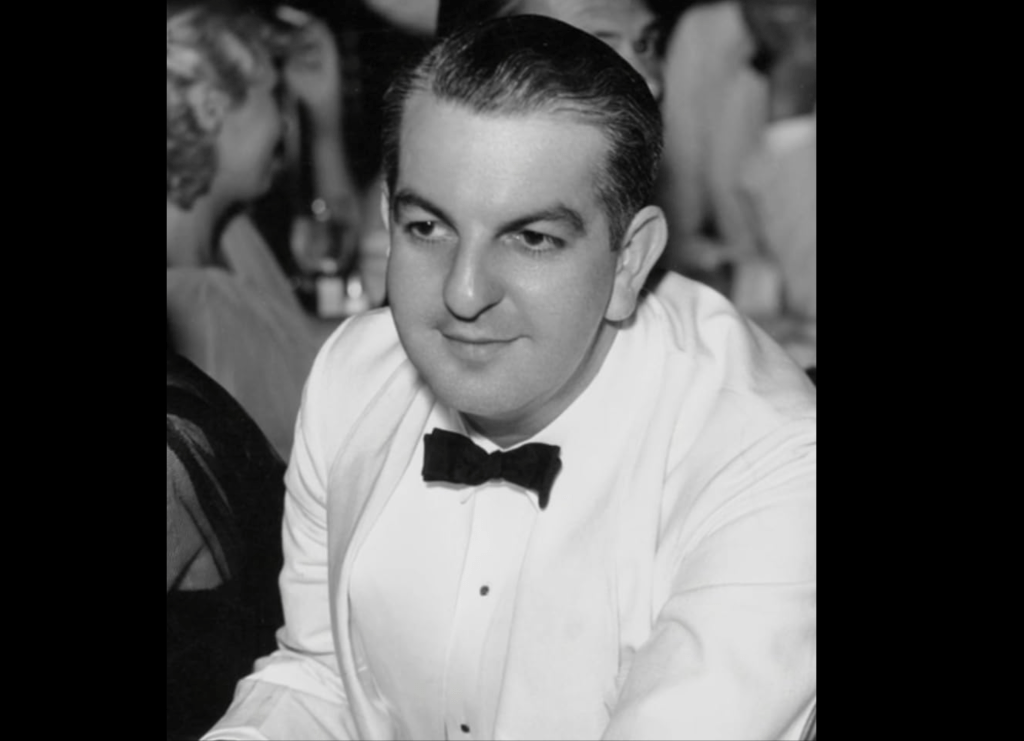
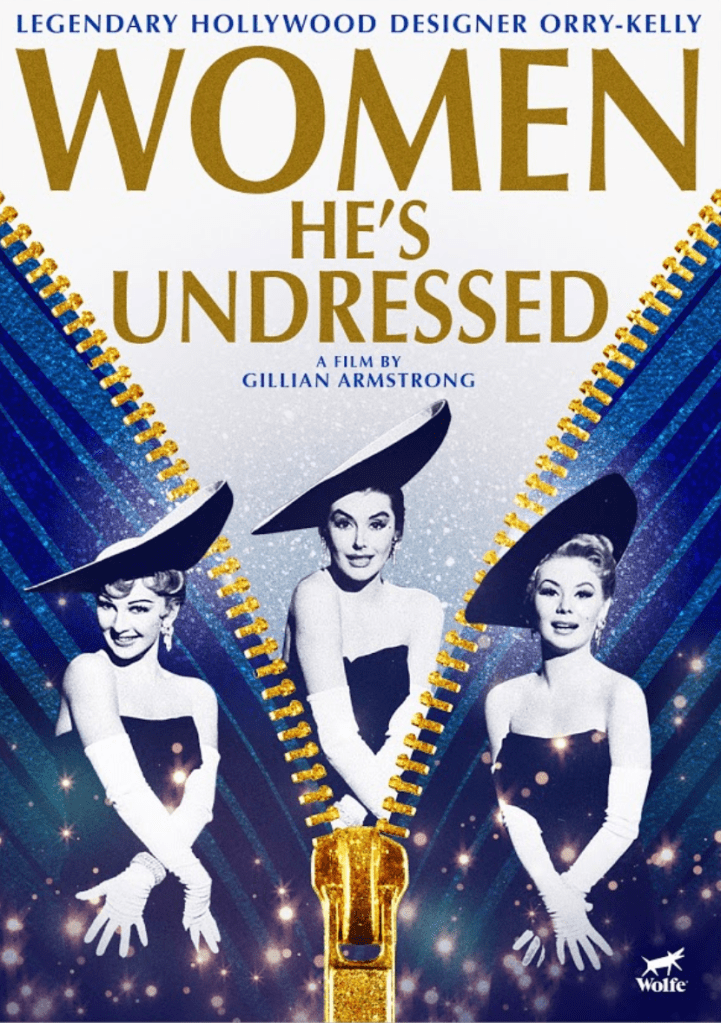
The Australian born first moved to New York City in to pursue an acting career and had a on-and-off relationship with actor Cary Grant until the 1930s when Grant became a star and cut Kelly from his life, something that Kelly resented deeply. A longtime alcoholic, Kelly died of liver cancer in Hollywood in 1964 at the age of 66. His pallbearers included Cary Grant, Tony Curtis, Billy Wilder and George Cukor and his eulogy was read by Jack L. Warner. In 2016, filmmaker Gillian Armstrong created a documentary about Orly-Kelly called “Women He’s Undressed”.
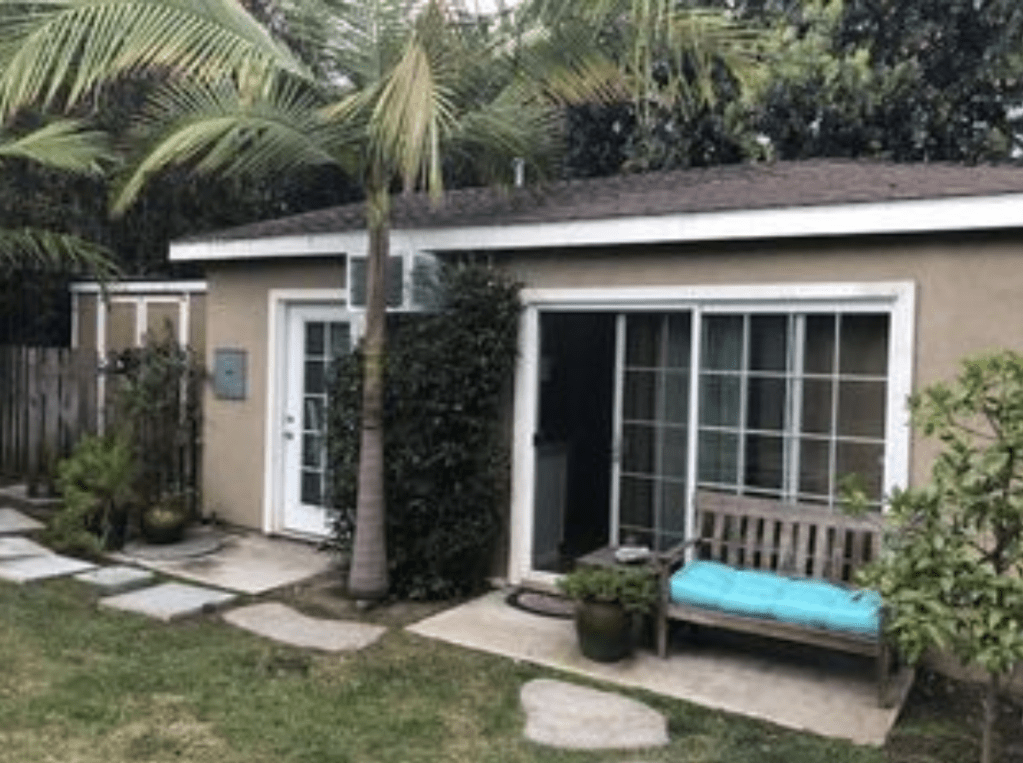
One of the last inhabitants was Richard Barthelmess (not the actor but the bar manager at Pig N’ Whistle Cafe). The house never had any work done on it, but had been treated for termites in 1945; the permit mentions 2 buildings on the property (a house and garage). In 1950, the house and garage were relocated to Charnock Road. Luckily, the house has maintained its original features and is called a “gingerbread house” with cathedral ceilings in the living room. In the rear of the house on the right hand side, it the pink colored detached garage which resembles the roof when it was on Fairfield Avenue.
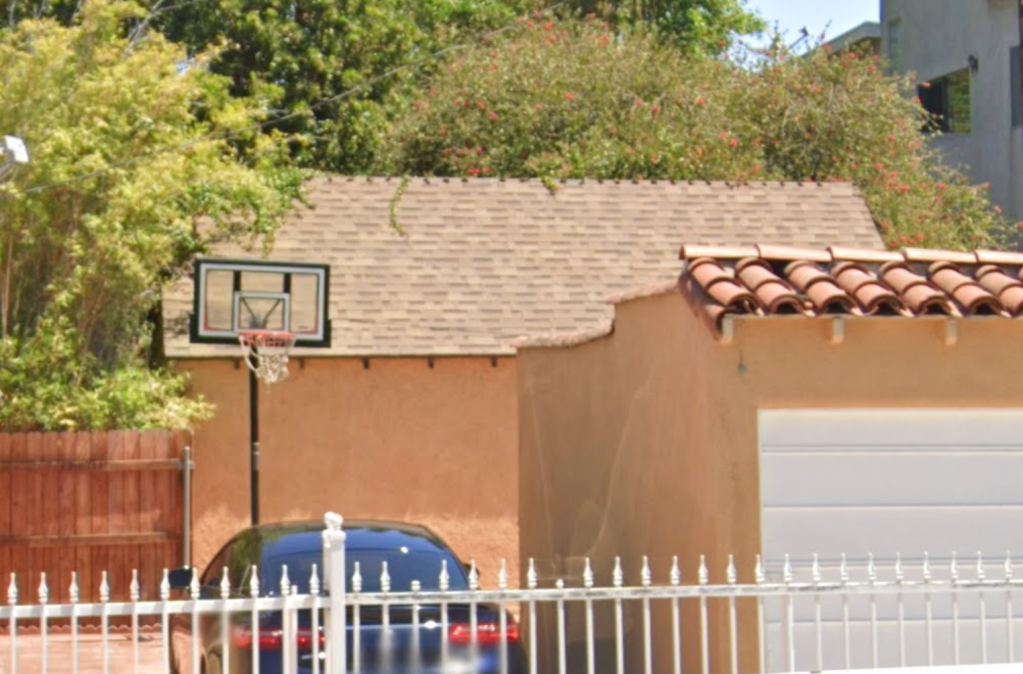
Below, the top of the garage roof can be seen from Glendon Avenue behind the basketball hoop. It was mostly likely the image of the building from the earlier photos taken on Fairfield Avenue.
 Whitley Heights 101
Leave a comment