2171 Fairfield Avenue
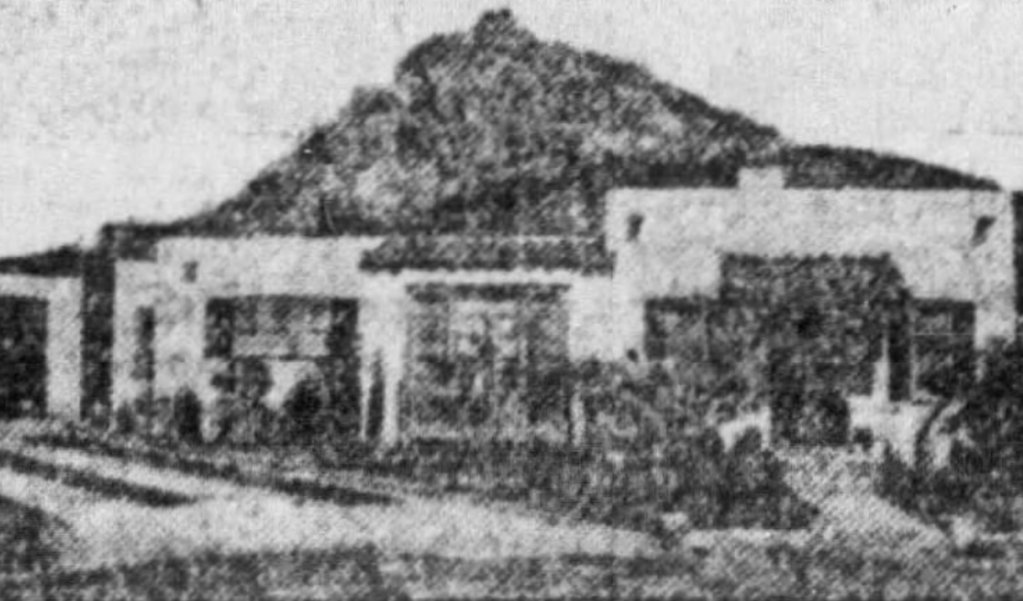
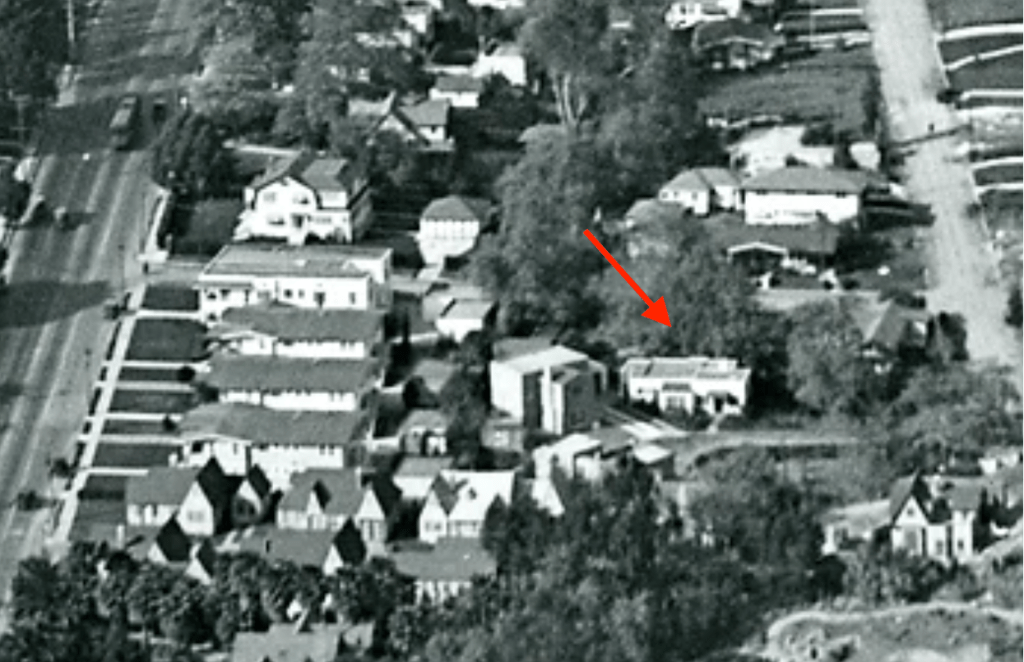
2171 Fairfield Avenue was built in 1921 by a builder named E.D. Dietz in the northern area of Whitley Heights which is now a parking lot across the street from the Hollywood Bowl. The 5 room Spanish style house had a detached one car garage to the left of the house. The only two permits of this property were the new construction of the house and the private garage. There were no permits to repair, move or demolish the home. The house was most likely razed by the state when they built the Hollywood Freeway as they did not use permits.
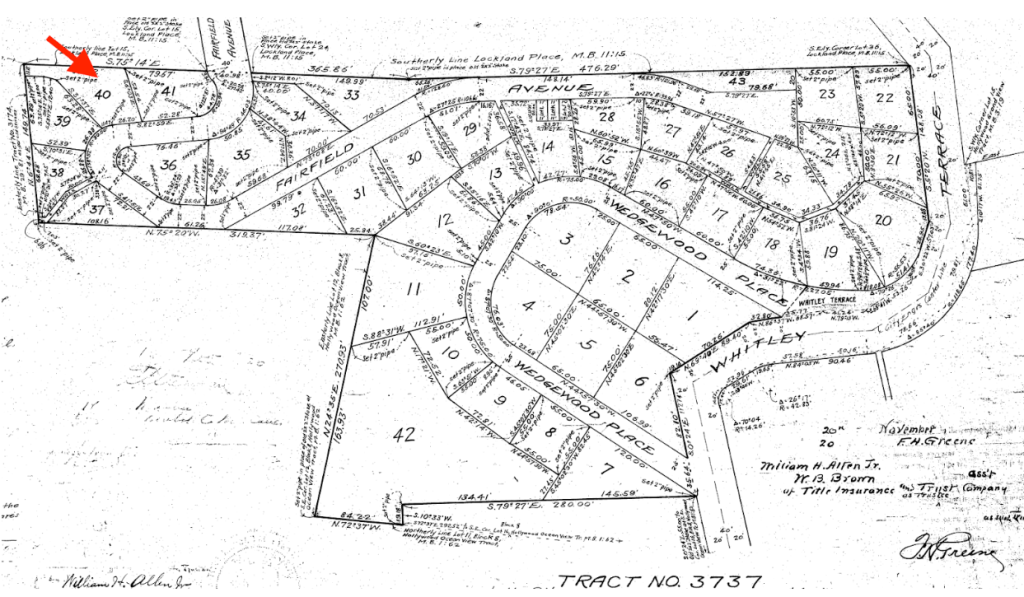
The house was located on tract 3737, lot 40 as Fairfield Avenue started from Cahuenga Blvd. (formerly named Oakwood Avenue) and then intersected of Odin Street. 2171 Fairfield Avenue was located where Fairfield curved and then went towards Whitley Terrace where it ended below that street and Wedgewood Place where Rudolph Valentino’s house could be seen. Only three lots remain in the north area of Whitley Heights: lots 29, 30 and 31. 2133 Fairfield Avenue is on lot 29 (built in 1926), 2145 Fairfield Avenue is on lot 30 (built in 1921) and in 1949, 2145 Fairfield Avenue was built on lot 31, just prior to the area being razed for the highway and then later for the parking lot.
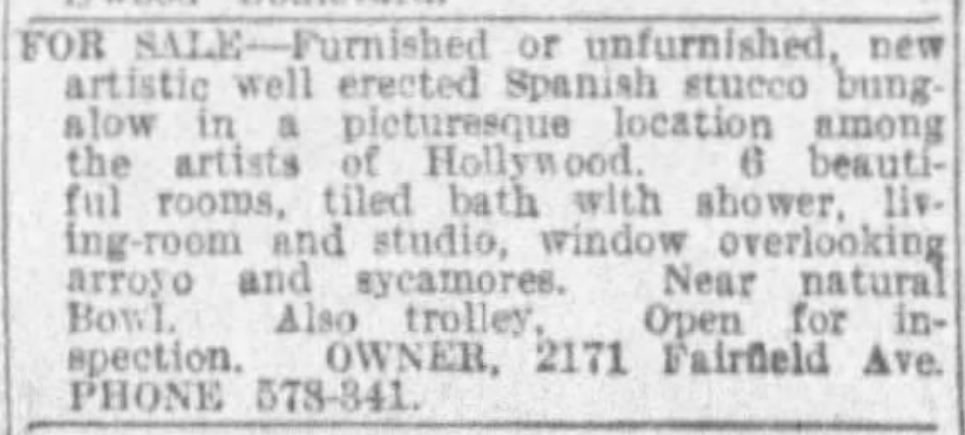
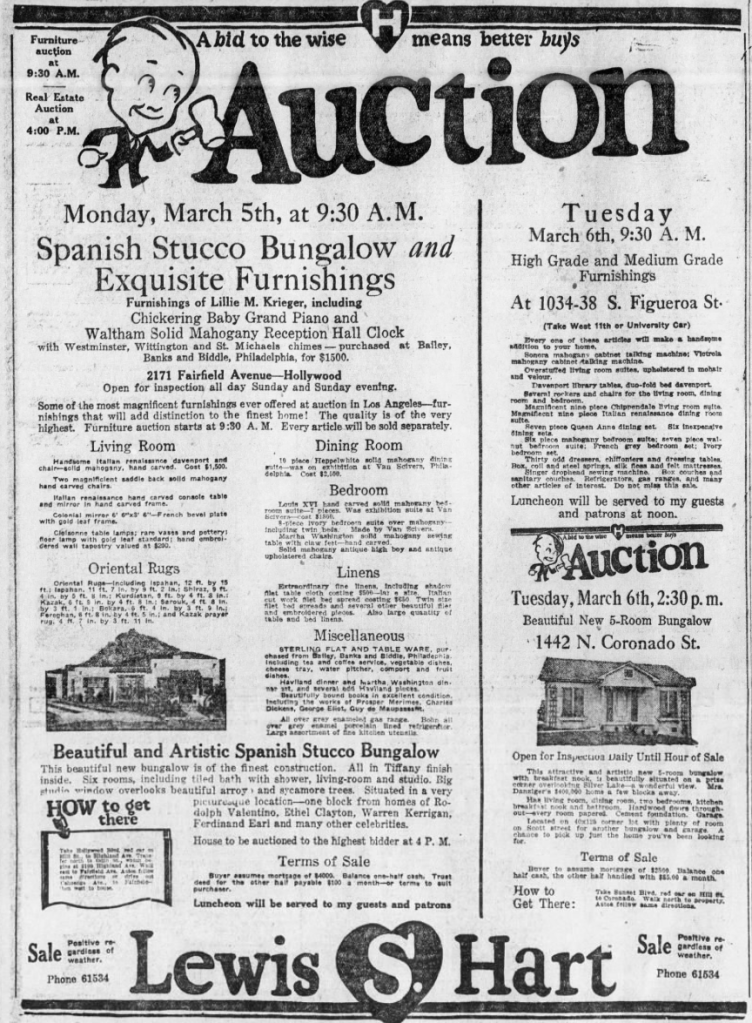
The builder and owner, E.D. Dietz listed the house for sale in November of 1922 in the Los Angeles Times as a Spanish style bungalow home with 6 rooms with a living room and studio overlooking arroyo and sycamore trees. A woman named Lillie Krieger bought the home and arranged to build 16 houses in that area of Whitley Heights.
Ms. Krieger must have run out of funding for her project as she auctioned off 2171 Fairfield Avenue and all of its contents in March of 1923. The auction advertisement below indicated the house was situated one block from the homes of Rudolph Valentino, Ethel Clayton, Warren Kerrigan, and Ferdinand Earle in order to lure prospective buyers to the property. Valentino lived up the hill at 6776 Wedgewood Place and Ethyl Clayton lived down the street at 2119 Fairfield Avenue on lot 28. Warren Kerrigan owned the two-story chalet located at 2307 N. Cahuenga Blvd. and director Ferdinand Earle lived at 2140 Highland Avenue. Unfortunately all of these houses would be torn down at one of time or another, including the Highland Avenue home for the parking lot. Earle and several others built artist studio’s down the street from the French Village which were all razed by the county in 1956.
A widow named Martha J. Like lived in 2171 Fairfield Avenue in 1926. The 62 year old Mrs. Like moved out to Hollywood from Iowa with her son, Ralph Like who worked as an engineer. In 1927, Ralph Like purchased the old Charles Ray Studios began producing low budget Westerns under the name of Action Pictures, while keeping his main job as a studio sound engineer. In 1932, Ralph met and married an actress named Blanche Mehaffey, a WAMPAS Baby Star of 1924 (the same year with actress Clara Bow), who started work with Hal Roach Studios in 1923. Ralph began putting his new wife as the lead female role in all of his films. Her first role working with her husband was in “The Sky Spider” in 1931 as Ralph began producing crime and action films in addition to the “B” westerns.
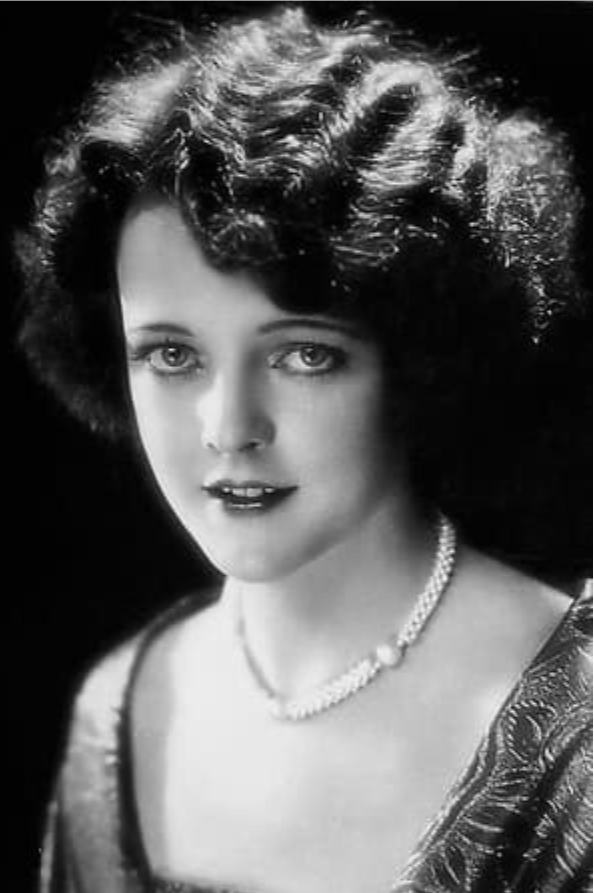
Martha Like worked at her son’s production company in various positions ranging from auditor to vice president. In 1932 Ralph changed the company’s name to Mayfair Pictures and then the Ralph Like Studios, but the product was still the same: very low-budget. Eventually, the company folded and bought out by Monogram Studios in 1942. Since Ralph had held on to his sound engineering job, he was able to continue to work in the movie industry. However, in 1943, Ralph took another try at producing on the film “You Can’t Beat the Law”, a prison movie that was filmed at San Quentin.
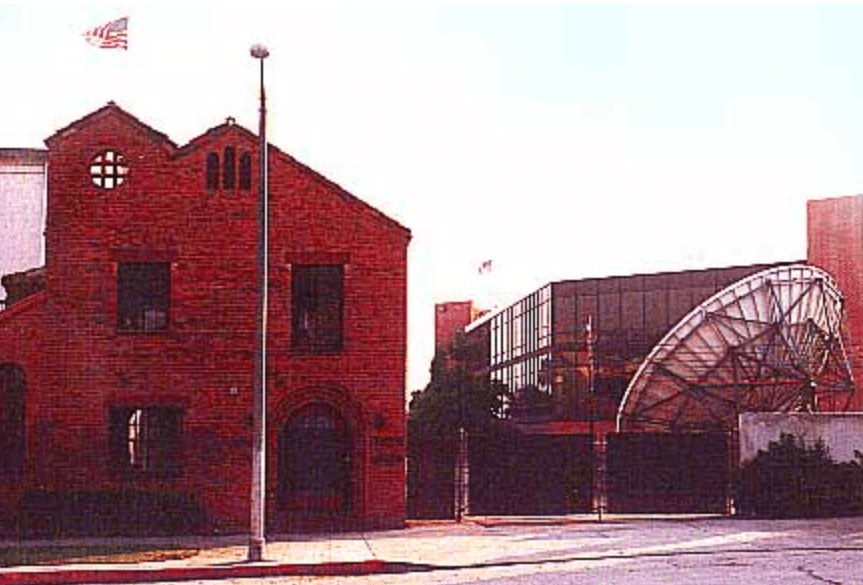
The studio, pictured above, was actually 1912 by film pioneer Sigmund “Pop” Lubin. Lubin had made and distributed some of America’s earliest films. One of his early shorts (1897) featured by peep-show exhibitors showed his two daughters having a pillow fight. With Thomas Edison he was a member of the Motion Picture Patents Company, which attempted to control all U.S. film production and projection through its’ ownership of patents. When Lubin’s film company folded in 1917, the studio went through a succession of owners. Notable among these was Monogram Pictures who filmed numerous “B” pictures during the 1940’s and 1950’s including the Bowery Boys, Charlie Chan, and Shadow series. The studio was known as the Colorvision TV Studios in 1970 when it was purchased by the present owner/occupant, KCET, a PBS affiliated station. This photo shows the red brick buildings built in 1920. 4376 Sunset Drive, East Hollywood. This building has since been torn down and now the site of Del Taco.
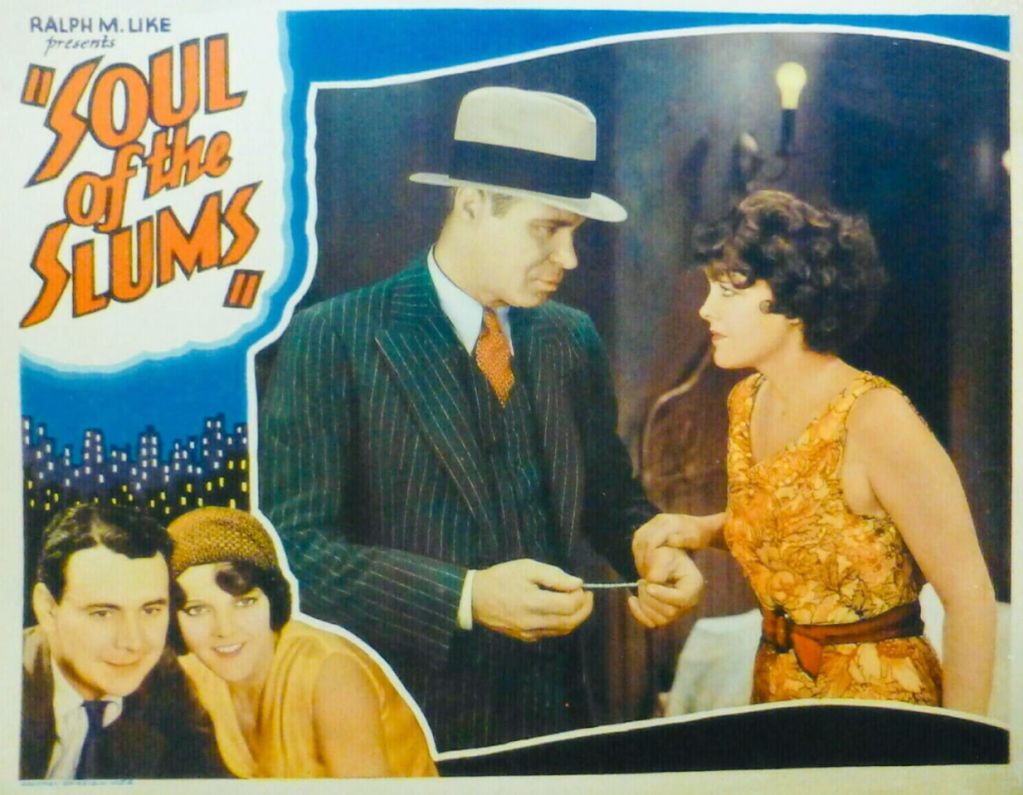
As Ralph’s production company faded away, so did his marriage to Blanche Mehaffey. In 1938, Mehaffey filed for divorce claiming Ralph was “moody and taciturn and critical of her plans and of everything she did”. She charged mental cruelty and indicated that her husband liked to sit around and read the paper without conversing and sometimes would not come home at all. She said she suffered a “nervous disorder” due to her husband’s actions. Mehaffey received a property settlement of $3,200. Mehaffey did not survive as an actress as she starred in two films in 1938 and then never acted again. In 1948, Mehaffey filed a suit against Paramount Pictures for $100,000 for royalties after they allowed the television broadcast of a 1931 film she had made for them.
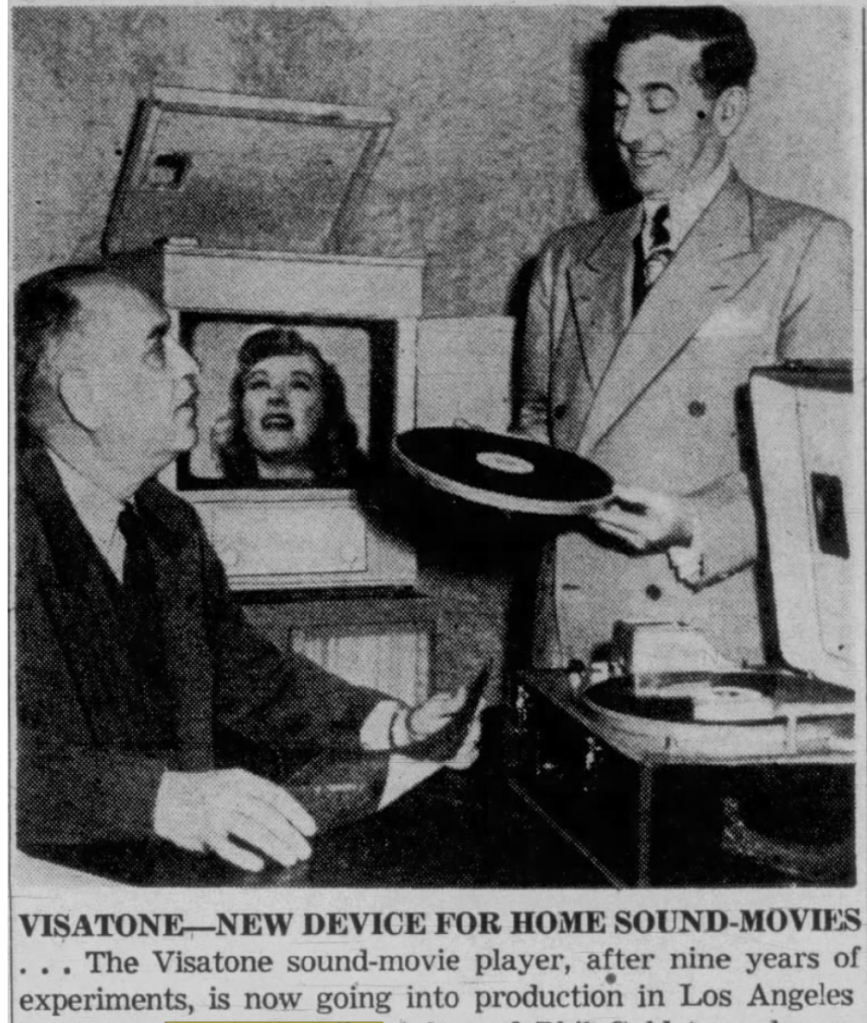
However, Ralph got creative with his engineering background. Phil Goldstone (pictured above the the right) financed Like’s invention of a phonovision machine in 1948. In 1950 they founded the Phonovision Corporation of America trying to market the portable apparatus that combined image and sound so movies could be seen at home. Unfortunately the invention was not successful due to being too expensive for consumers. However, Ralph Like died in 1955 in Newport Beach leaving his second wife, Marie Stepniak, whom he had married in 1950. 1950 married; he was 55; she was 45. By 1952 living on Balboa Island. Ralph left her his boat, named after his mother, “Martha Jane” at the Coronado Yacht Club.
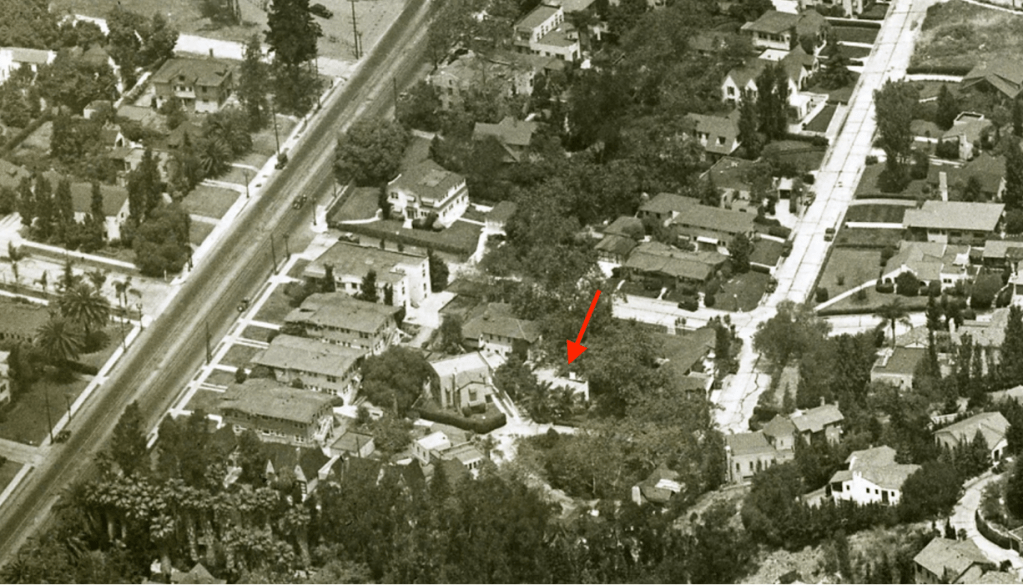
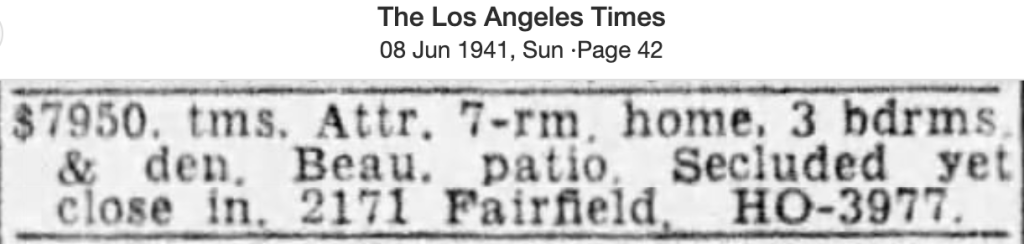
2171 Fairfield Avenue went through a succession of owners who worked in sales, real estate and teaching until 1954 when the house was most likely demolished. The house was last advertised for sale in 1941, now as a seven room home.
 Whitley Heights 101
Leave a comment