2017 Holly Hill Terrace
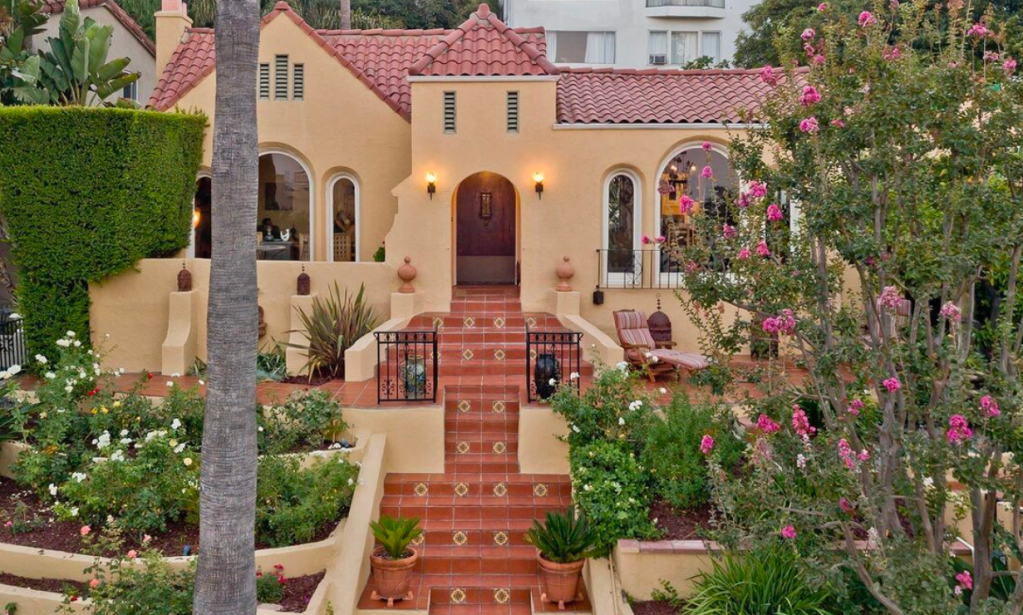
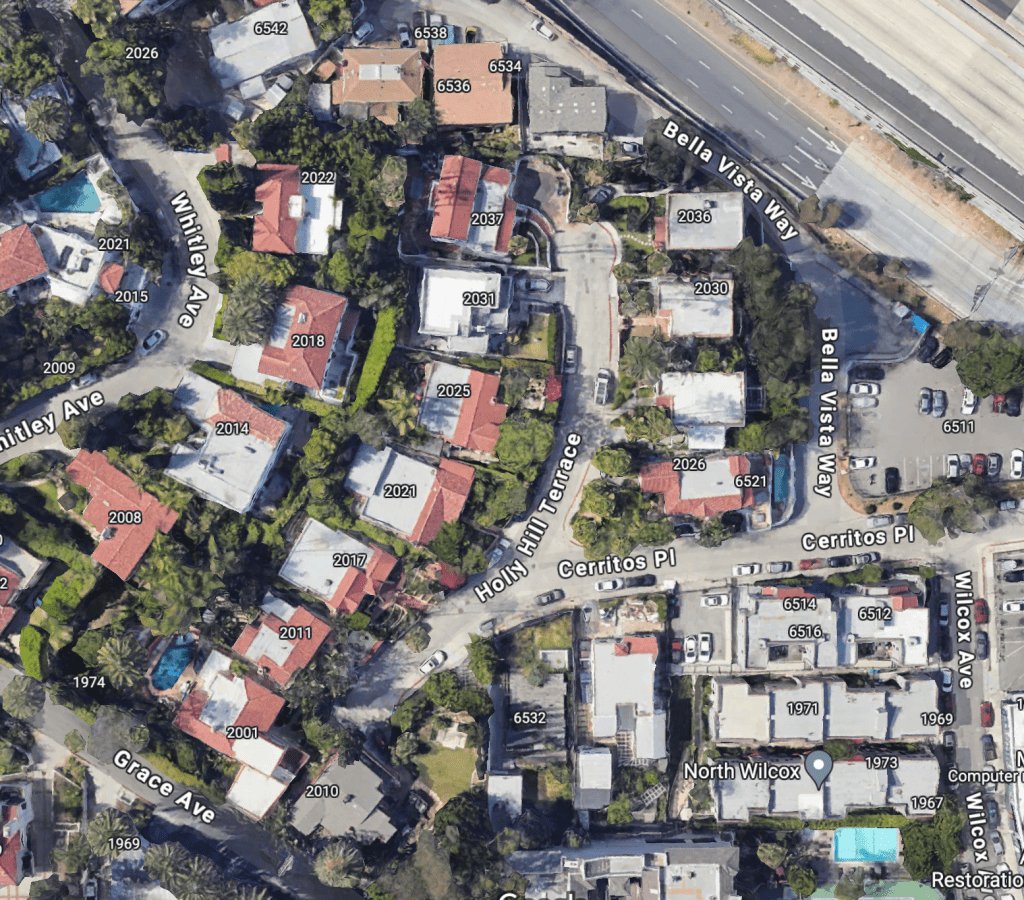
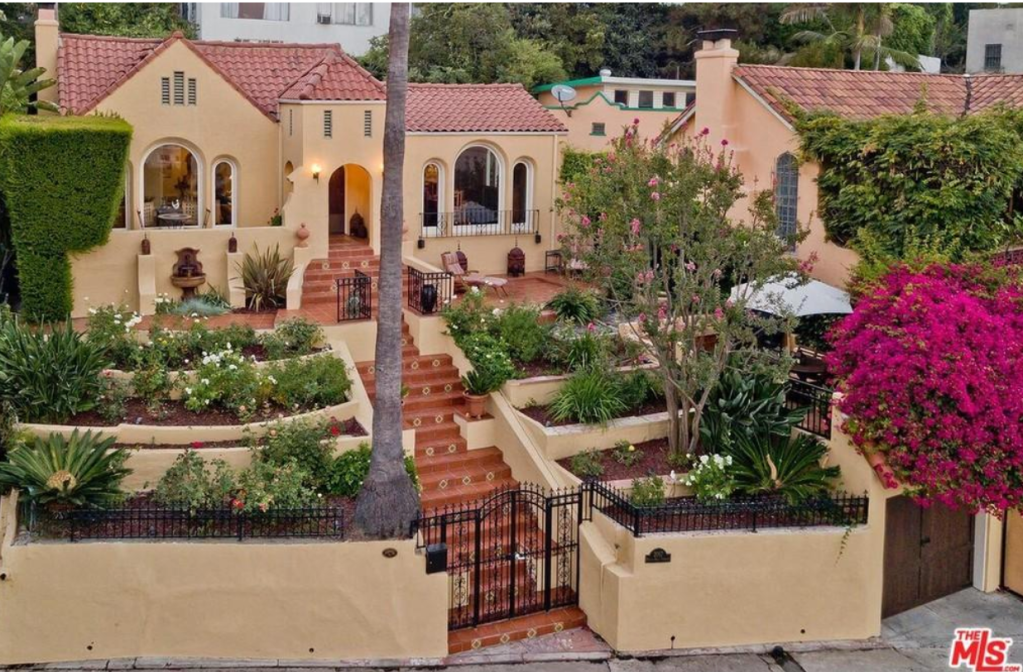
2017 Holly Hill Terrace was built in 1923 by the Hollywood Architectural Service Company for Leo Galitzki. The Mediterranean one-story residence, sits on an upslope and has a total of 1,690 square feet with 2 bedrooms and 2 bathrooms. The house has a Mission style roof, two sets of triple arched windows and a flank single arched covered entry. Holly Hill Terrace is located off of Cerritos Place which is accessible on Cahuenga Boulevard near the 101 Freeway. There are a total of 12 houses build on Holly Hill Terrace with Hollywood Architectural Service responsible for building six of them.
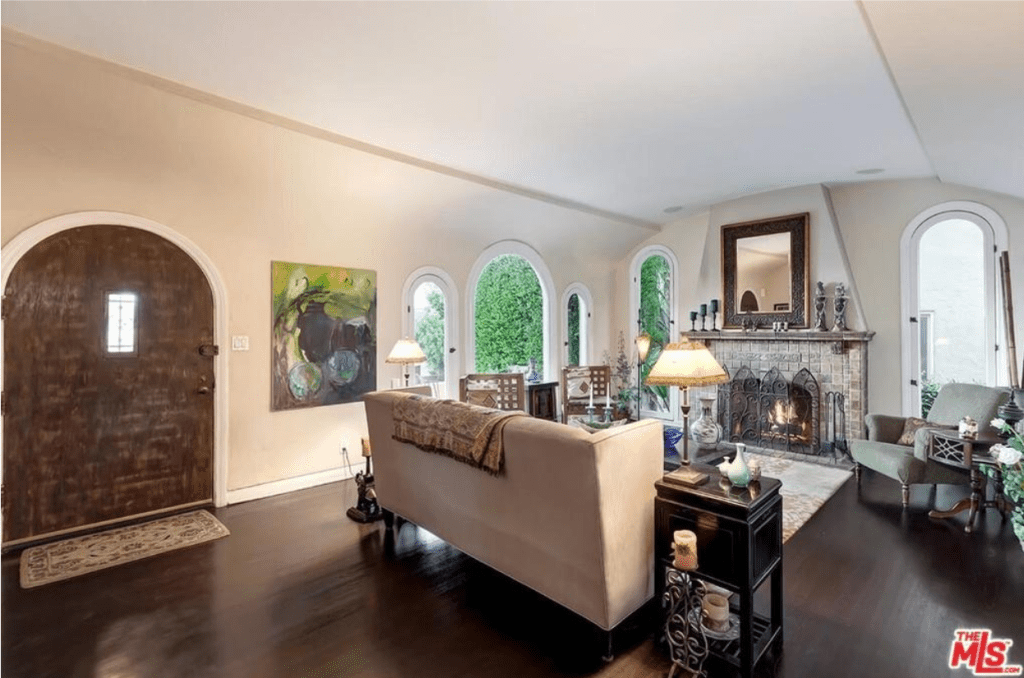
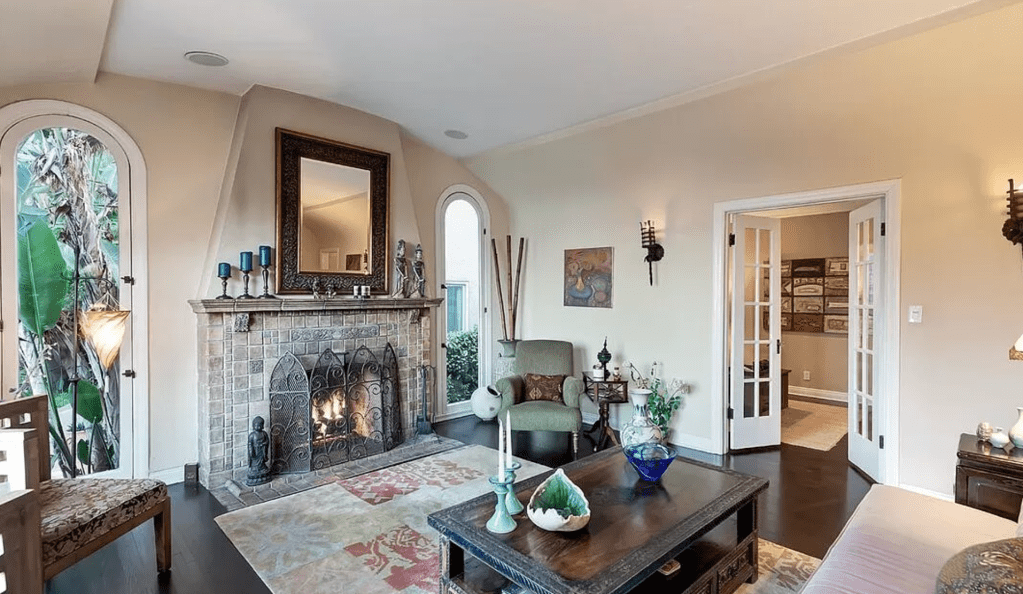
Upon entry into the house, is the living room on the left side, complete with a Batchelder fireplace. There is a den that is accessible from the rear of the living room.
On the left side of the residence is the dining room and the kitchen which is entered through the rear of the dining room. At the rear of the kitchen is the washer and dryer area and a door that exits to the outside of the property.
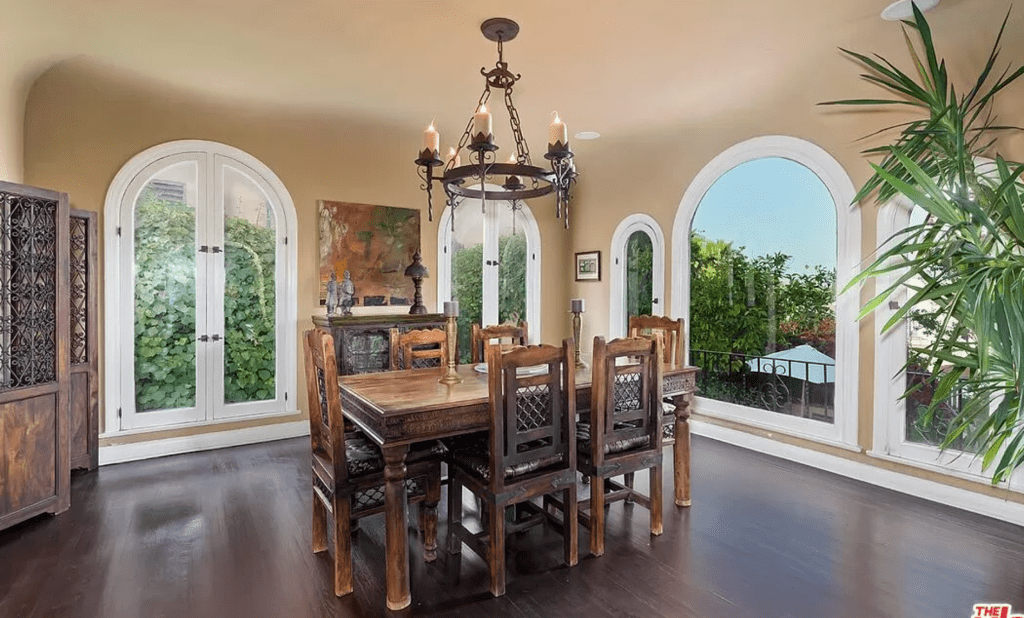
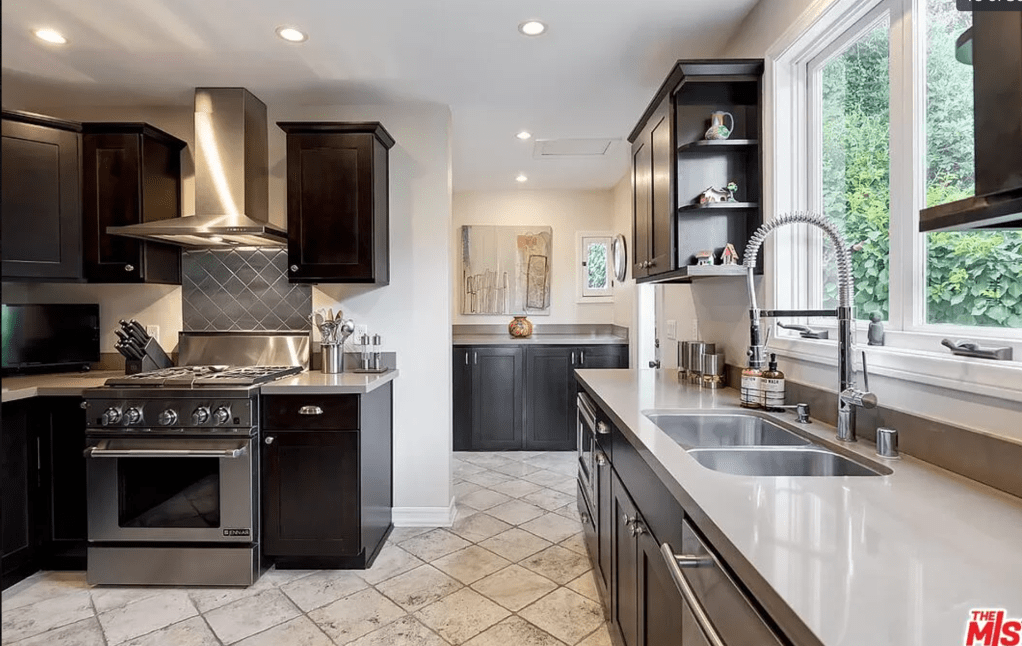
Between the living room and dining room areas, a hallway provides access to a bathroom and two bedrooms. Inside the master bedroom, is a bathroom complete with a tub. The other bathroom has a shower.
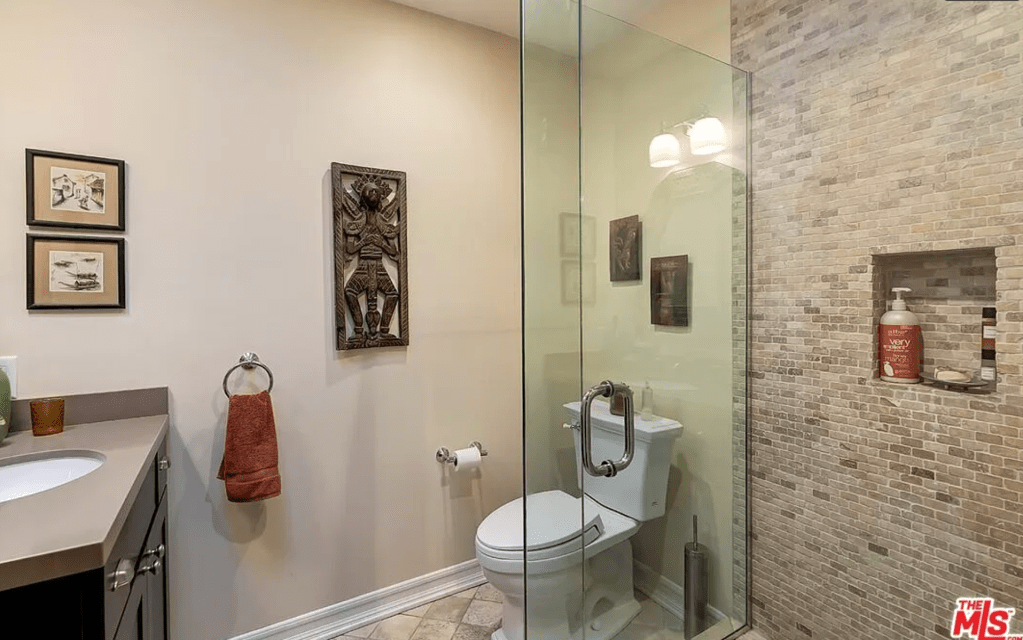
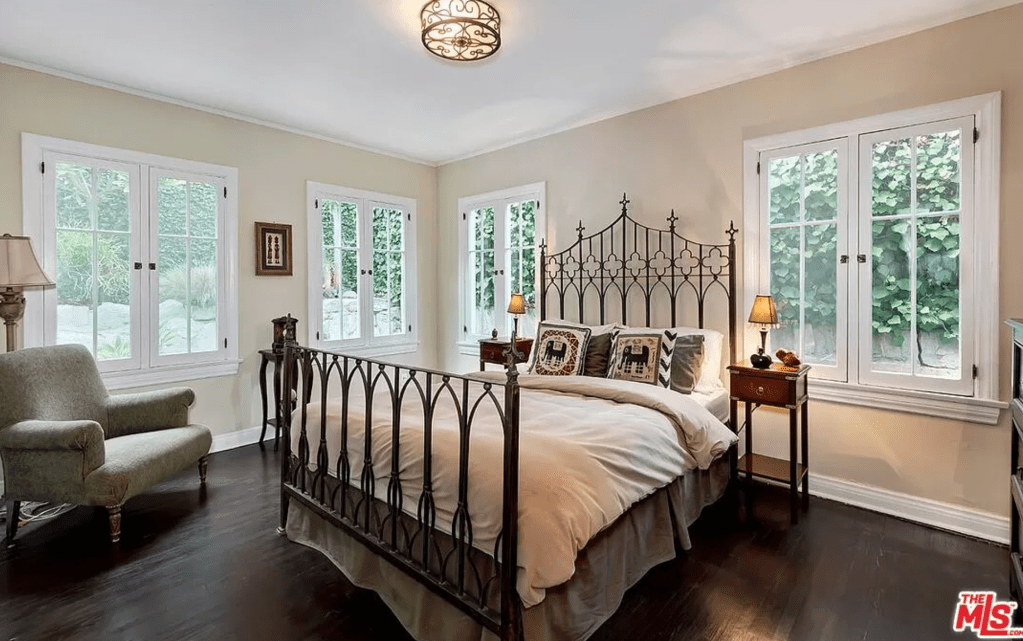
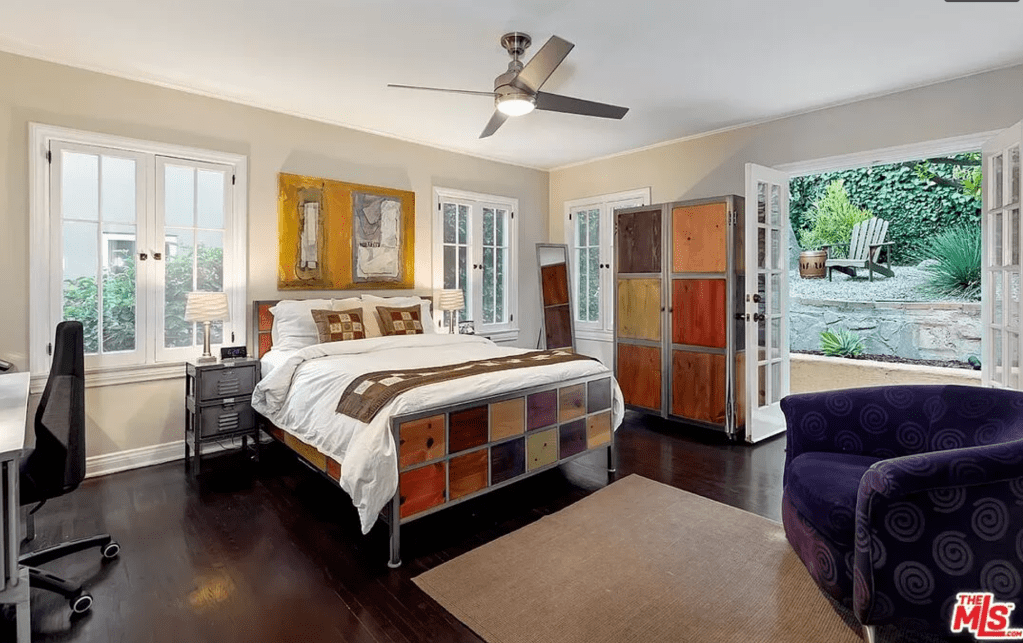
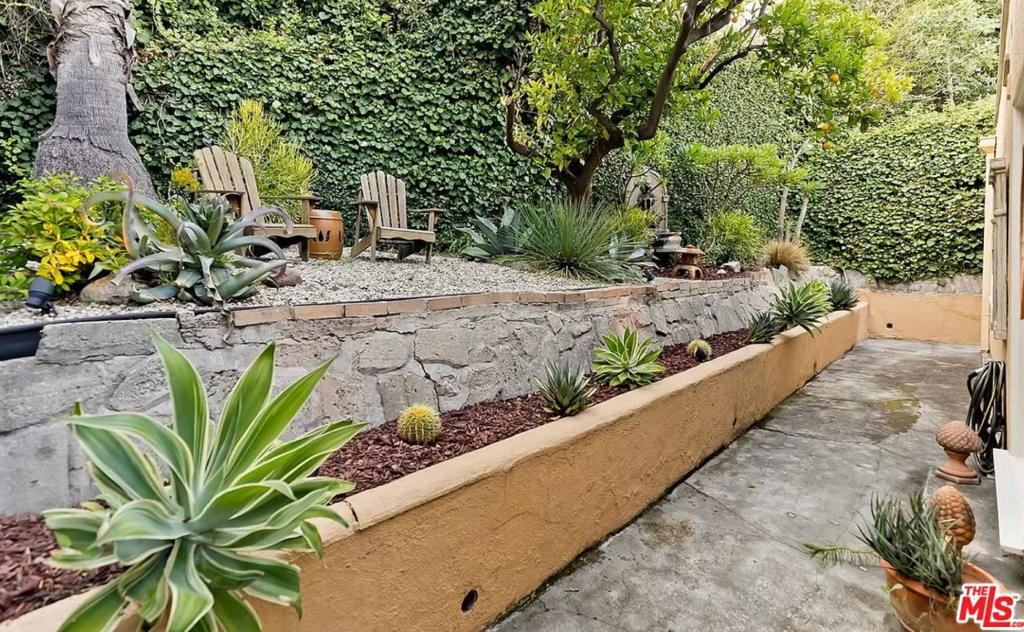
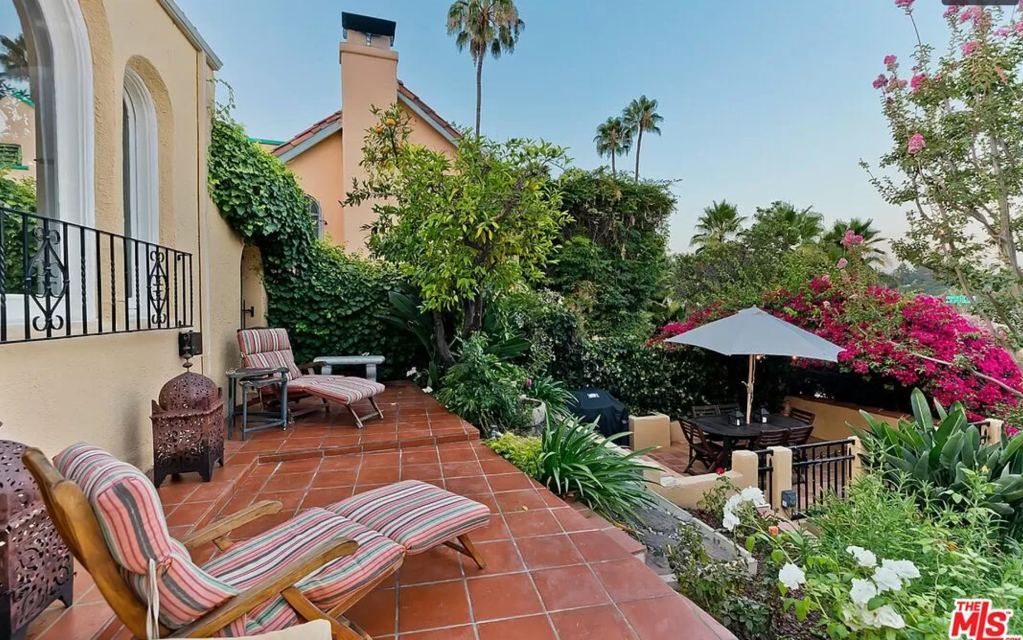
The rear of the property backs up to houses on Whitley Avenue. There is a sitting area and fountain in the rear of the property. The front of the property has an outdoor patio area that is used for dining.
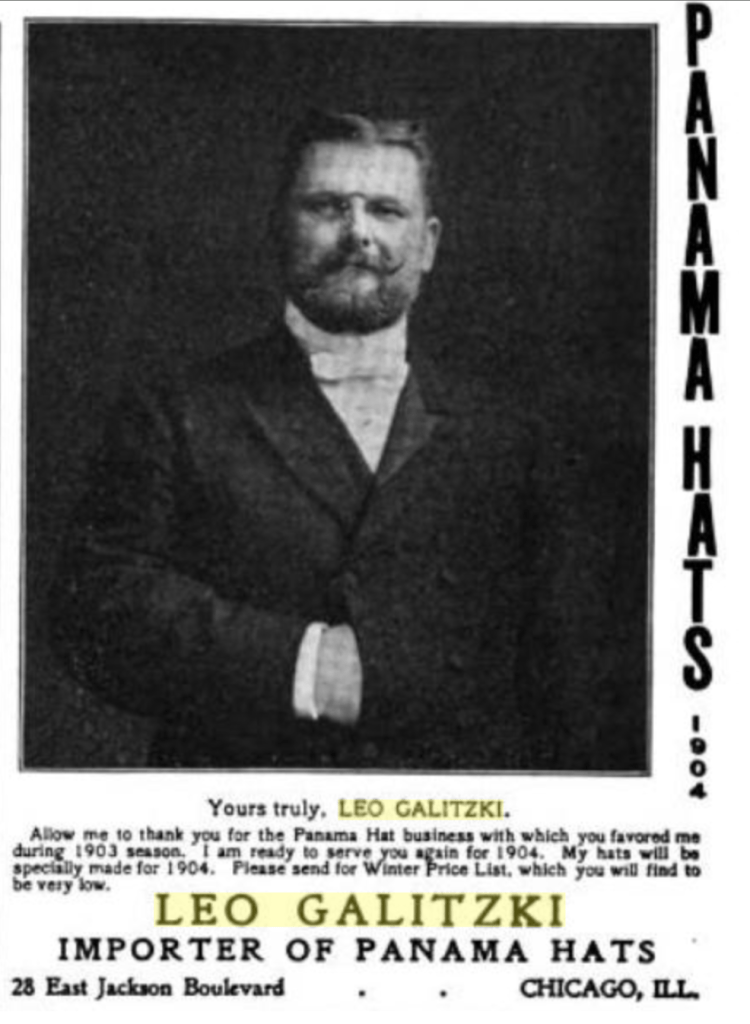
Leo Galitzki and his wife, Columba, owned the property until the late 1930s. Leo was born in Germany in 1860 and migrated to the United States in 1879 where he settled in Chicago. In 1886, he married Columba Titus in St. Paul, Minnesota, but resided in Chicago. They had a son, Leo Jr. born in 1888 and a daughter, Elsie, born in 1890. Leo was a successful businessman and in 1892, he was one of the directors of the Silver Crown Mining Company and a few years later, Leo and wife wife formed a company called the Universal Medicine Company. In 1905, Leo began importing Panama hats and then expanded his business by opening a factory to make his own hats and offering a cleaning business for them.
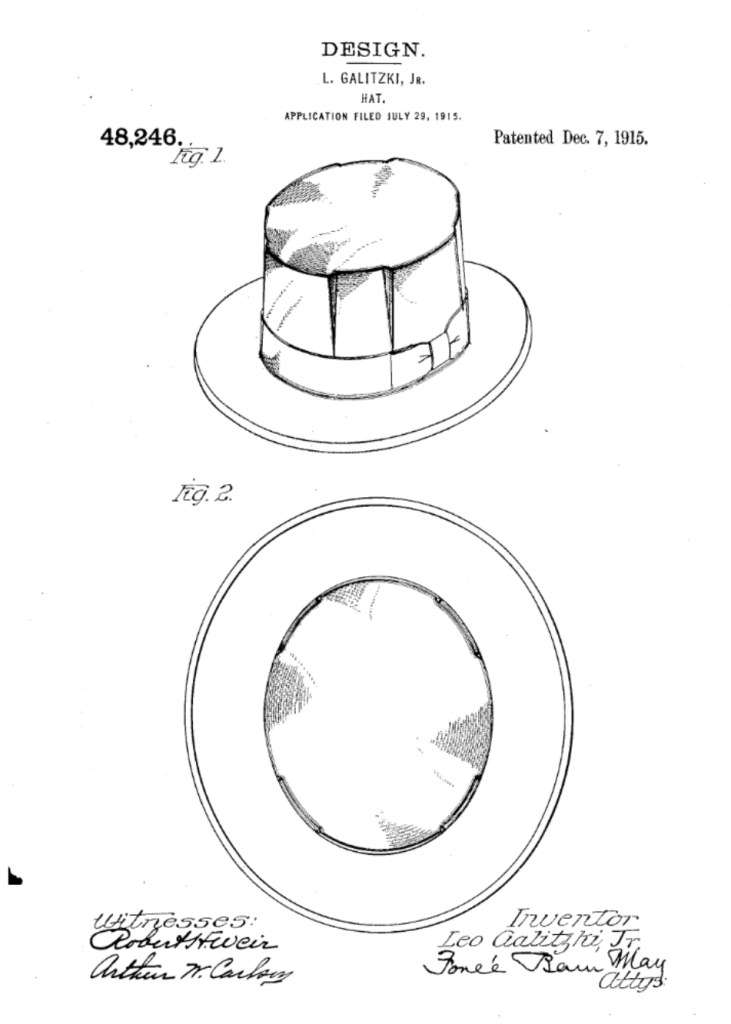
Leo Jr. was also involved in the family business and patented the hat design in 1915. That same year, Leo Jr. married Margaret Hart in Chicago.
In 1918, Leo Galitzki Jr. and his wife, Margaret made national news when she filed for divorce because her husband felt she was “too beautiful” to leave outside of the house. When they first married, Galitzki informed Margaret that when “his people married, they dominated their wives and were masters” so Margaret must be subservient and obey her husband. Margaret also accused her husband of becoming physically abusive towards her. On December 4 and 31 of 1917, she accused him of pointing a loaded gun at her and threatened to shoot her.
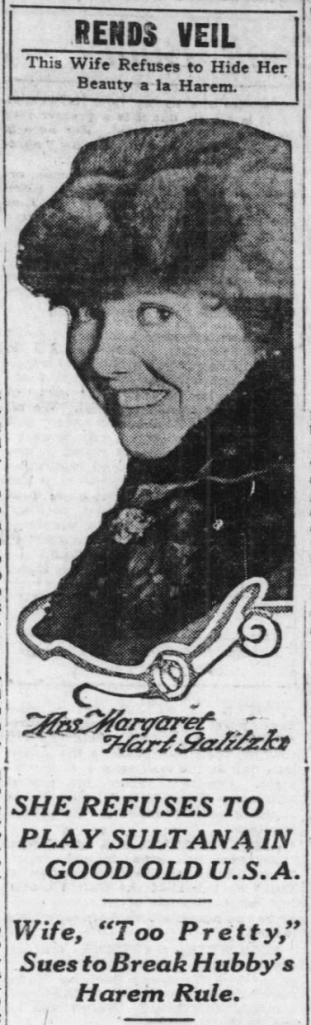
In October of 1919, Leo Galitzki Jr. and his wife, Margaret, were officially divorced and Leo had to pay her $20 a week for alimony. Margaret’s advice to other women: “Marry Americans. This is the United States. Not Turkey.” By this time, his father was a “millionaire hat manufacturer” of not only Panama hats, but also cigars, so Leo Jr. could afford the alimony payments. The newly divorced couple also had to share custody of their 3 year old son.
A few months later, Leo Galitzki Sr. was visiting Los Angeles when he made national news. Army Captain R.C. Potter shot three people in Venice on a Pacific Electric train as it was nearing Culver City, including his estranged wife, Wilda Potter and were hospitalized. Potter was arrested for attempted murder. Leo Galitzki, a Chicago importer of cigars and member of the Chicago Police Reserves, disarmed Potter after he started firing the gun. Potter told the police that he wanted to kill his wife because she was riding on the train with another man. The Potters have been separated for a month and met yesterday to talk. During the conversation, a man approached them and Wilda told her husband that he was friend and she needed to talk to him for a moment because he was leaving town and she would return to finish the conversation later in the day. R.C. Potter followed his wife and the man and saw that they were getting on the train together. Mr. Potter got on the train and asked them where they were going and they indicated they were going to Venice and that is when he got out the gun and shot his wife three times. Potter stated he did not know why he shot her other than he was mad at her since she left him. Witnesses on the train stated that when Potter shot his wife, the first bullet went wild, but the second bullet hit her in her eye, lodging in her brain. The third bullet missed Mrs. Potter but grazed another passenger on the side of the head and then a third passenger in the hand, severing one finger. This is when Galitzki fought with the crazed husband to get the gun away before he hurt anyone else. According to the Venice Chief of Police, Mrs. Potter may not survive.
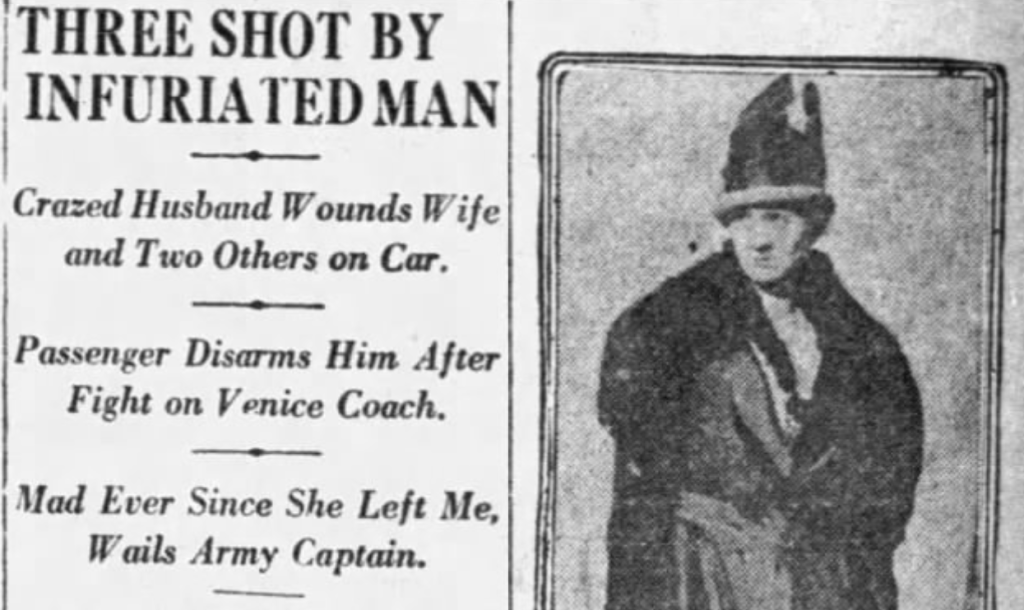
In May of 1920, Raymond C. Potter went to trial on 9 accidents that were caused as a result of his actions. The jury deliberated for 19 hours and could not agree on convicting Potter so there was another trial. Apparently, during the second trial, the Potters had reconciled and Potter ended up being acquitted on all charges by the female jurors. Mrs. Potter had testified against her husband during the first trial, now wanted him to be set free as they had reunited. The two ended up leaving the courtroom arm in arm, smiling together and were never heard from again.
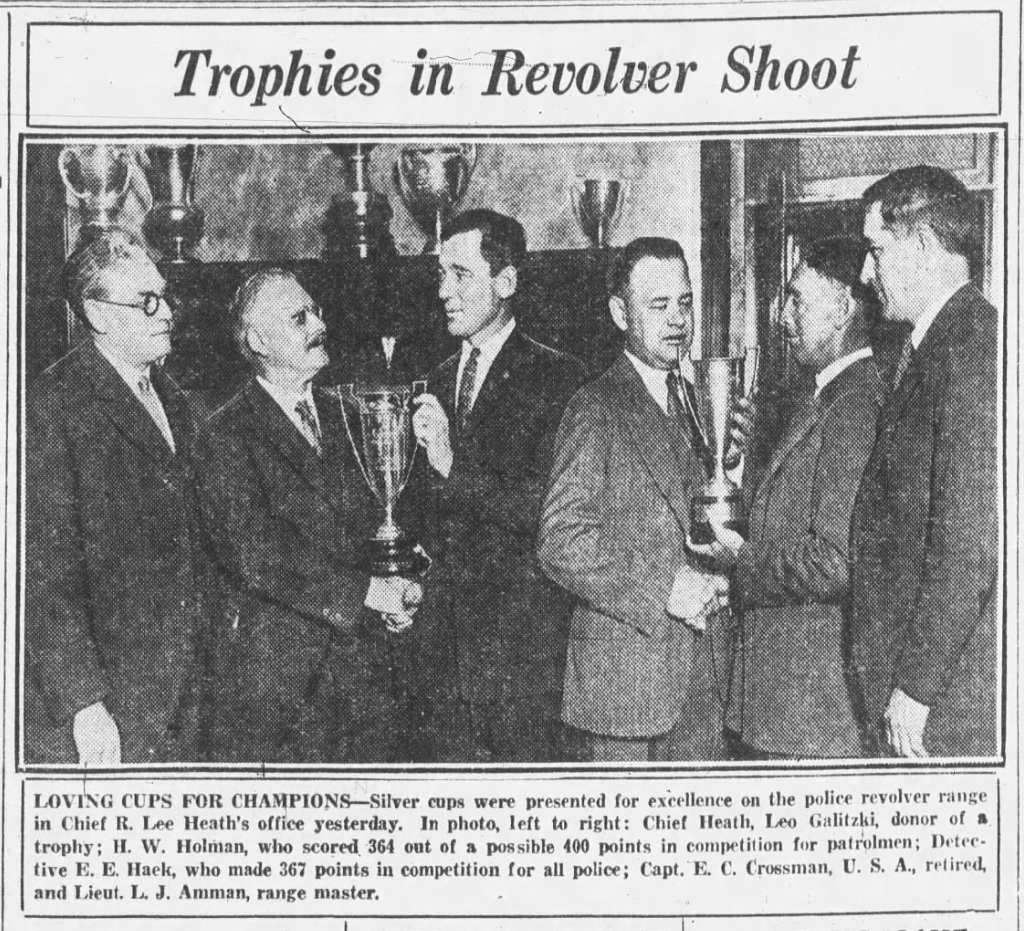
Leo Galitzki Sr. decided to retire a build a two bedroom house in Whitley Heights and moved from Chicago to Los Angeles in 1923. Although retired, Galitzki stayed active with his time with the police reserves. In 1925, Galitzki was presented with a silver cup for his excellence on the police revolver range. In November of 1933, Leo Galitzki died leaving his wife, son, daughter, and three grandchildren. Colombia remained in the Whitley Heights house until her death in 1939.
 Whitley Heights 101
Leave a comment