2109 Fairfield Avenue
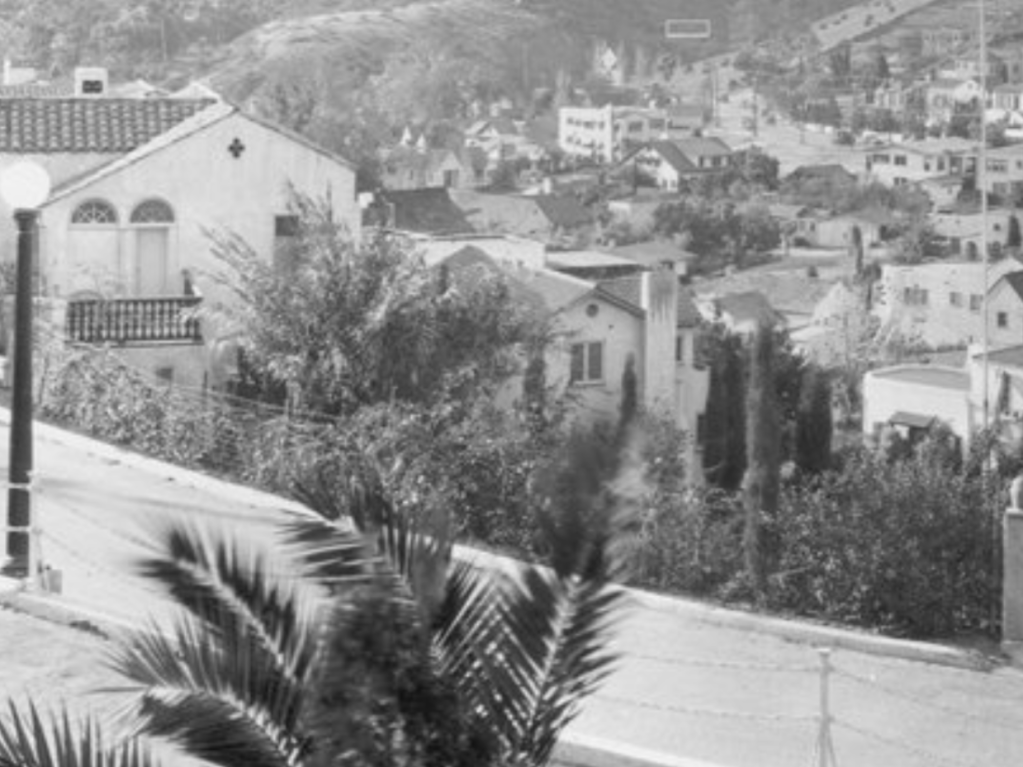
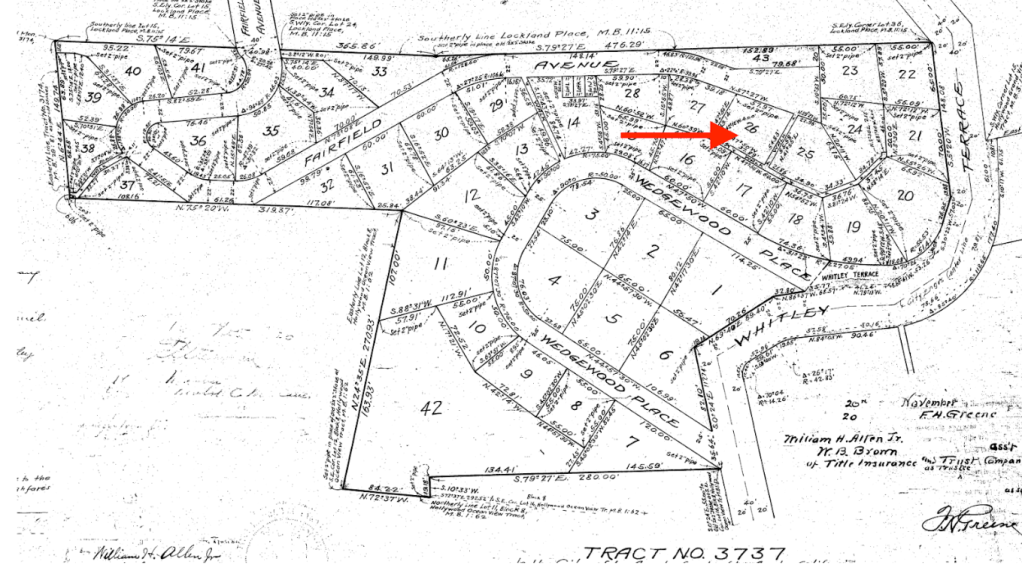
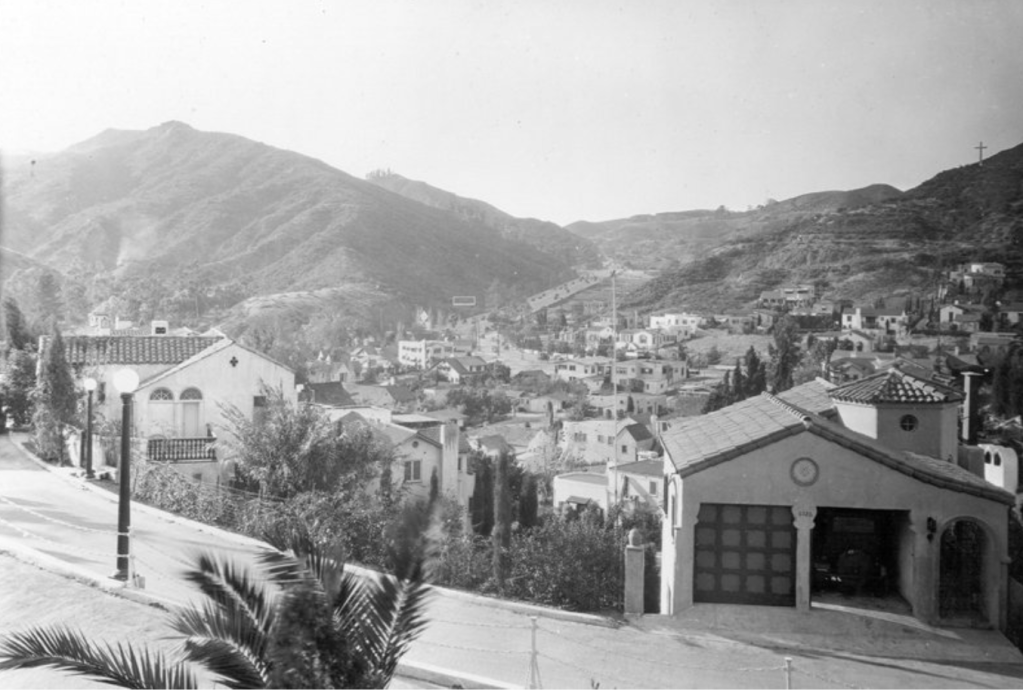
2109 Fairfield Avenue was built in 1992 by Whitley Height’s own architect, Arthur S. Barnes for Archibald M. Mackie. The two-story Mediterranean home was originally built with six rooms and was nestled below Rudolph Valentino’s house that was on Wedgewood Place. Mackie, the president of Monarch Laundry, owned the property until the late 1940s and rented out the property to at least three celebrities during that time. The house primarily remained the same until 1941 when the Mackies installed a “sash” on the exterior wall of the porch with no structural changes.
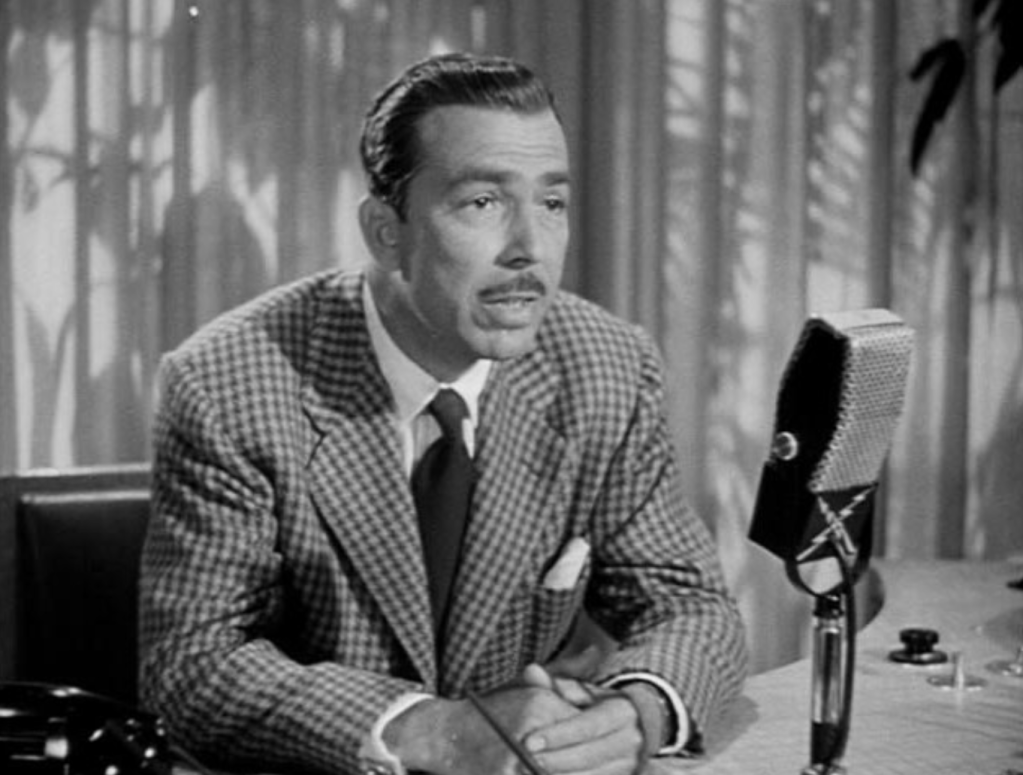
In 1924, Columbia Pictures producer Louis Lewyn (1891-1969) and his wife, actress Marion Mack (1902-1989) rented the home for part of the year. They had just wrote and produced the film, “Mary of the Movies” (1923) in which Marion Mack starred in. The Lewyns moved to various homes in Los Angeles county and would eventually build a mansion located at 2053 Lloyd Lane in which they lived in between 1929 and 1931, also located in Whitley Heights. Lewyn filmed mostly short films during the silent film era, while Mack was only in 10 films between 1921 to 1940. Her most notable role was playing opposite Buster Keaton in “The General” in 1926. The Lewyn’s remained married until Lewyn’s death in 1969.
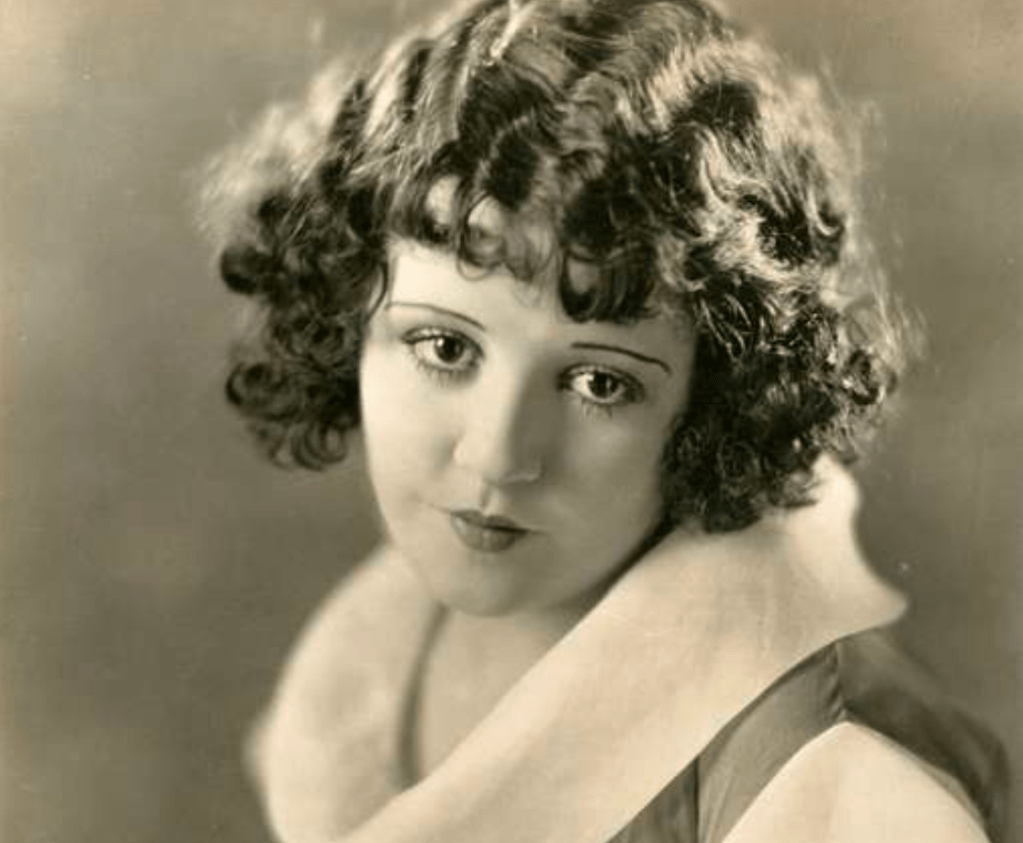
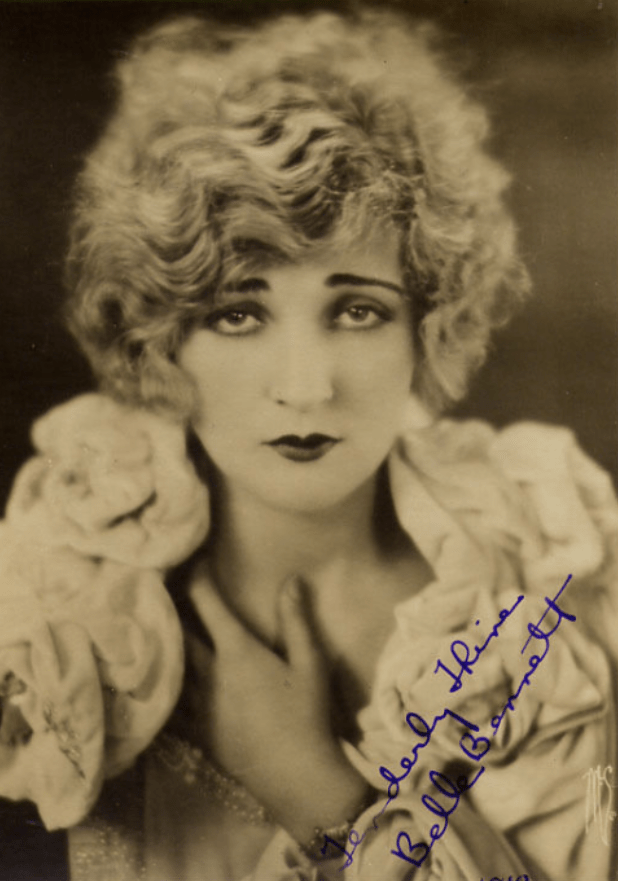
In 1925, actress Helen Lee Worthing (1905-1948) rented 2109 Fairfield Avenue. At the age of 24, Worthing won a beauty contest and was named the “most beautiful woman in America” and then moved to New York City and joined the cast of Ziegfeld Follies in 1921. Unfortunately, Worthing had mental health and substance abuse issues that would plague her entire life. Worthing had married young and her marriage ended in 1922 which resulted her suicide attempt. Between 1923 to 1927, Worthing would appear in a dozen films in minor roles.
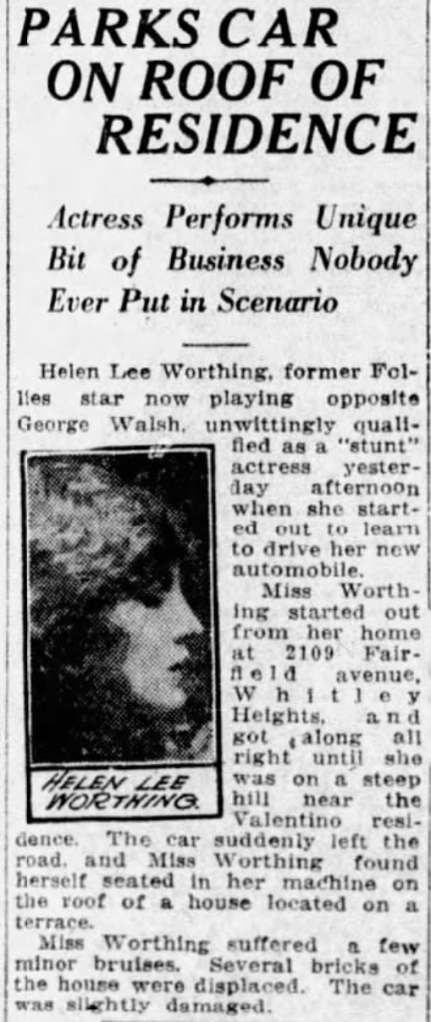
In October of 1925, while residing here, Worthing made headlines when she attempted to drive her new car in the neighborhood. She got to a steep hill near Valentino’s residence on Wedgewood Place when she lost control of her automobile which ended up on a roof of one of the houses on Fairfield Avenue (possibly near the house she was renting!). Worthing suffered a few minor bruises and her car was only slightly damaged. Several bricks on the house she landed on were displaced.
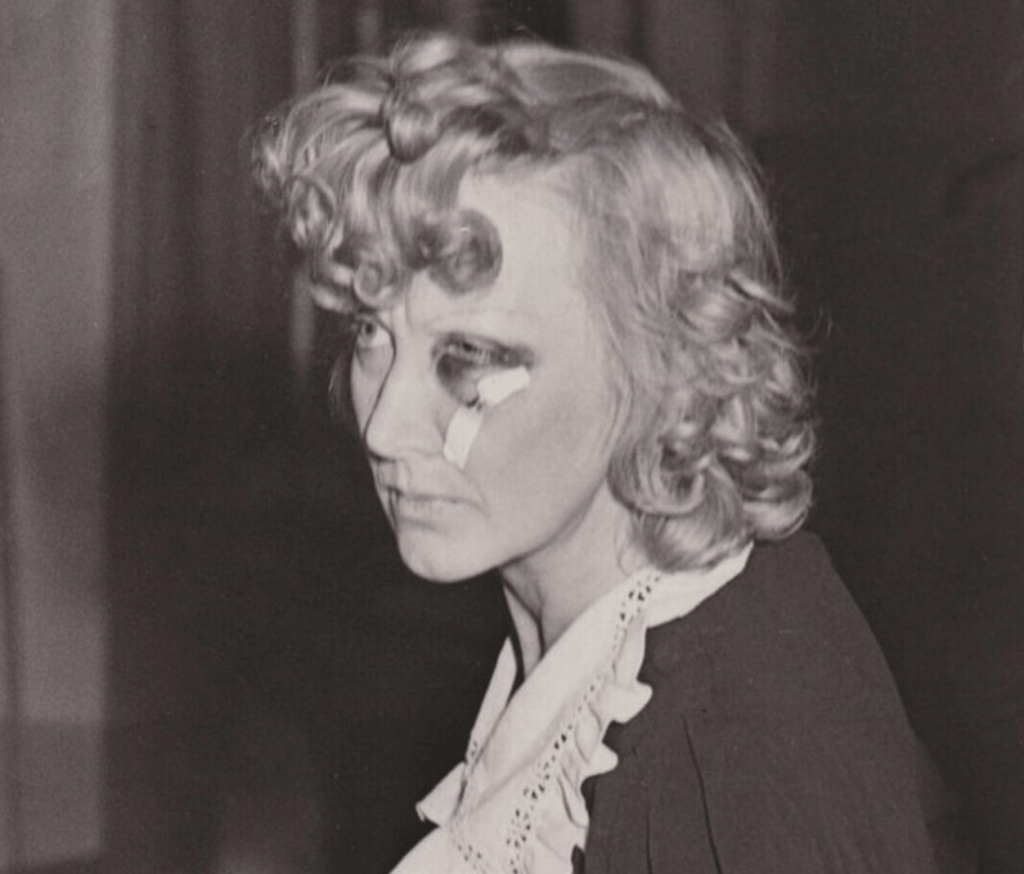
In 1927, Worthing was living down the street at 6823 Iris Place when she was attacked by an assailant who broke into the house. Her maid found her lying in a pool of blood with a broken nose, bruised face and one of her teeth was knocked out. (see below). She was under the care of Dr. Eugene Nelson, an African American doctor whom she ended up marrying. Her inter-racial marriage ended her acting career. Worthing started drinking in 1930 and her marriage was on the rocks. Her substance abuse issue worsened as she began abusing prescription drugs. On August 25, 1948 she committed suicide with an overdose of sleeping pills. She was forty-three years old. The police found a note that said “I have had so many heartbreaks and so many let-downs and I don’t believe I can stand one straw more.”
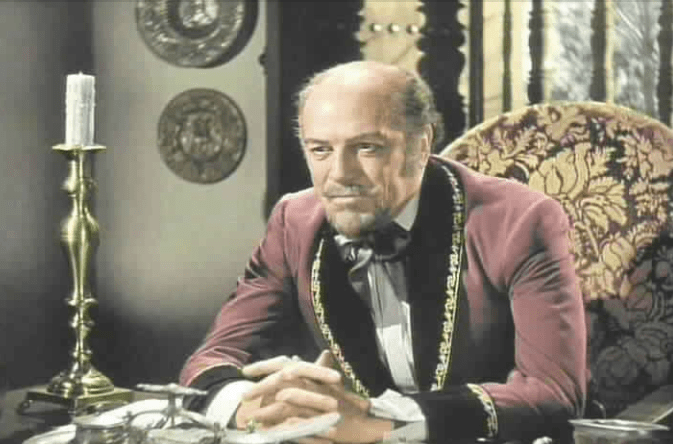
In 1927, British actor Montagu Love (1877-1943) rented 2019 Fairfield Avenue. Most of his roles were him playing a villain. Montagu was active on Broadway between 1913 and 1934 and was credited for 179 minor film roles between 1914 and 1946. He most notably played in Rudolph Valentino’s, “Son of the Sheik” in 1926, John Roche’s “Don Juan” in 1926, Lionel Barrymore’s, “The Mysterious Island” in 1929, Errol Flynn’s, “The Prince and the Pauper” in 1937, Errol Flynn’s, “The Adventures of Robin Hood” in 1938, Cary Grant’s “Gunga Din” in 1939, and Spencer Tracy’s, “Northwest Passage” in 1940.
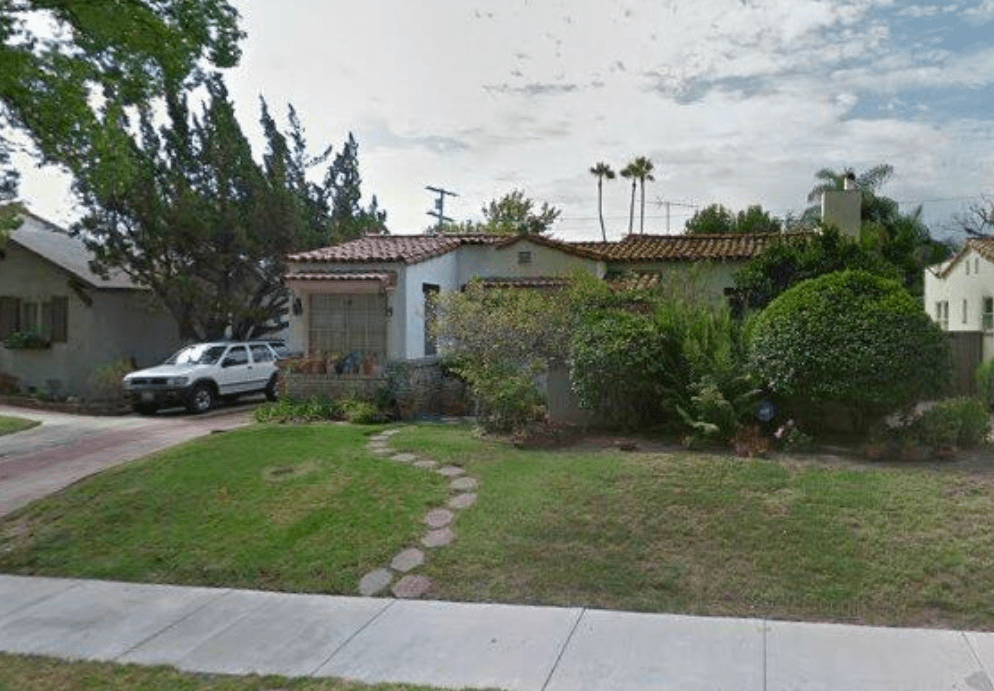
Between 1936-1938, a gardener named Joseph Coyne resided at 2019 Fairfield Avenue for music teacher Mildred Peterson. On September 28, 1938, a 43 year old divorcee named Ruth Voorhees was murdered in her home in Toluca Lake. Police found Coyne in the area of her home “talking in a rambling manner about a woman killed over there” and took him into the police station for questioning but he denied knowing anything about the murder. Voorhees, the mother of a 17 year old son, was nearly decapitated from the blast of a shotgun through her French doors and was found on the floor of the bedroom in the bungalow home (see below). The house has since been demolished and replaced by a Cape Cod home which was built in 2019.
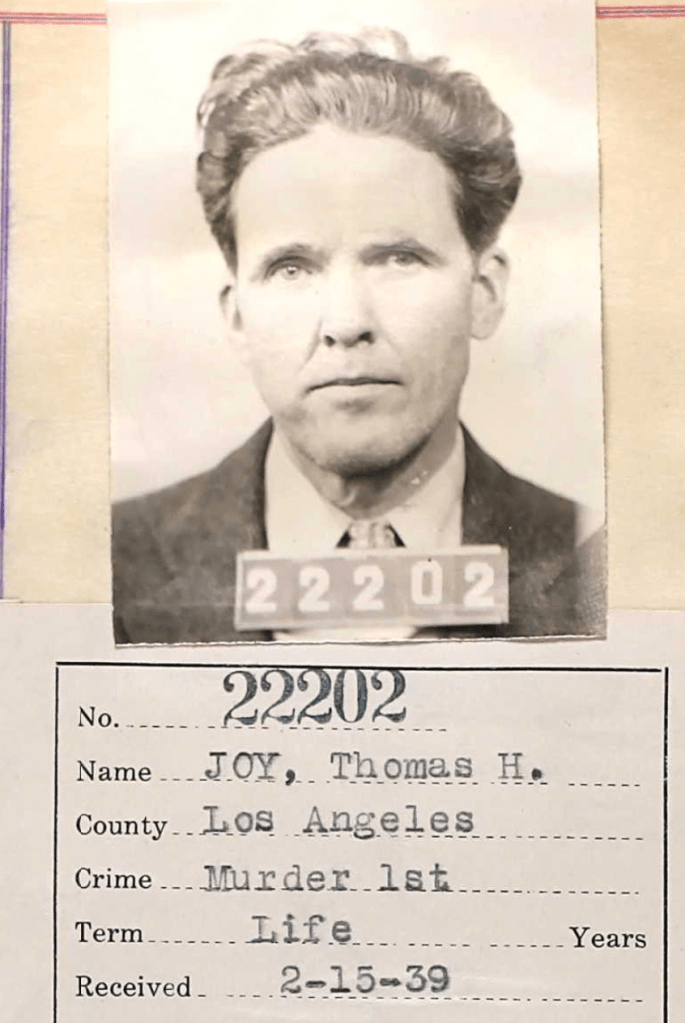
After an investigation, police were searching for one of the boarders, an ex-convent named Thomas Joy, aka Thomas Love. Joy was eventually captured after trying to escape from a police trap by jumping 36 feet from his hotel window. He was arrested and charged with her murder and ordered trial. In January of 1939, Joy ended up pleading guilty to Voorhee’s murder and indicated he was angry that Voorhees threw him out of her boarding house and apparently the two were lovers. Joy, who listed his occupation as a butcher and was married, had served 3 years in San Quentin for armed robbery.
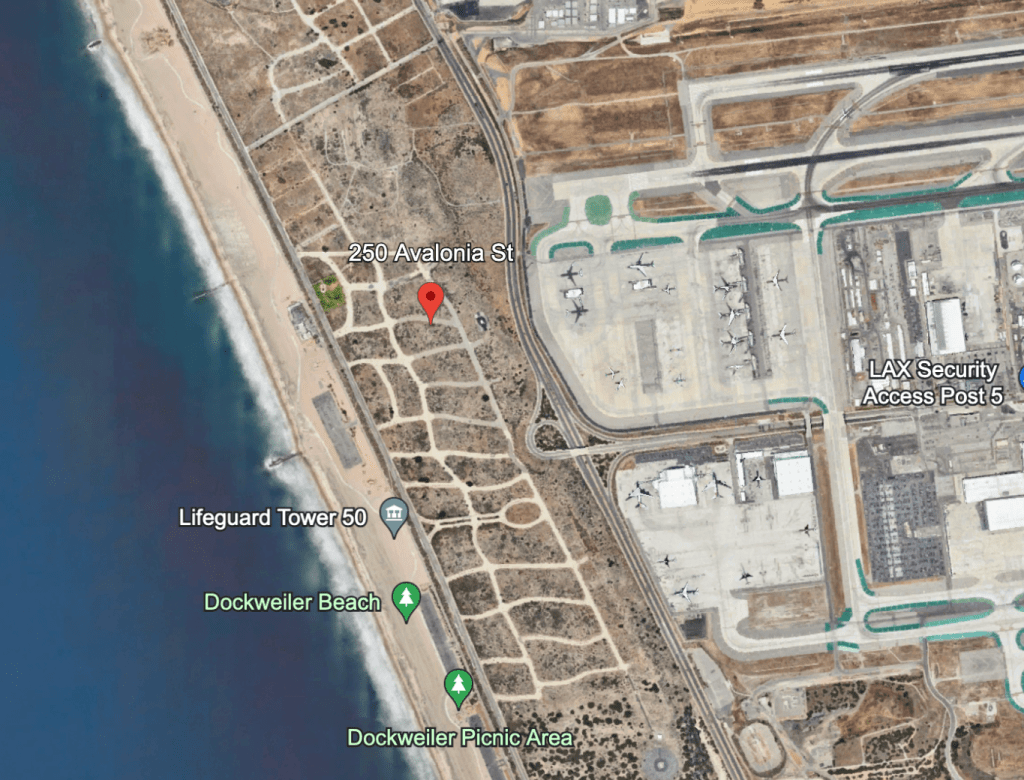
The house at 2109 Fairfield Avenue was auctioned off by the state in 1950 and purchased by a fireman named Samuel Kenniston who moved the property to 250 Avalonia Street in the Surfridge area of Playa del Rey (see below). Kenniston moved the home and then built a new detached garage which was completed by 1951 and placed in the rear of the property.
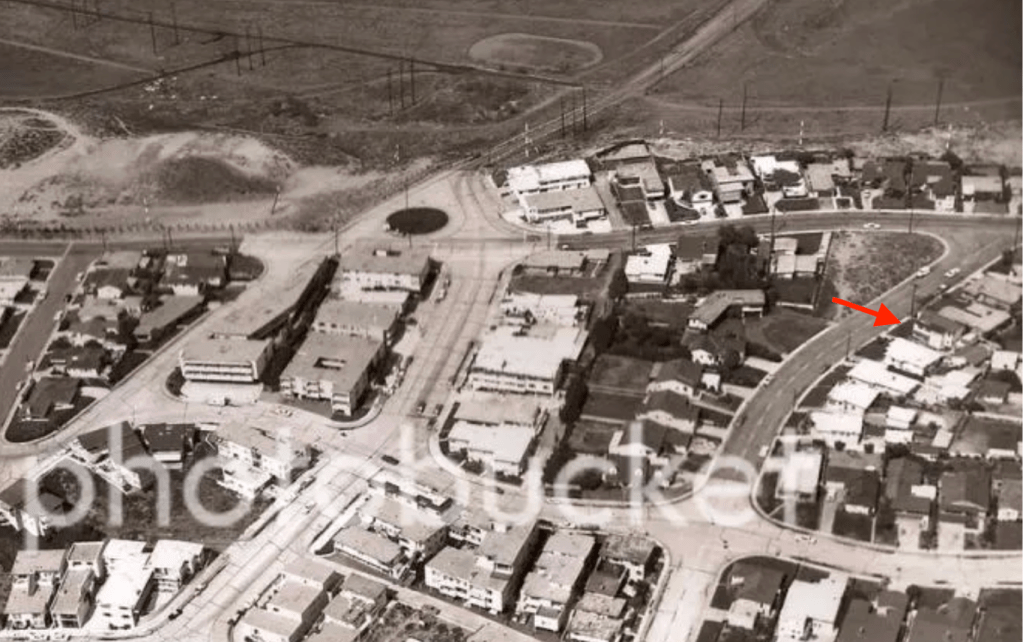
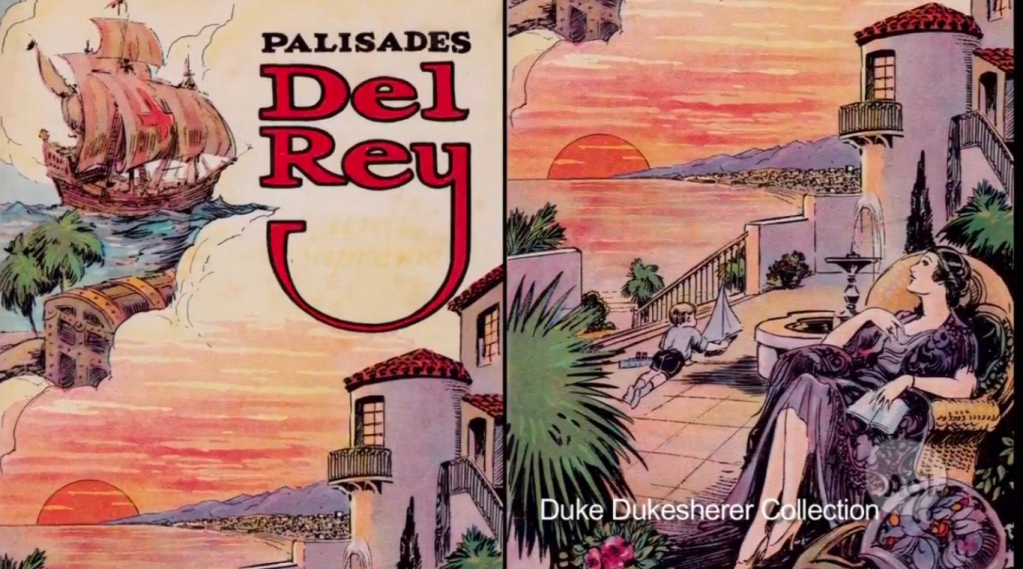
Palisades del Rey (Spanish for “Palisades of the King”) was a 1921 neighborhood land development by Dickinson & Gillespie Co. that later came to be called the Playa del Rey district of Los Angeles County, California. All of the houses in this area were custom built, many as beach homes owned by Hollywood actors and producers, including Mae Murray, William DeMille, Cecil B. DeMille, Charles Bickford, and Mel Blanc.
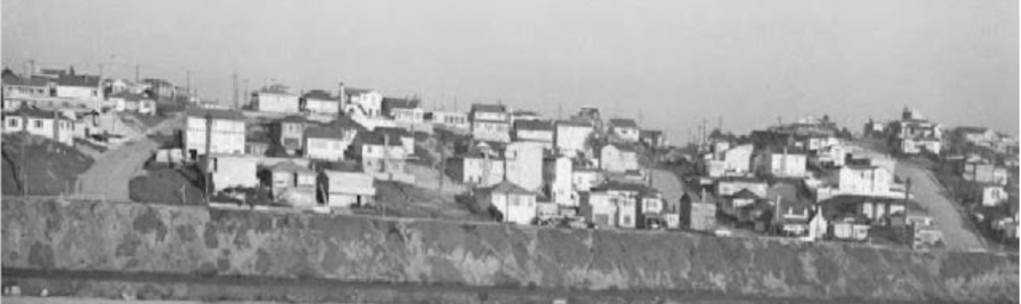
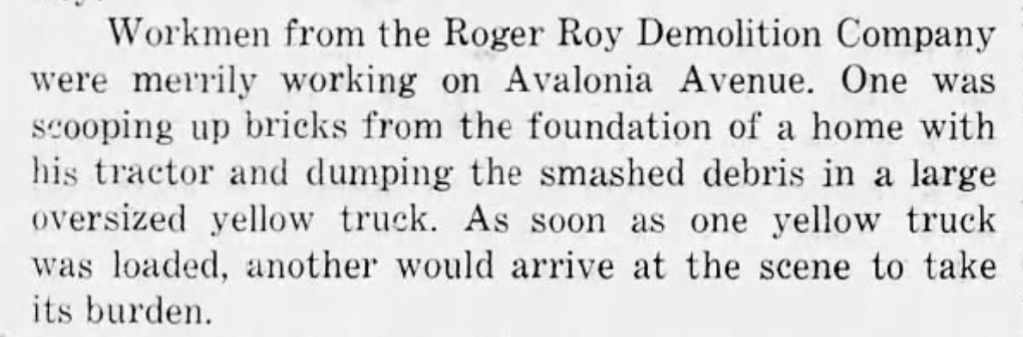
A southern portion of Playa del Rey became known as Surfridge. It was south of the current remaining area of Playa del Rey and north of El Segundo and immediately west of the perimeter of Los Angeles International Airport (LAX). The growing number of commercial flights into Los Angeles following World War II meant a higher number of planes flying low over Surfridge. Many residents learned to co-exist with the noise from propeller planes, but jet engines were difficult to ignore. In the 1960s and 1970s, the area was condemned and acquired by the City of Los Angeles in a series of eminent domain purchases to facilitate airport expansion and to address concerns about noise from jet airplanes. Homeowners were forced to sell their property to the city. Several homeowners sued the city and remained in their houses for several years after the majority of houses were vacated. Eventually all the houses were either moved or demolished. The former Whitley Heights house located at 250 Avalonia Street was likely torn down circa 1968 (see below) as there is not record of it being relocated.
 Whitley Heights 101
Leave a comment