2060 Whitley Avenue
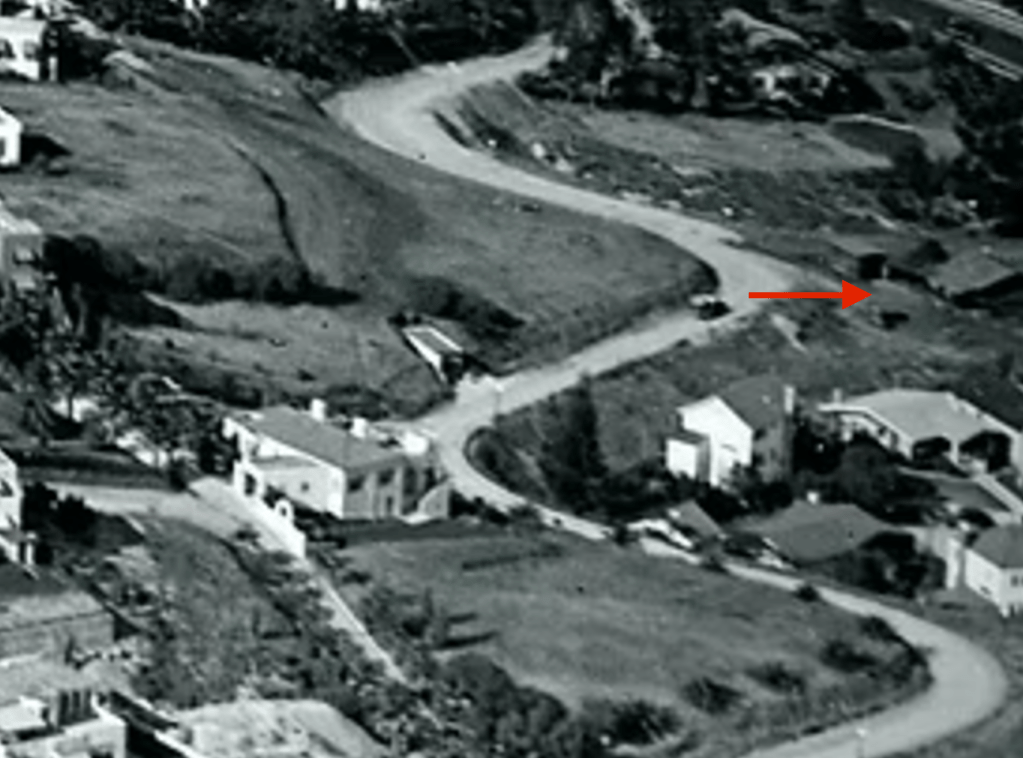
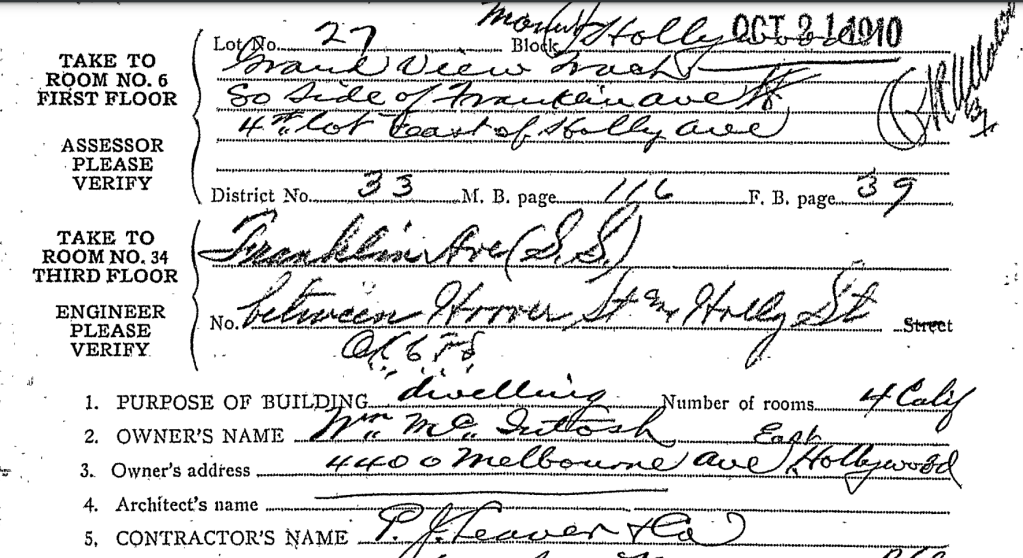
2060 Whitley Avenue is probably one of the oldest homes that was built in Whitley Heights. Based the permit below, this four room, one-story dwelling was built in 1910 before streets used numbers to distinguish properties. William McIntosh hired P.J. Leaver to build the home back in the day when the wood was carried by horses and wagons. McIntosh sold the house to William J. Kessler by 1913 and by that time, the property was known as “2043 Cahuenga Avenue”.
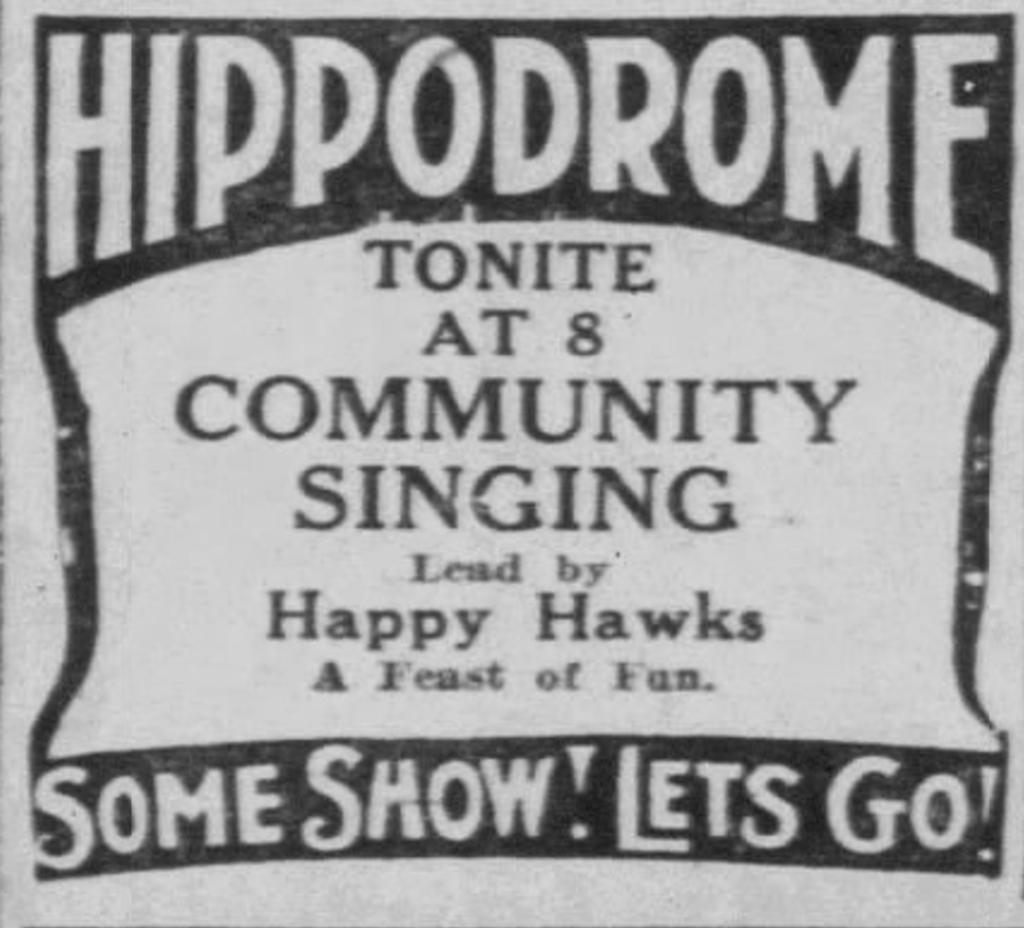
By 1918, Charles M. and Ida Hawks purchased 2043 Cahuenga Avenue. Hawks moved to Long Beach from Minnesota in 1916. He had graduated from Neidlinger School of Music in New York City and sang tenor in the Minneapolis Symphony Orchestra (Minneapolis Philharmonic Society) prior to relocating. In 1919, Hawks opened a music studio in Blanchard Hall, teaching students both American and Italian music. Known as “Happy” Hawks, he was also singing at the Hippodrome Theater, 314 Main Street, Los Angeles (demolished). The Hawks referred to their Whitley Heights home as “Hawks Nest”.
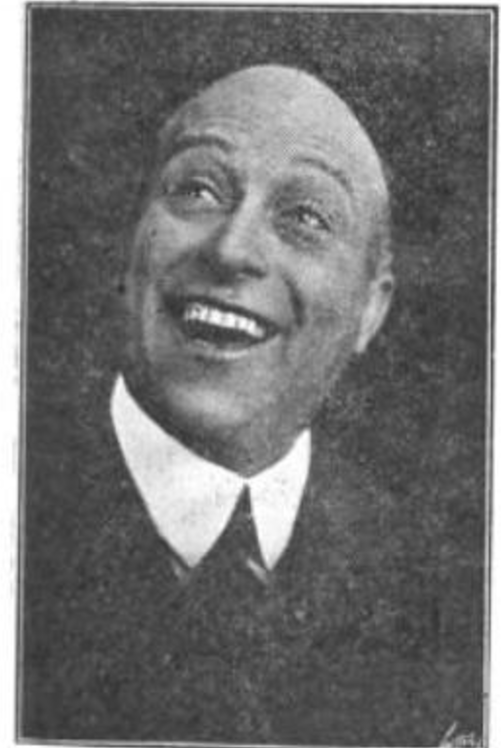
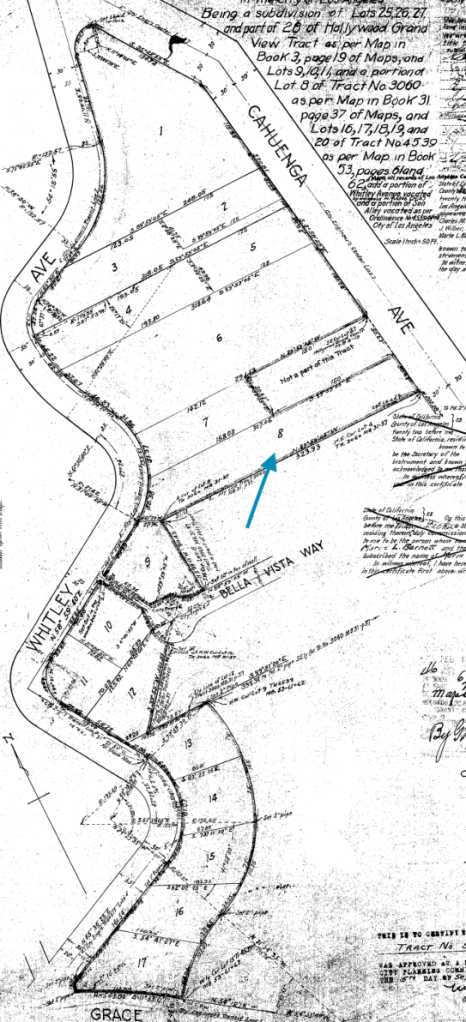
In 1923, the street that the Hawks resided on was officially changed to “Whitley Avenue” and Hawks was one of the residents who signed the new tract map indicating he was now living on lot 8 of tract 5323 with the new address of 2060 Whitley Avenue. During this time, the Hawks were involved with raising money for the Hollywood Bowl and Frank got into real estate, working for Poppy Land Realty Company and then Todd Brothers in West Hollywood. In 1923, he purchased 925 Edinburg Avenue in West Hollywood because he wanted his daughter to attend the new Fairfax High School during 1925 and 1926 so he rented out 2060 Whitley Avenue.
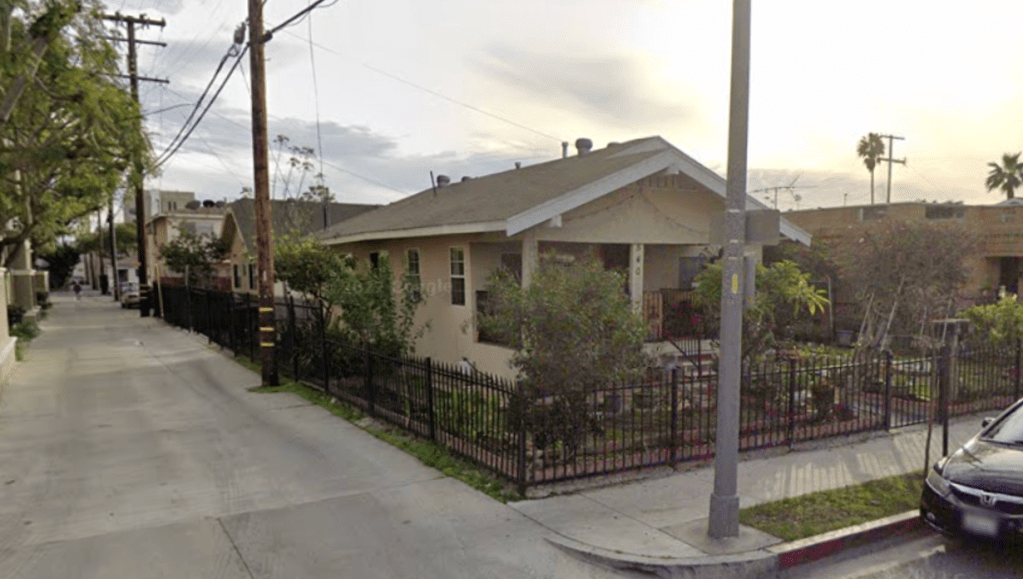
Charles and Ida Hawks had two children. Francis “Frank” Hawks who was born in 1897 in Marshalltown, Iowa and Mary Elizabeth Hawks was born in 1910 in Minneapolis, Minnesota. As a teen, Frank acted at a local stock company with actor Richard Dix which got him to a vaudeville contract and brought him to San Francisco; Dix headed for New York City. The Hawks enjoyed the California climate and moved the family to Long Beach where Frank attended Poly High, excelling in sports. Below, 540 New York Street, Long Beach, the first home the Hawks moved into in 1914 after they moved to California. The house is still standing today.
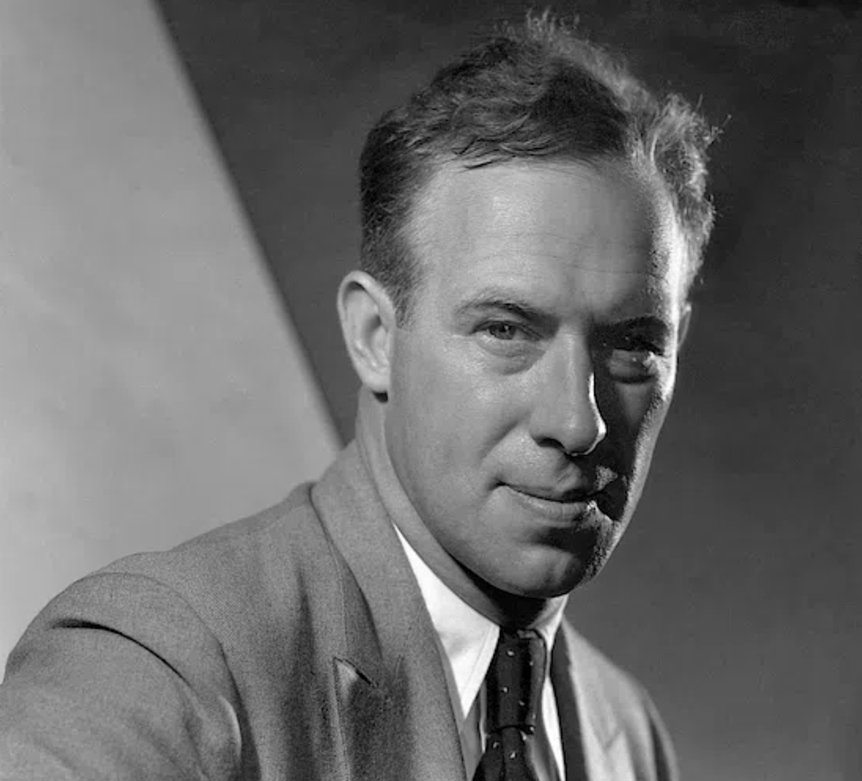
In 1918, Frank enlisted as an aviator during World War 1 and was accepted to the Aviation Corps and assigned to Berkley. That same year, Frank married Newell Lane, the daughter of a state senator in Montana where they moved. Frank had met his future wife when the family was vacationing in Long Beach in 1916. Frank loved flying and continued his career as an aviator and became one of the top pilots in the field, setting many records.
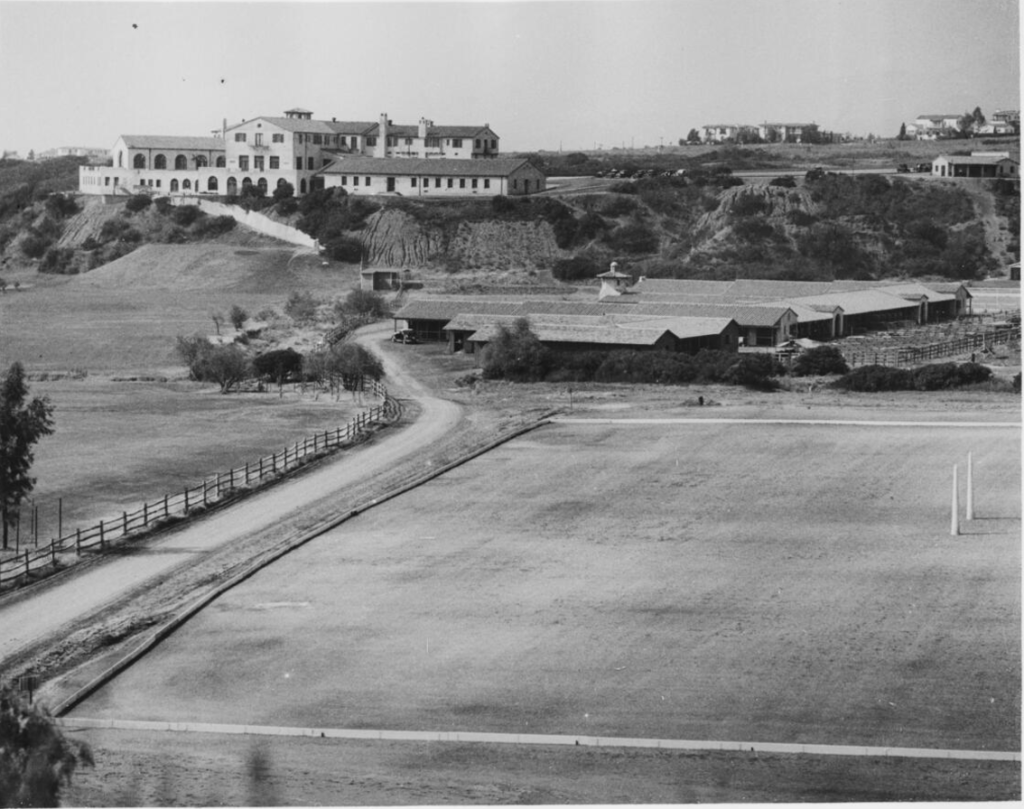
By 1927, the Hawks moved back into their Whitley Heights house. Frank now worked in the sporting department in May Company and after he won the company golf tournament, became a golf instructor at Riviera Country Club in Pacific Palisades. This golf course is over 100 years old and is in danger of being destroyed by the Palisades Fires (as of January 12, 2025). Below is the Riviera Country Club in 1930 at the time when Hawks worked there.
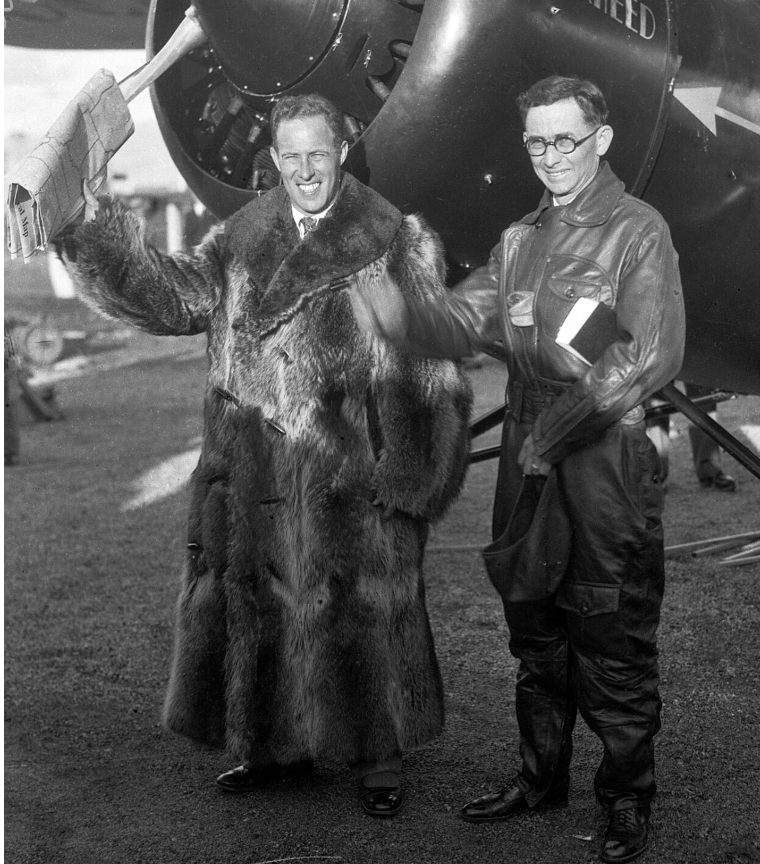
In February 1929, Frank set one of his first flying records: he flew nonstop from Van Nuys to New York in record time: 18 hours and 21 minutes, beating the record of Art Goebel of 18 hours, 58 minutes. Below is Frank with his mechanic Oscar Grubb, who traveled with him; both were working for Lockheed Company of Burbank when the record was broken.
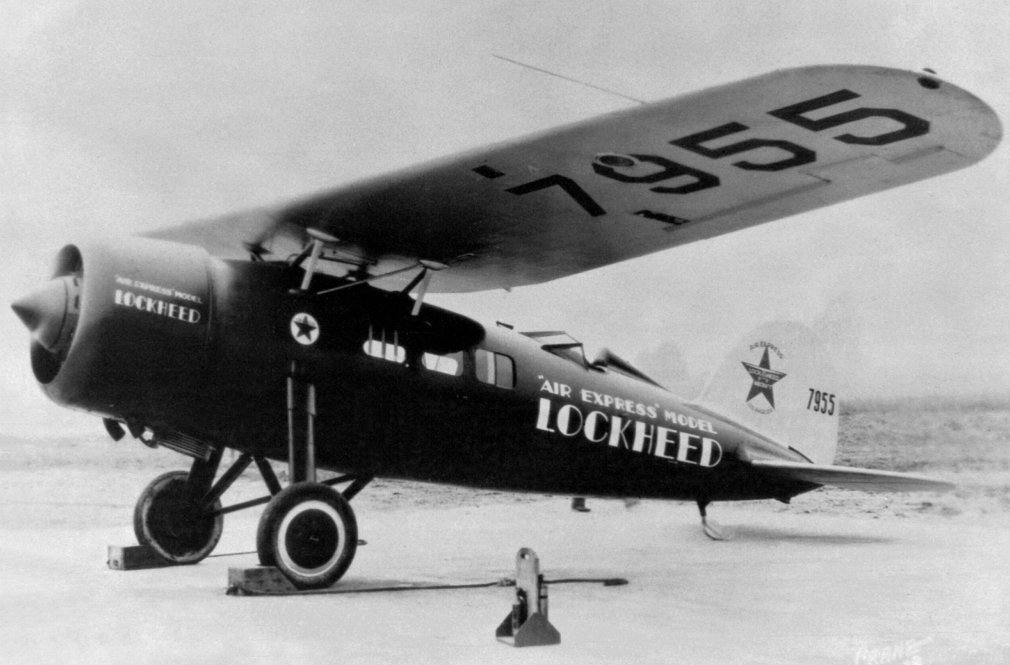
Below is the plane that Frank and Oscar flew in; the Lockheed Vega express model in which they took off from LA Metropolitan Airport in Van Nuys and landed at Curtis Field in Long Island, New York.
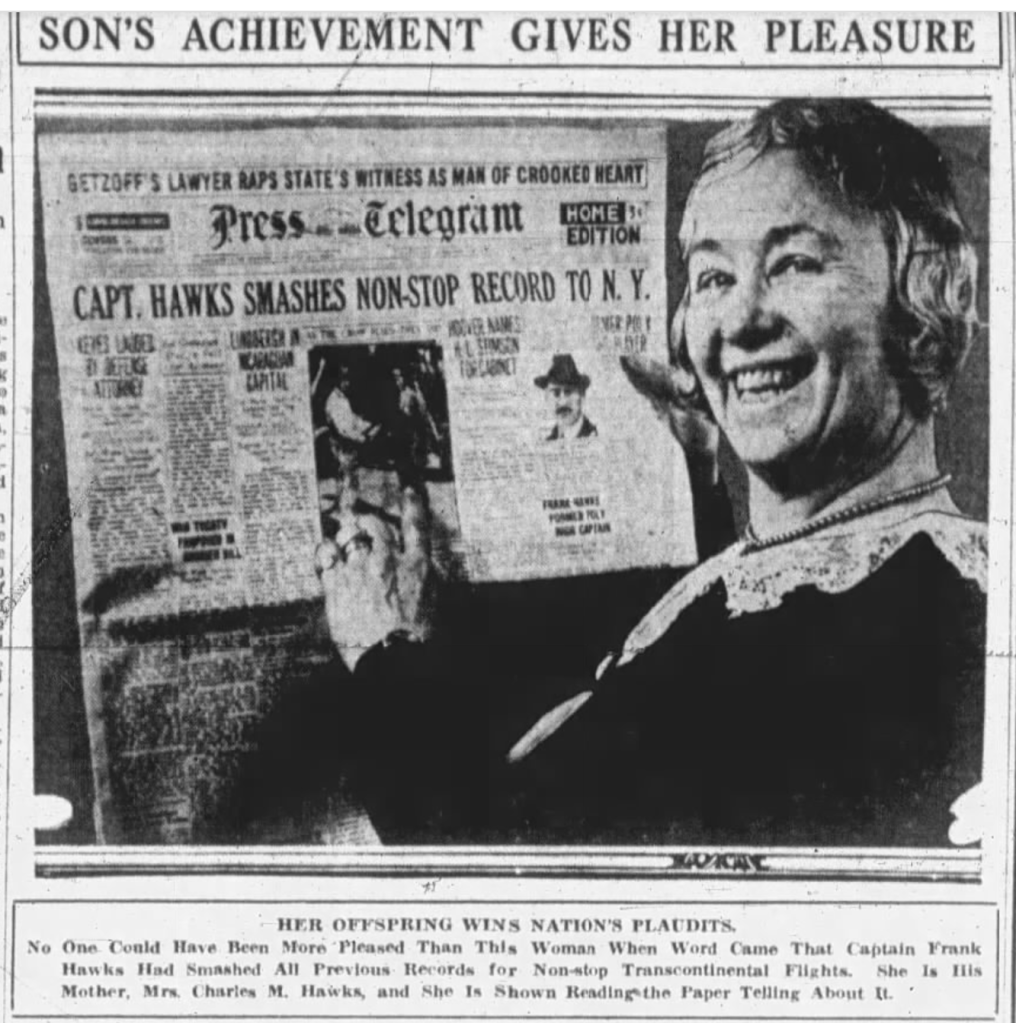
Below is Frank’s mother, Ida Hawks, reading the news about her son’s flying achievement from her home located at 2060 Whitley Avenue in 1929. Eighteen year old Mary Elizabeth, who had been devoting her time and singing and playing the piano, married 20 year old Herbert Shuler in 1929 and their daughter, Louisa was born in 1930.
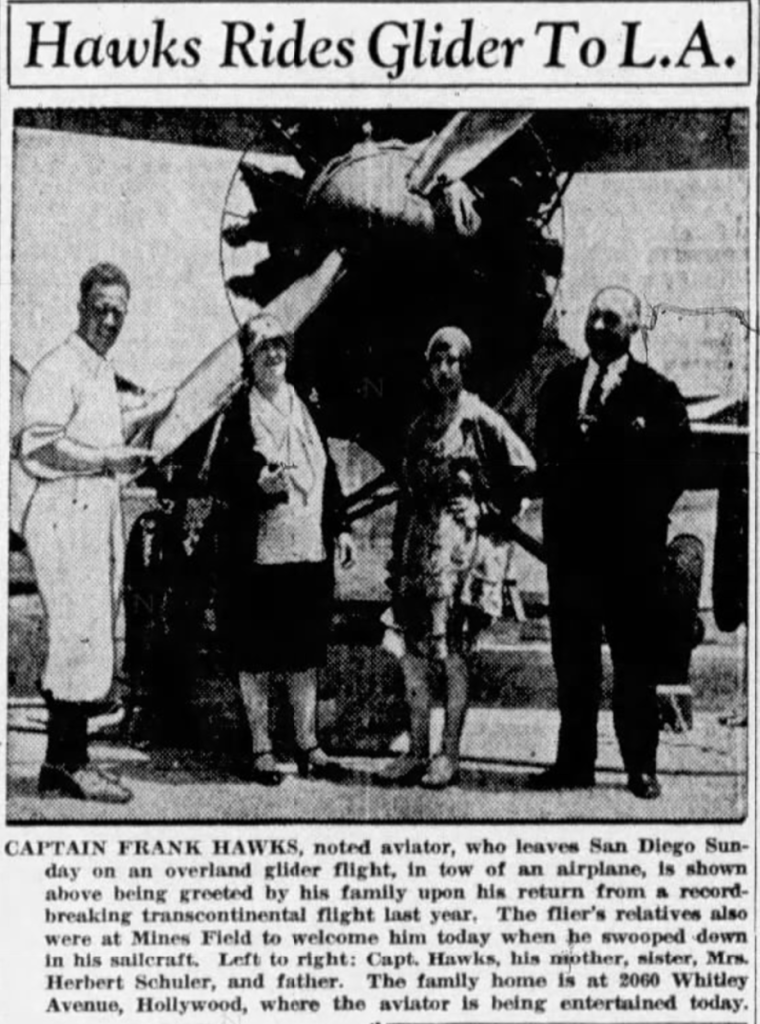
In January of 1930, the Hawks had a scare when their son was forced to land the plane during a storm in Midland, Texas traveling to Miami. One month later, Frank set another record. The 34 year old flew a glider from Los Angeles to New York with only 30 stops. During that time, he was remarried, living on Long Island, New York, and the aviation director at Shell Oil Company. A few months later, Hawks set another record when he arrived in Los Angeles from Roosevelt Field, NY in record time of 14 hours, 50 minutes and 43 seconds and only had five stops.
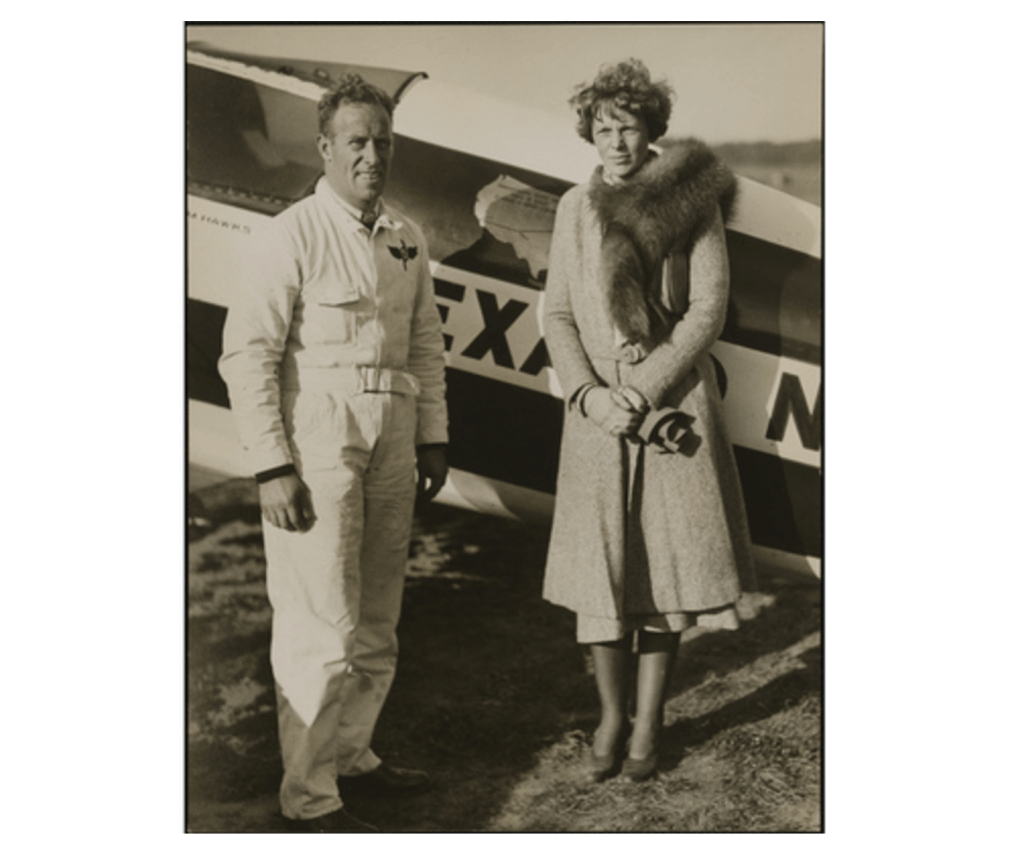
His autobiography Speed was also published in 1930, documenting his life and aviation career. The book was well-written and became a highly popular title (still sought-after to this day). Hawks also flew regularly with Amelia Earhart.
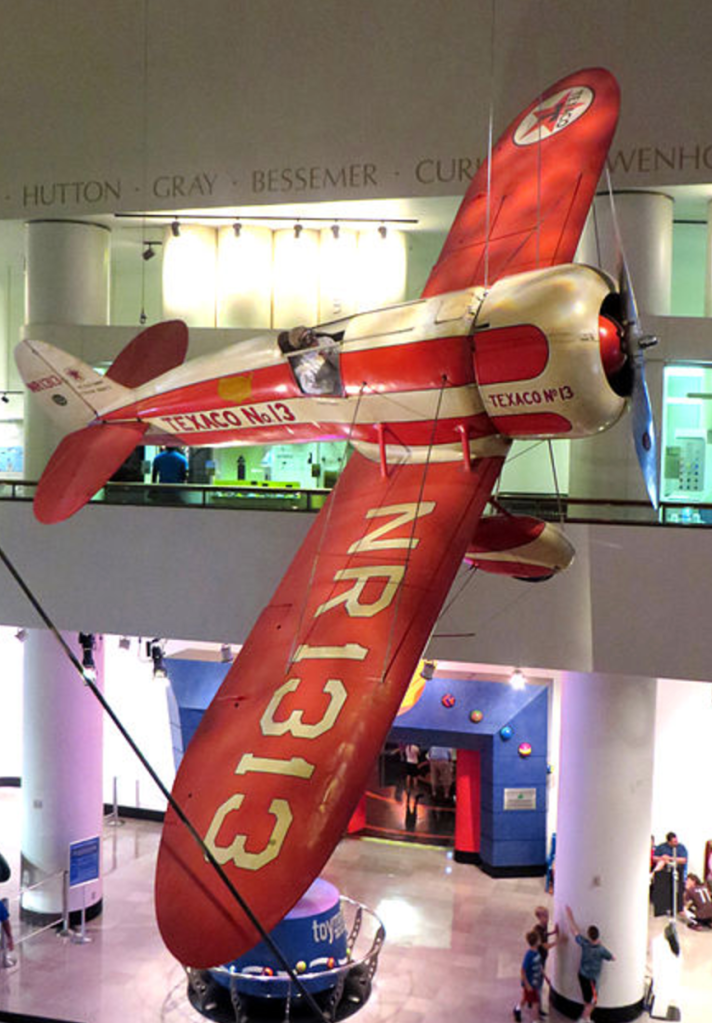
One of Hawks planes, the “Texaco 13” is currently located at the Museum of Science and Industry in Chicago and is a testament to the 1930s “Golden era” of air racing and Frank Hawks.
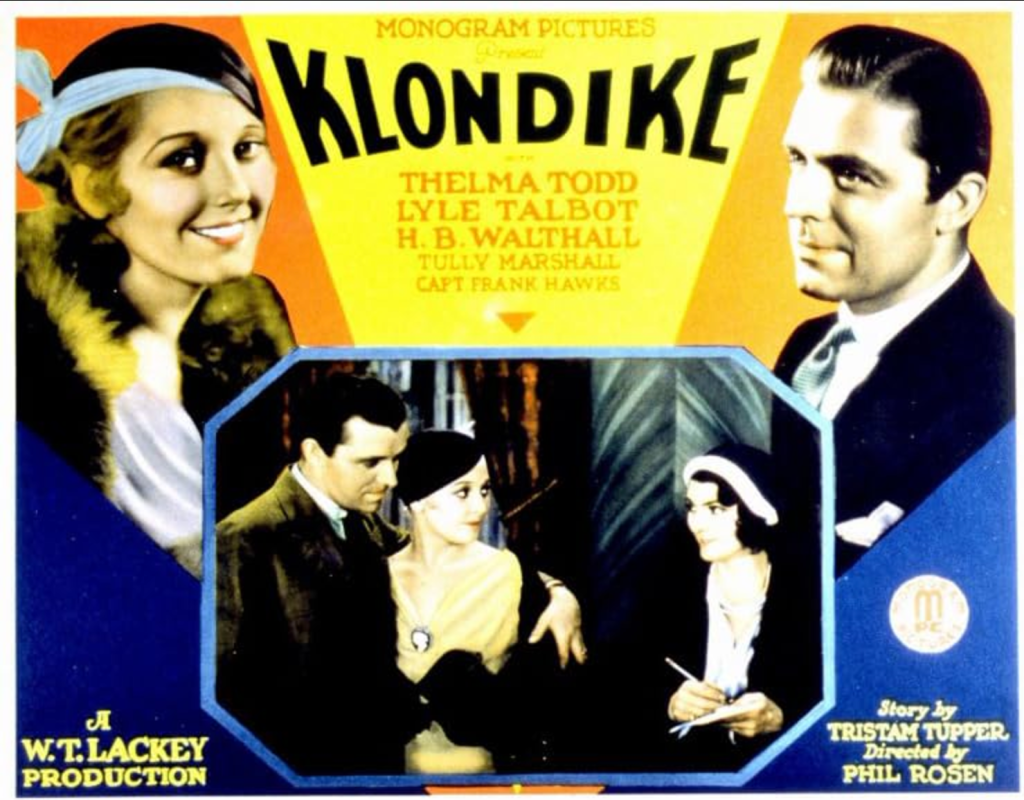
In 1932, Frank appeared in the film, Klondike, which starred Thelma Todd and Lyle Talbot, and played a World War 1 pilot. Ironically, his character was killed in a plane crash which may have been a foretelling prophecy to Hawks a few years later.
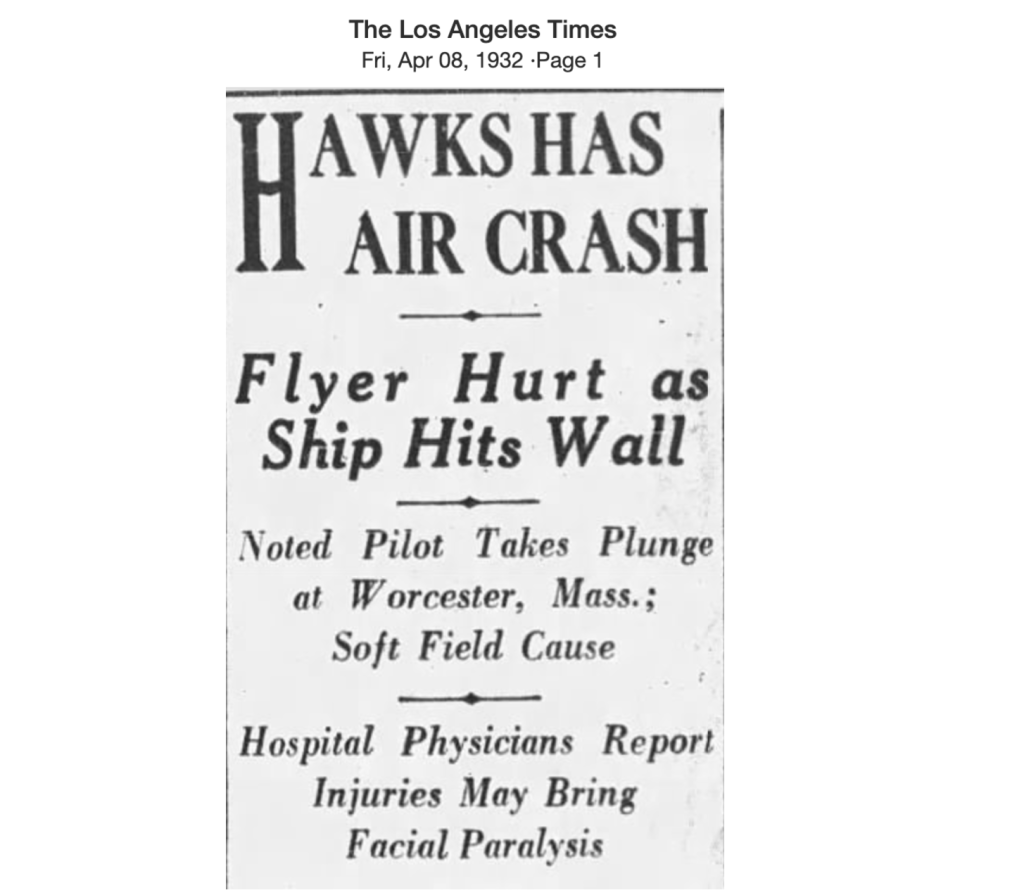
On April 8, 1932, Frank Hawks was involved in a plane crash. He was injured from an attempted take off from Worcester Massachusetts. The soft field prevented him from picking up speed and lift off and the plane crashed through heavy undergrowth, over rocks and hit a stone wall. Hawks was unconscious when he was removed from the wreck. X-rays later indicated his nose and jaw were fractured but luckily, he survived.
Another tragedy struck in February of 1933 when Mary Elizabeth’s daughter died at the age of three. Unable to cope, she left her husband and remarried by the end of the year to 24 year old Benjamin Davis. Resembling Clara Bow, Mary attempted to return to show business which was short-lived.

Interestingly Charles switched careers in 1934; worked with Dr. Charles Townsend, a California physician to create a bill called the “Old Age Pension Plan” which would assist citizens over the age of 60 with monthly payments by the government. As a result, Charles spent time in Boston where he met another woman named Mabel Proctor who owned a corset shop. While Charles was in Boston, Ida stayed with her daughter and son-in-law, who were living in Bell. The Hawks rented out 2060 Whitley Avenue to director Joseph Boyle in 1934. Boyle is pictured below with his first wife, actress Maud Douglas.
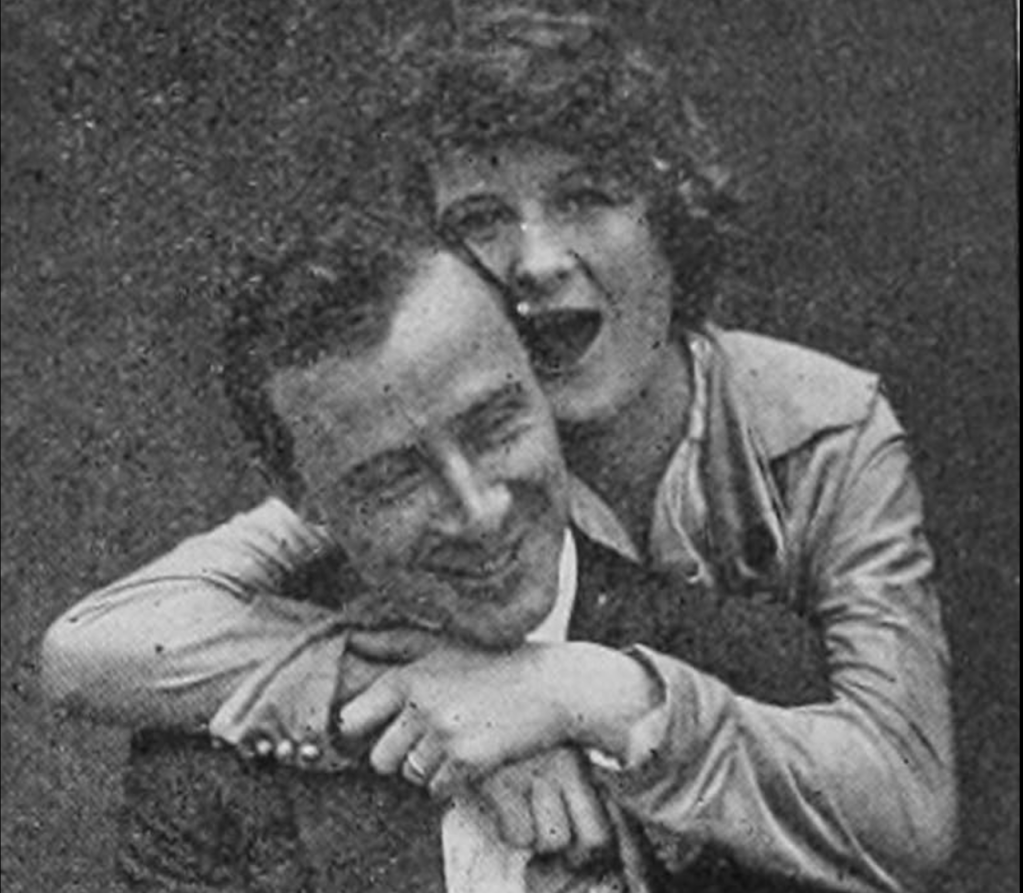
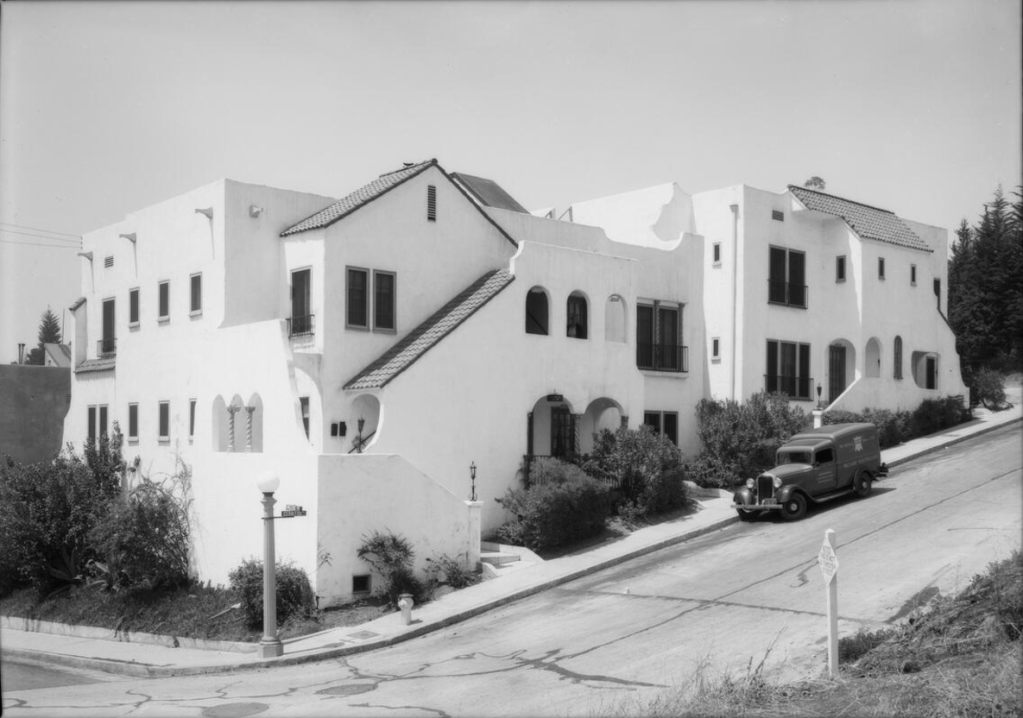
Boyle was born in 1888 in Philadelphia where he began acting at the Lubin Studio and met actress Maud Douglas whom he eloped in 1915 and eventually moved to New York City by 1920. Boyle began his film career as a production manager in 1923 for “The White Sister” which starred Lillian Gish. The Boyles moved to Hollywood in 1929 and by 1938, the Boyles divorced as Joseph moved in with actress Ruth Fallows, who was 17 years younger than he, in an apartment in Whitley Heights: 6518 Cerritos Place (pictured below). The two would remain together until Boyle’s death in 1972.
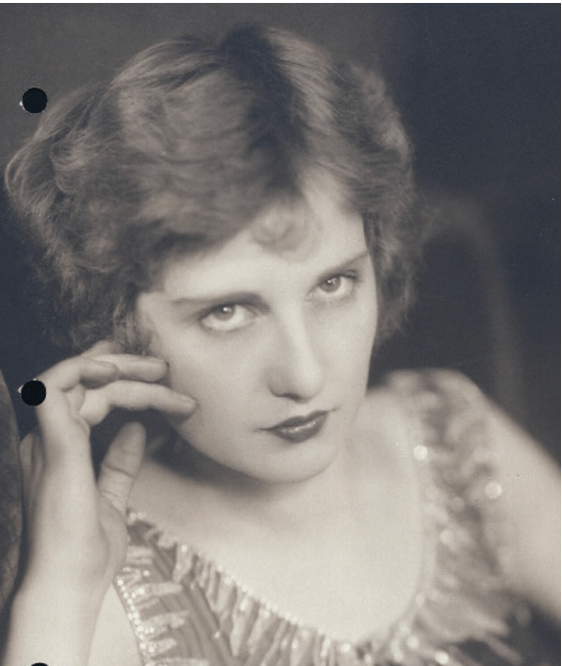
Boyle is best known for his work as an assistant director in the following films: Romola (1924) starring Lillian Gish, Dorothy Gish, and William Powell, National Velvet (1944) starring Mickey Rooney and Elizabeth Taylor and directed by Clarence Brown, The Yearling (1946) starring Gregory Peck and Jane Wyman and also directed by Clarence Brown, and A Star is Born (1948) starring Danny Kaye. Below is Boyle’s second wife, actress Ruth Fallows.
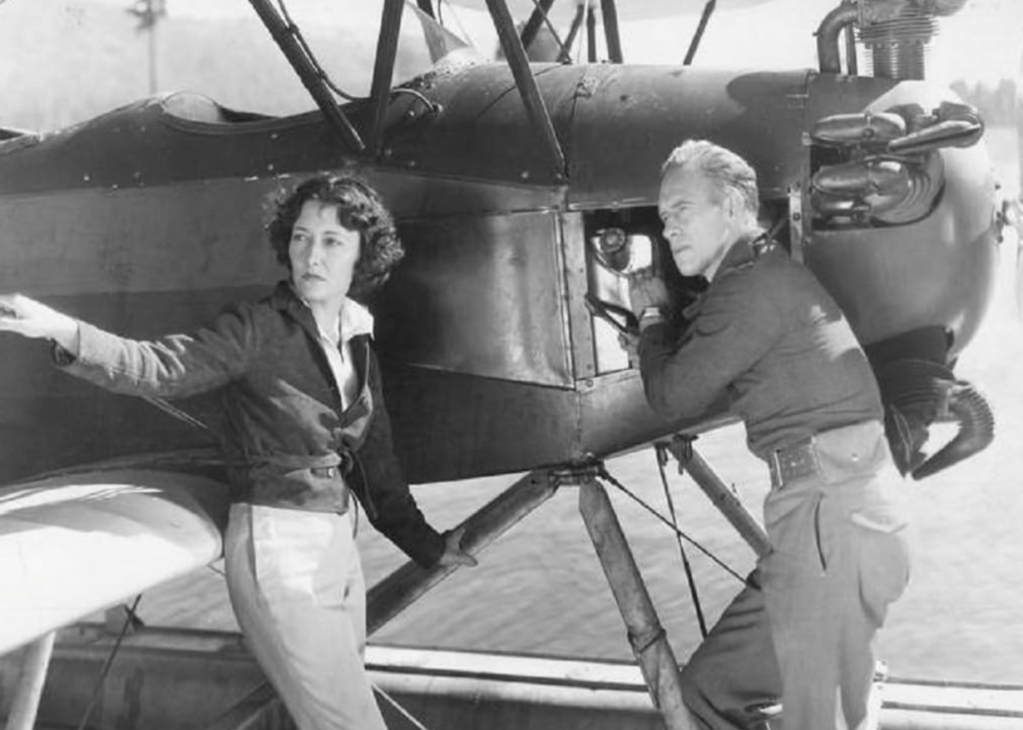
While Charles Hawks was in Boston having an affair, his wife, Ida, became ill for several months eventually succumbing to her death in 1935 at her daughter’s house in Bell, at the age of 61. The following year, Charles married Mabel in Ensenada, Mexico, moving back to 2060 Whitley Avenue in Whitley Heights. Meanwhile, his son, Frank, appeared as the main star in the film, “The Mysterious Pilot” with actress Dorothy Sebastian. As Frank’s flying career was reaching all time heights, he now had a promising film career.
In 1938, Hawks decided to give up his speed flying career. However, on August 23, 1938, Hawks flew wealthy Aurora sportsman J. Hazard Campbell from the polo field on the E.H. Rogers estate in New York in an experimental plane, a tiny Gwinn Aircar. It was extremely windy and as the plane was taking off, it crashed into some tension wires and caught on fire. There was a fire extinguisher on the plane that exploded adding to the danger of spectators who rushed to the crash in order to try to save both men.
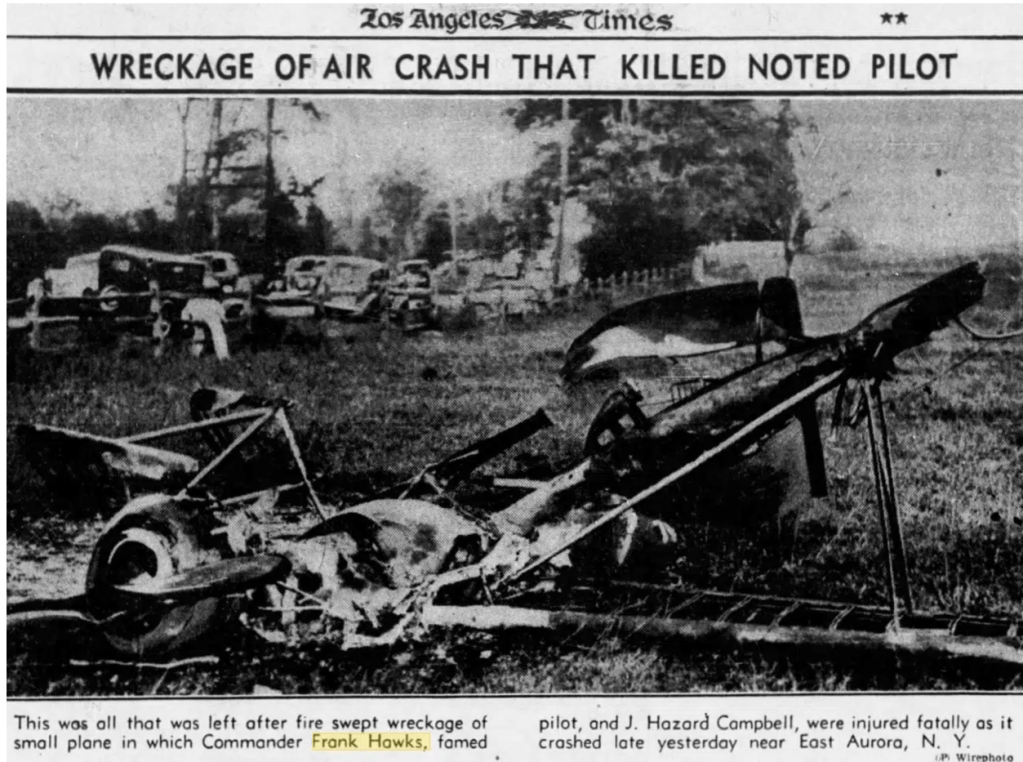
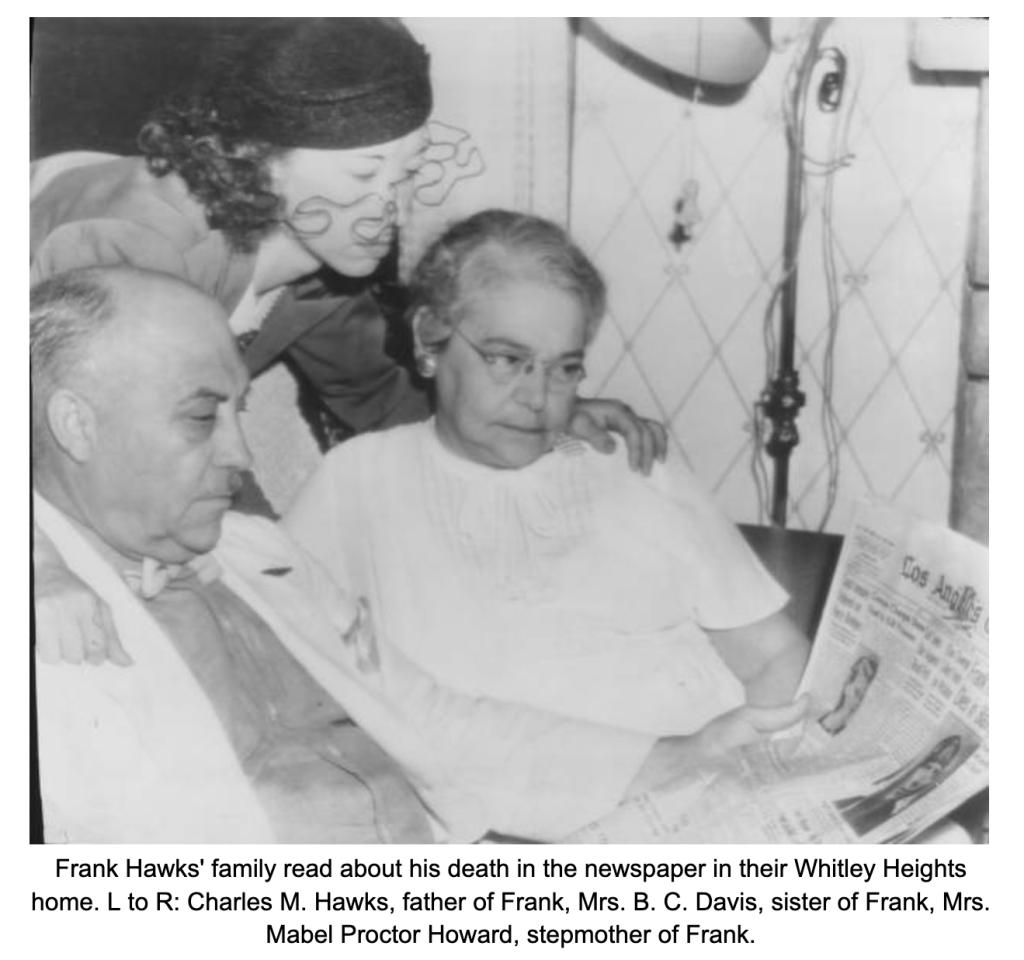
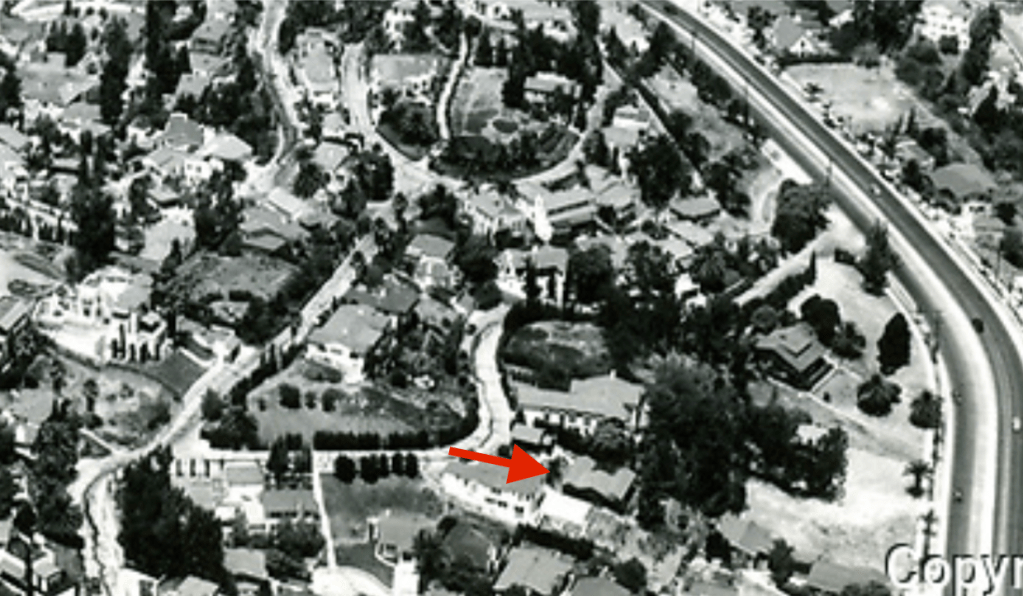
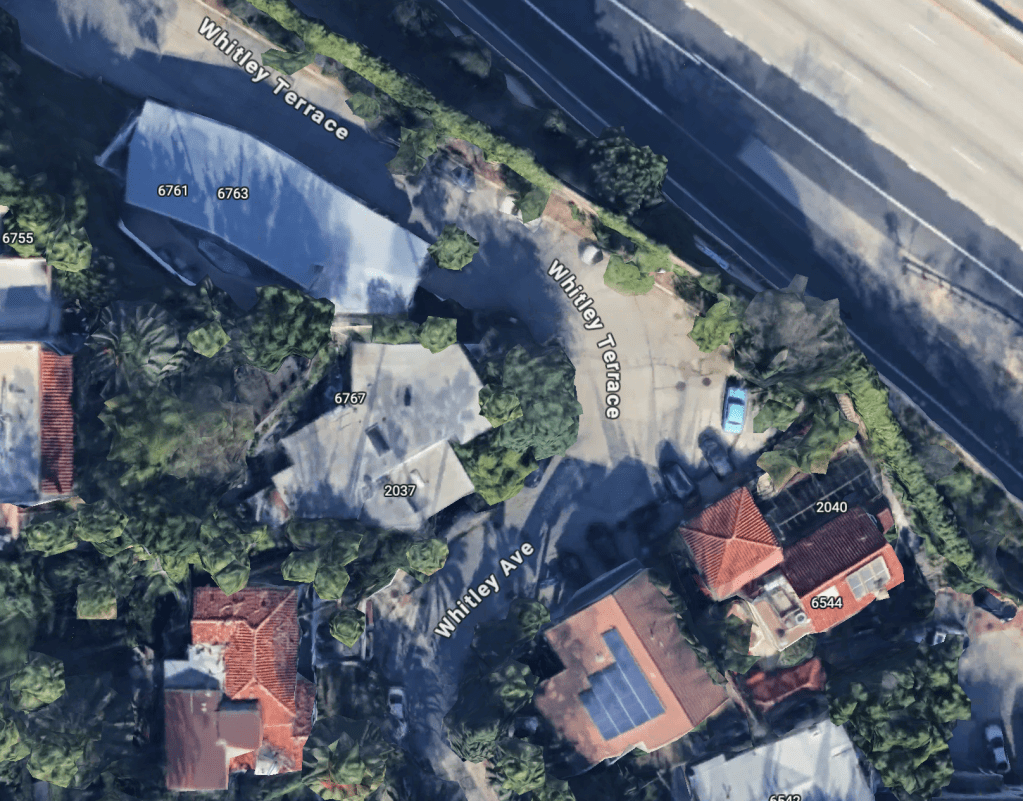
Above is 2060 Whitley Heights during the 1940s. The house was situated between 2050 and 2100 Whitley Avenue residences. Charles and Mabel were still living at 2060 Whitley Avenue when Mabel died in 1941. Shortly after, Charles sold the house and moved in with his daughter and her family. There is no record of the fate of this Whitley Heights house but it was most likely demolished in the early 1950s as it is in direct path of the Hollywood Freeway. Below is the area of Whitley Avenue which was demolished for the freeway.
 Whitley Heights 101
Leave a comment