1724-1728 Whitley Avenue
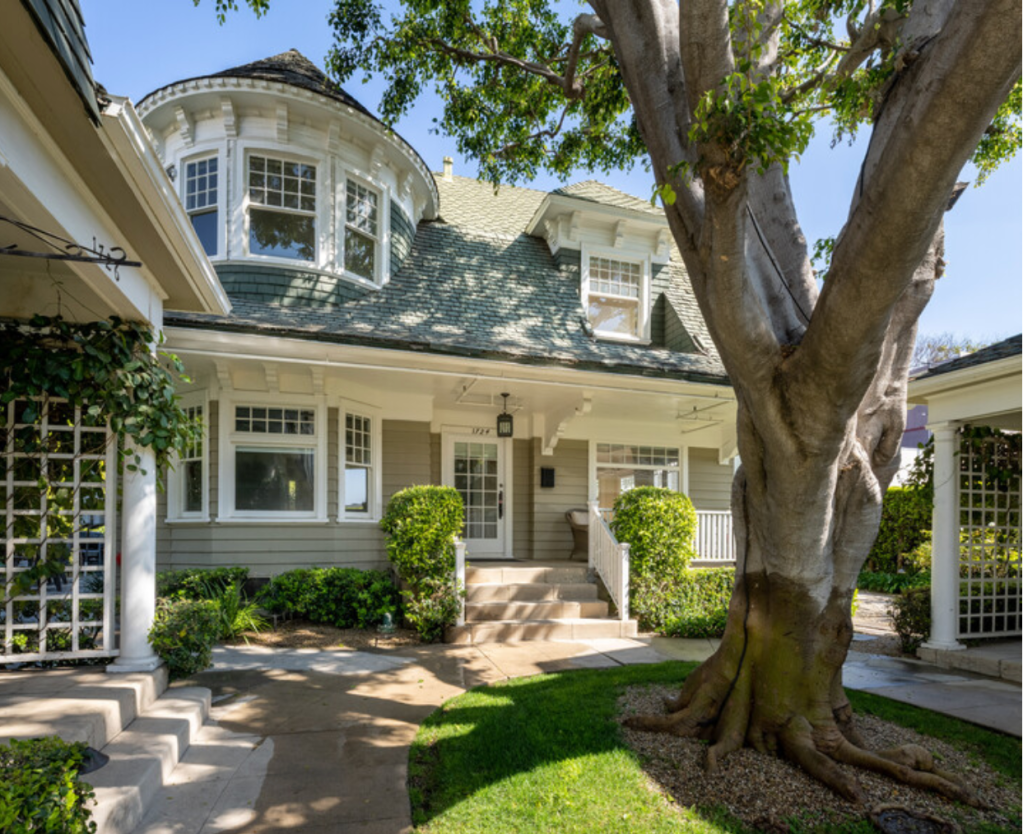
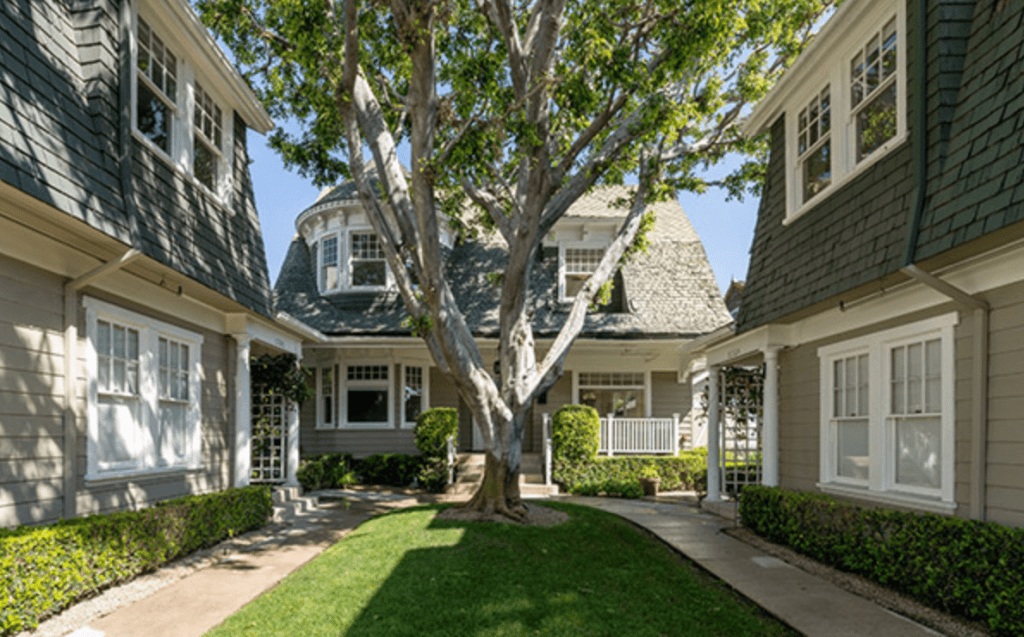
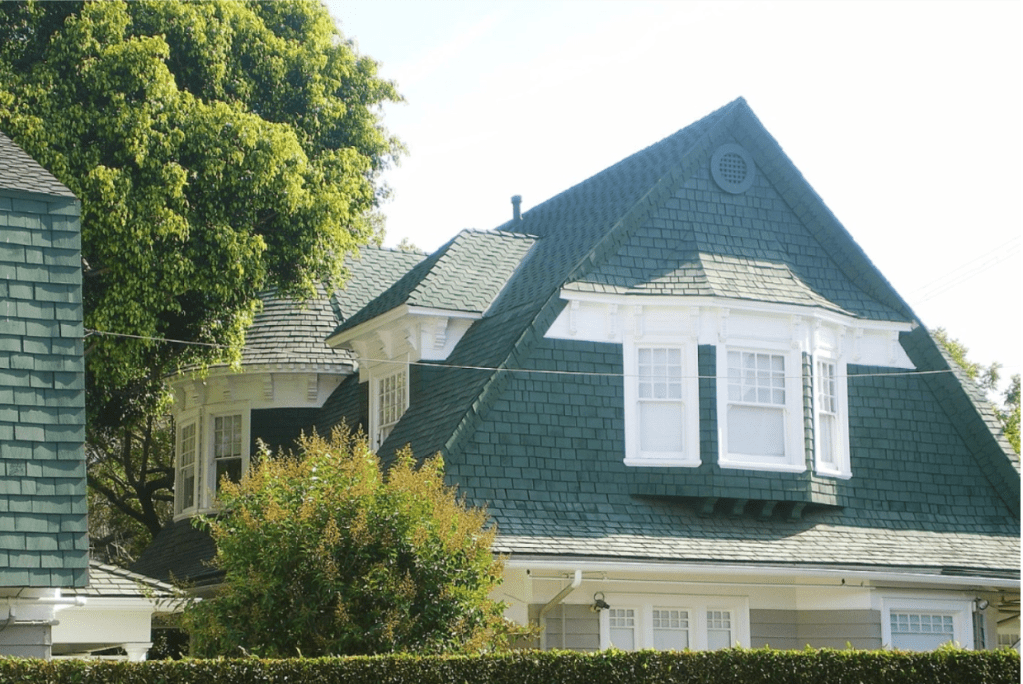
Down the hill from Whitley Heights, 75 feet from Hollywood Boulevard, there sits a Queen Anne style house which began to be built in 1903 and finished circa 1904. The house was moved to the back of the lot from the street in 1919 to build a courtyard. It was declared a historical residence in 1988 and is currently used as a commercial property.
In March of 1903, Miss Ellen McManus purchased lot 13 on Whitley Avenue for $1,600 and built the two story house consisting of three bedrooms and a deck on the second floor. The house took almost two years to be completely finished. By that time, she was ill and decided to move to Michigan selling the house to real estate man, Ezra Hansen by 1907. The house was given the street number of 124 Whitley Avenue by 1910 and then 1724 Whitley Avenue in 1913. Hanson sold the home to Richard Barnett in 1911 who built a garage on the property. He, in turn, sold it to a Canadian doctor named Frederick Old in 1913 who moved to a house in Hollywood Hills in April of 1919.
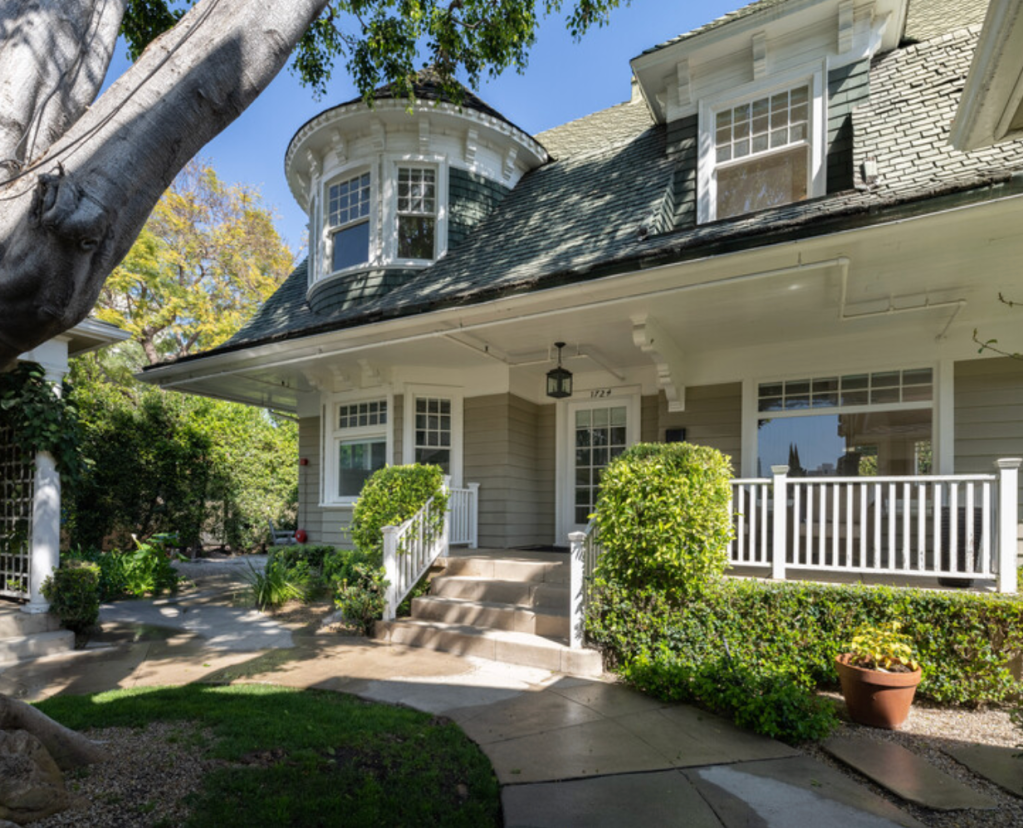
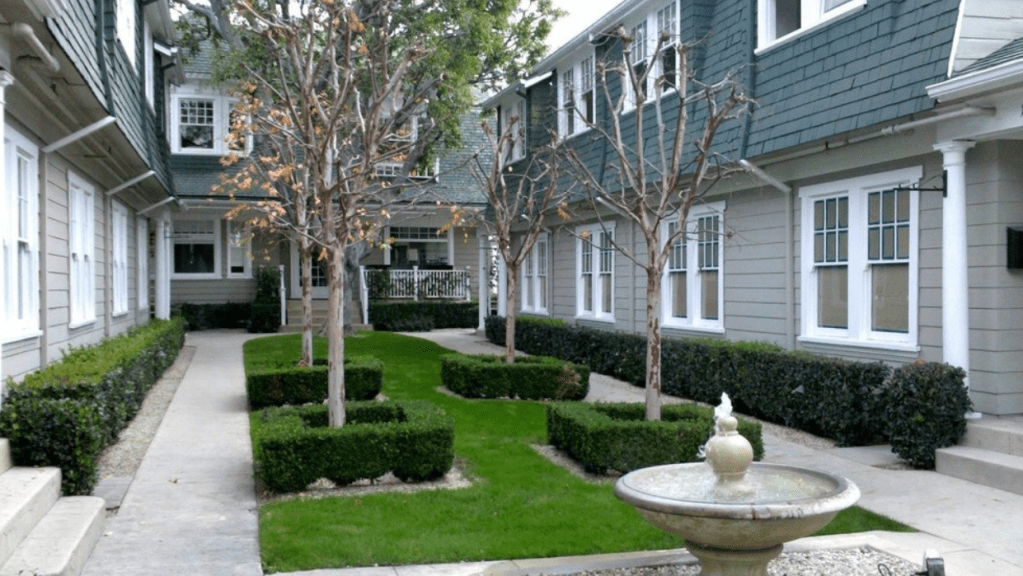
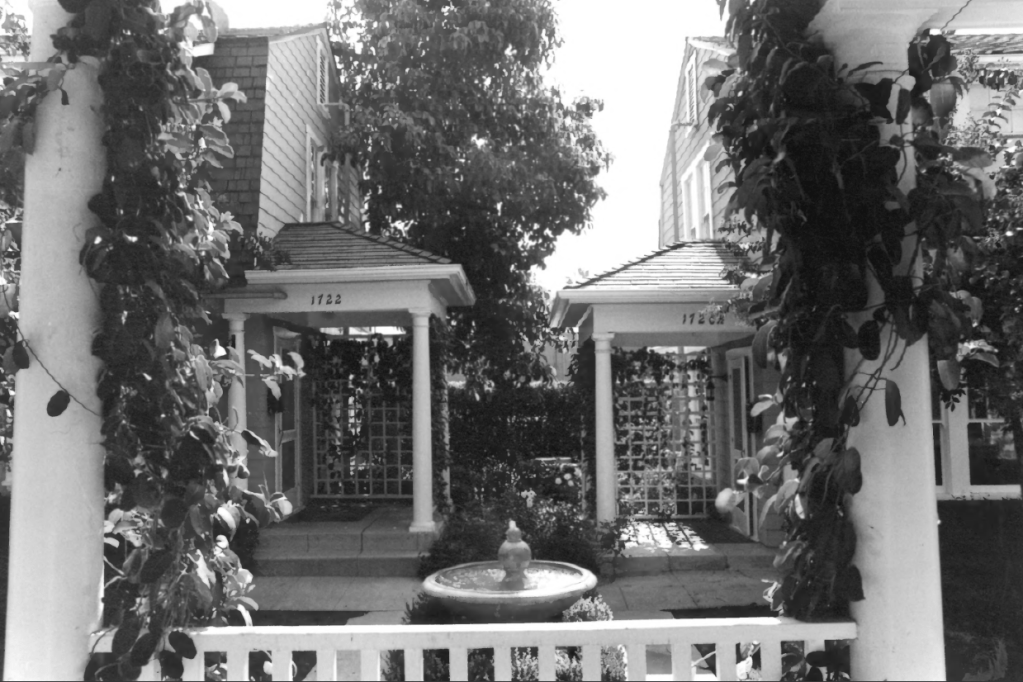
Old sold the property to widow Mary E. Davis in 1919 who attempted to sell the house to be. moved off of the land with no luck. Instead, Davis moved the house to the back of the lot (near Hudson Avenue) and built 4 2-story duplexes and created a courtyard into “Whitley Courtyard Apartments”. Each building was given it’s own Whitley Avenue address: 1720, 1722, 1724 (original house), 1726 and 1728. The property rented the units out from 1920 until 1974 when it switched over to commercial use.
With most historic buildings in Los Angeles, there comes along legends of the past. In this case, it was rumored that actress Theda Bara resided in one of the buildings during the 1920s and actress Sylvia Sidney during the 1930s.
Despite her image of being an Egyptian actress, Hollywood vamp Theda Bara was actually born Theodosia Goodman in Ohio in 1885. She moved to New York City to pursue an acting career and was first cast in “The Stain” (1914) and then hired as the lead as a vampire in “A Fool There Was” in 1915, a Hal Roach comedy.
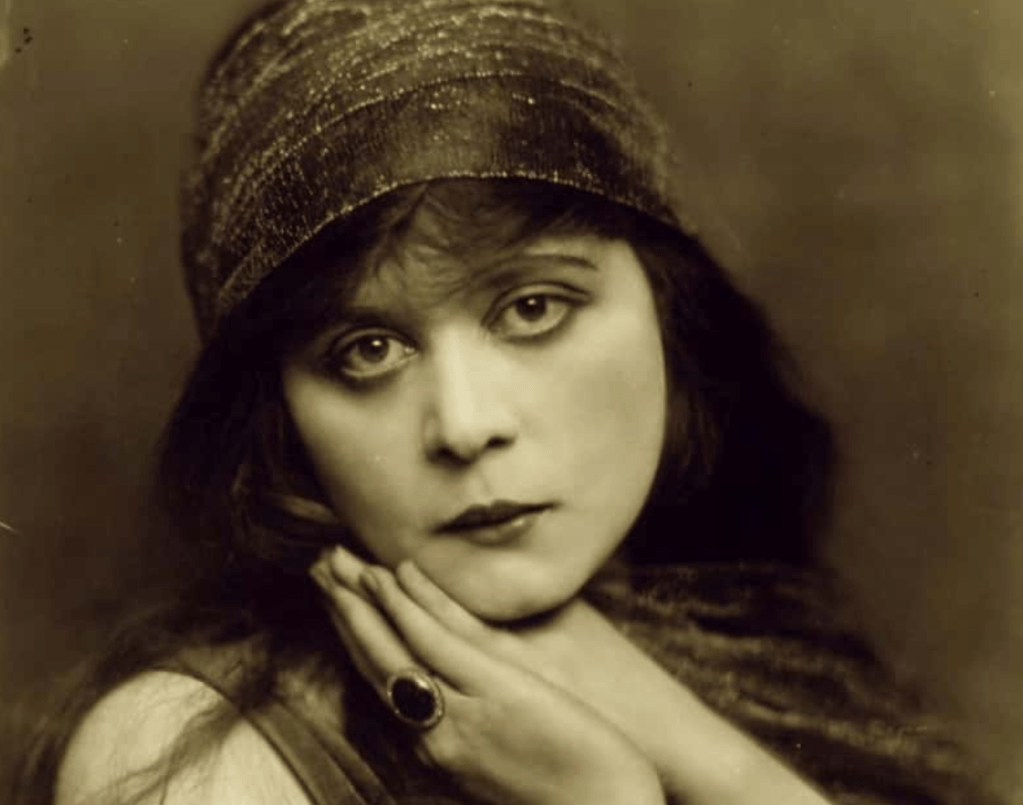
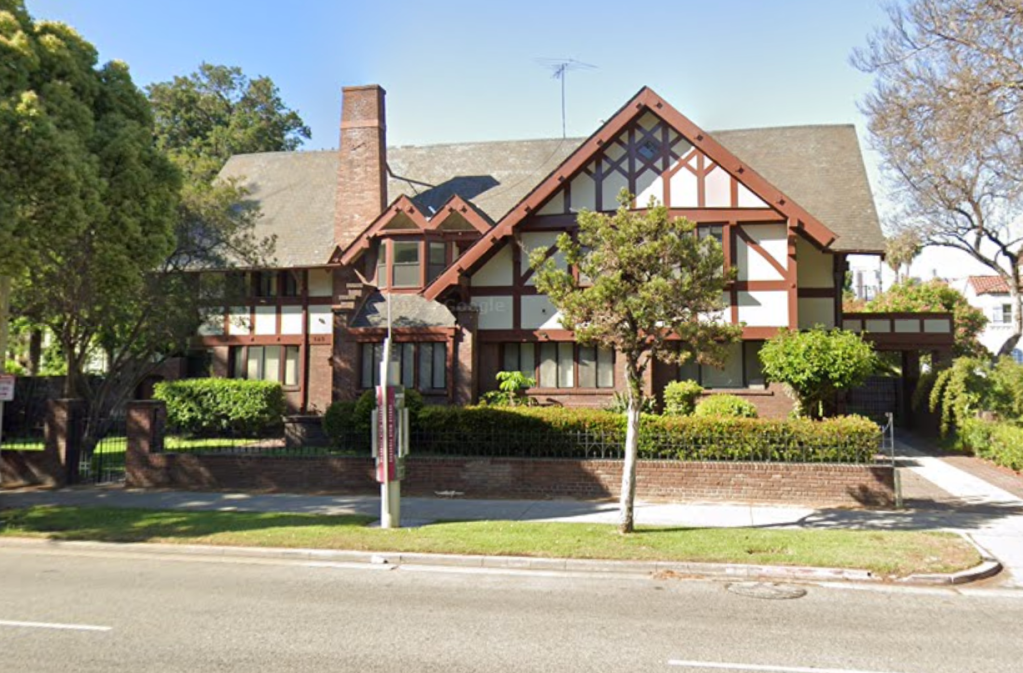
She then got a contract with Fox appearing in dozens of silent films including “Romeo and Juliet” before she was sent to Hollywood in June 1917 to film “Cleopatra”. Bara first rented 2445 S. Western Avenue in San Pedro (demolished). She then rented 649 W. Adams Avenue in February 1918 and moving out by the fall after she was robbed. The house was then leased to Roscoe “Fatty” Arbuckle who purchased the property in 1920.
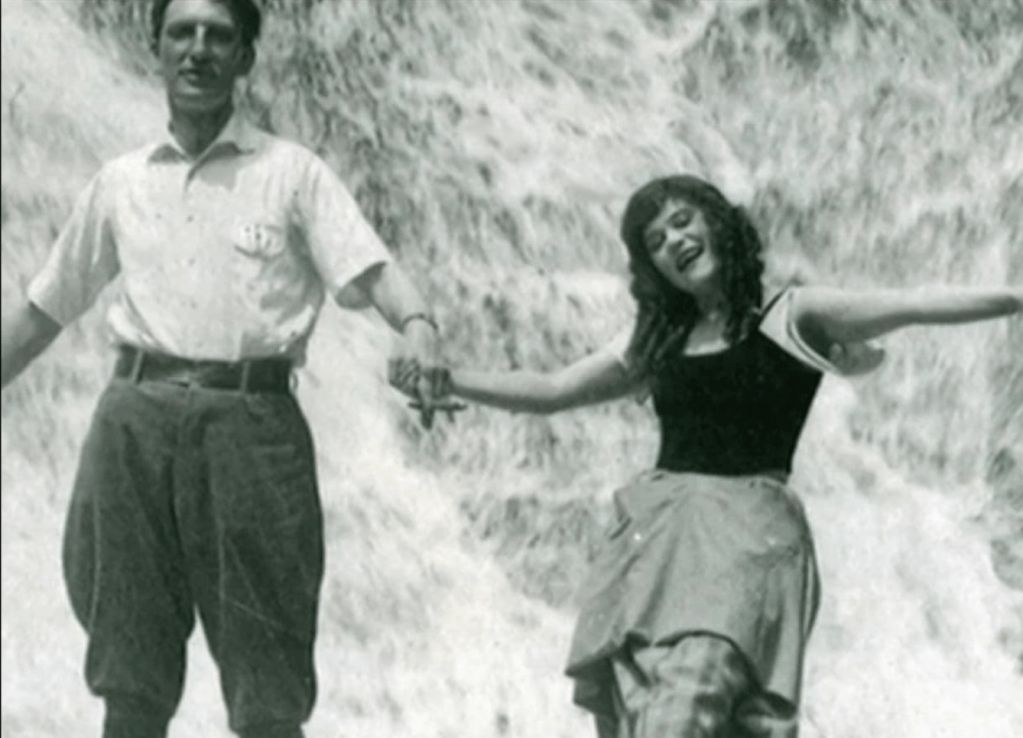
Bara left Los Angeles to film in New Orleans and then returned to New York City. She met director Charles Brabin on the set of “Kathleen Mavourneen” and they started an affair as Brabin was married. Below, Brabin and Bara on the set of “Kathleen Mavoureen” circa 1919. By the fall of 1920, rumors circulated that Brabin was getting a divorce and wanted to marry Bara. On July 2, 1921, they secretly married in Greenwich, CT before the press found out a week later. Just like that, Bara’s acting career was over.
The Brabins moved to 632 N. Alpine Drive in Beverly Hills around 1930 where Bara died of cancer in 1955. Brabin died two years later of a heart attack. The Beverly Hills home is still there. Did Bara live in Whitley Court Apartments during the 1920s? Not likely since she lived in New York City until she and her husband moved to Los Angeles in the late 1920s.
The other rumor-Sylvia Sidney lived at Whitley Court Apartments during the 1930s may be more likely although there is no documentation. Born Sophie Kosow in the Bronx in 1910, she took her step-father’s last name of Sydney after her parents divorced and mother remarried. Sidney began acting on the stage at the age of 17 after she was discovered by Paramount executive BP Schulberg in “Bad Girl” in 1930. Paramount hired Sidney to replace Clara Bow in “City Streets” with Gary Cooper as Bow needed a rest.
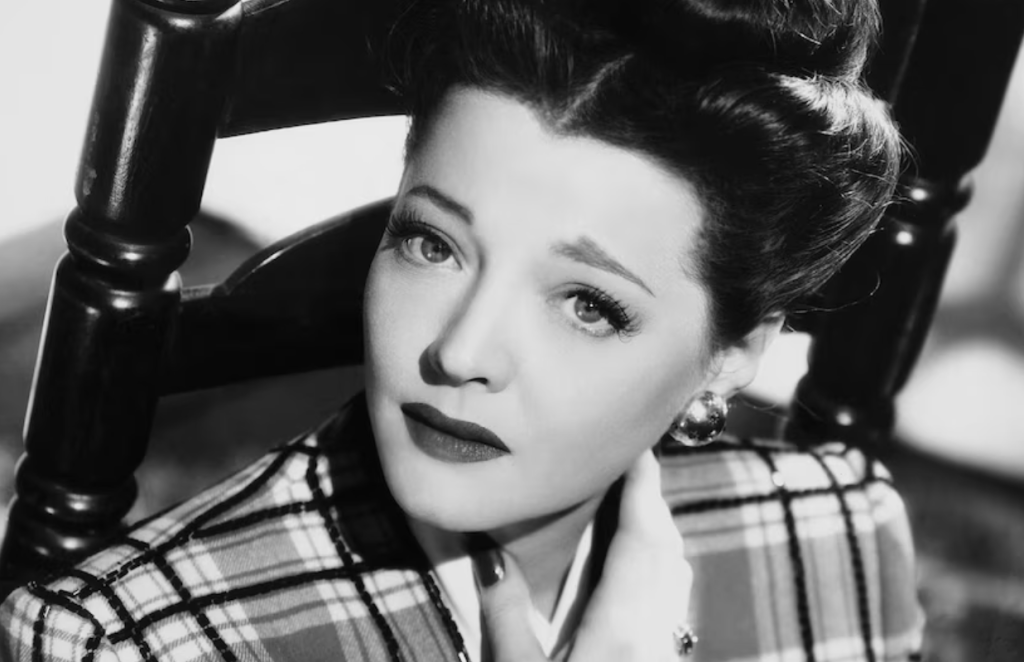
Paramount flew the new “It Girl” out to Hollywood and she may have stayed at the Whitley Court Apartments in January of 1931. However, the “It Girl” suddenly became the “Sad Girl” as she was mocked by other actresses and then type-cast into crying roles. Perhaps it was due to the fact that she was having an affair with Schulberg who was married and 18 years her senior. Sidney finally broke off the affair and became involved with publisher Bennett Cerf who she married in 1935. Three months later they separated and were divorced within a year.
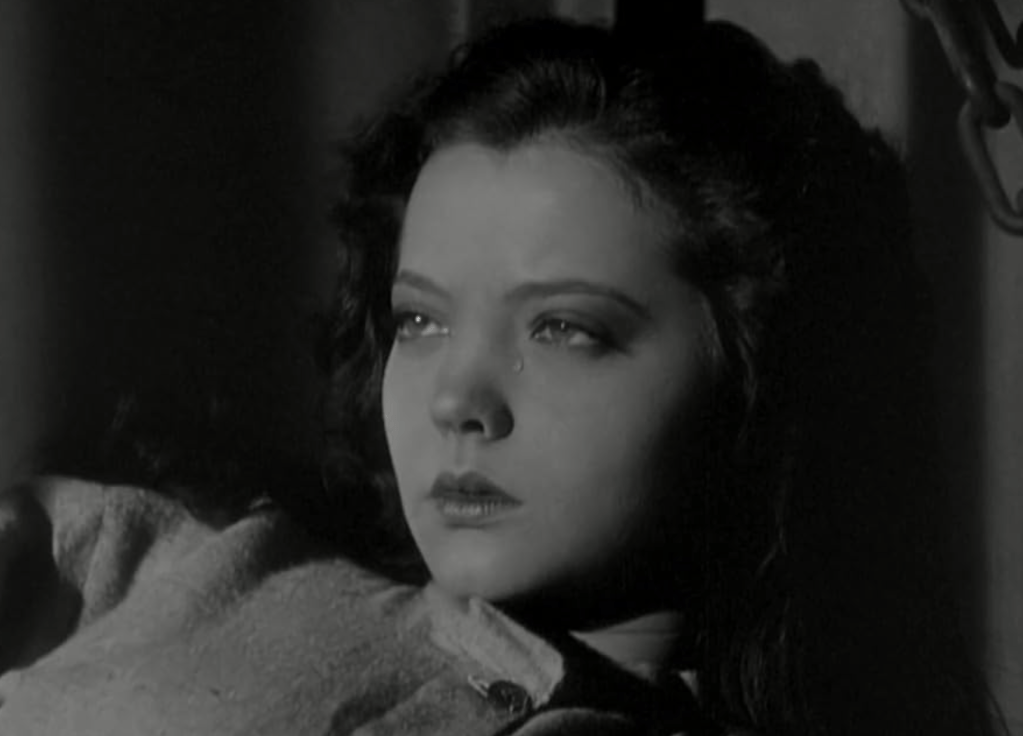
Three years later, Sidney married character actor Luther Adler and welcomed a son together in 1939. Sidney worked opposite actors Chester Morris (The Miracle Man), Frederic March (Merrily We Go to Hell, Good Dame), Cary Grant (Madame Butterfly, Thirty Day Princess), Henry Fonda (The Trail of the Lonesome Dove, You Only Live Once), Spencer Tracy (Fury) before working with Humphrey Bogart in “Dead End” in 1937. Rumor has it Bogart drank heavily on the set and gave her a hard time to the point that she was difficult to work with. Eventually was was labeled “box-office poison”. Her roles dwindled and so did her second marriage. The married and divorced again and was reduced to television appearances and small movie roles. Sidney worked up until her death in 1999.
Actor Donald Crisp (1882-1974) resided at 1720 Whitley Avenue in 1920. Crisp was a character actor who appeared in 167 film and television roles between 1908 and 1963 including playing Ulysses S. Grant in DW Griffith’s “The Birth of a Nation” in 1915 and was an extra in “Intolerance” in 1916. He also appeared in “Red Dust” starring Clark Gable and Jean Harlow in 1935, “Mutiny in the Bounty” starring Charles Laughton and Clark Gable in 1935, “Jezebel” starring Bette Davis in 1938, “Dr. Jekyl and Mr. Hyde” starring Spencer Tracy in 1942, “National Velvet” starring Mickey Rooney and Elizabeth Taylor in 1944, and “Spencer’s Mountain” starring Henry Fonda and Maureen O’Hara in 1946. Crisp had just separated from his wife and they were living at 6631 Odin Street in Whitley Heights in 1920.
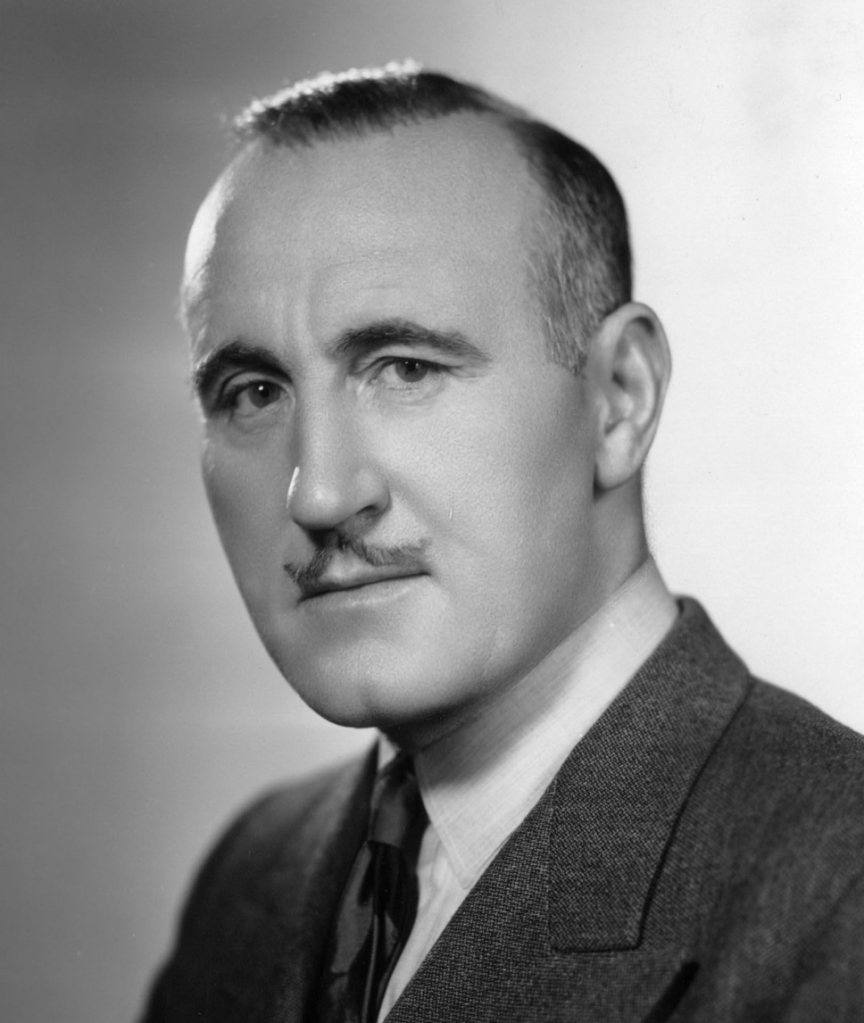
Silent film producer Herbert Horkheimer was residing with his wife at 1720 Whitley Avenue were he died in 1962. Horkheimer and his brother, E.D. Horkheimer founded Balboa Amusement Producing Company in Long Beach in a small factory building in 1911 before they ceased operations which expanded 4 blocks in 1918. Producing over 1,000 films in 8 years, some notable film starts such as Buster Keaton, Charlie Chaplin, Fatty Arbuckle, and Baby Marie Osbourne “Little Sunshine” series. Below, Horkheimer with Charlie Chaplin.
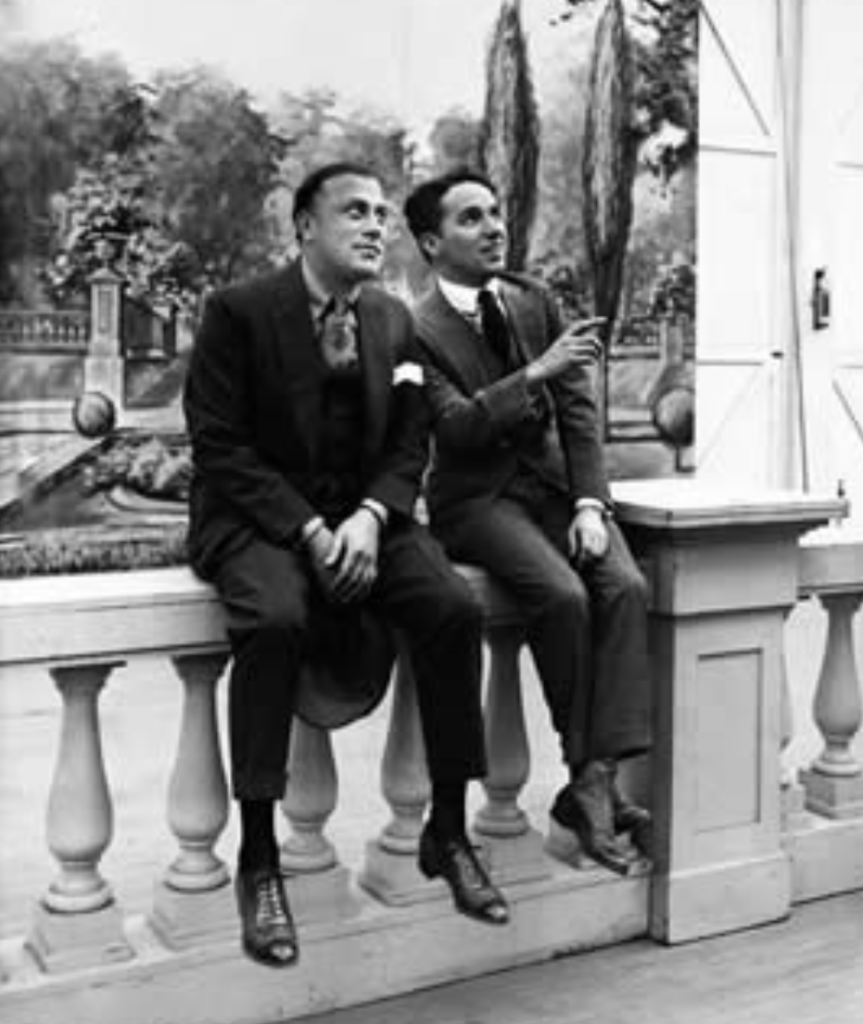
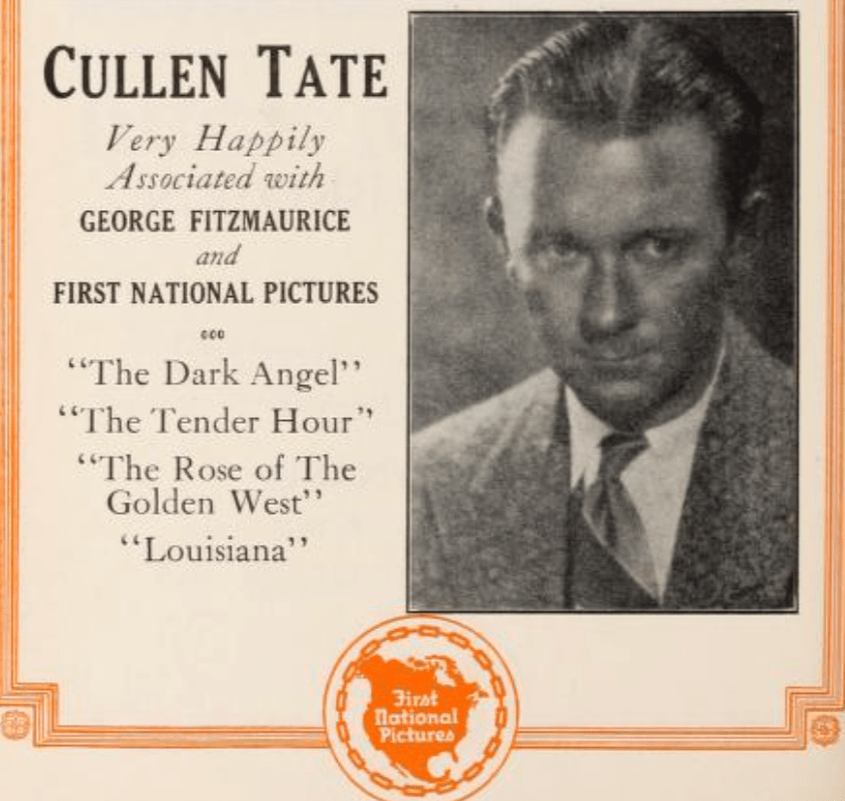
Director Cullen Tate (1896-1947) resided at 1722 Whitley Avenue in 1922. Tate, who was nominated for Best Assistant Director for “Cleopatra” in 1935, also assisted Cecil DeMille in “The Little American” starring Mary Pickford in 1917 and with James Cruze in both”The Valley of the Giants” and “The Lottery Man” starring Wallace Reid in 1919. Tate also assisted DeMille in several other films including; “The Ten Commandments” in 1923. In 1931, he assisted director George Fitzmaurice in “Mata Hari” starring Greta Garbo and “As You Desire Me” also starring Garbo in 1932. The following year, he assisted George Cukor in “Dinner at Eight” and his last film, “Road to Morocco” in 1942 starred Bing Crosby and Bob Hope.
Between 1937 and 1938, British actress Connie Leon (1881-1955) resided at 1722 Whitley Avenue. Leon has 54 credits between 1934 and 1949 including; “Clive of India” starring Ronald Colman (1935), “The Adventures of Robin Hood” starring Errol Flynn (1938), “Mrs. Miniver” starring Greer Garson (1942), “Sweet Rosie O’Grady” starring Betty Grable (1943), and “Love Letters” starring Jennifer Jones (1945).
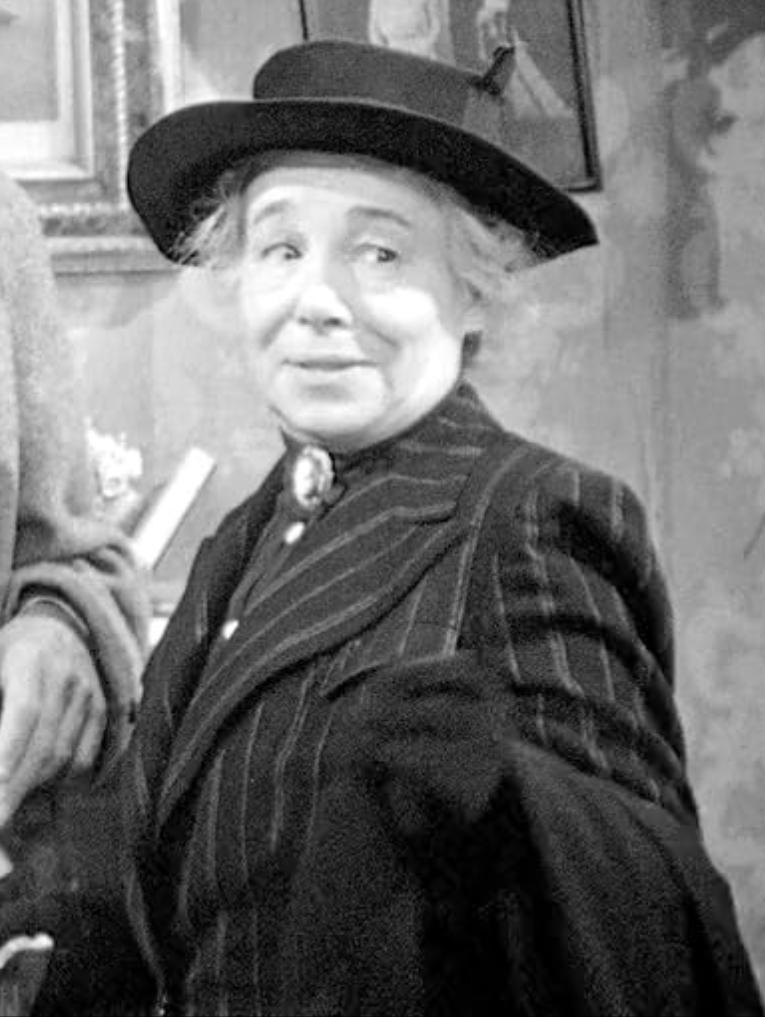
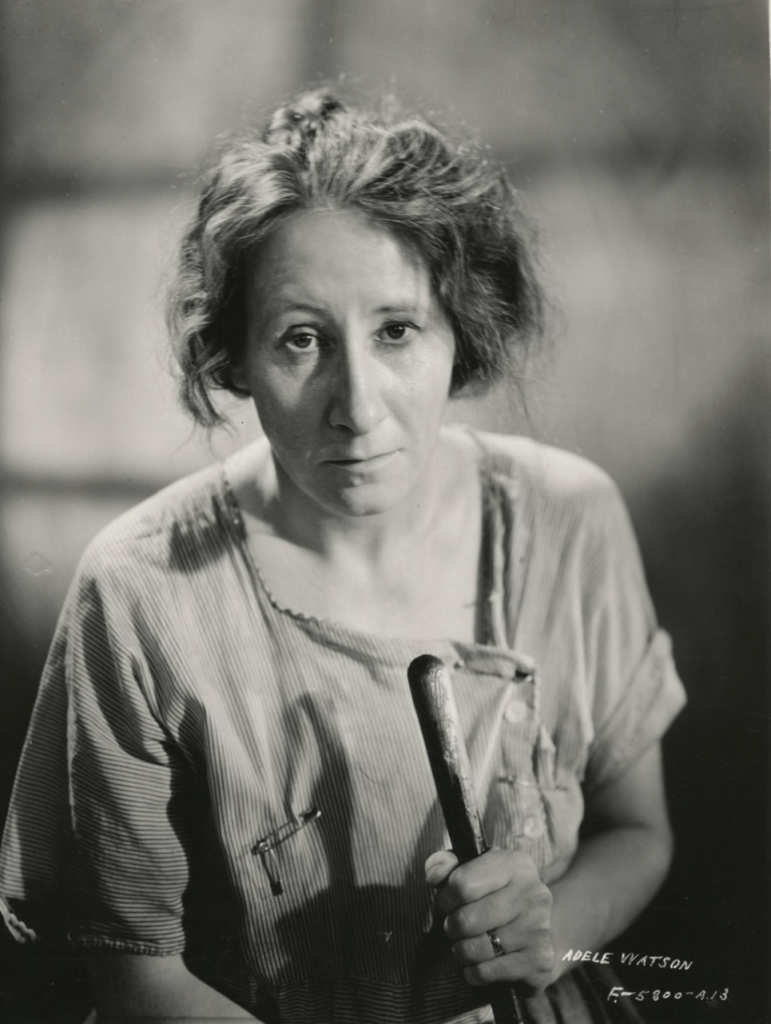
Actress Adele Watson (1890-1933) resided at 1724 Whitley Avenue (original house) in 1924. Watson had 33 credits between 1922 and 1933 including her first film, “The Lying Truth” starring Noah Beery. Others included; “Beyond the Rocks” starring Gloria Swanson (1922), “Don’t Doubt Your Husband” starring Viola Dana (1924), “The Tower of Lies” starring Norma Sheerer (1925), “Public Enemy” starring James Cagney and Jean Harlow (1931), and “Street Scene” starring Sylvia Sidney (1931). (A Sylvia Sidney connection).
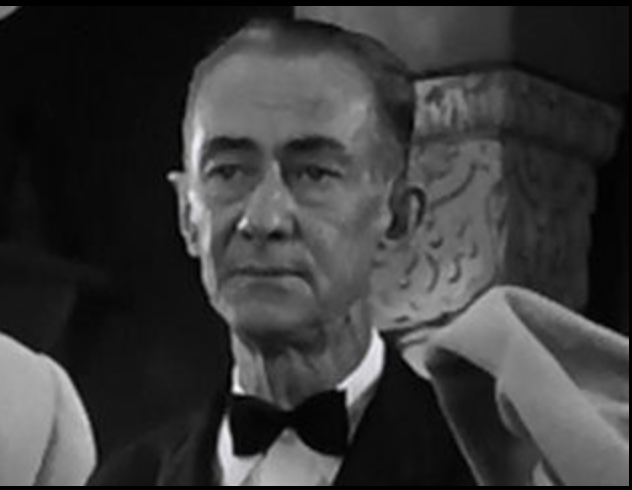
Actor Jack Wise (1888-1954) also lived in the original home in 1930. This character actor made over 185 appearances between 1925 and his death in 1954. He made his way into some notable films such as “Casablanca” in 1942 and “House of Wax” in 1953, but filmed mostly “B” films.
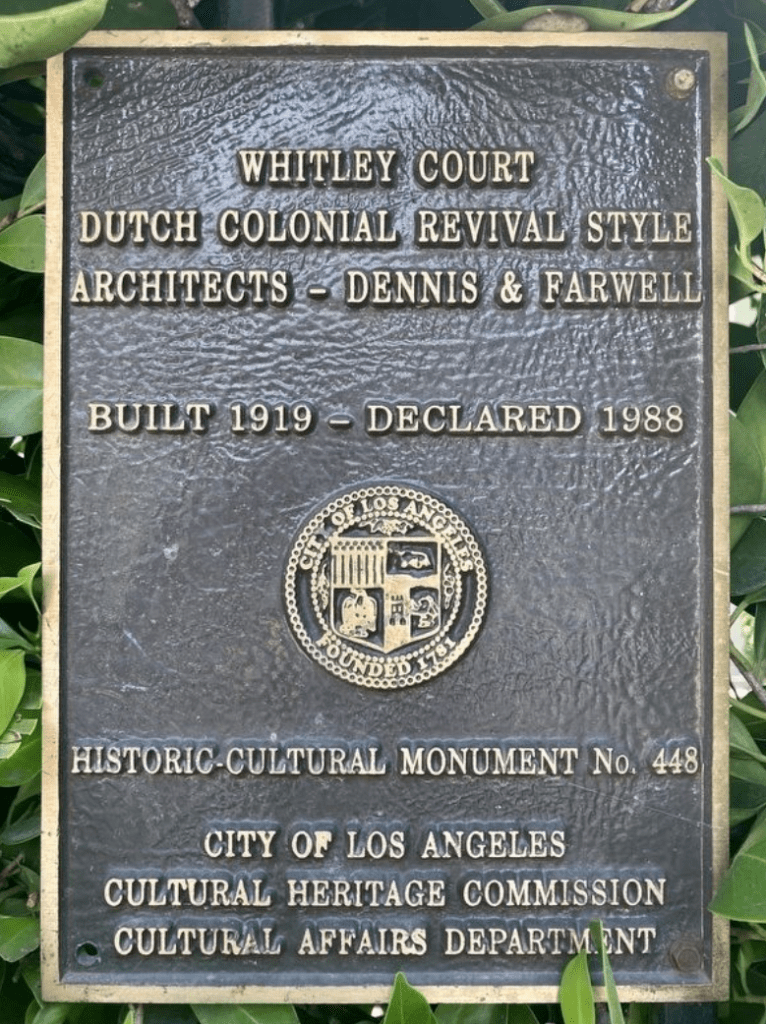
In 1974 Whitley Courts Apartments were converted into both residential and office spaces. Whitley Court was designated a Historic Cultural Monument (HCM #448) by the Los Angeles Cultural Heritage Commission in 1988, and was listed in the National Register of Historic Places in 2004. During the 1992 riots, fires were burning close to the property and residents protected the structures with hoses, saving them. At the time, one of the owners said, “These buildings are important. You can’t replace a historic building. When it burns, you lose it forever.” So true, even when buildings are demolished purposely for newer ones!
 Whitley Heights 101
Leave a comment