1833-1835 Grace Avenue
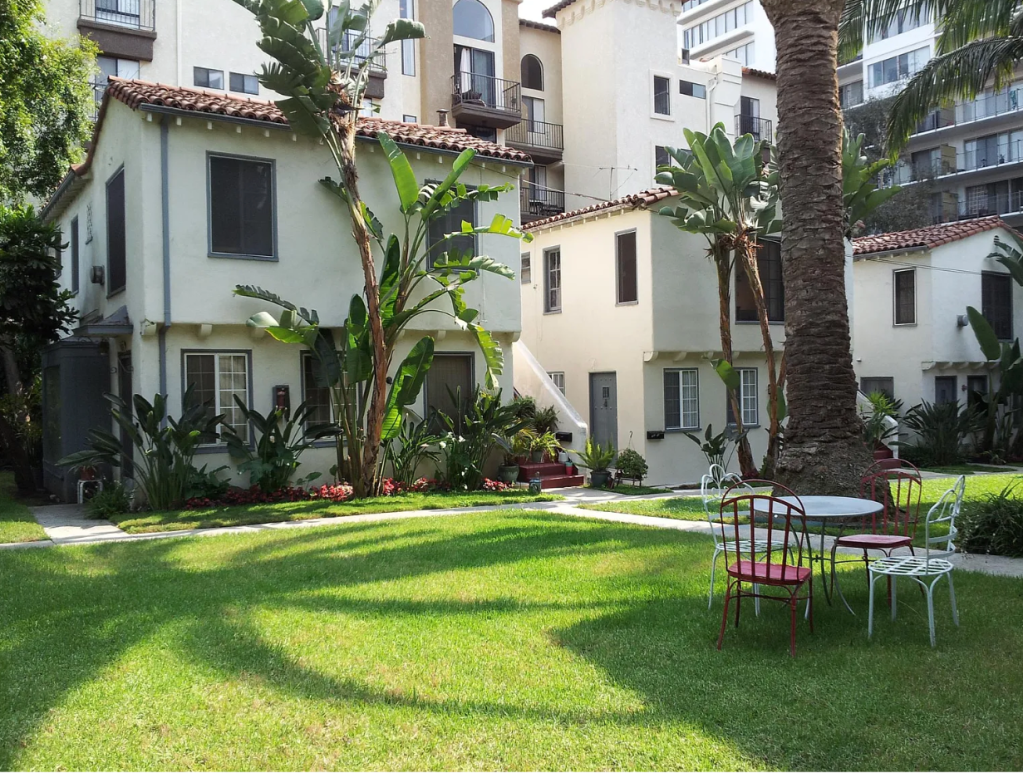
In 1927, Douglas and Martha Burkman hired architect Henry B. Pentland, who designed Linda Vista Court on Cahuenga Blvd. in Whitley Heights to design a small apartment complex on Grace Avenue. Pentland would die of typhoid fever in Mexico in 1932. Four duplexes (1833-1835 Grace Avenue) were constructed to create a courtyard atmosphere on Grace Avenue near the intersection of Franklin Avenue across the street from the famed El Cabrillo Apartments.
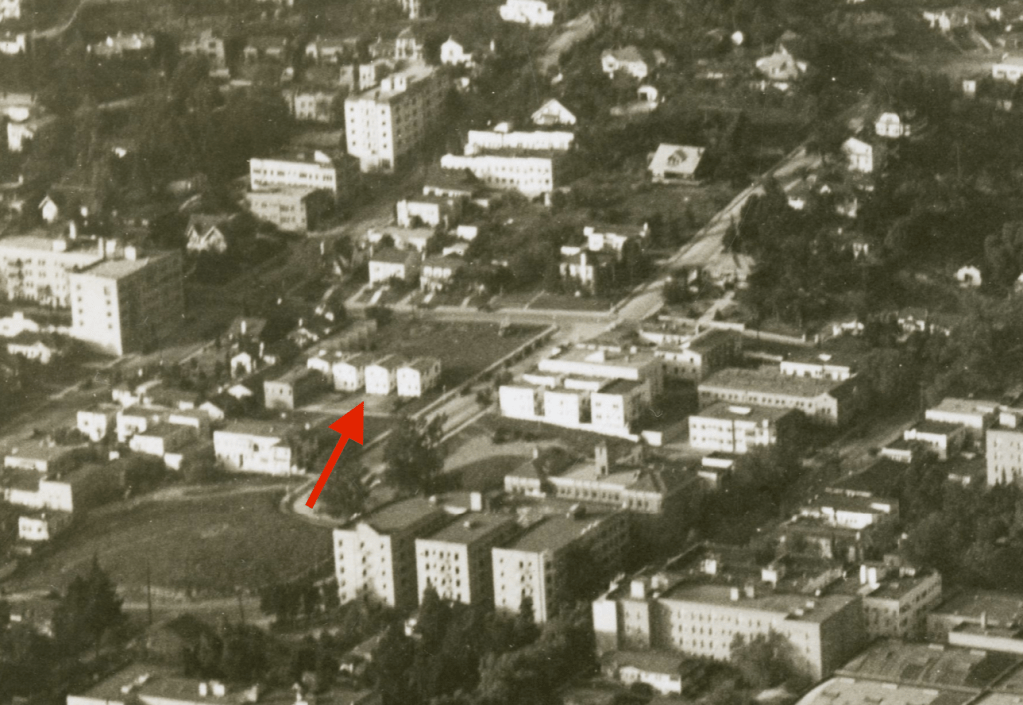
The Burkman’s also built 2008 Whitley Avenue in 1925 and Pentland was also responsible for designing that house. The Burkman’s moved out of that house and sold the property to actress Dorothy Devore in 1927. As they were building these duplexes, they were in litigation with Devour who sued them for selling a house with a leaking roof. The Burkman’s offered to buy the property back from Devore, but the court’s did not find them guilty of fraud and Devore was forced to keep the property. The Burkmans lived in one of these units after they were built for several years, renting the other three out.
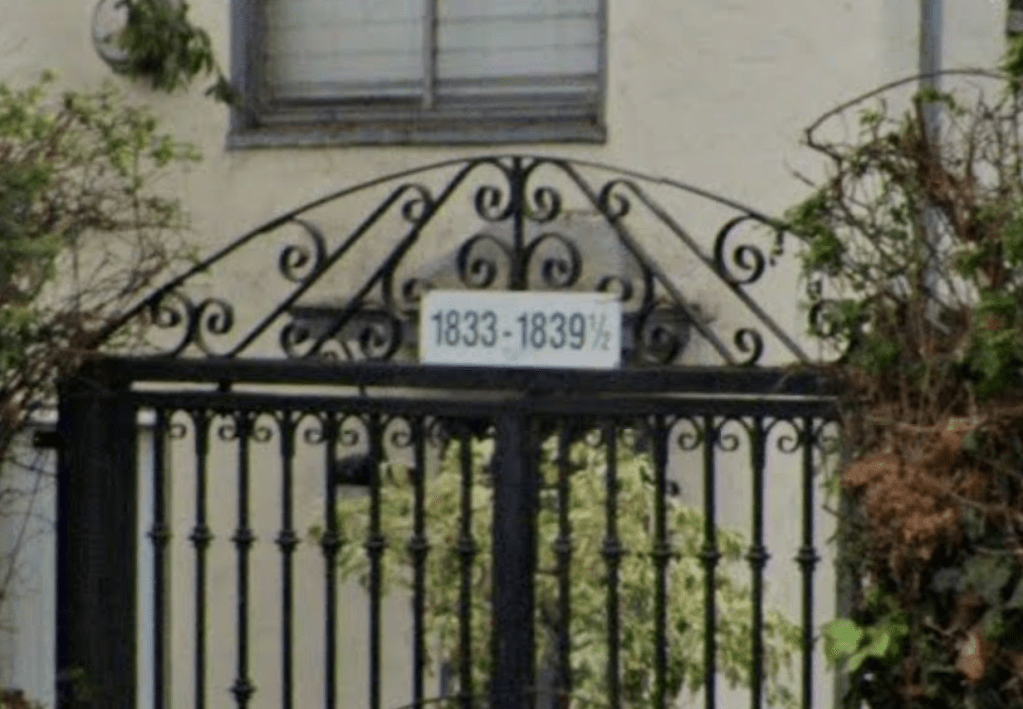
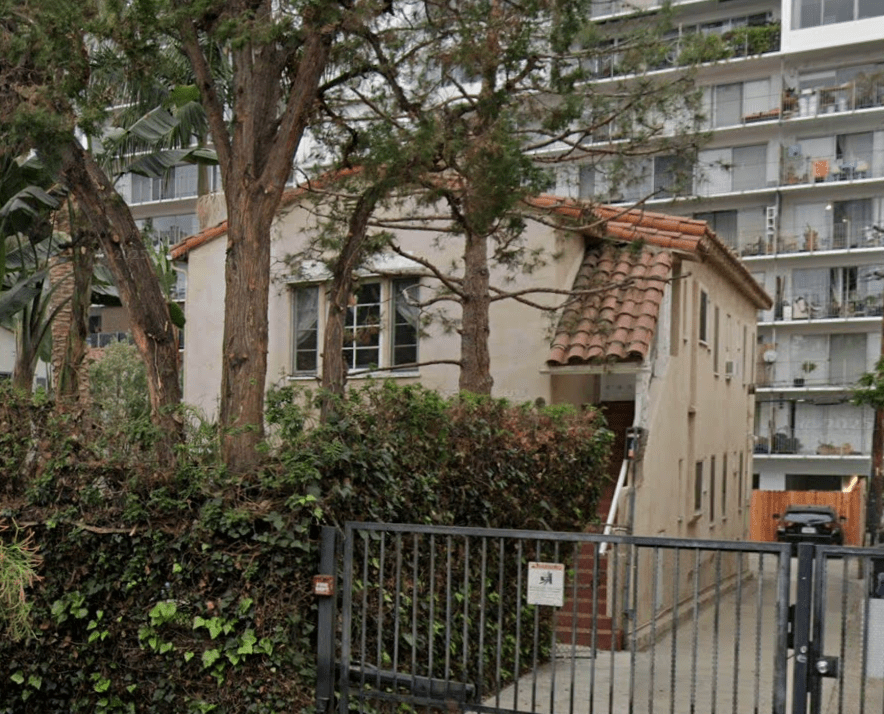
Actor Allen Connor rented one of the units with his mother, Maud, in the early 1930s and eventually, Allen and Maud bought the units and added another building-a 2 story, 4 unit dwelling that they had built in 1937 (1837-1839 Grace Avenue). Maud died in 1948 and Allen continued to own this complex until his death in 1967.
Connor was a movie actor who then worked on the stage. Connor had 23 film credits between 1920 to 1940 and were mostly minor roles. He appeared in “The Life of the Party” starring Roscoe ‘Fatty’ Arbuckle in 1920, was the lead in the short film of Alexander Hamilton in 1924, worked with Warner Baxter and Noah Beery in “Linda” in 1929, was a ticket taker in “Bottoms Up” starring Spencer Tracy in 1934 and appeared on “Union Pacific” which was directed by Cecil De Mille and starred Barbara Stanwyck in 1939. Connor starred on two films on Broadway during the 1930s. Connor was also De Mille’s assistant and worked as a cameraman at Fox Studios.
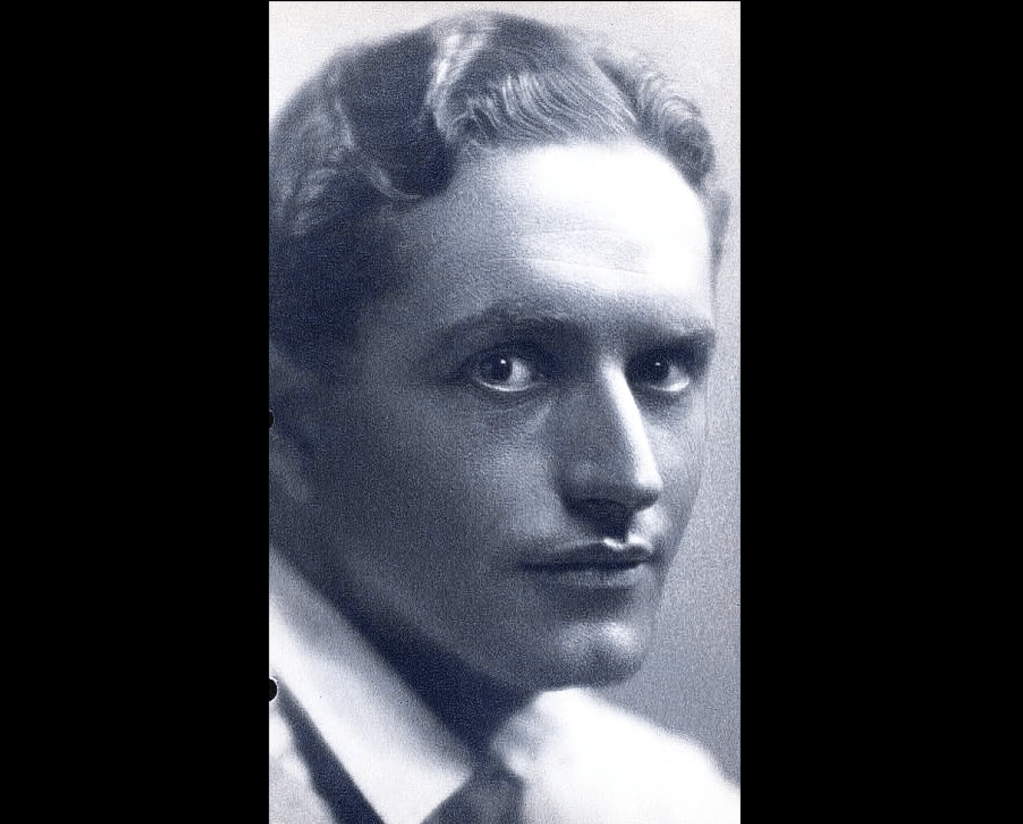
Actor Charles Morton, born Carl Mudge ((1908-1966) was living at 1835 Grace Avenue in February of 1928 when his wife, who he had secretly married, threw a pot of boiling water in his face and he was rushed to the hospital. The 20 year old first told police that it was deliberate, then later switched the story to it being accidental.
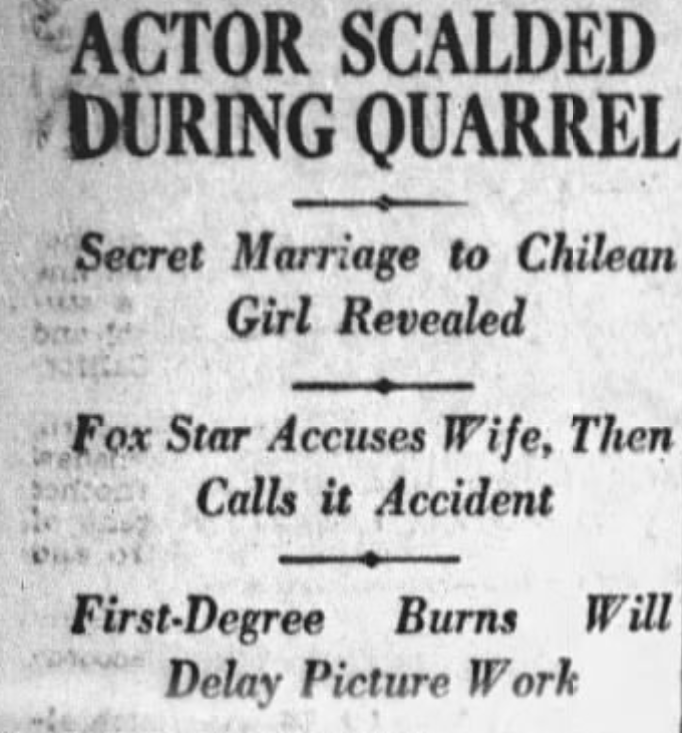
Either way, the movie studio found out about the incident and Morton slowed down production of “Four Devils” starring Janet Gaynor. Morton had secretly married a wealthy Chilean girl named Lola Medona a year prior but did not tell anyone because he was only 19 years old when he married and at that time, he was not legally allowed to get married. In November of 1928, Medona filed for divorce so Morton responded to the filing with “I was underage at the time of the marriage, so I want an annulment”. The courts consented to the annulment in June of 1929, but interestingly the two continued to live with one another at the El Captain Apartments in 1930. In May of 1929, Morton got arrested for drunk driving.
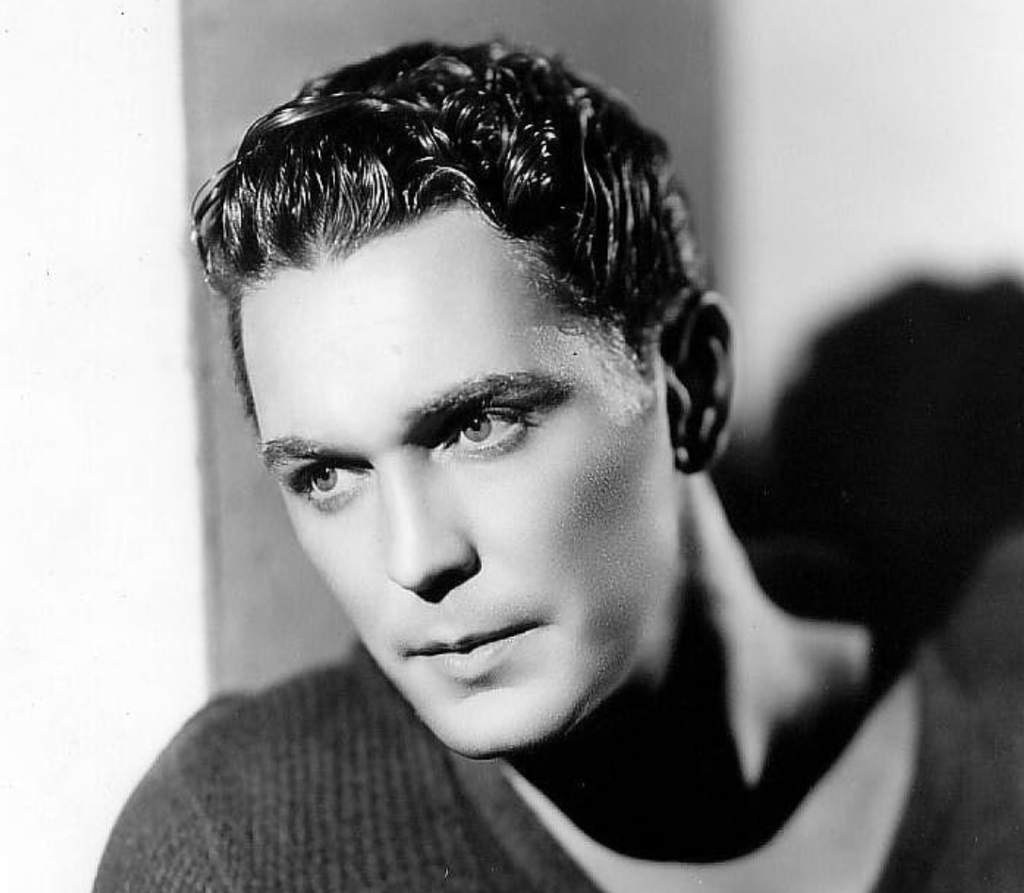
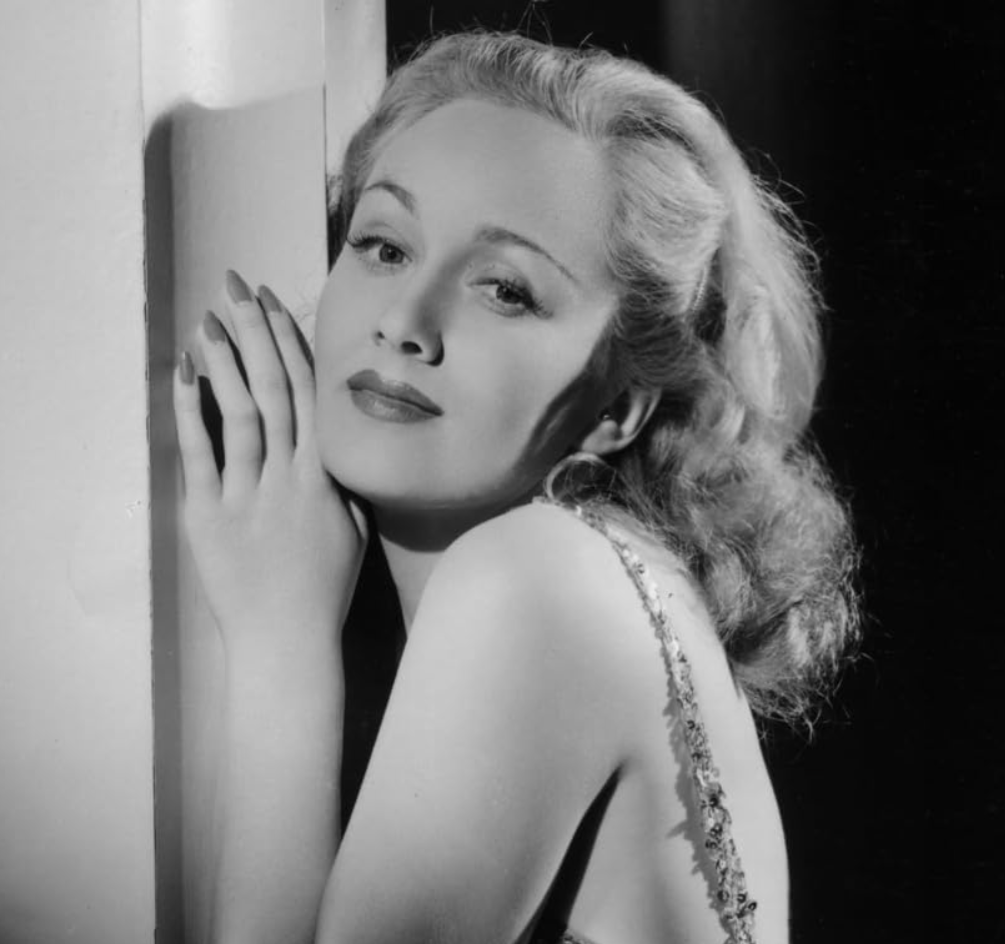
Morton was 19 year old when he got a contract at Fox and was in demand for his handsome charm and athletic build. He worked opposite actresses Mary Astor and Janet Gaynor, but by 1930, his parts dwindled to minor roles. However, work was steady as had over 250 credits in film and television until his death in 1966. Morton married and divorced twice more, including to a German actress named Lya Lys for a year because she was pregnant with his child. Lys’s thick accent prevented her from advancing her career with the invention of sound pictures.
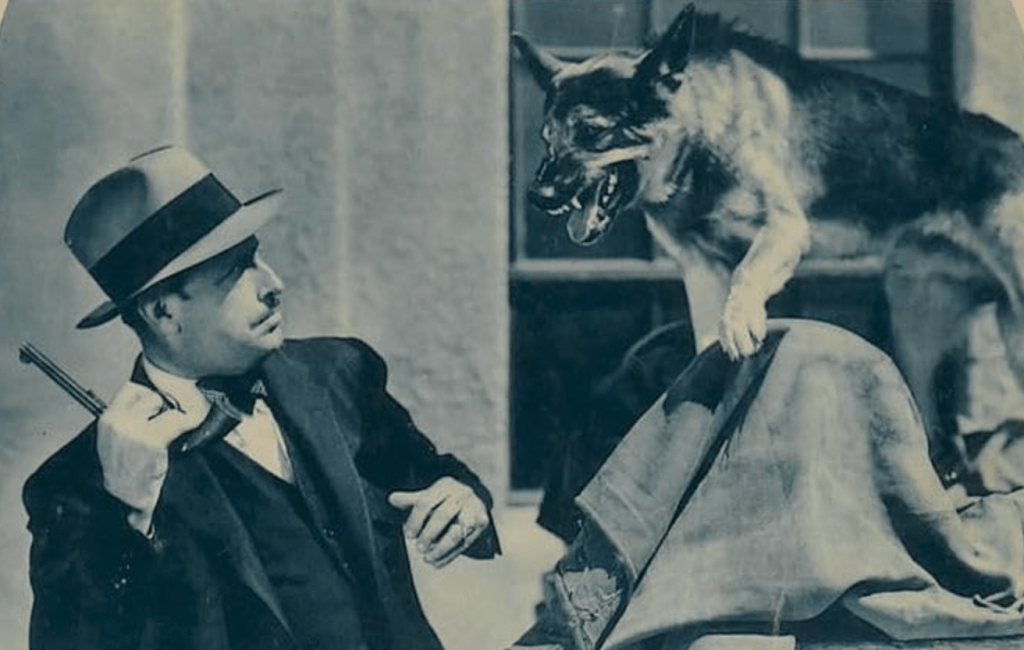
Actor Gordon De Main (1886-1954) resided in the Grace Avenue complex in 1930. A character actor with over 100 roles since 1914, De Main appeared on “Mata Hari” starrign Greta Garbo in 1931 and “The Three Musketeers” in 1933. De Main was married to silent screen actress Octavia Handworth who had over 60 credits between 1910 to 1921. Handworth worked alongside Anna Q Nilsson on several of her films. Handworth was married to director Harry Handworth who died in 1916. She worked on “The Toll of Mamon” in 1914 in which her husband directed and she co-starred with her future husband, Gordon De Main. Below, De Main is featured with Rin-Tin-Tin in “Wolf Dog” in 1933.
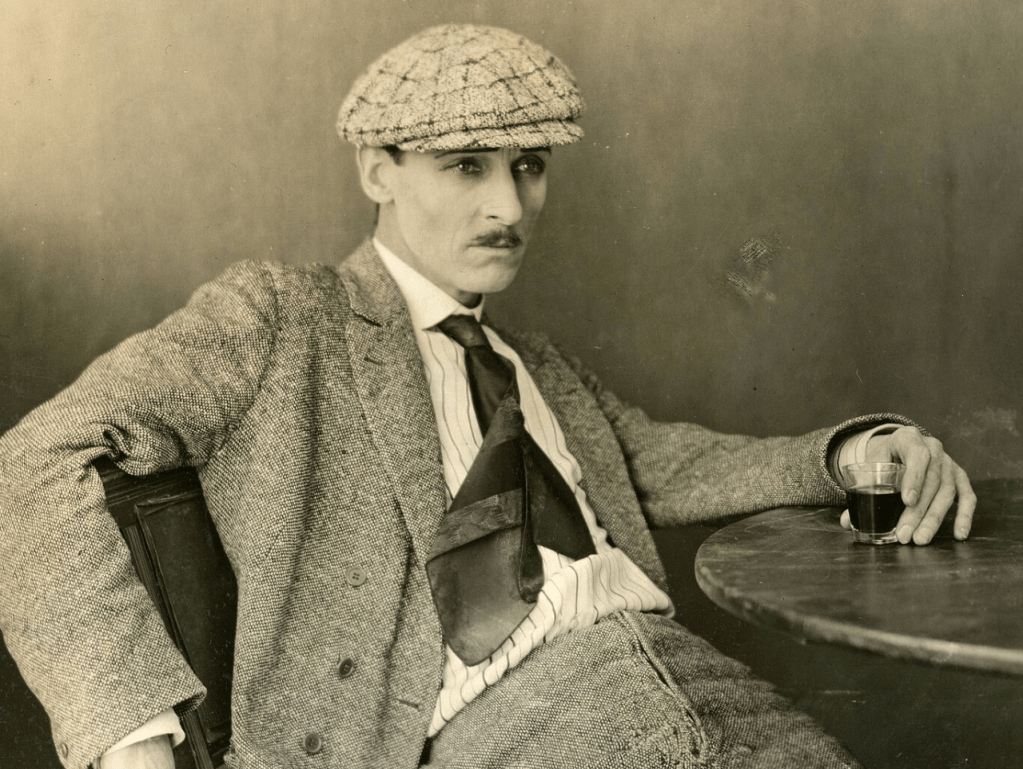
Actor John Monte Dumont, born George McNamara, resided in this complex from 1938 to his death in 1959. Born in New Orleans, in 1879, he began his acting career in 1919 and it ended in 1921. His first role was in “The Miracle Man” starring Thomas Meighan, Betty Compson, and Lon Chaney. He also appeared in films starring Ethel Clayton, Mary Miles Minter, Wallace Reid, and Roscoe “Fatty” Arbuckle. Dumont also claimed to be a writer.
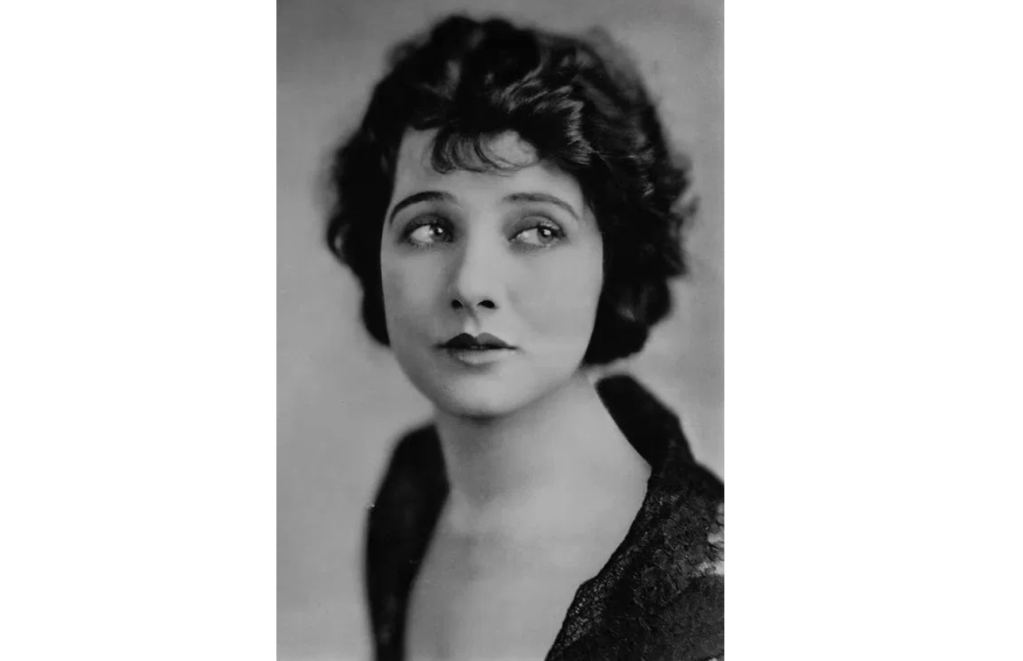
Several accounts have actress Betty Blythe residing at 1835 1/2 Grace Avenue sometime after her husband’s death in 1954. When Betty married director Paul Scardon, she was 27 years old and he was 45 years old. Born Elizabeth Blythe Slaughter in Los Angeles in 1893, Betty grew up by a widowed mother since her father died when she was only two years old. Betty was the youngest of three daughters; her oldest sister, Blythe was nine years older, and Abagal was eight years older. The family resided in a house located at 709 W. 8th Street in downtown Los Angeles and her mother, Kate, rented out 5 of the the rooms to boarders for income in exchange for light housekeeping, electricity and use of the gas range. A decade later, Abagal, 24, was listed as head of house working as a secretary for a lumber company, while Kate worked in a hospital as a nurse and Betty, now 17, was attending high school.
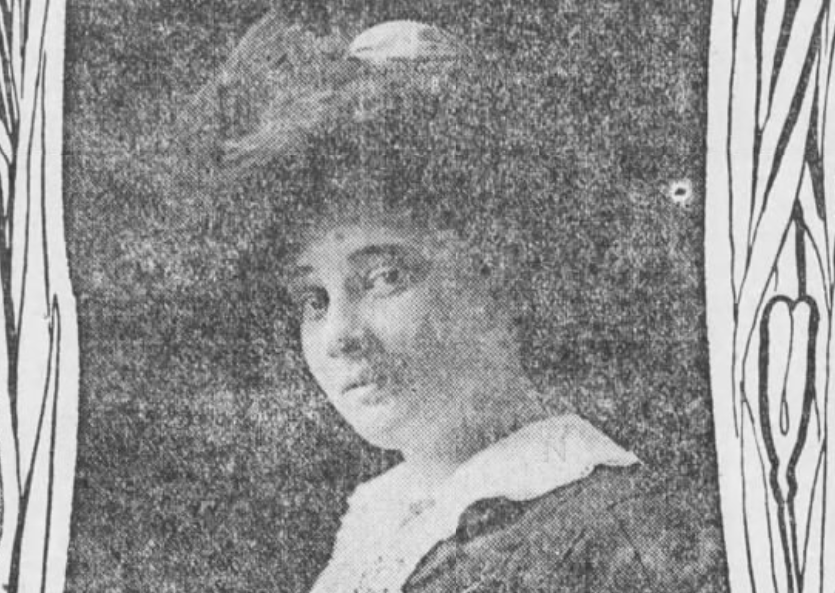
After she graduated from Westlake School for Girls, she spent a year abroad studying music in Paris. She returned to Los Angeles and attended USC where she became a member of the Sigma Phi Epsilon sorority in 1911. In 1914, after shortening her name to “Betty Blythe”, she deputed in a show at the Pantages Theater. She was a hit; Vitagraph offered her a contract-their answer to the new vamp as Theda Bara was becoming old news. Like Bara, Betty had no problem wearing provocative customes on the sets. Her mother died in 1915 at the age of 56 making her a 25 year old orphan.
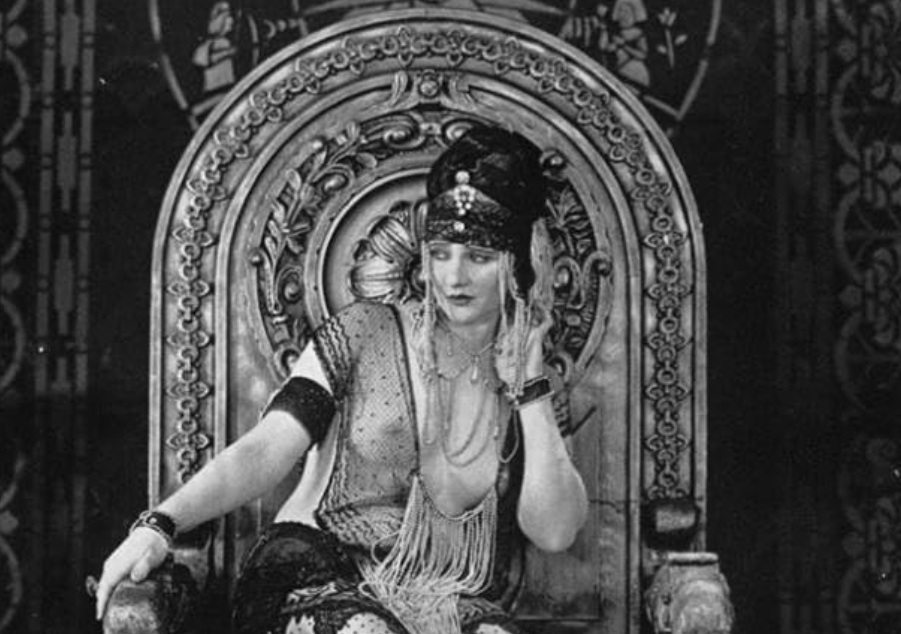
After her first Vitagraph Studios role in the 1917, she was given a leading role in the studio’s 1918 film A Game with Fate. In 1918, she appeared on “Tangled Lives” where she met director Paul Scardon. Scardon was 22 years older than she and had a sick wife and a younger daughter. After his wife died, Betty and Paul became romantically involved, announcing their engagement in April of 1920. After they quietly got married, Betty’s career was exploding and she was frequently out of town, on location in Europe for the next several years. Her most notable roles where when was filmed overseas playing the leads in “Chu-Chin-Chow” in 1923 and in “The Queen of Sheeba” in 1924 (pictured above).
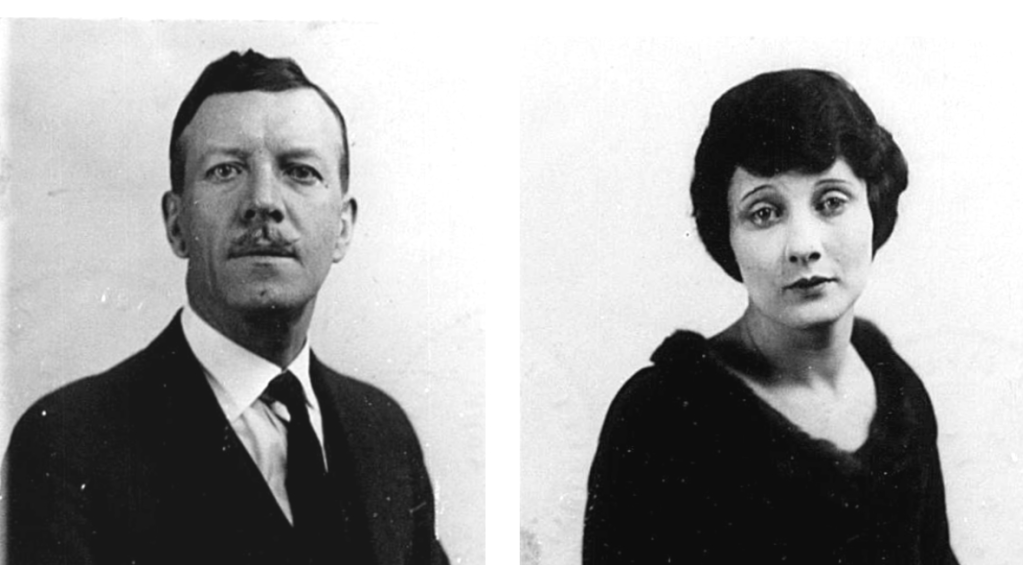
Following her return to Hollywood, Betty would continue her acting career until 1964, but her roles were reduced to minor ones. As soon as they got married, Betty and Paul purchased a ranch in San Bernadino where they spent their later years splitting their time between acting and managing a citrus farm. When Paul died in 1954, Betty moved back to Los Angeles renting from several apartment complexes, including this one. Before her death in 1972, Betty admitted that the one thing she regretted was putting her career first over having any children.
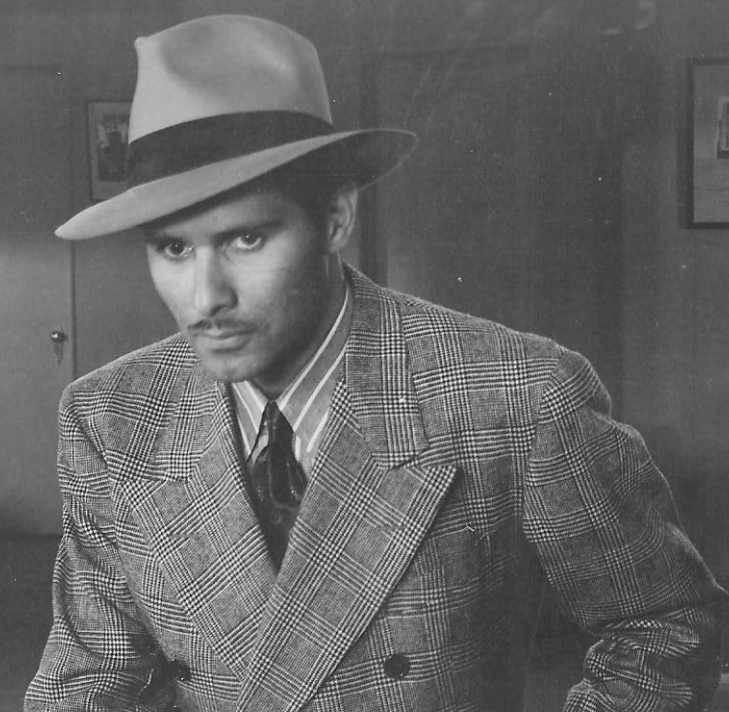
Actor Paul Marion (1915-2011) resided here in 1944 after he and his wife divorced. Marion had almost 100 roles between 1939 to 1955 of primarily minor roles. Marion appeared in “Phantom of the Opera” in 1933, “To Have and Have Not” starring Humphrey Bogart and Lauren Bacall in 1944, “Adventures of Superman” in 1952, and Abbott and Costello Meet the Mummy in 1954. Marion married actress Isabel Jewel in 1941 (Bombshell 1933), (Gone with the Wind 1939), after she divorced actor Owen Crump. The newspapers read, “Actress weds Soldier”. After a quick honeymoon, Marion headed overseas for WW2. Jewel filed for divorce in 1944 citing mental cruelty. Perhaps Marion was suffering from the after effects of the war.
Actor Tod Andrews also lived in the complex in 1944. Andrews had two things in common with Marion-they were both actors and they both moved here after divorcing. Andrews, however, would marry four times more. Andrews was a character actor with 71 credits between 1941 and his death in 1973 including; Now, Voyager in 1942 and even starred in a short-lived television show called “The Gray Ghost” during 1957 and 1958. During his later years, Andrews guest starred in dozens of tv shows including; Gunsmoke, 77 Sunset Strip, Rawhide, The Twilight Zone, and Ironside. Andrews made his acting debut at the Pasadena Playhouse in 1941 and then joined Warner Brothers with a contract playing minor roles. He used the pseudonym “Michael Ames”‘ until 1944, for his appearances in B-grade material and also went back to the stage.
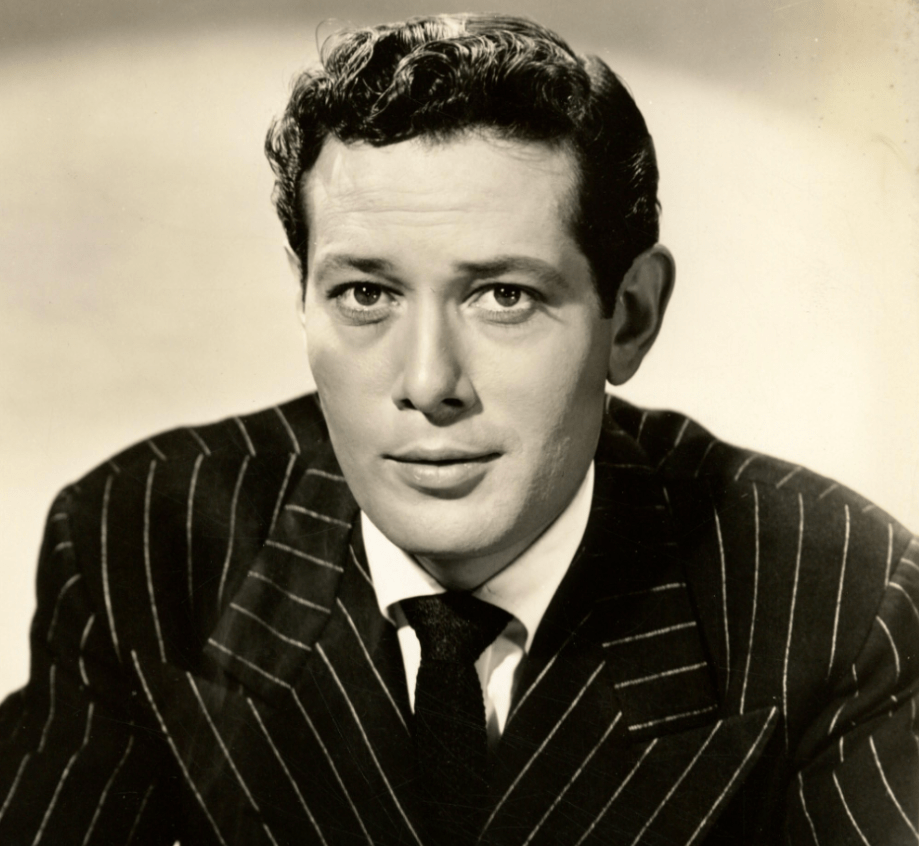
Andrews, however, had his struggles with depression. In August of 1961, while residing in New York City, he reached out to a female friend indicating he wanted to end his life and was found slumped over in a chair after an overdose of sleeping pills. He died in Los Angeles in 1972 of a heart attack, two days before his 58th birthday, survived by his 5th wife and children.
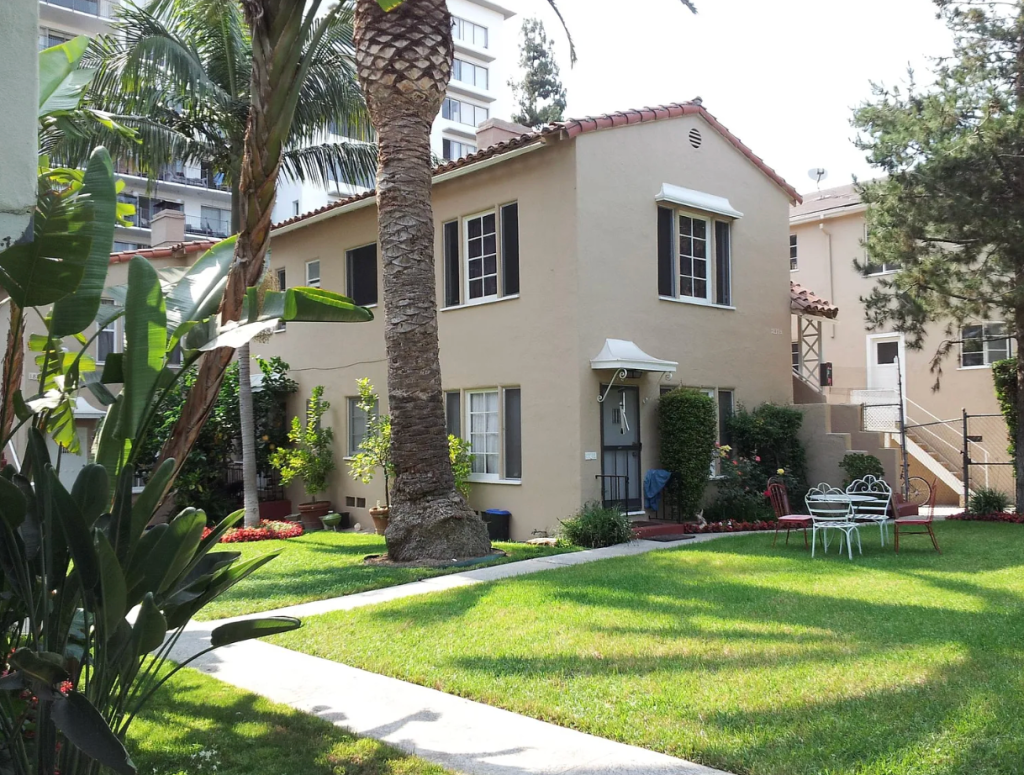
Currently this complex is called “Grace Apartments” and is part of the Grace-Yucca-Wilcox Multi-Family Residential Historic District. The district is located slightly to the north of the Hollywood Boulevard commercial corridor, the district encompasses a small L-shaped area that is oriented around the 1800 block of Grace Avenue and the 6400-6500 blocks of Yucca Street, but also includes a few adjacent parcels on Wilcox Avenue. 1833-1839 Grace Avenue is eligible as a contributor to a Historic Preservation Overlay Zone (HPOZ) through SurveyLA or other survey evaluation.
 Whitley Heights 101
Leave a comment