Wedgewood’s Wall
“If you want to build a high wall, start with a deep foundation” -unknown
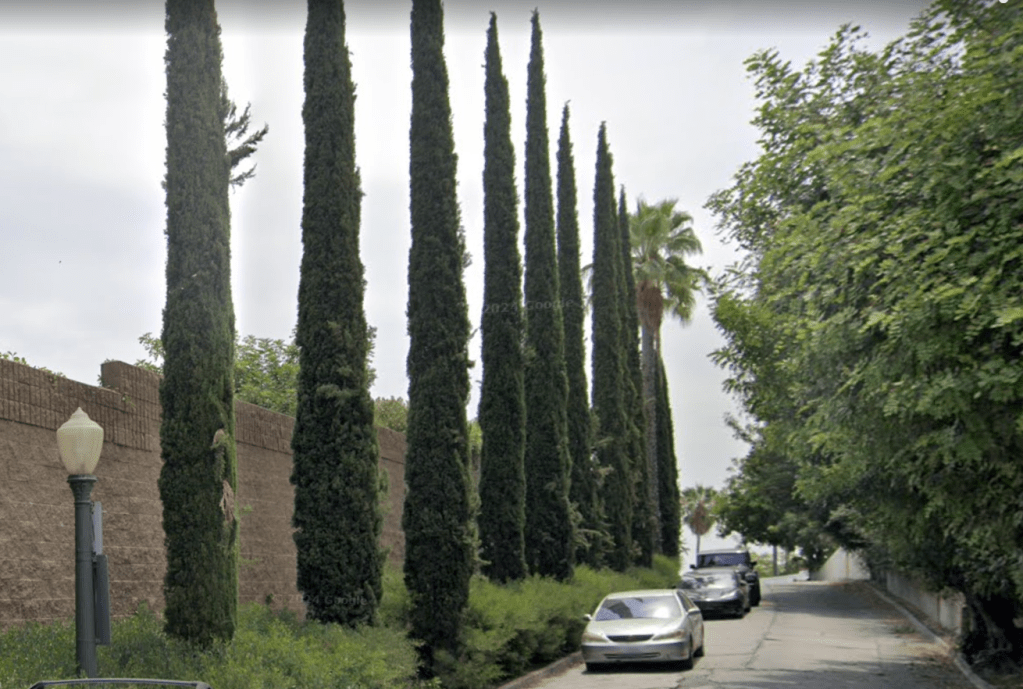
Wedgewood Place once had a total of 18 lots during the early 1920s. Homes built in 1921 included: 6733 Wedgewood Place and 6755 Wedgewood Place. Homes built in 1922 included: 6734 Wedgewood Place, 6738 Wedgewood Place, 6754 Wedgewood Place, and 6776 Wedgewood Place. Homes built in 1923 included: 6735 Wedgewood Place, 6746 Wedgewood Place, and 6750 Wedgewood Place. 6766 Wedgewood Place was built in 1924 and 6764 Wedgewood Place was built in 1927. Only three more homes would be built after the 1920s; three homes would be destroyed decades later.
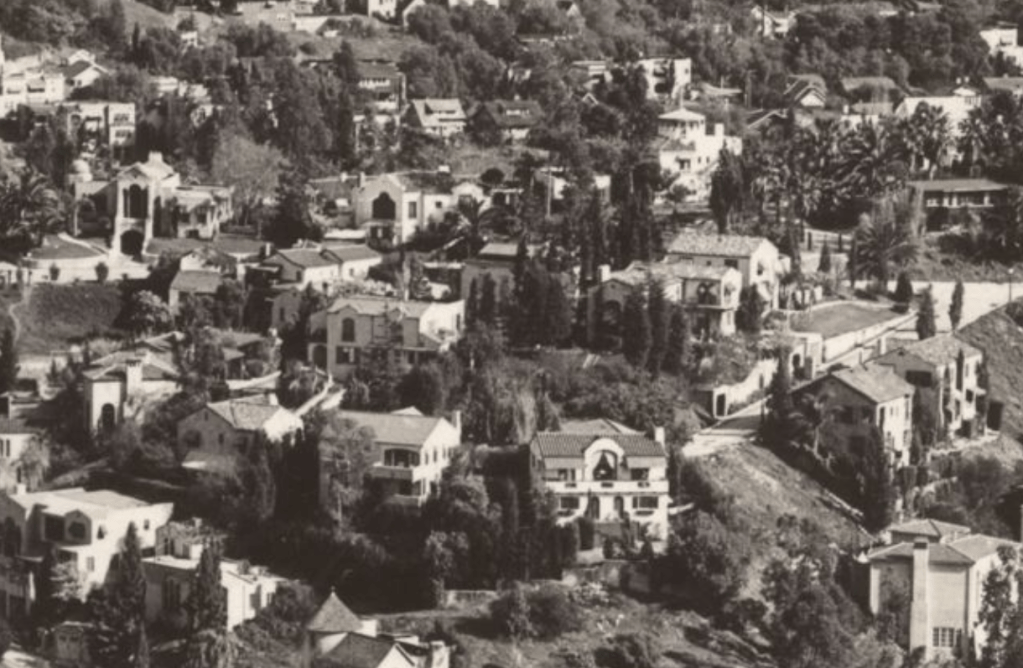
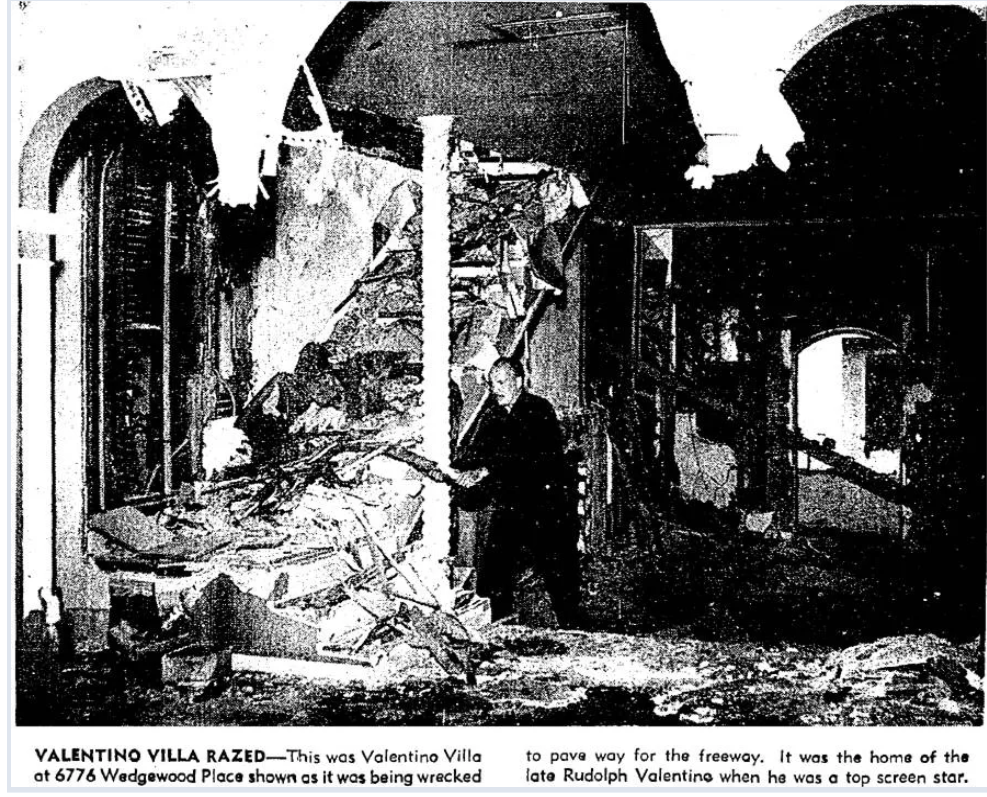
The horseshoe shaped neighborhood would stay in tact until 1951 when Rudolph Valentino’s former home was razed to make way for the Hollywood Freeway. During the early 1970s, two more homes on Wedgewood Drive would be taken to widen the freeway and replaced with a wall to separate the neighborhood and the busy roadway.
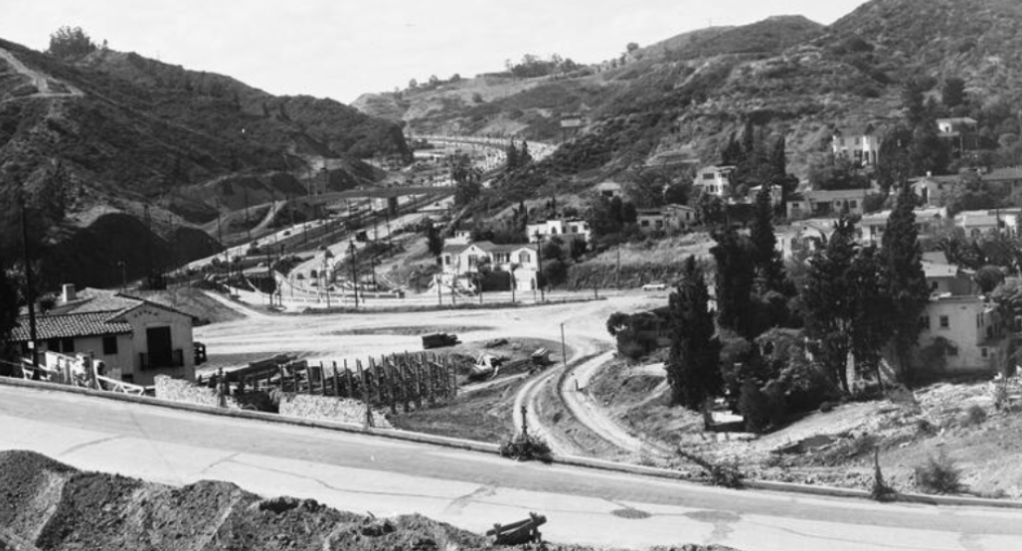
This section of Whitley Heights has seen its share of Hollywood film stars including; Edward Flanagan and his son, Dennis O’Keefe, Ellen Pompeo, W.C. Fields, Barbara Bennett, John Roche, Beulah Bondi (before she moved to Whitley Terrace), Knute Erickson, Sidney Fox, Lyle Talbot, Louise Closser Hale, Ethan Laidlaw and Rudolph Valentino and his wife, Natacha Rambova.
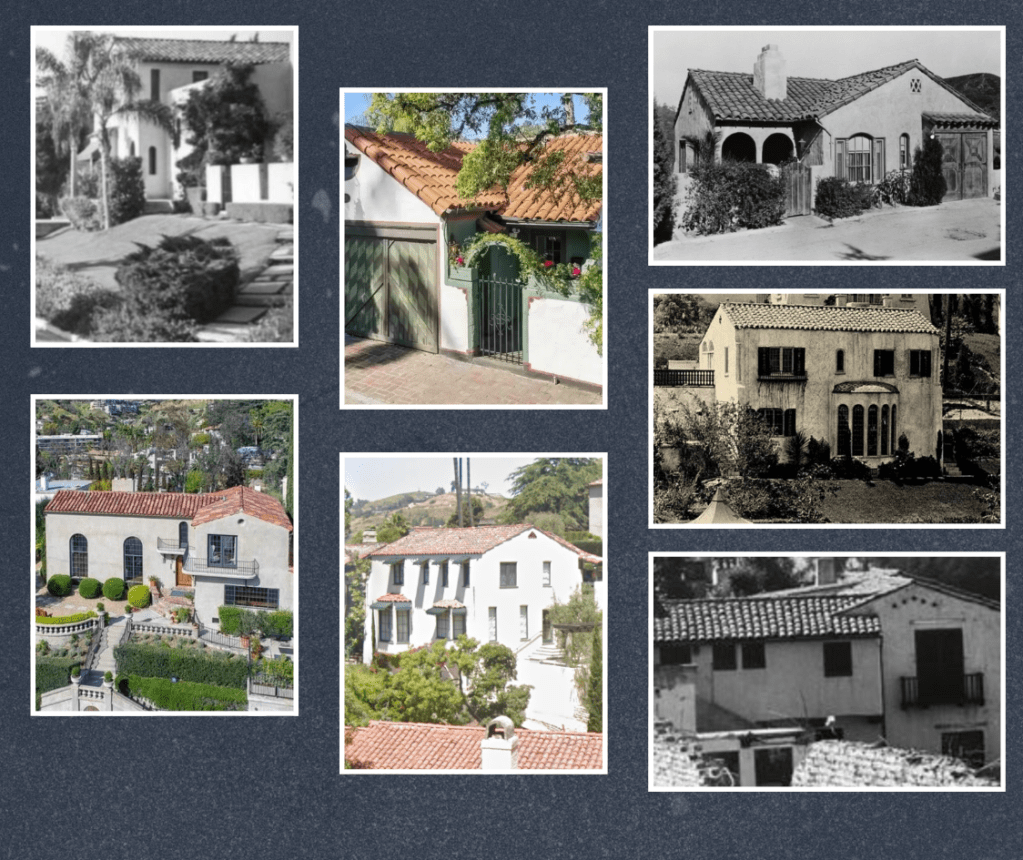
The homes built on Wedgewood Place during the 1920s were either built by the father architect of Whitley Heights, Arthur S. Barnes or Nathan Coleman. One of the homes even listed the architect at H.J. Whitley, himself. Many of the homes sat on a downslope with two stories; it was common to have all of the bedrooms on the top floor and the rest of the living quarters on the bottom. These homes were either Mediterranean Revival Style or Spanish Colonial Revival. The first permit issued in this area of Whitley Heights, was in July of 1921 by owner William G. Hunter, a retired importer from Scotland, to build the first house on Wedgewood: 6733 Wedgewood Place (pictured below on the right).
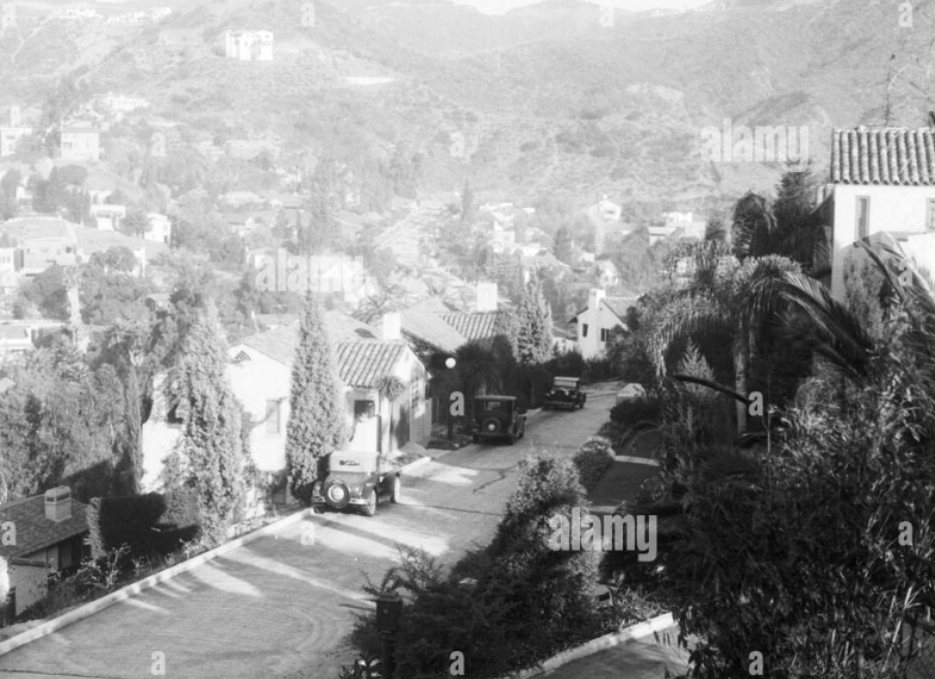
On June 18, 1921, Arthur S. Barnes and Charles D. Grolle were issued a building permit to build a 2-story, 6 room residence located at 6776 Wedgewood Place. Rudolph Valentino and his wife, Natacha Rambova moved into the home from December of 1921 to circa 1924; Valentino decided to build a bigger home in Benedict Canyon with a little more privacy. This house was too close to the road where tourists could park and wait for the movie star to exit his home. When Valentino moved to his new home, Falcon Lair, he maintained this property as his butler was residing in the home in 1926.
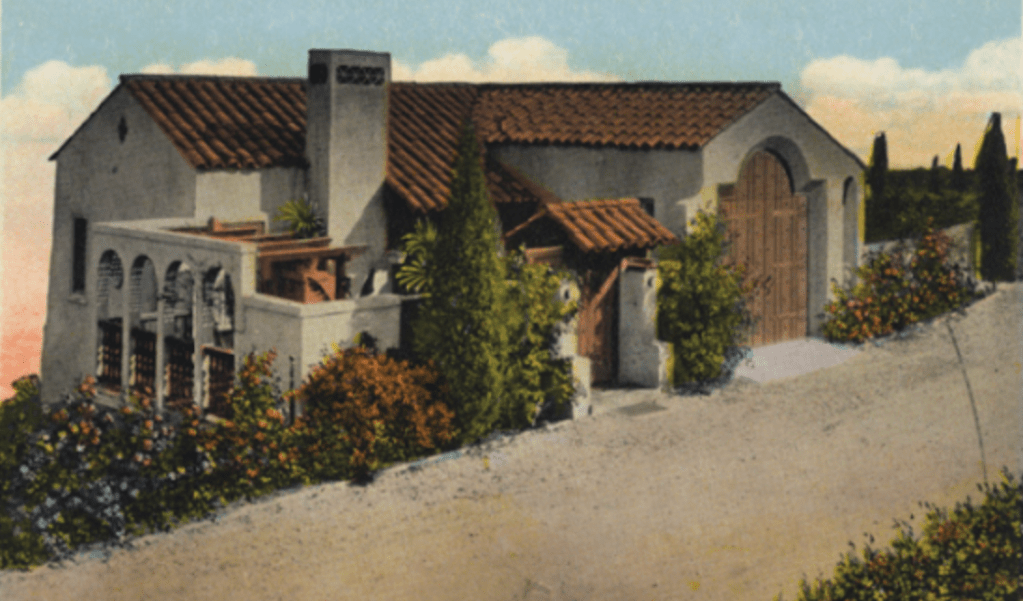
After Valentino’s death, there was a public auction on December 10, 1926, in attempt to sell off all of his belongings as he did not have any heirs and already divorced Rambova earlier that year. Items for sale included: real estate, club memberships, stock, automobiles, a power boat, horses, dogs, furniture, decorations, camera equipment, clothing, jewelry, and books. Valentino had three properties-6 acres of vacant land off of Beverly Terrace, Falcon Lair (2 Bella Drive, Beverly Terrace), and 6776 Wedgewood Place (real estate complete with 4 lots). Sometime after purchasing the Whitley Heights home, Valentino purchased the lots around his property on lot 18 to maintain privacy.
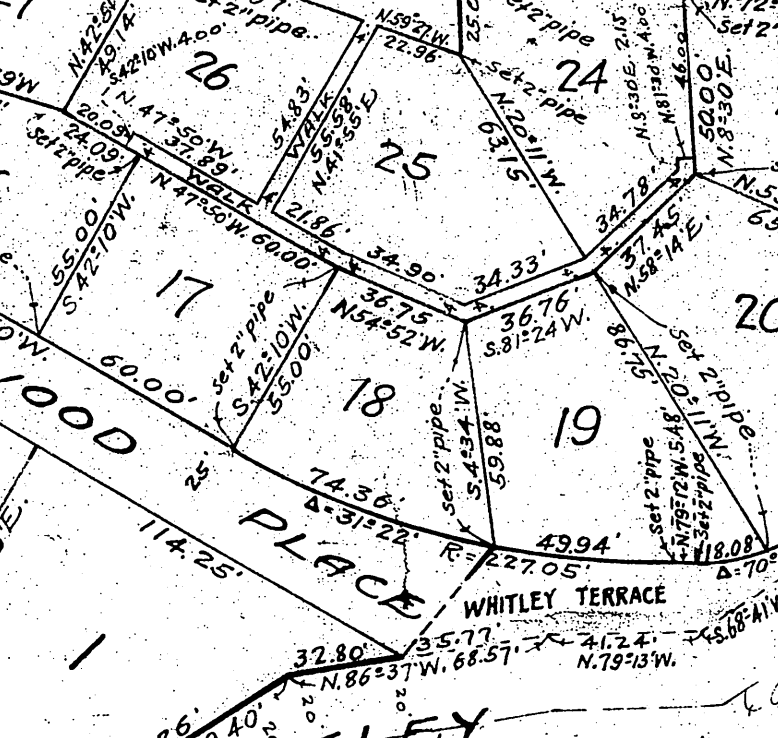
On February 21, 1929 Valentino Productions Inc. rezoned the property from tract 3737 to tract 10040 on Lot A.
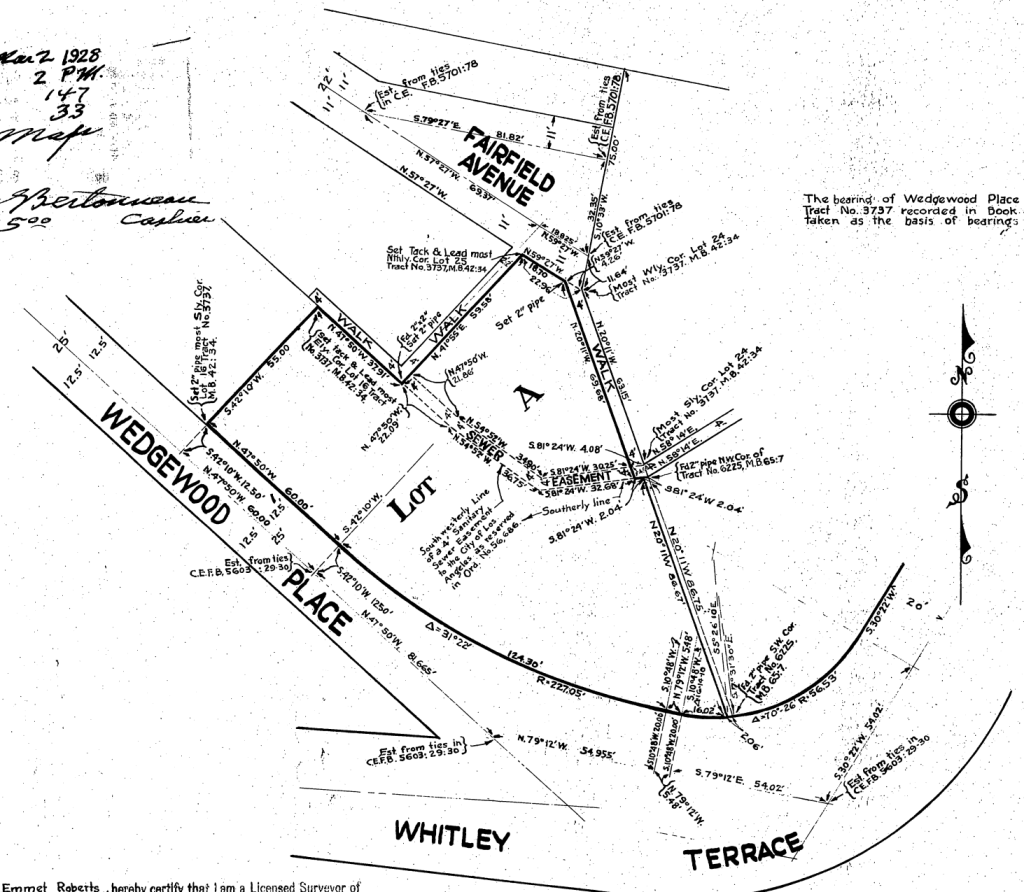
On December 11, 1926 at 2 p.m., 6776 Wedgewood Place was open to the public. Surprisingly there were no buyers for the Whitley Heights or the Falcon Lair estate. Both properties remained with Valentino’s brother, Alberto, who moved into Falcon Lair and rented out this property. Falcon Lair was sold by 1935 and Alberto and his wife moved into this house to repair it and put it up for sale. Italian actor Paulo Portanova purchased the property in 1937 and then sold it to Maybelline owner, Tom Lyle Williams in 1939.
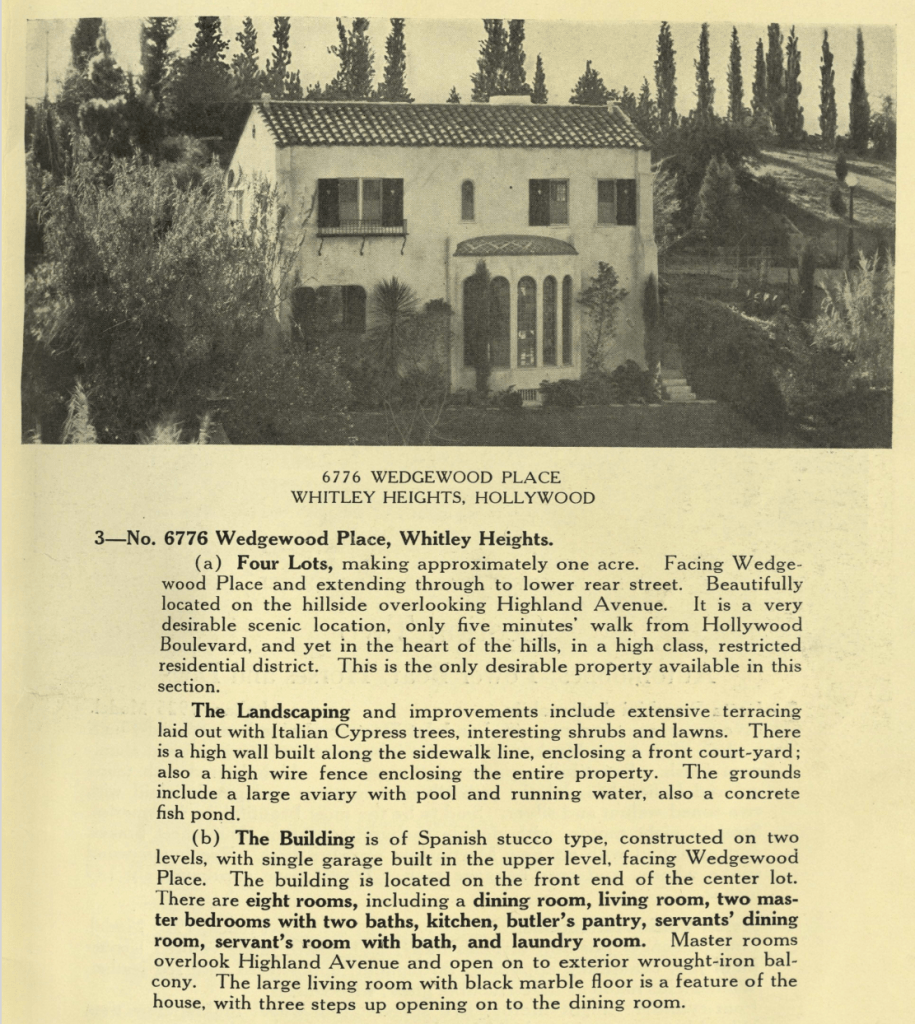
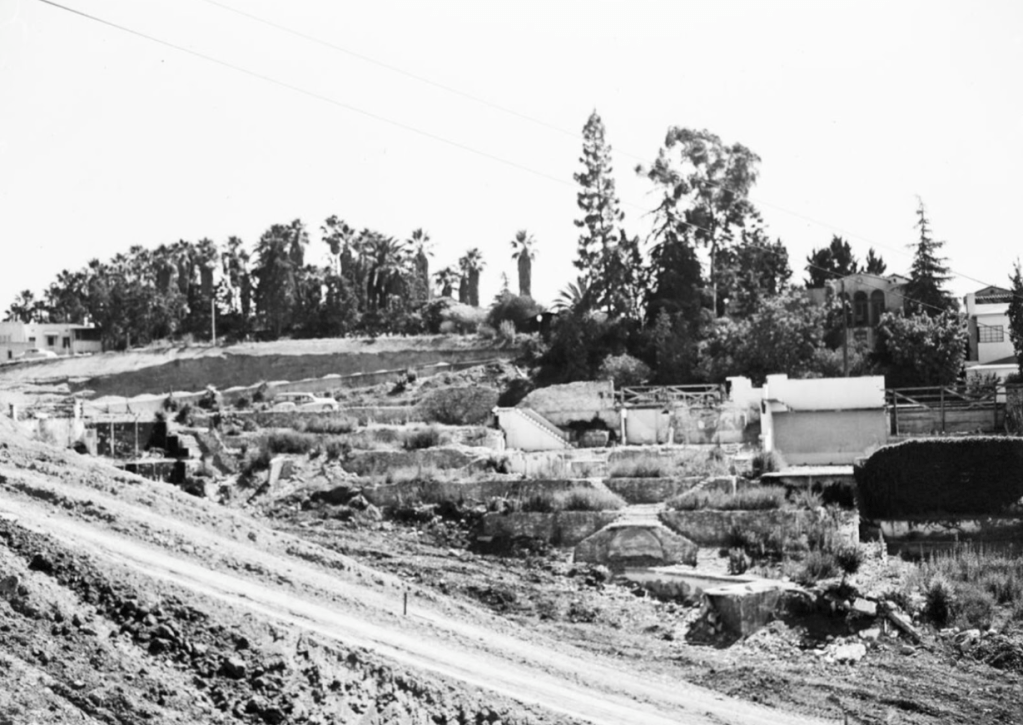
By the time Williams bought the house in 1939, it was in need of repair; he hired the original architect, Arthur S. Barnes to bring back the original charm to the house but add features such as more bedrooms, a pool, and gym. On May 9, 1939, the first permit was issued to build a garage to the right side of the house (lot 17) with a retaining wall and a badminton court between the two buildings. The location of the original garage was converted into another bedroom and bathroom. Below is the new building with the garage on the top floor and the gym on the bottom with the badminton court in view. This building is the remaining part of the foundation that can be seen from the Hollywood Freeway.
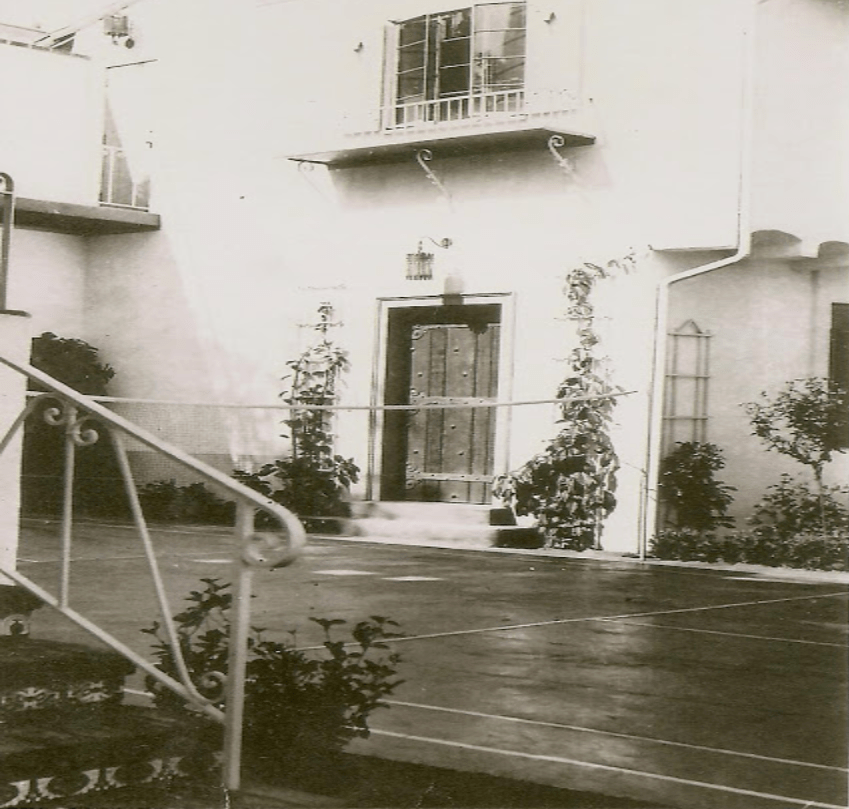
Below, a portion of the foundation can be seen from the Hollywood Freeway. It is not known why the entire building was not removed.
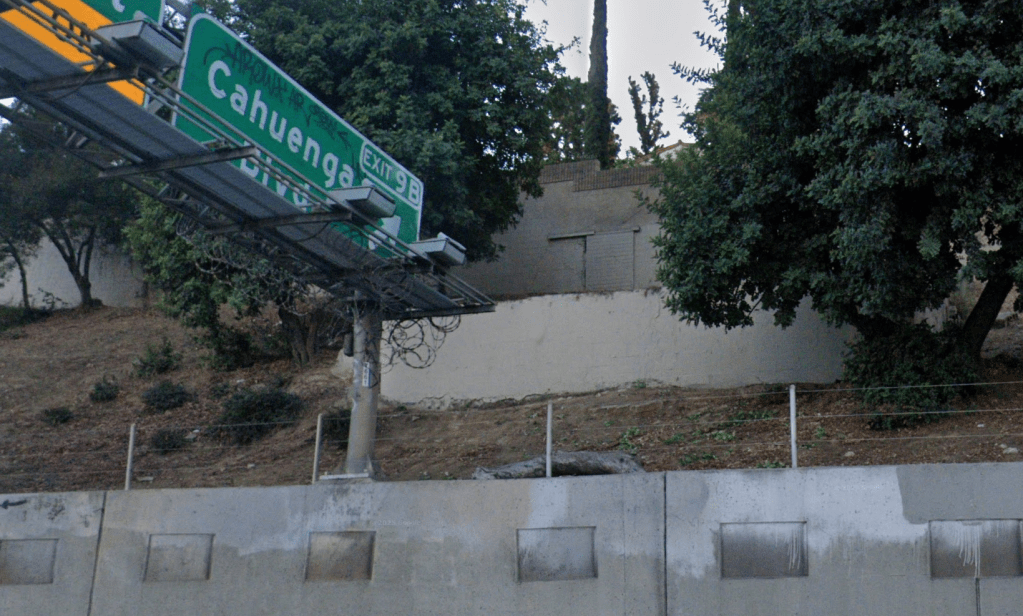
According to the September 1952 issue of Excavating Engineer, “International Bucyrus-Erie dozers made short work of the machines belonging to Julio Tomei, who did the earthmoving and grading work on a subcontract from Carlo Bongiovanni, low bidder for the section. Already the swimming pool, fountains, tile and brick walls of “Villa Valentino” are again getting heavy use: this time as fill for the new route. The section now under construction is 1.4 miles long and costs about $2.5 million. It started the 26th of February and is due to be completed on Jan. 25, 1954, according to Resident Engineer Milton Masters.” Below is a photograph from the magazine with Villa Valentino being dismantled.
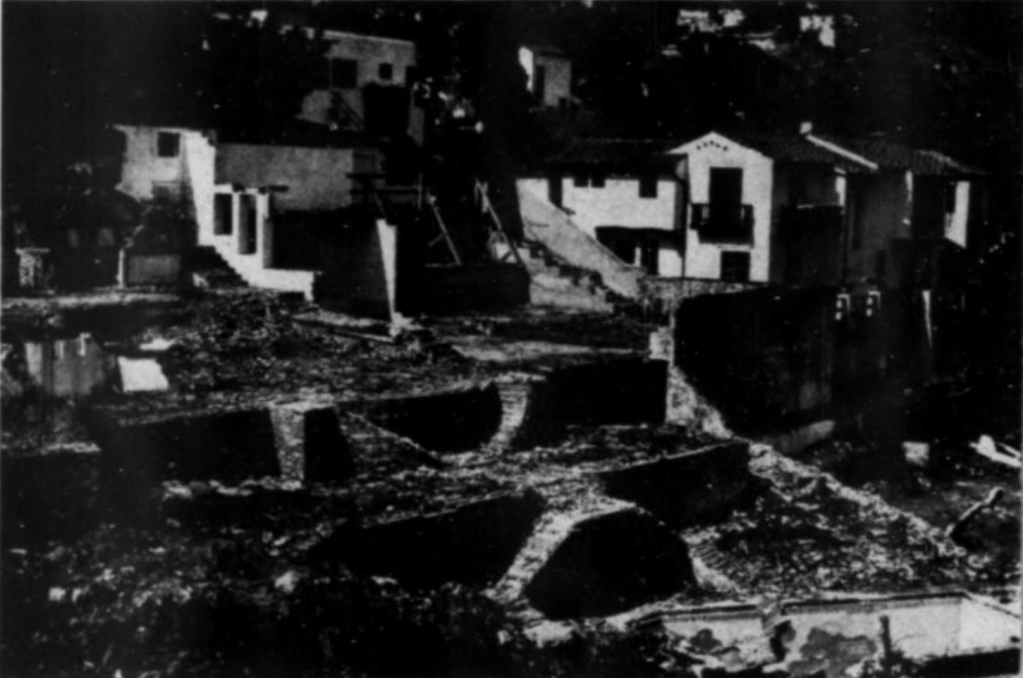
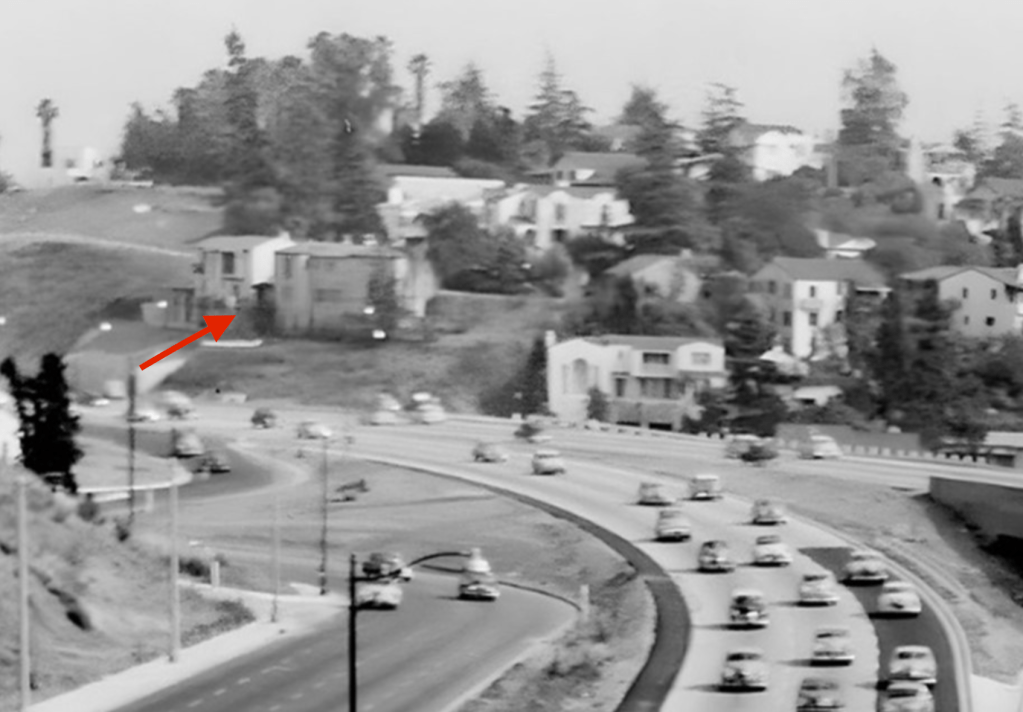
Perhaps the excavators were running out of time to meet the deadline of when the freeway was supposed to open. Maybe the foundation was so secure, that taking it out would affect the foundation of the house next door at 6766 Wedgewood Place. Nevertheless, 6766 and 6764 Wedgewood Place would be the next residences to be demolished in the early 1970s in order to widen that section of the freeway. Below, the two homes can be seen circa 1954 just above the freeway. When the freeway was widened, a wall was erected to separate Wedgewood Place from the freeway.
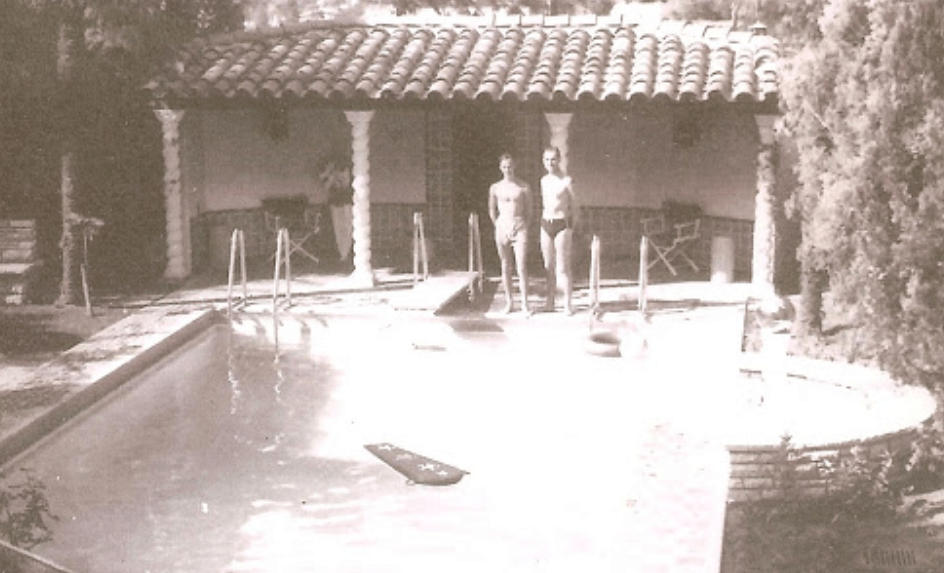
Back to Villa Valentino-on June 15, 1939, two permits were issued to build a 44 x 16 “shelter house” made of concrete and tile roof to use as a pool cabana. On June 22, 1939, a permit was issued to “revise the foundation”. Architect Arthur C. Munson was hired to help Barnes with this project. On August 4, 1939, three permits were issued to redo the interior tile, build an outdoor swimming pool, and tile the swimming pool and the shelter house. There was also a porch that ran the perimeter of three sides of the house on the second floor. A statue of Valentino was erected and placed in the backyard which christened the house as “Villa Valentino”.
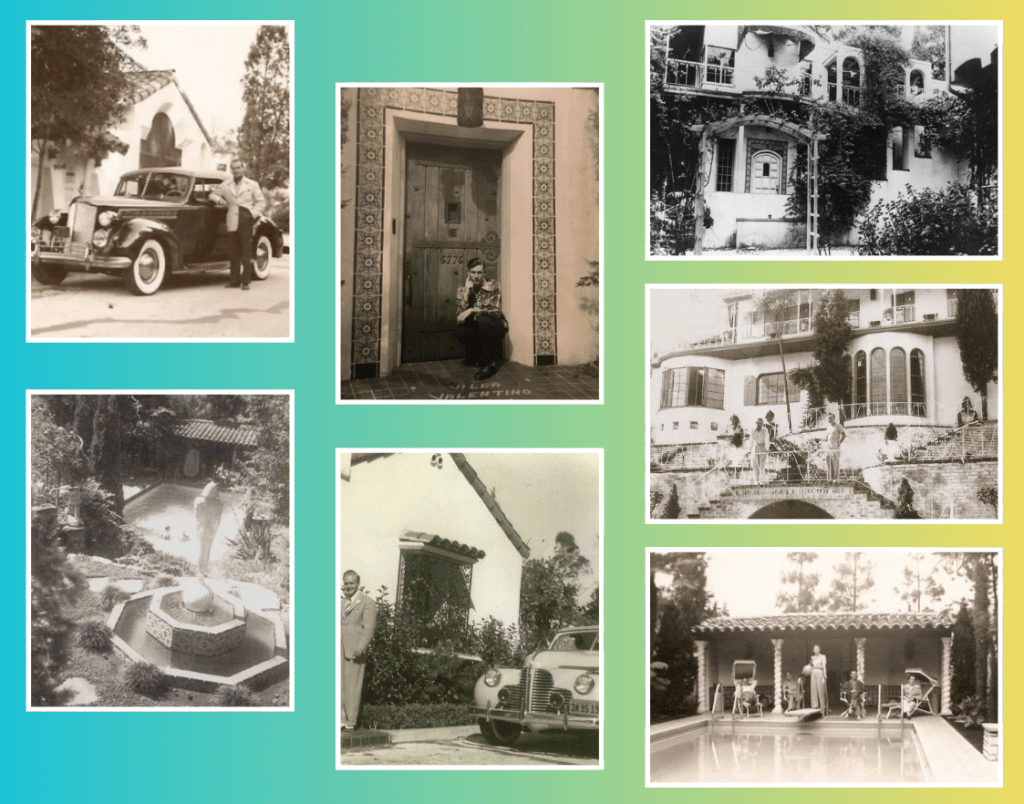
Williams was pleased with the additions and moved into the house at the end of the year with his partner, Emory Shaver, thinking he would spend the rest of his life in his private sanctuary. Things were great for a decade until 1949 when he received a letter from the state indicating his land would be taken by eminent domain to be used as part of the Hollywood Freeway. His heart sank-he thought of moving the house but decided to start fresh and build a mid-century modern house located at 900 Airole Way in Bel Air. (Note: In 2000, Fleetwood Mac’s Lindsay Buckingham purchased 900 Airole Way and demolished the house to build a 10,000 square foot estate).
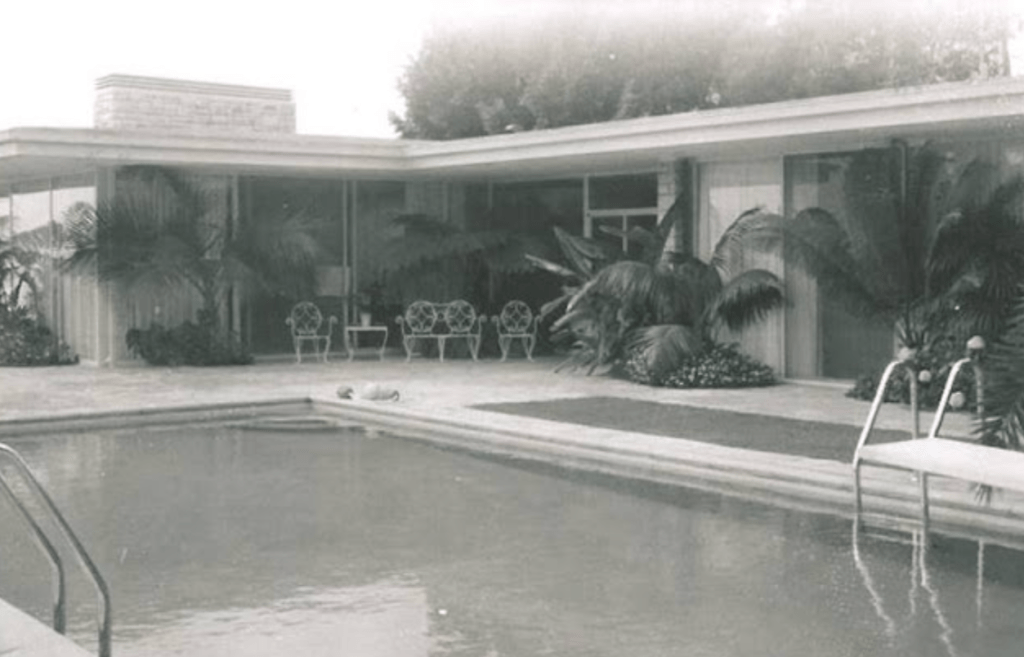
The state ended up paying Tom Williams $90,000 for Villa Valentino and in turn, tried to sell the house to be moved. During that time, vandals and souvenir collectors took everything from the home that they could-chiseling the tiles, ripping parts of the wallpaper, and even prying out the wiring for the telecommunication system. Didn’t they know what they were stealing was not from Valentino? There were two sets of buyers who paid to have the house relocated. LR Shirley, Robert Morehead, and Robert Pugh entered into agreement to have the mansion moved but never did. Gale Fleming paid $20,000 with others to move the home to another location but backed out due to the extent of the vandalism. The main house ended up getting demolished.
There are rumors that the “shelter” house had been moved near Hollywood’s ‘Hangman’s Tree’ in Outpost Estates. The site of the first home in Hollywood, an adobe built by Thomas Urquidez in 1853, contained a large sycamore grove. Allegedly, one of the trees was the hanging site of at least 13 bandits and horse thieves. In 1927, actress Dolores Del Rio, built 1903 Outpost Drive and had the hanging tree chopped down during construction. (By the way, there are dozens of Hangman Trees legends all over Southern California). Perhaps the 44 x 16 shelter house is somewhere in those hills.
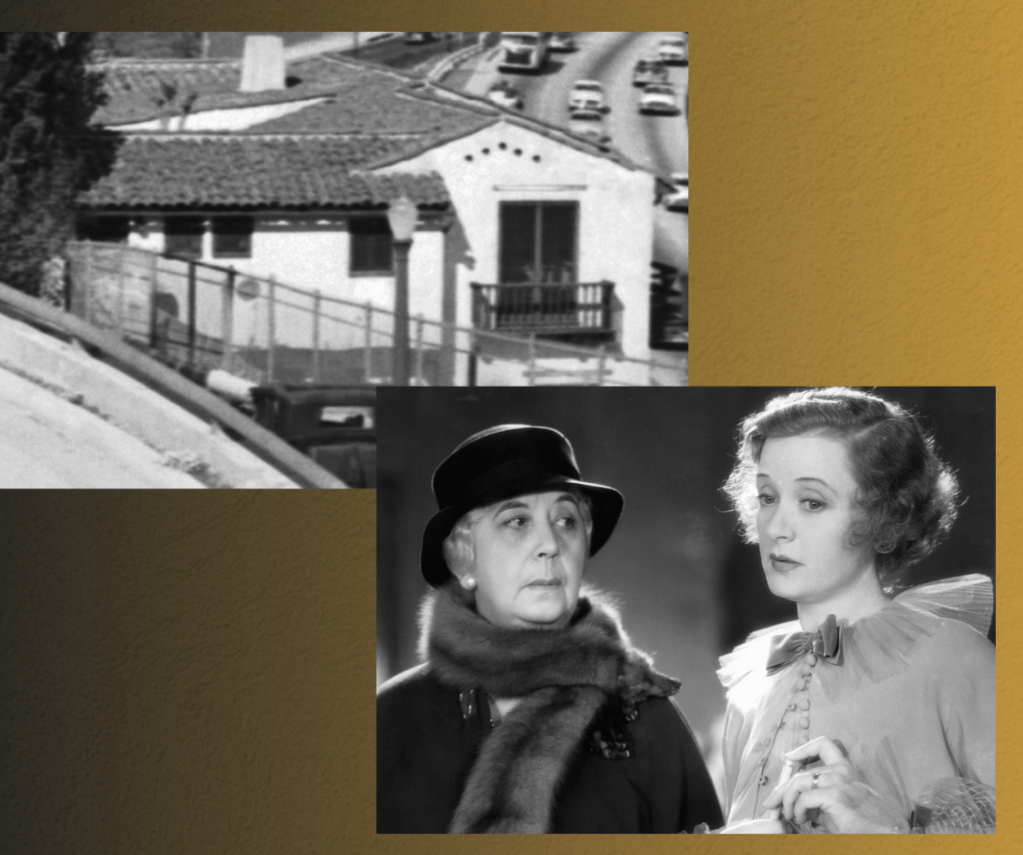
The house adjacent to Valentino’s, 6766 Wedgewood Place was built in 1924 by architect Nathan Coleman for owner Joseph Wittliff who lived in the two story, 6 room house until 1930. Actress Louise Closser Hale (1872-1933) purchased the home until her death in 1933. Hale appeared in over 30 films until her death including; “Platinum Blonde” with Jean Harlow, “Shanghai Express” with Marlene Dietrich, “Letty Lynton” and “Today We Live” with Joan Crawford, “Movie Crazy” with Harold Lloyd, “Faithless” with Tallulah Bankhead, “No More Orchids” with Carole Lombard, “Rasputin and the Empress” with the 3 Barrymore’s-John, Ethel, and Lionel, “The Barbarian” with Ramon Navarro, “Dinner at Eight, and her last, “Duck Soup”. Great resume! Below, 6766 Wedgewood Place before it was demolished and Hale with actress Billie Burke in “Dinner at Eight”.
6764 Wedgewood Place was built in 1927 by architect Nathan Coleman for A.C. Walker. Actress Sidney Fox (1907-1942) rented this house when she first moved to Hollywood as she signed with Universal Studios after being discovered by Carl Laemmie in a Broadway Show. Her first film was “Bad Sister” starring opposite Conrad Nigel which aired in 1931. This film also starred Zasu Pitts and Bette Davis (her film debut). Fox was busy with three other films that same year: “6 Cylinder Love” starring Clark Gable, “Nice Women” which she co-starred with Frances Dee, and “Strictly Dishonorable” which she co-starred with Paul Lukas.
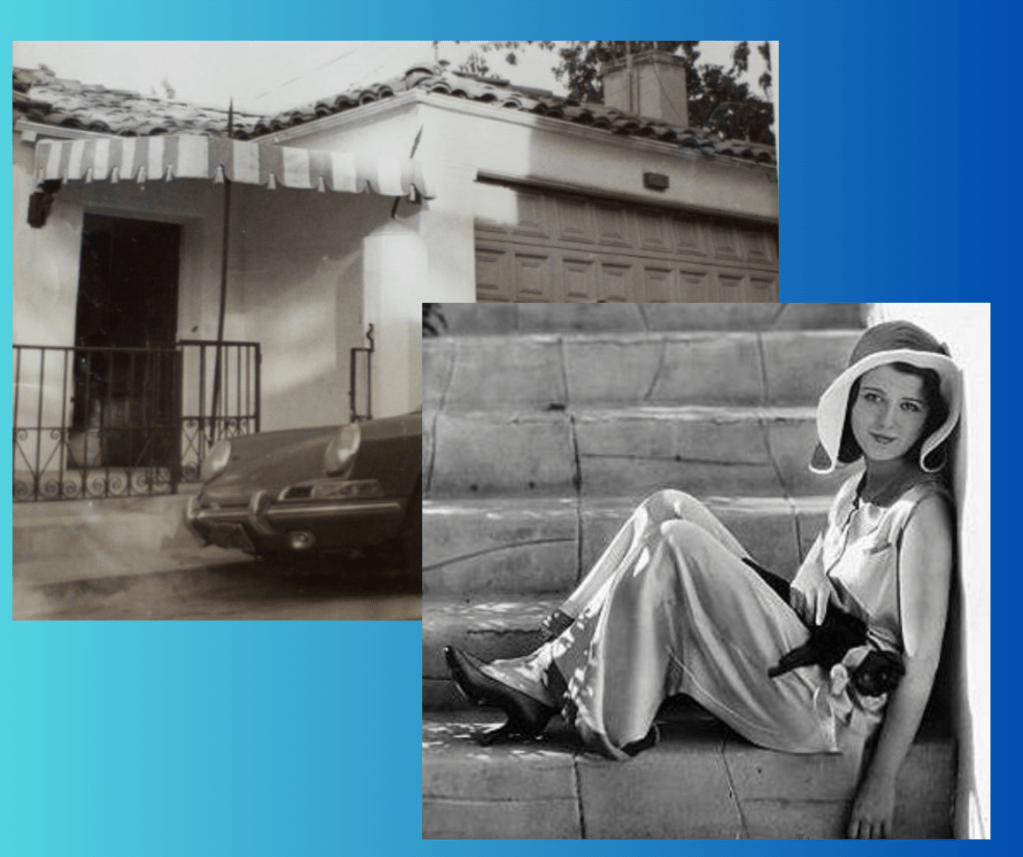
The following year, Sidney was still renting 6764 Wedgewood Place and was given a part opposite Bela Lugosi in Edgar Allen Poe’s “The Murders of Rue Morgue”. On May 10, 1932, Fox could have really used the Wedgewood Wall. She was backing her car out of the driveway of 6764 Wedgewood Place and prepared to make a sharp turn to the left when the car wheels slid off the roadway rolling 40 feet down the hill onto Fairfield Avenue. The car actually did a complete somersault and landed upside down against a tree. A passing milk truck witnessed the accident and went to her aid; while the car was completely wrecked, Fox walked away from the incident with only a few bruises. Fox attributed her deadly escape to her small size of 4’11” as she bounced around in the car.
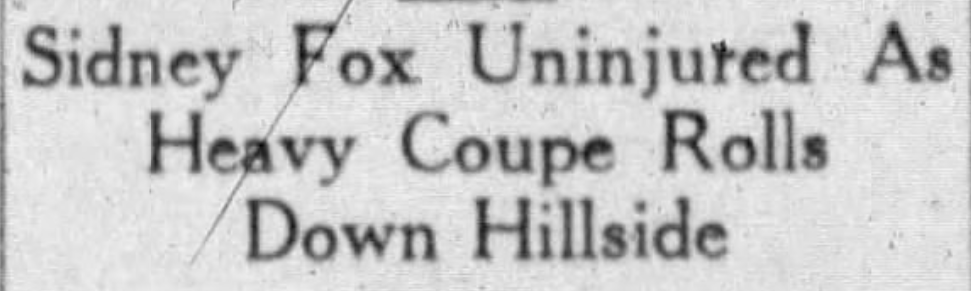
Fox was not the only actress who rolled down that hill in her car. In 1925, actress Helen Lee Worthing was residing in the house just below at 2109 Fairfield Avenue when she left her home in her car and was nearing Valentino’s residence on Whitley Terrace when the car “suddenly left the road”. Her car rolled onto a roof and only suffered minor bruises. Luckily both actresses could walk away from the accidents.
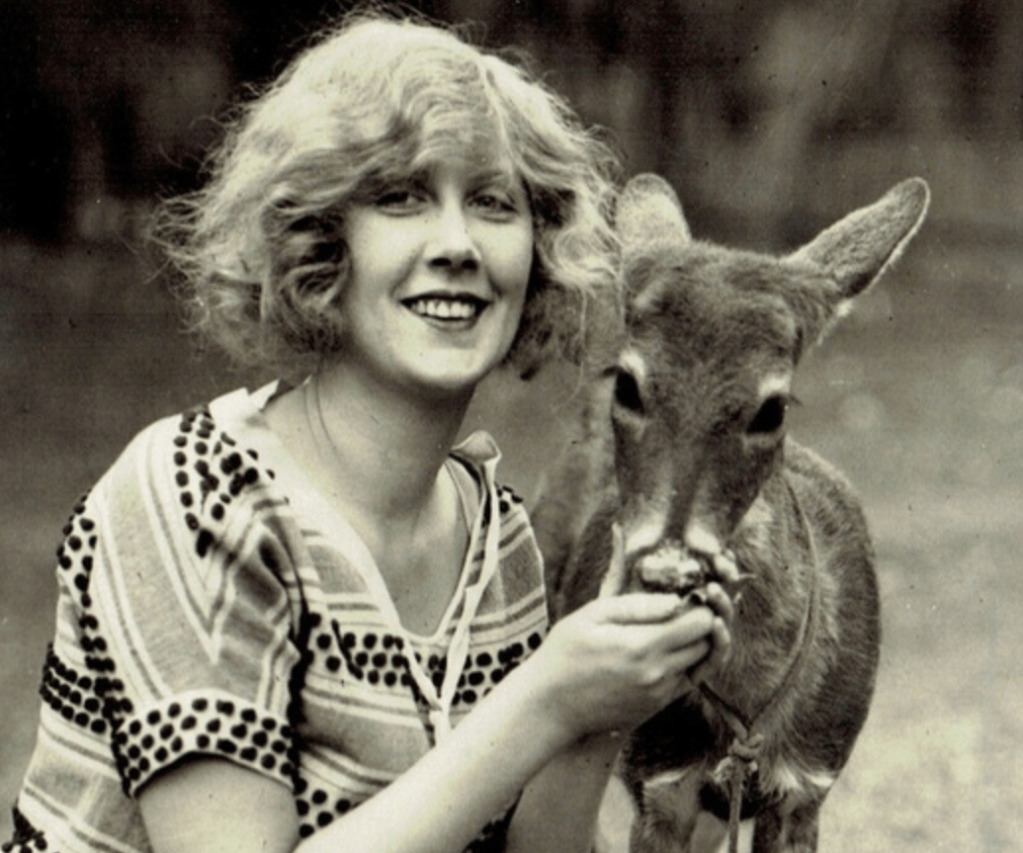
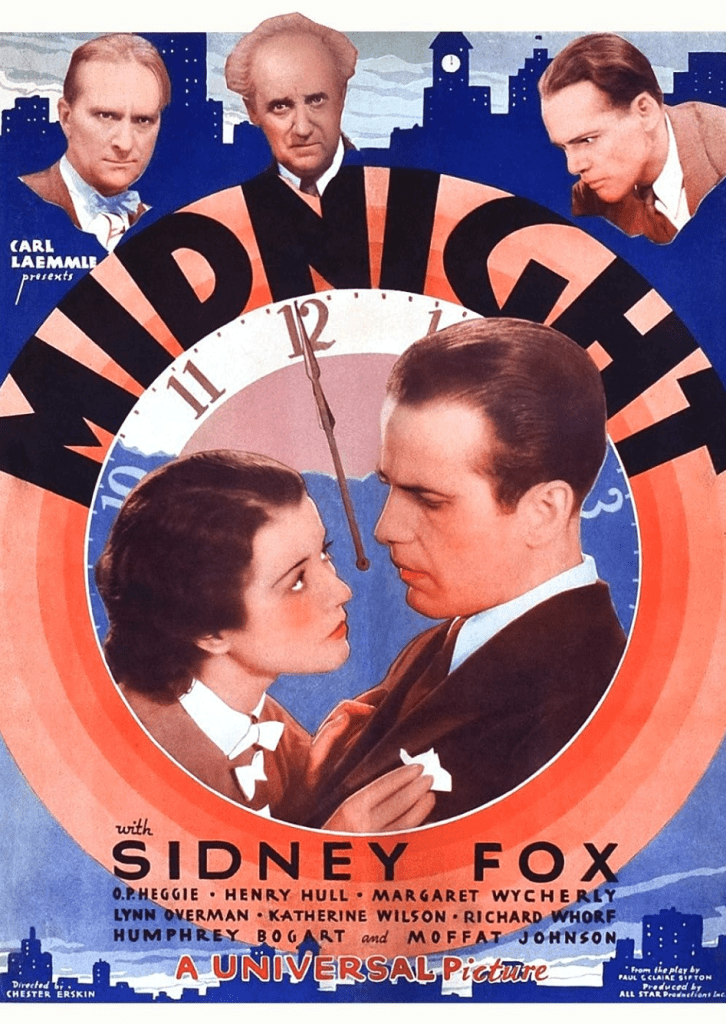
In December of 1932, Fox married screenwriter Charles Beahan, whom she met at the Universal Studios and they moved to New York. Sidney was still with Universal and starred opposite Humphrey Bogart in “Midnight” which was filmed in New York City. Prior to marrying, Fox was allegedly having an affair with Carl Laemmie. Most likely, she ended the affair after this film and was cut from Universal. She then returned to Los Angeles to film two more films with RKO Studios, but then her career abruptly ended. Did her career end because she refused to carry on the affair with Laemmie?
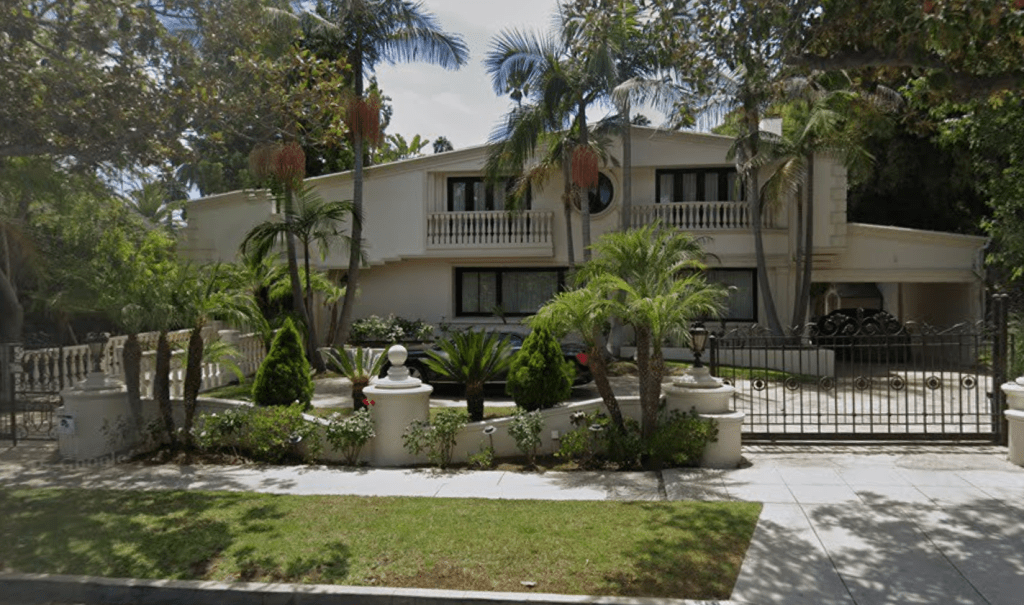
By 1940, the Beahans moved back to Los Angeles and rented a 2 bedroom apartment located at 9421 Charleville Blvd. in Beverly Hills. They then moved to 591 N. Crescent Drive also in Beverly Hills. The unemployed actress was very distraught and began taking prescription pills. On November 15, 1942, Fox was found unresponsive in her bed at her Beverly Hills home due to an overdose of sleeping pills. The coroner ruled the death as “accidental”. She was only 34 years old.
Actor Lyle Talbot moved into 6764 Wedgewood Place from 1933 to 1935. Talbot (1902-1996) starred in over 300 films and tv shows, his most notable role on television was his portrayal of Ozzie Nelson’s friend and neighbor Joe Randolph, a character he played for ten years on the ABC sitcom “The Adventures of Ozzie and Harriet”. When Talbot first arrived in Hollywood, he could not even afford a hotel so his agent set him up at the Ravenswood Apartments (Mae West resided here since it opened in 1930 until her death in 1980).
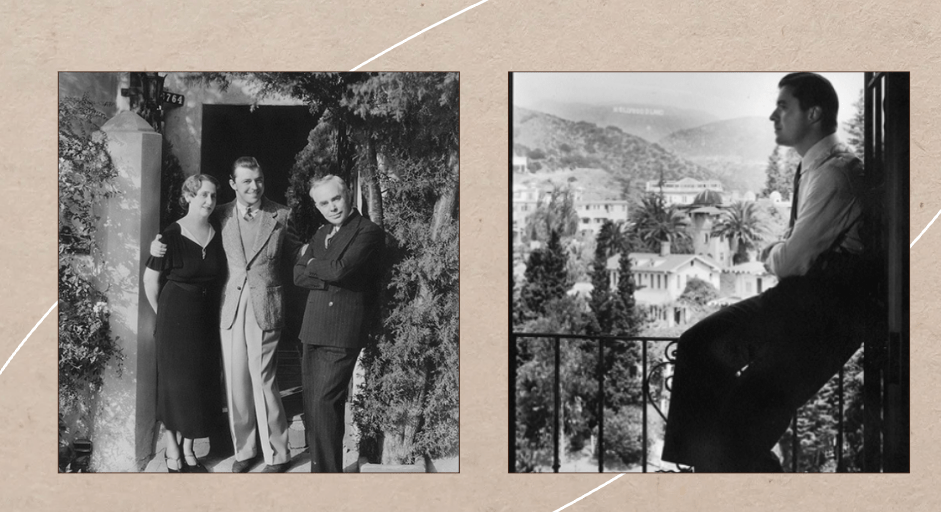
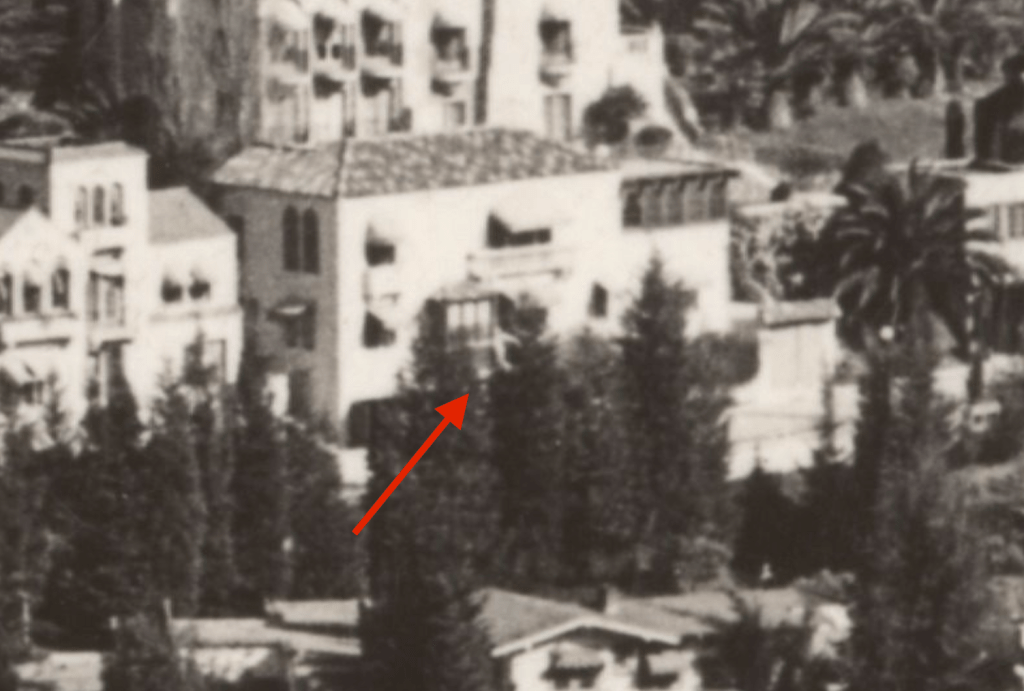
While he was living in Whitley Heights, he too, was involved in an automobile wreck. On October 8, 1933, 28 year old Talbot was driving on Whitley Terrace towards his home when he lost control of his automobile which hurled over the curb and crashed into the residence at 6813 Whitley Terrace (aka 6814 Iris Circle). The car was totaled and a section of the house was torn away. Talbot was transported to the hospital with a head injury and severe body bruises. Below, the triplex building Talbot crashed into.
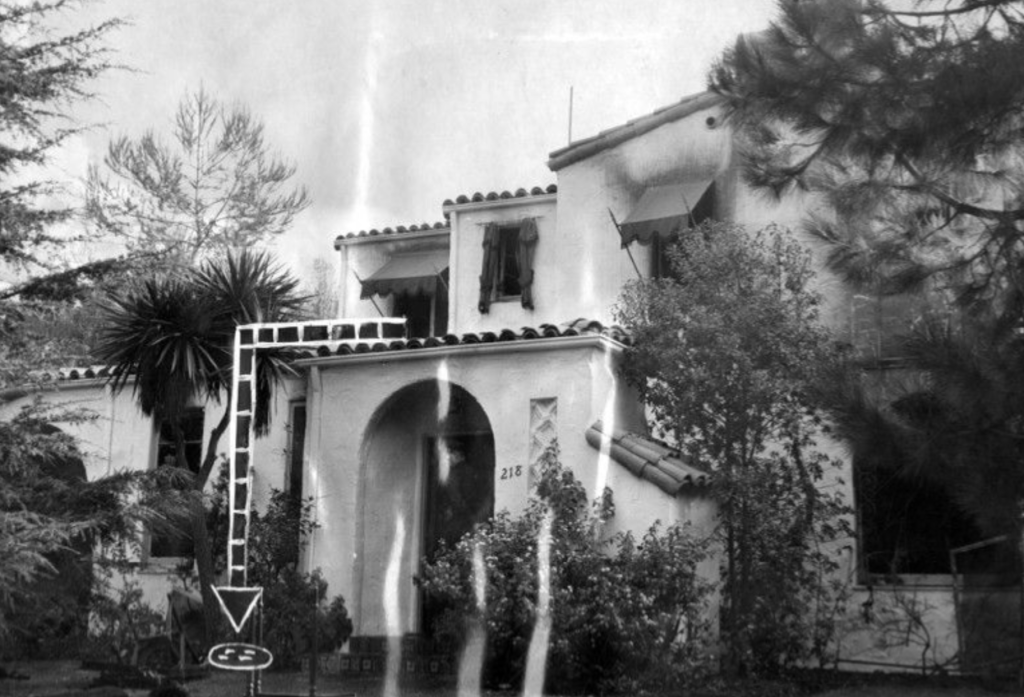
Talbot was definitely a “ladies man” as he was dating actress Lola Lane when he moved to Whitley Heights and then actress Judith Allen when he was involved in the car accident. He married five times. Talbot moved to Beverly Hills in 1935; in 1938 he was residing at 218 S. Peck Road where his house caught on fire. Talbot and his guest, Franklin Parker, were sleeping when the fire broke out. Awakened, Talbot dragged Parker to a window, tore off the man’s blazing pajamas and hoisted him out on ledge. Then rescuers arrived and Talbot jumped 20 feet, as shown by dotted line, and Parker was saved.” Seems like Talbot had as many lives as he did wives!
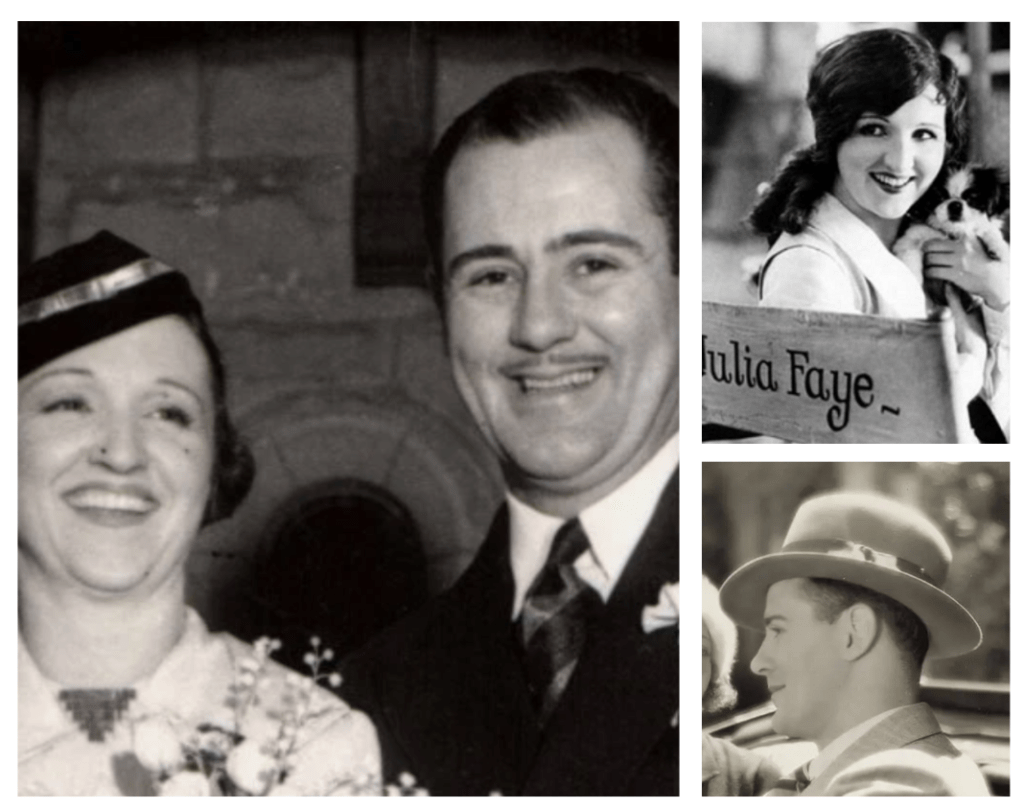
In 1935, after Lyle Talbot moved out of 6764 Wedgewood Place, Elsie Merrill moved in and decided to convert the basement into the servant’s living quarters. Her son, Walter, was an actor who moved in with his mom in 1936 after a six month marriage to actress Julia Faye. Known as the “Hollywood girl with the perfect legs”, Faye worked in over 30 Cecil DeMille films including; “Intolerance”, “The Squaw Man”, “The Ten Commandments”, “Chicago”, and “Sampson and Delilah”. She also appeared in “Sunset Boulevard” like many other stars, in an uncredited role. Faye was known as one of Cecil DeMille’s mistresses and perhaps would not give that up as she was getting steady roles and that did not please Walter at all.
After 6764 and 6766 Wedgewood Place were demolished in the early 1970s, the once perfect horseshoe street was now trimmed off on one side where a large wall now stands. Behind that wall was three homes that once belonged in an era of old charm in the Hollywood hills. That wall is a reminder of how quickly a spectacular scenery can be taken away and replaced with a big concrete wall. Along that wall is a pad locked door with sign that states, “warning state property no trespassing”; another reminder how elected officials can decide the fate of a community.
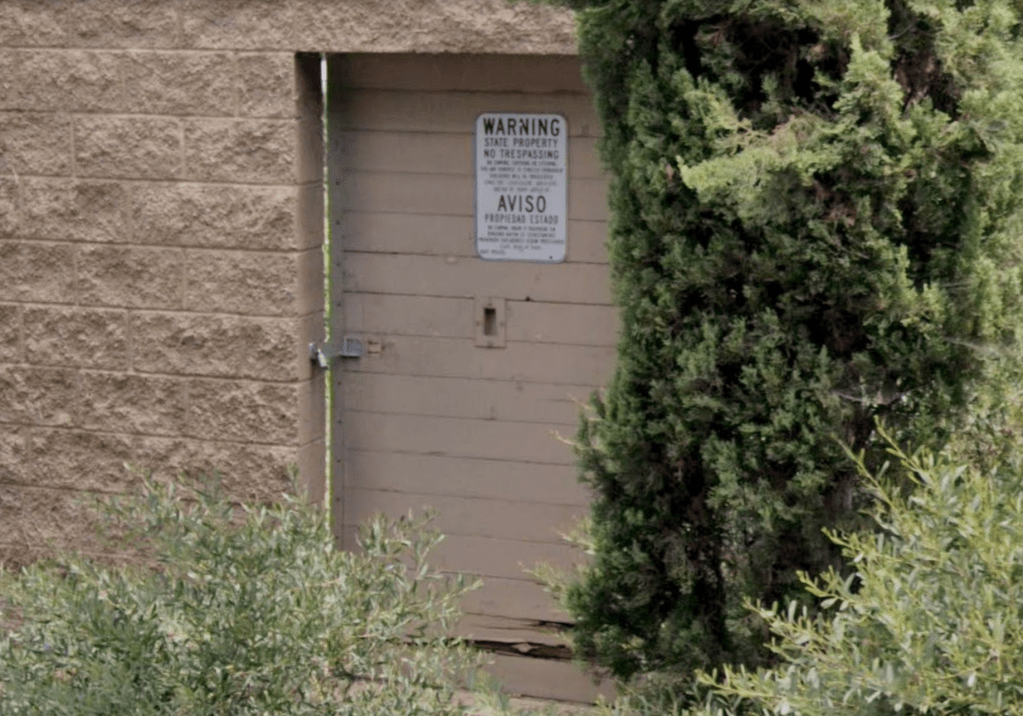
On the contrary, that door is a passage to the past of Old Hollywood. Perhaps on a quiet night, when the traffic is slow, one can hear the rattling of a 1925 French Avion Voisin automobile climbing up Whitley Terrace where it turns right onto Wedgewood Place and stops in front of the garage of a hillside home. Several dogs begin to bark as they greet their owner at the front door. Yet again, it is going to be a great evening in Whitley Heights!
 Whitley Heights 101
Leave a comment