All Roads Lead to Whitley Heights
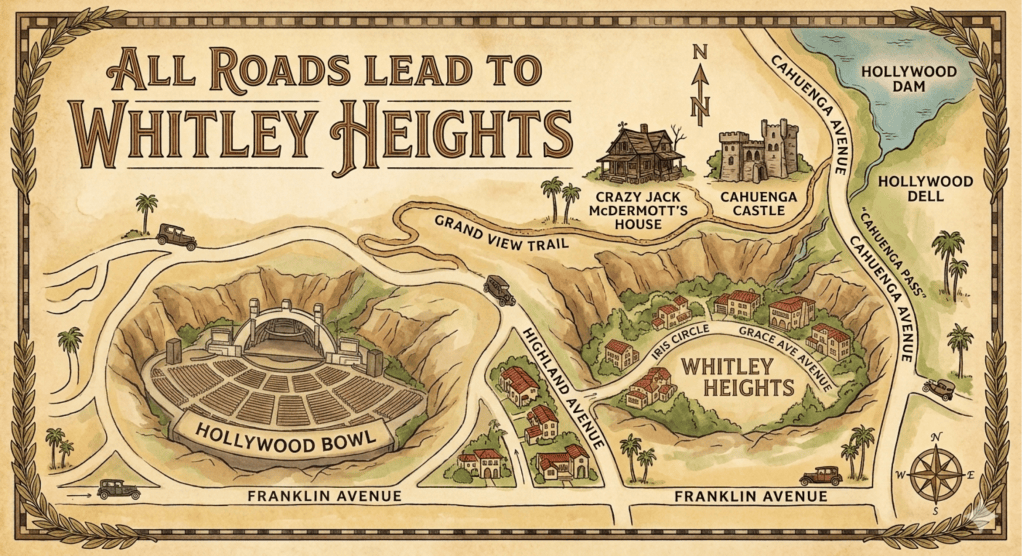
On July 13, 1935 the Los Angeles Citizen News indicated that Paramount Studios screenwriter Jack McDermott “has a house near Whitley Heights, Hollywood which can be entered only by a tunnel leading up through a trapdoor beside the master’s bed”. Back then, it was understandable many locations would be referenced to the most popular neighborhood of the silent screen era. In reality, McDermott’s home, once located on Goodview Trail, was five miles away from Whitley Heights, in the Hollywood Park neighborhood in the Hollywood Hills, high above the Hollywood Bowl.
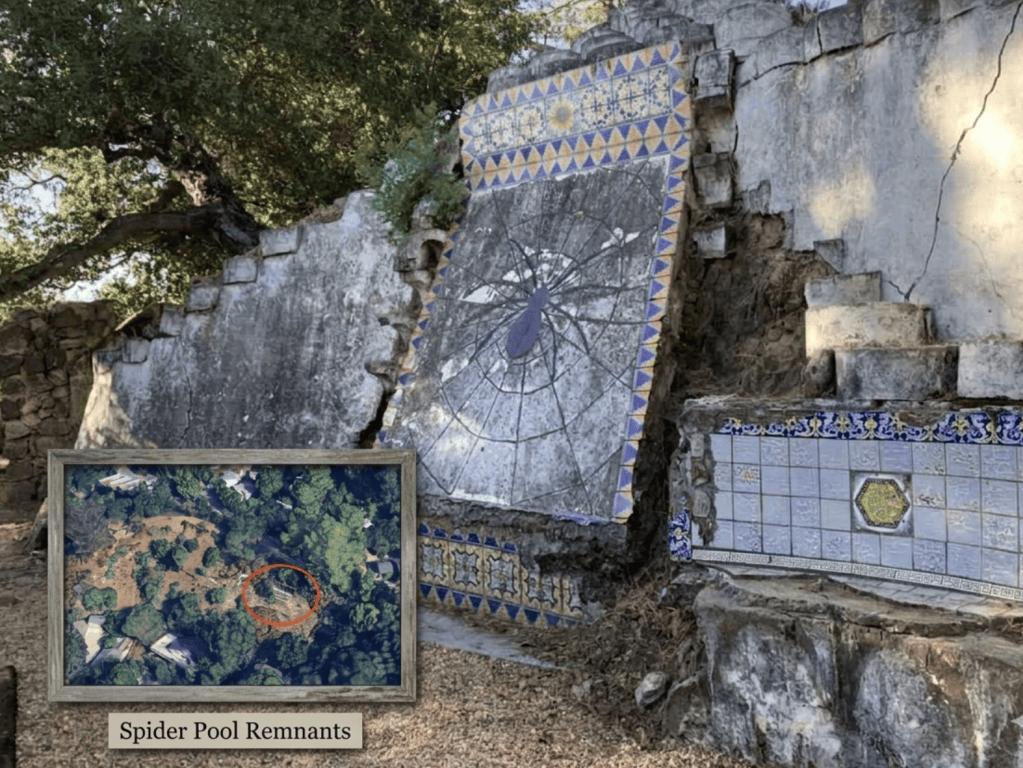
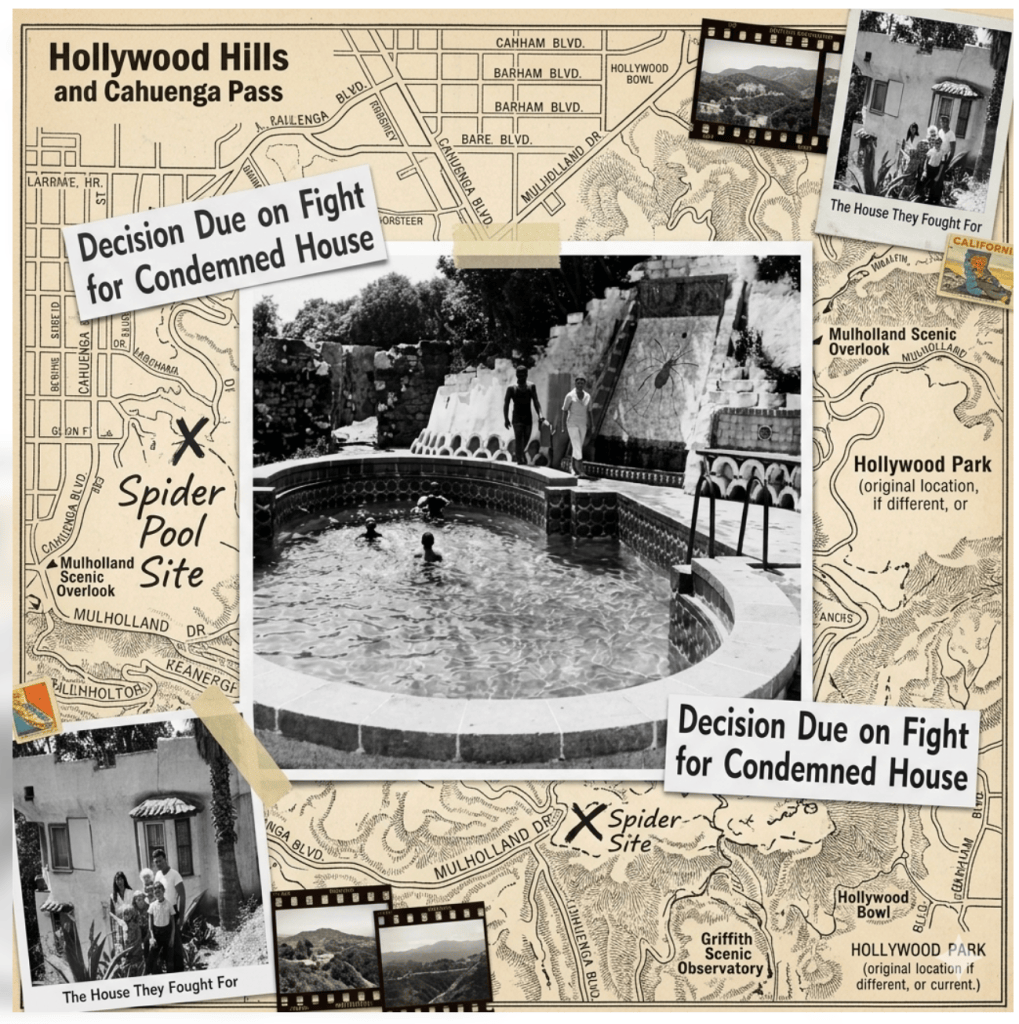
What is left on McDermott’s former property is ruins of a tiled wall with a spider where Jack McDermott built a sunken pool. Just above the wall is where his eccentric house once stood. Yes-Jack McDermott was not a Whitley Heights resident, but the history of his former house is so fascinating and it was constantly mentioned in Los Angeles newspapers and magazines until it met its demise in the 1960s.
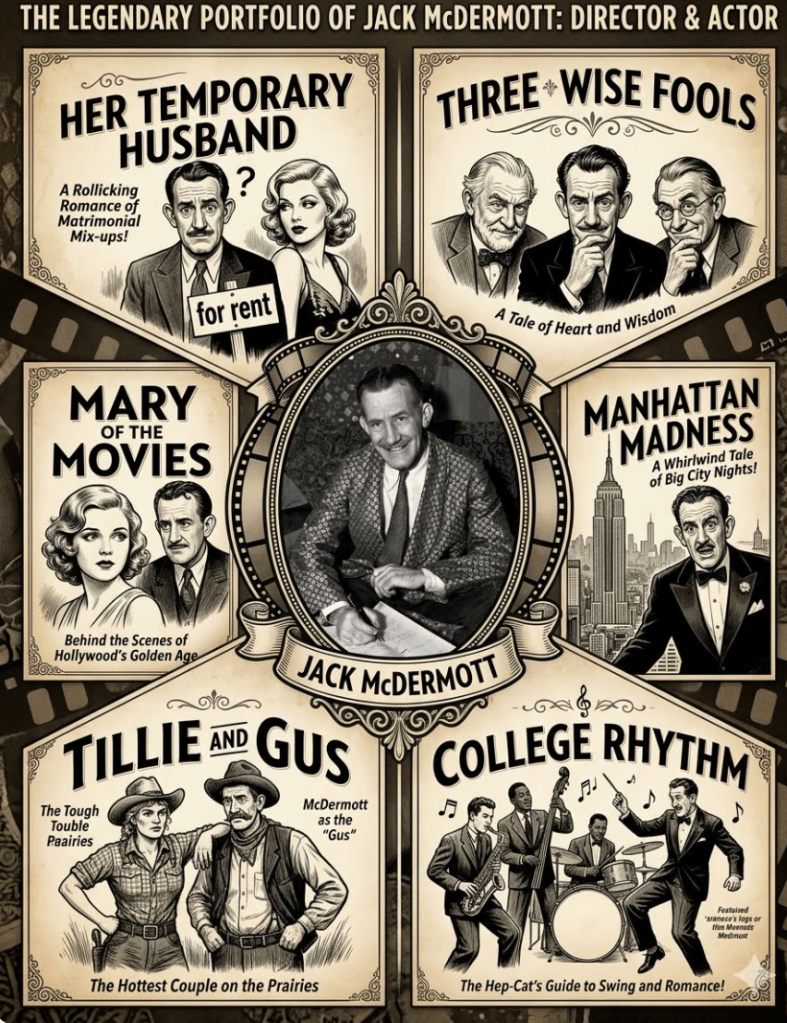
Here is the Whitley Heights connection- it may only be a “six degrees of separation” link. McDermott directed the 1923 film, “Mary of the Movies”, starring Marion Mack, which she co-wrote with her husband, Louis Lewyn. Lewyn also produced the film and at the time, the Lewyns were living at 2109 Fairfield Avenue in Whitley Heights, while they were building their palace located at 2053 Lloyd Lane, also in Whitley Heights.
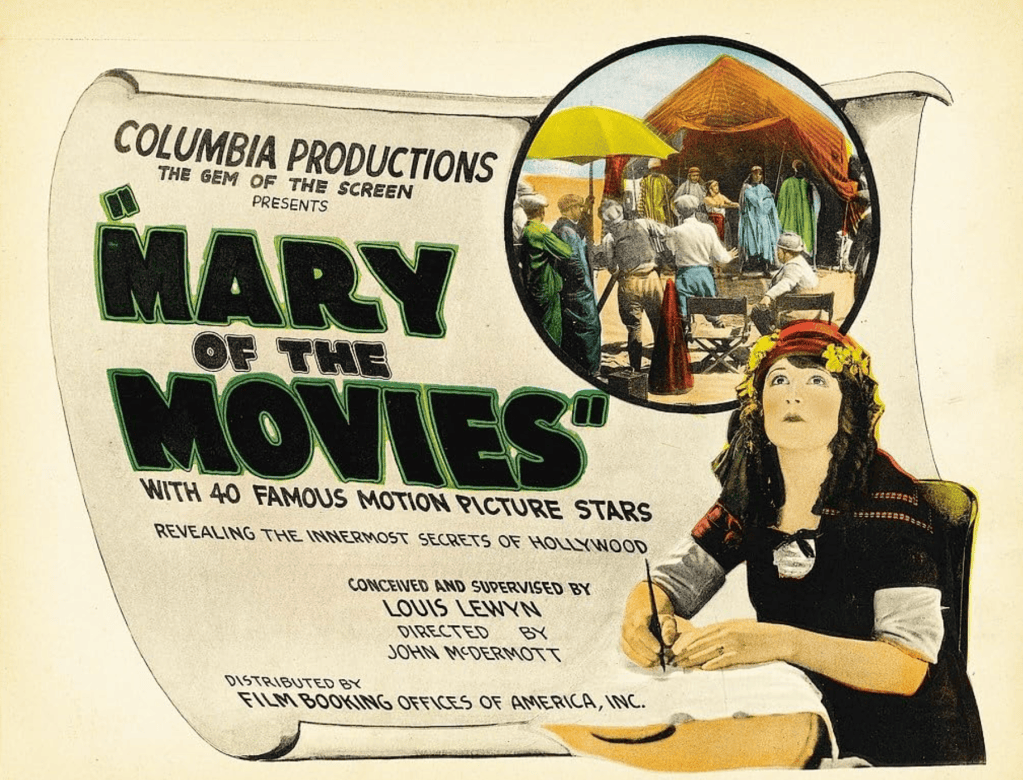
The film featured cameos of 40 actors and actresses, many of whom lived in Whitley Heights at one time or another. These Whitley Heights residents included; Wanda Hawley, Rex Ingram, J. Warren Kerrigan, Barbara La Marr, Bessie Love and Estelle Taylor. Others included; Marjorie Daw, Louise Fazenda, Tom Moore, Zasu Pitts, Anita Stewart and Anna May Wong. McDermott also made a cameo as “The Director”. The film was based on the main character “Mary” going to Hollywood to get an acting job to help pay for her younger brother’s operation but was forced to work as a waitress. For McDermott, the film’s success helped pave the way for future work with MGM and Paramount.
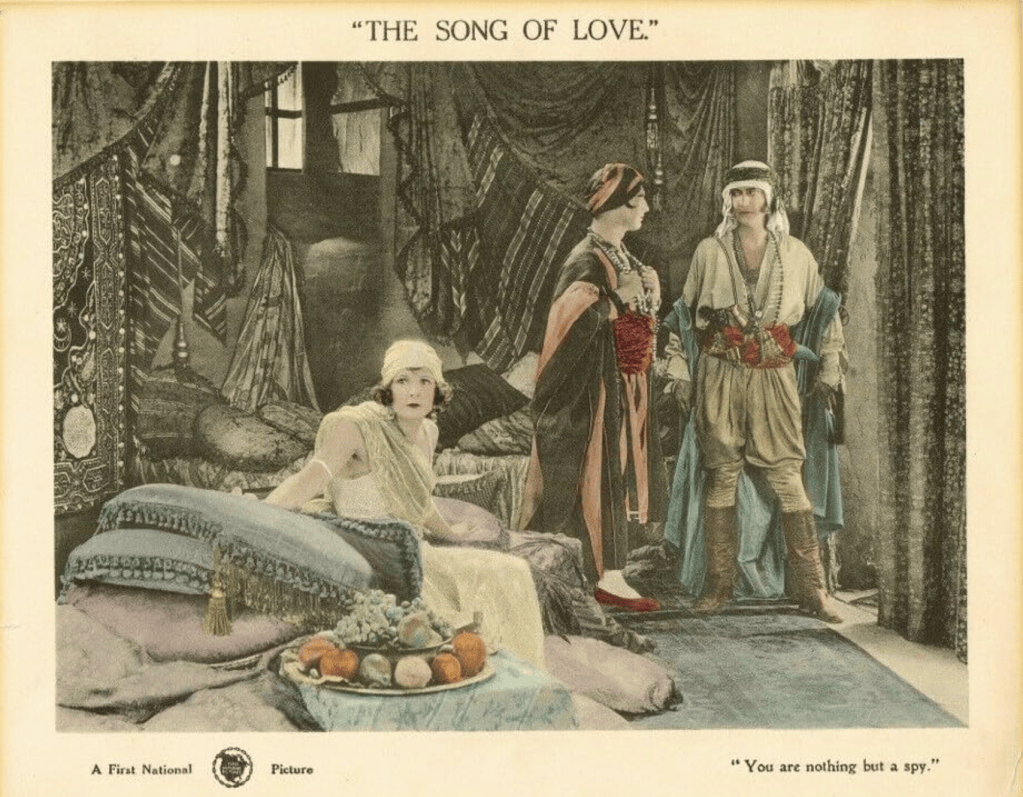
While working on the movie sets, McDermott would collect furniture and other artifacts that were used in films. In 1922, he purchased several plots of land in Grand View Trail (renamed Goodview Trail in 1939), in the Hollywood Park neighborhood, high above the Hollywood Bowl. After the film “The Song of Love” was completed in 1923, he purchased 6 Algerian rooms which were used on the movie set to build his house. The film starred Norma Talmadge and Joseph Schildkraut (another former Whitley Heights resident).
McDermott hired MGM art director Eugene Hornbostel to assemble the rooms into a house since no architects were willing to design his vision. He purchased balconies, doors, French windows, beams, porch railings, stairways, flooring, furniture, and anything else from movie studios. He called his street address “Cloud 6” in Hollywood Park and had spent three years building the house which was finished in 1927.
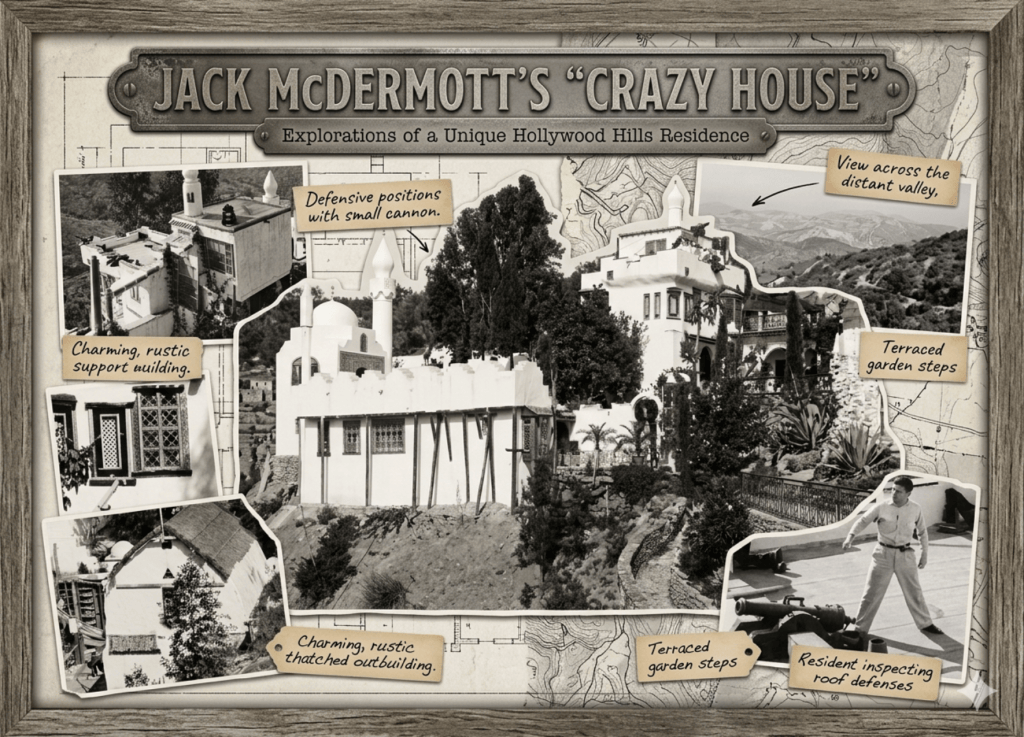
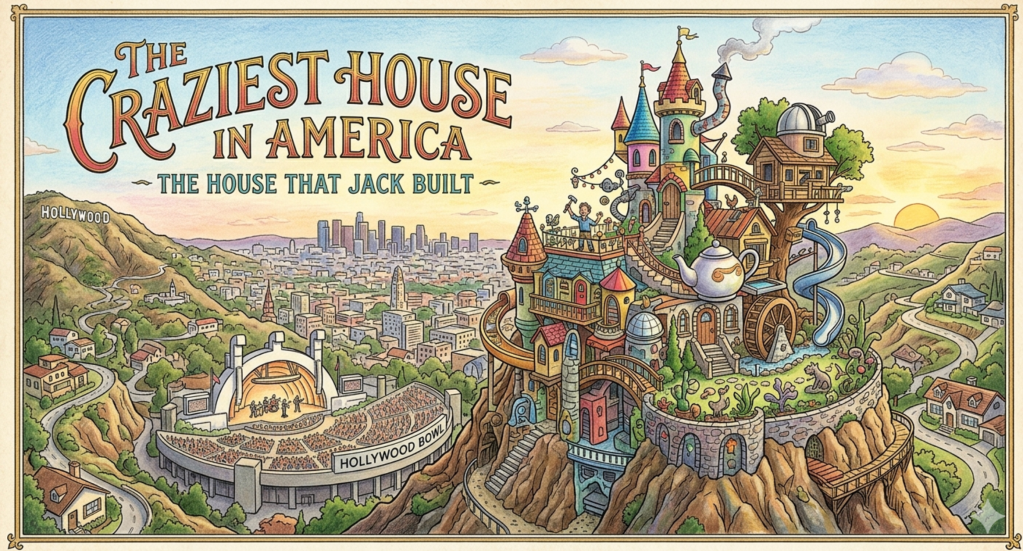
All of Hollywood was fascinated by his new house, calling it the “crazy house”, “the strangest home in Hollywood”, “the dark house” and “the craziest house in America”. McDermott would often host elaborate drunken parties for the movie industry folks. Actor John Barrymore was a constant attendee, remembering the house vividly, even falling down the stairs at one party. McDermott wired all of the furniture to the ceiling in one of his rooms and named it the “upside down room”. One party goer passed out in the room and woke up thinking the house had fallen off the cliff. Since the fireplace was sunken into the livingroom and close to the bedroom which was right below, another passed out partygoer thought the bed was on fire when he woke up.
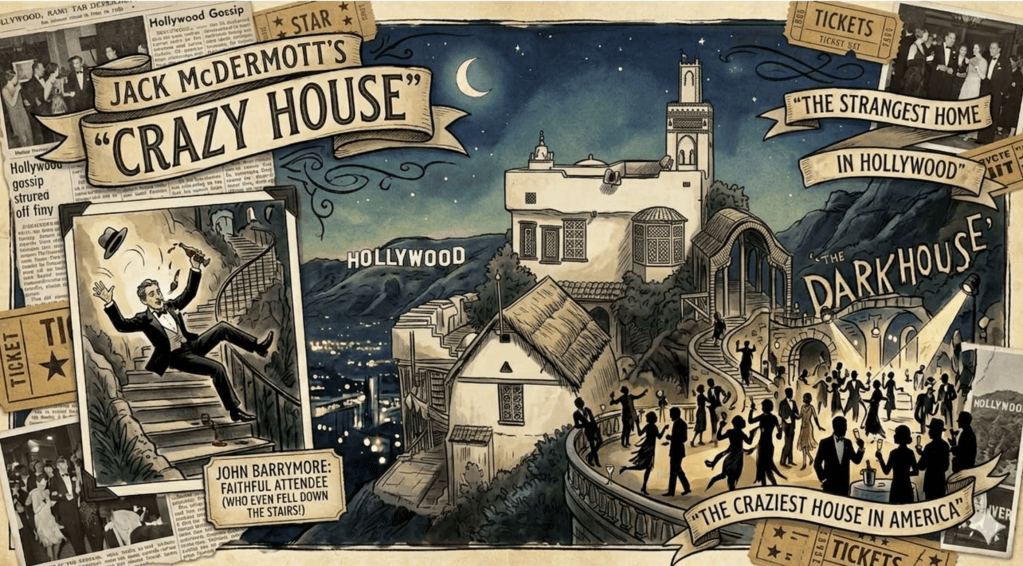
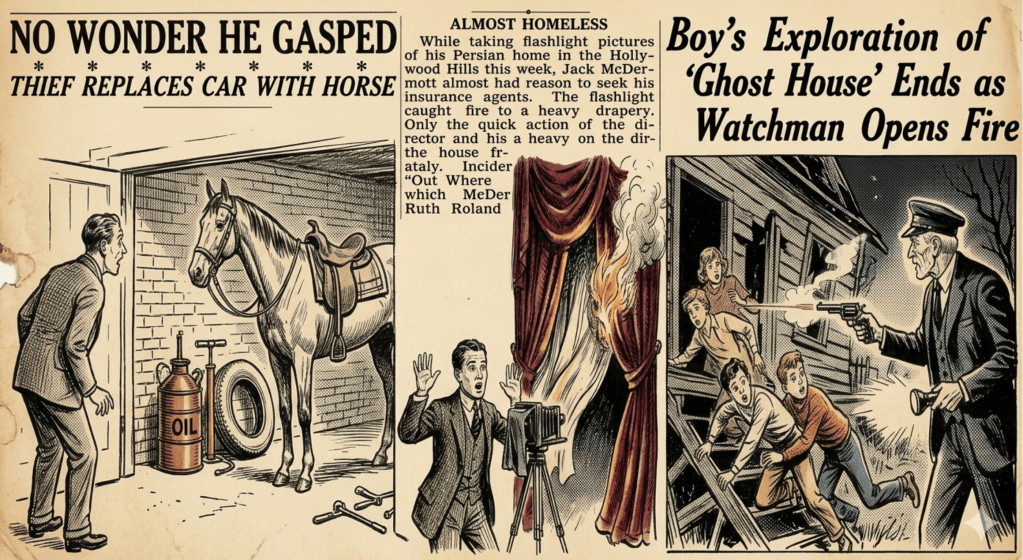
Perhaps the house, designed with a patchwork of Hollywood film artifacts, was never at peace. Odd occurrences happened over the years. In August of 1924, there was a fire mishap. While taking flashlight pictures of his new Persian home, heavy drapery caught on fire. Thankfully, the photographer and McDermott were able to put out the flames. In August of 1934, someone replaced McDermott’s car, which was located in a garage below the property, with a live horse. The car was found down the street. Curious teenagers often crept up the hill to take a look at the odd structure; sometimes they vandalized the property. McDermott moved out for a few months in 1935 and left a caretaker to watch the house. In March of 1935, a group of teenagers snuck onto the property and the caretaker shot one of them in the leg. In 1943, his house was ransacked and robbed of many of his treasures.
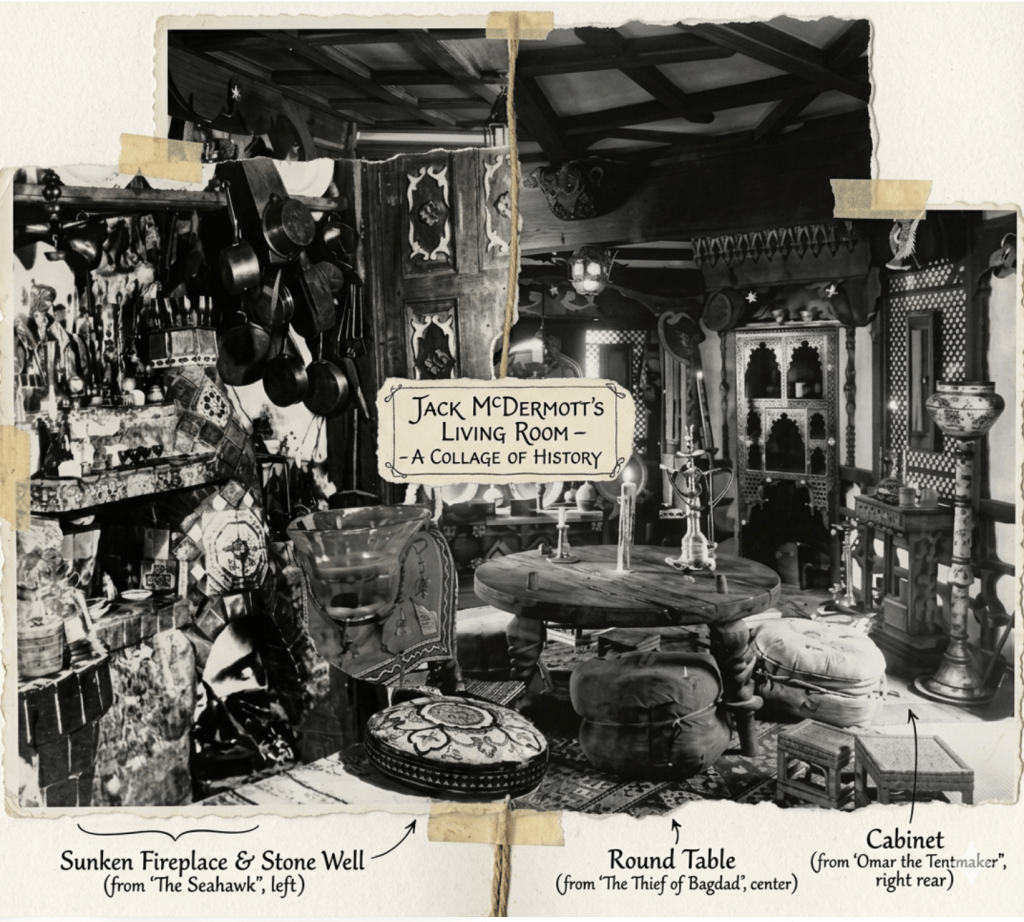
One article described it as his “crazy house.” A low, rambling structure, strung out along the face of a cliff high above Cahuenga Pass in Beverly Hills, it greets the eye as a thing part Egyptian, part Turkish, part Navajo, and with such touches of modern architecture as may be found anywhere “east of the water tower.” The living room consisted of a sunken fireplace and stone well which came from the 1924 film “The Sea Hawk”, which sat in one of the corners of the room. There was a round table which came from the 1924 film “The Thief of Baghdad”, which starred Douglas Fairbanks. There was also a cabinet from the 1922 film, “Omar the Tentmaker” starring Guy Bates Post (another former Whitley Heights resident).
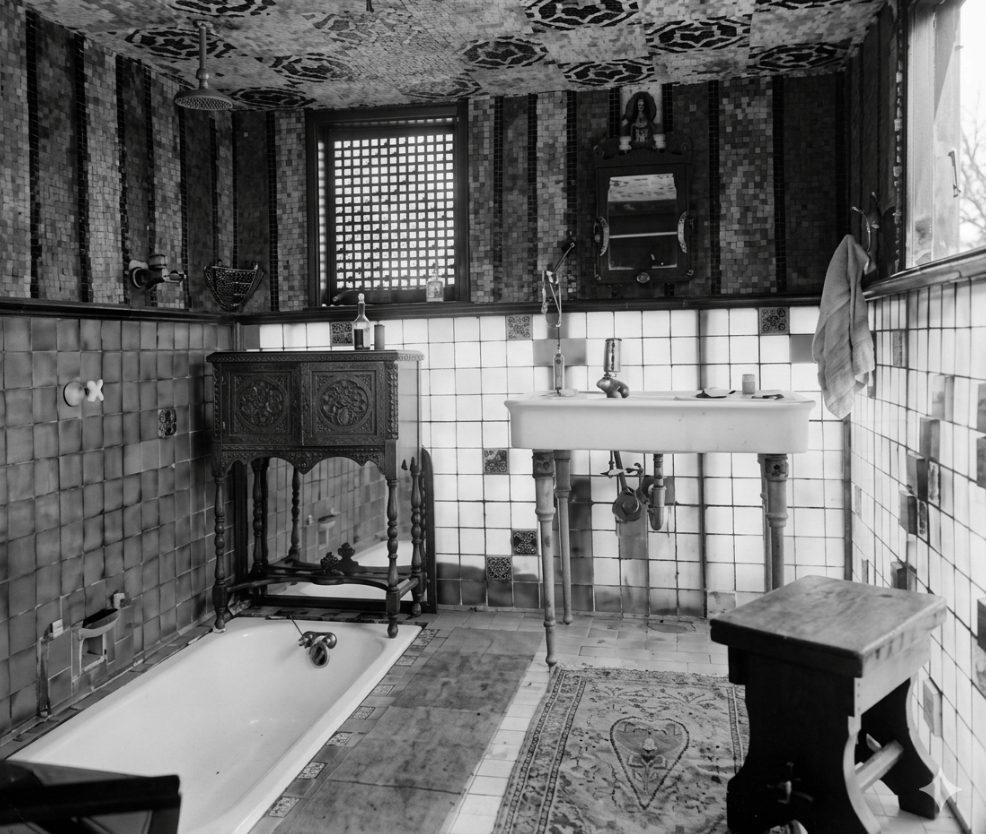
Behind a heavy oak door was the kitchen in a tiny cove which consisted only of an electric stove. Below the living room was a bedroom and bathroom which was accessed by a narrow staircase, barely wide enough for one person to creep down at a time. A lone bed (from Omar the Tentmaker), a dresser, a table and a weird lamp furnished the bedroom. The bathroom had a sunken tub and a beautiful mirror, which was used in the cathedral scene from “The Hunchback of Notre Dame”. There was also a small stool on the right from the set of “Robin Hood”. There was a shower that yielded only ice-cold water, piped from a spring below the house.
The dining room was in a separate building from the movie set of “Robin Hood”, starring Douglas Fairbanks. Inside the dining room, there was a dining room table which came from the same movie set.
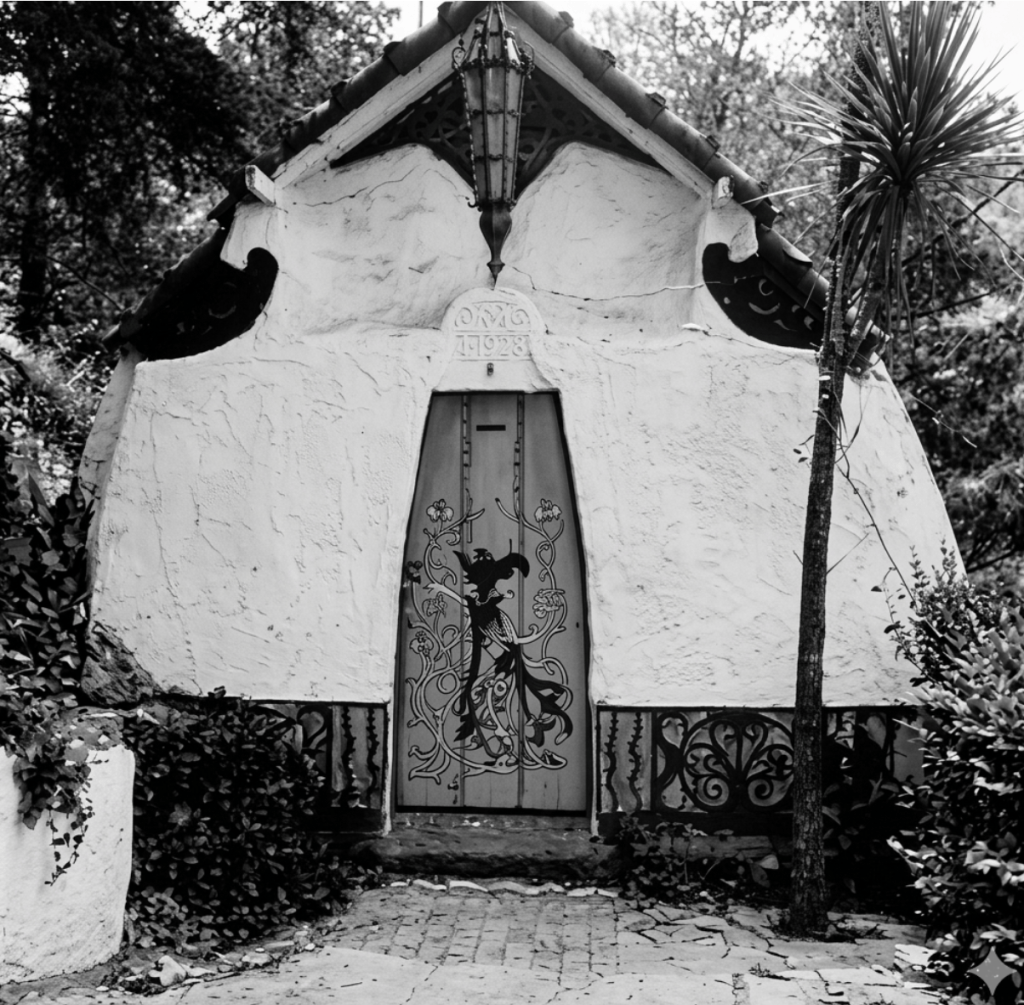
The exterior of the house consisted of many levels of different patios which looked like a Persian temple. The back yard consisted of a graveyard where dozens of chalk skulls were scattered about. The walls were carved in the form of tombstones with different masks hung about. He even built a sunken pool with tile on a concrete wall with an image of a spider.
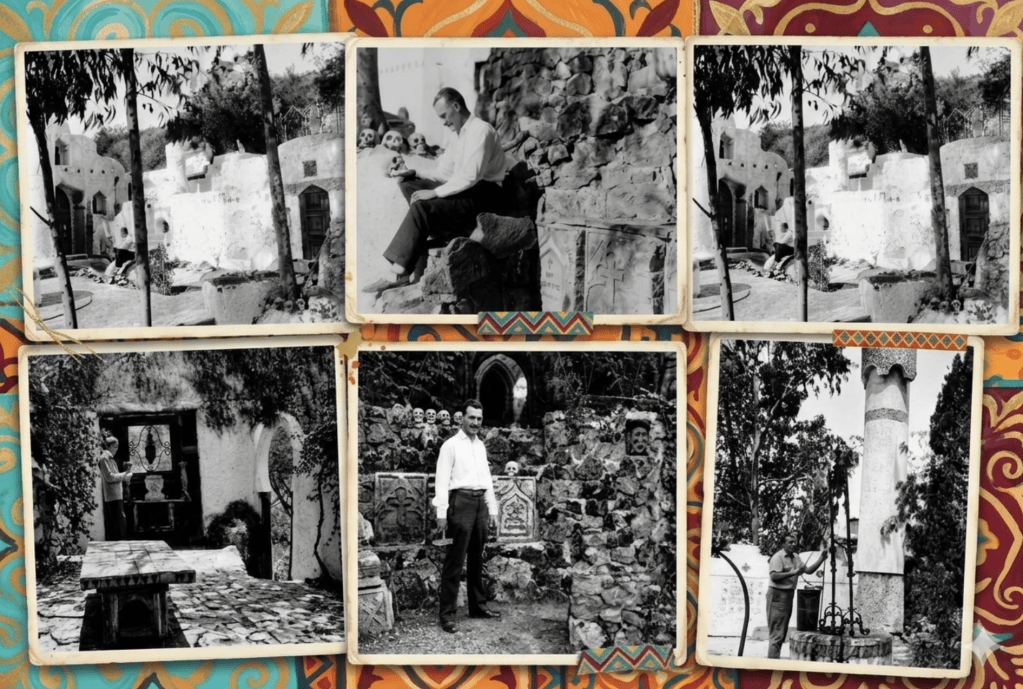
McDermott lived in the house until his death in 1946. Director and screenwriter Jacques Jaccard had been living with him at the time and observed McDermott swallow 28 pills with a glass of water, claiming he had been depressed for months. McDermott collapsed and was sent to the hospital where he died. He left the property to his nephew Edward J. McDermott who lived in Reseda who allowed Jaccard to live in the home after McDermott’s death.
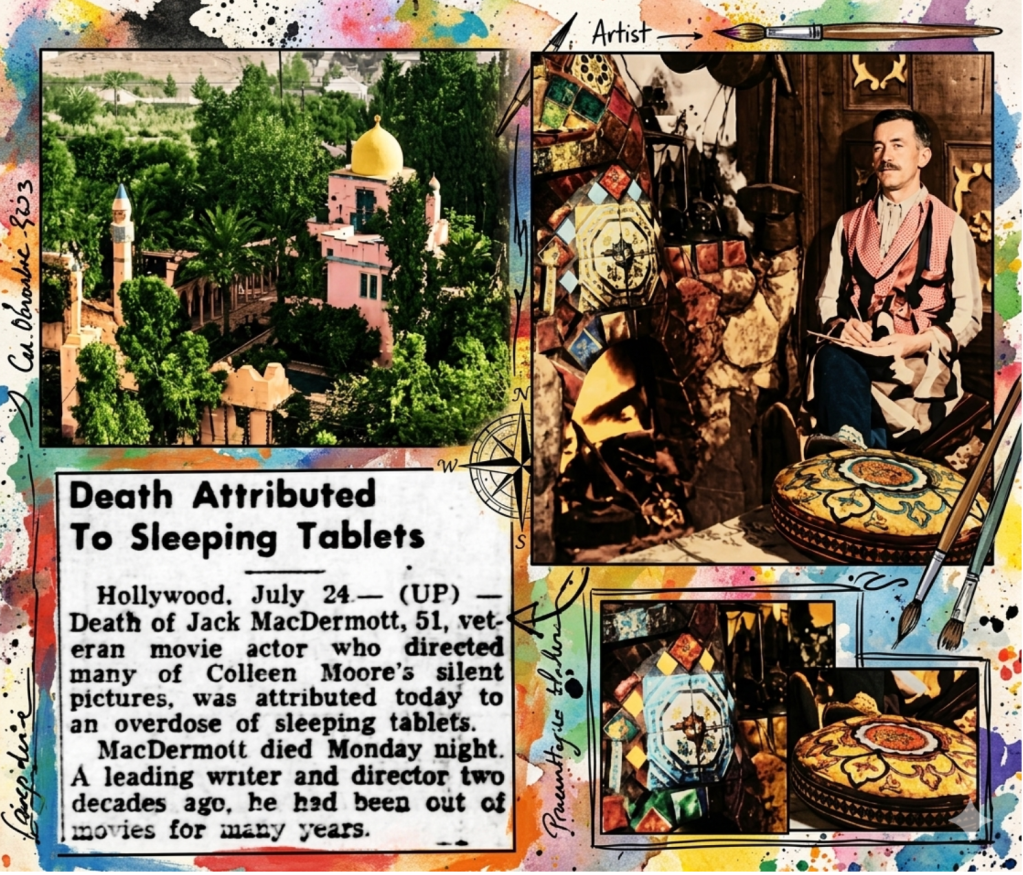
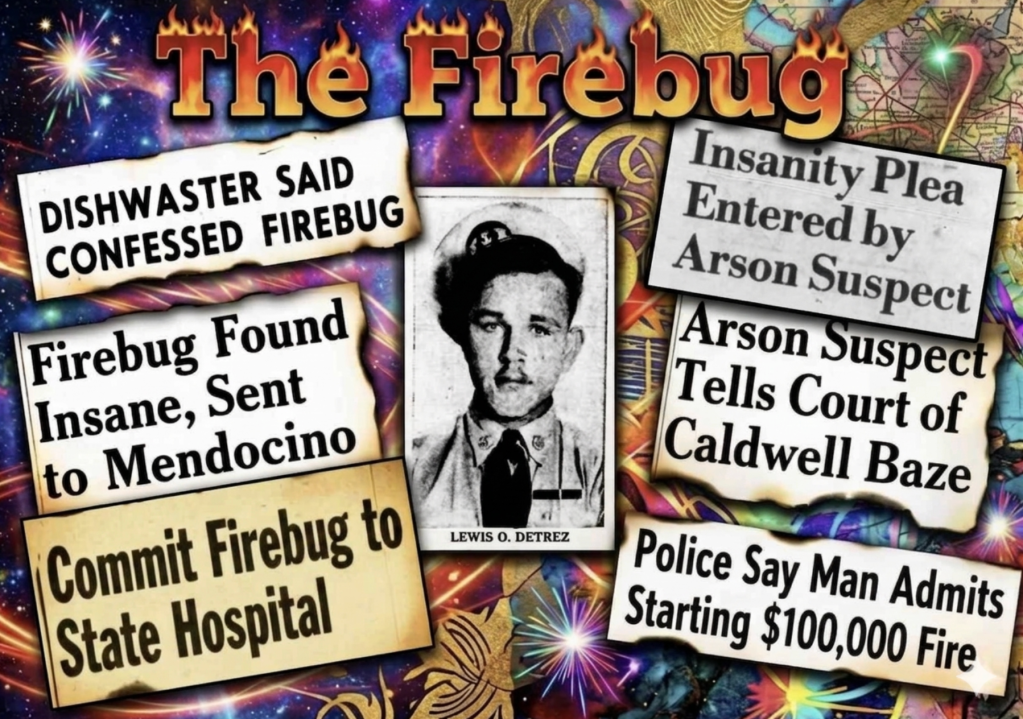
In early February 1947, the house caught on fire which left the home in partial ruins. The fire department indicated the fire started on the second floor from unknown origin. A few days later, 24 year old, Lewis Detrez was arrested. In 1944, Detrez, recently discharged from the Navy due to a head injury, began a rash of fires in Long Beach which resulted in $100,000 damages. Dubbed “firebug”, Detrez plead insanity and was sent to the Mendocino Hospital for the Criminally Insane but released two years later. In March 1947, he was arrested on burglary charges and held in the city jail. One month later, police questioned him about the Goodview Trail fire. Not wanting to face further charges, Detrez calculatedly ate a metal cup and was sent to the hospital where he escaped on the roof clad in pajamas and handcuffs. By August 1947, he was listed on the FBI most wanted list. There was no further mention of these charges; perhaps charges were dropped since there was no evidence against Detrez.
In 1951, Carl Brainard purchased the property in an attempt to revive the eccentric home. Ten years later, he sold it to Darrell Gregory who attempted to do the same. Gregory moved into the house with his wife Frances and four children: Rocky, Stony, Sandy and Cindy. He applied for a building permit to repair the house in 1962. The building department denied the permit and condemned the house. Gregory appealed and while waiting for the city’s decision, slept outside and swam in the spider pool. At the end, they lost the appeal and the house was demolished in 1962; the pool was demolished a year later. All that remains as a reminder of Jack McDermott’s crazy house is the spider wall somewhere in the Hollywood Hills…
 Whitley Heights 101
Leave a comment